• About
  • Celebrating our decades…
  • Welcoming all and inclusiveness

chaplinesblog

~ everyday and commonplace parables

chaplinesblog

Monthly Archives: May 2015

What is a parable?

12 Tuesday May 2015

Posted by chaplines2014 in Words

≈ Leave a comment

Tags

A License to Preach, Serendipity

3 Owls  Maybe the answer is obvious, but whenever people say “obvious,” some investigation may be in order. Start with “A parable is a short and simple story that represents a message about values.” Short? As short as a couple of sentences or as long as a few hundred words. Simple? Usually simple means easy to understand or uncomplicated, but here there is a difficulty. On the surface a parable sounds simple enough, but when it comes to what it means, it gets more complicated. Maybe we should scratch out “simple,” though the story itself should at least sound straightforward.

A parable’s representation of something else is metaphorical, but not allegorical. In an allegory each part of the story, or each key part of the story is a symbol for something else, which it should resemble in some important aspect. A parable may sometimes become an allegory, when the teller of the tale decides to interpret its elements as symbols for something specific. Jesus’s parable of the sower and the soils (Mark 4) becomes an allegory when the soils become symbols for several specific kinds of human responses, like deafness, apostasy, fickleness, weakness, conflicted values, and faithfulness, and the sower becomes the preacher of the gospel. In its original telling, as a parable, the story merely suggests a comparison. It is more or less obvious to the listener how amazing it is that a bountiful harvest usually follows the scattering and waste of much of the seed. Many parables have been interpreted allegorically. The allegorical method of interpretation dominated the early centuries of the Christian church. In the same centuries rabbis continued to teach with parables, leaving the interpretation to the imagination and consternation of their listeners.

The interpretation of parables does sometimes lead to frustration and other times to inspiration, to disturbance and to comfort, to puzzlement and to satisfaction. If it leads nowhere, it is not a parable. If it answers its own questions, and leaves no sense of incompleteness for us to think about, it is probably not a parable. If the analogy is too perfect, and we see a meaning immediately that is exact, it is unlike the parables of those teachers who used parables so well, like Jesus of Nazareth or the Baal Shem Tov.

What about the values that parables suggest? Is there a limit to the kinds of values that can be espoused in the parable form? While I may favor humane and compassionate suggestions over cruel and selfish ones, parables can be moving expressions of all of the attitudes people rank as important.

Where will we find parables? That is what I’d like to know. I’m looking for them In nature or human interactions, in memories or imagination, in dreams or lived moments that make an impact, everywhere that my attention is grabbed and something is discovered.

As far as how the parables I find may be used, I must leave that up to the listener. Have fun with them. Make a sermon out of them. Let them suggest experiences when you have discovered your own parables. Carry on.

Fire Call #4 at the Guns and Ammo Store

11 Monday May 2015

Posted by chaplines2014 in Events, fighting fires, guns, Small town life

≈ Leave a comment

Tags

The Volunteer Fire and Rescue Squad

Yellowstone Pool

The siren blasted on a fall evening after dark, calling us volunteers, not to an retail merchant’s store, but to a single story ranch-type house set on a one acre wooded lot, with several other homes nearby. The house was smoking heavily when we arrived. The owner had been smoking heavily also, but he awoke in time to escape and stood nearby. We responded with a full crew and three trucks and had the hoses out and charged when the explosions started inside the house. We began to hear whizzes and pops against the side of the new firetruck where I was adjusting the controls, and I felt something hit my helmet hard.

“What’s inside that’s doing that?” Don, our chief, asked the owner, and he answered, “A hundred or so guns, positioned around the house, and lots of ammo. They’re worth a lot of money. I’d like to see you get busy and save what you can.”

Don called out in his loudest voice, “Pull back. Pass the word. Pull back now.” As the explosions continued and the occasional sound of stray bullets, also, the crew repositioned the hoses and the trucks about thirty yards farther back, aiming the new high pressure hoses from a distance, breaking the few windows that remained, blasting holes in the burning sides of the house, but mostly watching that the wind did not carry flames or debris toward the neighbors north and east of the house.

The owner was angry, and protested the decision to pull the crew back and away from the house. It was obvious that the house was going to be a total loss, after the delays and the new orders from the chief. “As I see it, I’ve got three duties that come before saving your house. Saving my firemen. Saving your neighbors’ property.  And protecting our equipment.”

“What about my stuff?” the owner asked.  Don answered that the owner had already taken care of that, when he set fire to his own armory and shooting gallery. The owner did not respond well. The year was 1974, before the country as a whole had gone gun-mad, but this man already had the conviction that he had to be ready for anything. That’s why he had loaded guns and ammunition in every room of his house. Unfortunately, he was not quite ready for anything.

Fire Call #3 at the Foundry

10 Sunday May 2015

Posted by chaplines2014 in Events, fighting fires, Small town life

≈ Leave a comment

Tags

The Volunteer Fire and Rescue Squad

Yellowstone PoolThe fire siren split the quiet spring afternoon with its insane blare, and I was the first to respond to the station. Earlier I would have tried to drag my feet, but it would have been obvious since my office and home were just two blocks from the station. I put on my firefighter suit and boots, and had opened the main door and started the engine when a couple of other volunteers arrived. The bad news that I had to relay was that the call came from the General Motors Foundry, a five block long complex of oversized buildings filled with molten iron and steel. The good news was that they were asking for precautionary backup. They didn’t think that we needed to call for mutual aid from other departments. Their own crew was fighting the fire already and they thought they would have it under control when we arrived.

We hurriedly drove, siren screaming, to the east end of the complex and the open hangar door that looked like it could admit two or three fire trucks simultaneously. A little Hyster lift-truck preceded us down the aisle past employees standing nonchalantly, waving, obviously out-of-work for the time being while the problem was being resolved elsewhere. As the building swallowed our fire truck and we tried to look ready for whatever task awaited us, we at least felt some relief that the workers seemed unconcerned, not panicky and not ready to flee.

Turning a corner near the far end of the building we saw an area of smoke and steam ahead, water hoses charged and spraying under the command of three other volunteers that belonged to our squad, but also worked for the foundry. They did in fact have the fire under control, and I said my silent prayers of thanksgiving as we learned what had happened.  It was a vehicle fire, and grease fire, that had ignited some storage boxes nearby. Fortunately they had an in-house plan for immediate response. This was the first time that anyone remembered that they had called in an outside fire department, and they were grateful to learn that we could respond so quickly.

Whether they knew it or not, they were not more grateful than I was that they didn’t need the help of three volunteers who were ill-prepared to do much more than they had already done. We were deep inside the belly of a building that looked like nothing less than a Towering Inferno even when it was not on fire.  We took even more seriously the immensity of tasks that we might face and the training that we needed.

The Hunger Simulation at a church conference

09 Saturday May 2015

Posted by chaplines2014 in Events, Learning from mistakes, People

≈ Leave a comment

Tags

A License to Preach, Serendipity

Monkeys see, hear, speak no evil, Bangra.com

In 1974 a concern for food deficits and hunger swept through the church and the nation. Famine in the Sahel and the rediscovery of large pockets of hungry people in the United States moved many people to take part in study groups, organizing, advocacy, and simulations. Simulations? In order to identify with hungry people, those of us who were not usually hungry had to remind ourselves what hunger felt like.

I attended my first Illinois Conference of the United Church of Christ Annual Meeting at Dekalb, Illinois, in June of 1974. I had attended many conferences, many annual conferences of the United Methodist Church, but this was my first UCC Annual Conference. I did not know what to expect. My ignorance went so far as to include what my registration fee covered. It seemed like a lot of money to me at the time. I assumed it covered the costs of the meeting itself, housing, and meals. It was the latter item that revealed that I had assumed too much. The cost of meals was not included.

I did not have much money in those days, living paycheck to paycheck and paying off education loans. I had a family of a wife and two small children who needed cash more than I did, so I had about five dollars in my pocket and a gas credit card for the travel. What else would I need?

The conference meeting lasted about four days, and my loaf of bread and jar of peanut butter had stretched about as far as I could make it stretch. I had access to plenty of water. I also had a conference dinner to look forward to, with a ticket that was prepaid in my registration fee. I felt very happy that the fee had at least covered that one meal. The dinner itself was elaborately set up in a grand ballroom with white tablecloths, napkins, glassware, and tableware, no plastic or paper in sight.

The servers had specific instructions that began with the serving of about ten people out of a hundred with hors d’oeurves. Then came the salads which were served randomly to about fifty out of a hundred, including of course those who had already been served. Meanwhile the grumbling had begun from those who had not yet been served. The servers just continued their quiet compliance with their directives. As a newcomer I did not yet have a voice, but I was in tune with the times and catching on to what was happening.  When the main course arrived, about seventy people out of a hundred had full plates with meat, potatoes, vegetables, and bread rolls. The rest got small plates of rice. In front of me sat a small plate of rice.

The dessert that followed the main course came to about thirty out of a hundred. The grumbling increased in volume and anger, and the faces of those who had received and eaten the extra food looked appropriately humble. Everyone scarfed down what was set in front of them. No one within my view was sharing anything that they received, although I learned afterward that some tables had several sharers when the dessert arrived. By the next business session, facing an angry audience, the planners of the simulation extended their apologies and promised not to surprise the attendees with such an ill-conceived plan again.

The rice that I ate was probably the best rice I have ever eaten, and the portion, though small, satisfied my hunger. I could return home with a clear conscience to a place where I had enough to eat.

The Impressive Nighthawk

08 Friday May 2015

Posted by chaplines2014 in Nature

≈ Leave a comment

Tags

Serendipity

snow geese migration near St Elmo IL, Dave Moody 2What bird is more impressive than the nighthawk as it dive bombs to catch an insect and makes that victorious booming buzz with its feathers when it reverses direction upward again? All you see of it is a dark flash of long, pointed wings or a silhouette high in the sky.

Other realities about the bird are less impressive. It is neither a hawk nor nocturnal, so its common name is inappropriate. Nor does it nest as other birds do but the female lays her eggs on the ground, logs, or rooftop gravel. Here is another case of a bird that does not live up to its billing.

The name may be wrong but the power dive is still impressive. Sometimes the bird is called the “nightjar” and this name captures the fact that a single bird can capture and contain up to 500 mosquitoes in an evening’s work. That makes it my friend, regardless of its mistaken etymology and lack of a decent place to lay its head. After all other people have accomplished much without a place to lay their heads.

We continue our journeys, laying our heads in various odd places. Some places live up to expectations and some do not. Visiting old friends and celebrating their accomplishments does. We visit other churches and often find people who believe in essentials unity, in nonessentials diversity and in all things diversity, or better yet, love. We investigate places where some of our ancestors sojourned in their quest for religious freedom, economic prosperity, or peace at last. Often they had to move on, and we do too.

When we travel there are always lots of incongruities, plenty of disillusionments, and many expectations met and exceeded in any life fully lived. But even if we do not fully live up to our names, if we can catch 500 mosquitoes in one evening and do impressive power dives we must be considered successful.

Shall we join the demonstrators?

06 Wednesday May 2015

Posted by chaplines2014 in Caring, Events, Racial Prejudice, Words

≈ Leave a comment

Tags

A License to Preach

cropped-circledance.jpgWhat is a demonstration? Is it a showing, a calling of attention to something? Or is it a proof of the reality of something, bringing enough evidence together to be persuasive, as some of us would assert the validity of the metaphorical statement, “Christ is the light of the world?” Like most words we may use the word “demonstration” either way.

Some of us grew up in a world of demonstrations which grabbed our attention, and persisted in presenting uncomfortable truths, and made life more difficult for both demonstrators and others immediately involved, with positive results I would hurry to add. There were sit-ins, marches, and boycotts– many of which demonstrated effectively the presence of racist discrimination and injustice in our world. The demonstrators often had to pay a price in fines and imprisonments, ridicule and bodily injury,

loss of security and even life, in order to demonstrate the deprivations of dignity and opportunity to others. The people demonstrated “against” had to deal with a challenge to their authority, routines and attitudes.

We owe much to one who expressed so powerfully the rule of love as a means to effective demonstration, including self-giving, sacrifice and refusal of violence–  M L King Jr. He made his source in the love of Christ a central affirmation of his work, but he made no secret that he owed much to the influence of the Mahatma as well.

I think of Sheltered Reality with its focus on homelessness, youth and their capacity to express themselves, their songs and their drums as a form of demonstration. The sound of dozens of drums can be deafening, literally, when people do not protect of their ears. It can be uncomfortable and challenging, and those involved pay a price in time and energy for their effort. The obvious “target” is the people who ignore and dismiss the problem. Yet, as the years have  gone by since the group was formed, the problems of homelessness have continued to mount, and someone must make noise about it. As in the earlier demonstrations, youth are often more willing and ready to show their true colors than their seniors.

Many of our demonstrations are more polite and subtle, less brash and potentially offensive, and as a result often less effective. We have some noisy and obvious tools at our disposal– bells, lights, and whistles to draw attention. When and how will we use them? We come from many centuries of tradition calling for human dignity and mutual service, the relief of suffering and life in solidarity with the oppressed. We live with the benefits and burdens of mass media letting us know of innumerable insults and attacks on such values. Where shall we apply ourselves and our resources? Does it matter which situation of need we address or where we work as long as we do? Shall we join the demonstrators?

The River Flows Both Ways: Following the Mekong Out of Vietnam and Cambodia

05 Tuesday May 2015

Posted by chaplines2014 in Books by Gary Chapman, People

≈ Leave a comment

Tags

Books by Gary Chapman, The River Flows Both Ways, Vietnam and Cambodia

TRFBWcoverThe remarkable and poignant stories of Hung Nguy and Hue Nguyen’s family from the 1960’s to the 1980’s, when they moved from Svay Rieng, to Bo Dau, and on to Ho Chi Minh City, then back to the countryside, and finally sought to leave Indochina, are told in The River Flows Both Ways: Following the Mekong Out of Vietnam and Cambodia, written by Gary Chapman and published in October 2014. After five years, a series of failed attempts, imprisonments and refugee camps, three teenage sons finally completed the journey to the United States.

The book is available from https://www.createspace.com/4977913,  http://www.Amazon.com, and your local bookseller.

Members of the Nguy family are interested in other peoples’ experiences related to their experiences in Cambodia and Vietnam, and their emigration, and other published memoirs, reported to chaplinesblog.com, or Email at gchapman@scciowa.edu

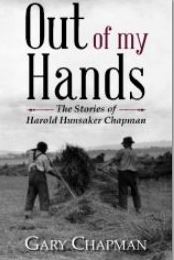
Out of My Hands: The Stories of Harold Hunsaker Chapman

05 Tuesday May 2015

Posted by chaplines2014 in Books by Gary Chapman

≈ Leave a comment

Tags

Books by Gary Chapman, Out of My Hands

OOMHA poignant personal memoir, Out of My Hands presents the story of Harold Chapman, a Jasper County boy, born at Yale, Illinois, in 1911, whose difficulties begin in the grip of one of the worst influenza outbreaks in history.

With his mother dead, seven-year-old Harold must take on the care of his siblings—who soon increase in number when his father and the nanny he hired to help them produce a seventh, then an eighth, child. But tuberculosis and a disastrous move to eastern Colorado weaken Harold’s father, leaving Harold responsible for getting the farming and ranching work done.

Extended family, friends, and community always come to the aid of Harold’s struggling family, and Harold’s maternal grandparents play a significant role in their lives, instilling values and imparting the skills the children will need to survive before and during the Great Depression.

Harold becomes a breadwinner early in life and as a teenager works at a gas station, a repair shop, and a dairy farm as well as in the cornfields and hayfields of Illinois doing menial labor.

An often-humorous tale of hope and perseverance, Out of My Hands was written by Harold’s son, Gary Chapman, based on Harold’s first-person stories about growing up, helping his family, and overcoming life’s inevitable obstacles.

Available from Create Space Publishers, http://www.createspace.com/4876050 , http://www.Amazon.com, and your local bookseller.

Back Cover Summary: Based on his stories about growing up before and during the Great Depression, Out of My Hands begins with Harold Chapman as a young boy whose life is turned upside down when his mother falls victim to the influenza epidemic sweeping the nation.

Charged with helping raise his brothers and sisters, Harold finds himself and his family shuffled from one home to another, from the rich fields of Jasper County, Illinois, to the dusty ranches of eastern Colorado and back.

After branching out on his own at the age of fourteen, Harold scrapes by for years working hard at various jobs…especially after he meets Vena, the girl of his dreams.

Years of waiting, working to secure enough income to provide for her, and respectfully courting her finally draw near to the time of their marriage, when Harold discovers that, no matter how prepared you think you are, there are always more obstacles to overcome in life.

Starting a list of the odd things that happen around death

05 Tuesday May 2015

Posted by chaplines2014 in Caring, Death, Events

≈ Leave a comment

Tags

A License to Preach, Serendipity, Synchronicity

Luna mothA colleague told me about his uncle who was killed in the Battle of the Bulge during World War II. He went to visit the military cemetery in Belgium where his uncle’s body was buried along with thousands of other casualties from that battle. He entered the memorial chapel where the book is kept that records the names of all the soldiers buried there, with the locations of the graves. He approached the book. It was already open to the page with the name of his uncle, out of thousands of names, and no one there to open the book for him.

A friend’s grandfather died at the ripe age of 95. He had lived at his own home and tended his own garden until a short final hospitalization. She had lived nearby and helped him in his garden. The day of the funeral they went back to his house for a family gathering, and near the front door there was a fresh rose blooming on an old plant, but the rose showed a new combination of red and white, his favorite rose colors, on a plant that before had only produced reds.

I had spent several hours of the day at the bedside of a dear and faithful member of the church, knowing that her time was growing short. She had no family left, and her aged peers could not remain at her side. I also needed a break and took a few minutes for something to eat, and returned as quickly as I could. When I approached the door to her room, I heard lovely symphonic music coming from inside. At least I thought it was coming from inside, though no player or radio had been there before. I supposed a thoughtful nurse had brought one in, to provide the soothing sounds that sometimes calm the sufferer. When I opened the door, walked into the room and stood at her bedside, I saw that she had died, her face finally serene after her struggles with pain. Then I noted that the music had stopped; the room was utterly quiet. There was no player or radio there, and there was no music coming from outside either.

Erosion under the sidewalk?

04 Monday May 2015

Posted by chaplines2014 in People

≈ Leave a comment

Tags

A License to Preach

cropped-circledance.jpgThe church that I served for nineteen years stood on a steep hill. When a crew broke up the sidewalk in front of the church in order to replace it several years ago, everyone wondered what they would find underneath it. After forty years sections were cracked and uneven, and holes had developed. When the street caved in a year before that, with a hole large enough to swallow a car, we thought that the same caverns might have developed in other areas nearby, including the sidewalk. Erosion had obviously taken its toll, at least in the view from the top. Would there be gaping holes, and even damaged drains and pipes?

Yet when the concrete was gone, there were the sand and the gravel that had been tamped into place before the last sidewalk was poured, with little evidence that the water flowing downhill for decades had done much damage to that base. Where the old window wells had been filled, there was no sign of subsidence. In a few places the curbing, damaged by snowplows and weather, had allowed some erosion, but not nearly what we expected.

There has been a lot of social erosion over the same forty years, at the same time that there has been significant progress in some areas of justice and equality and understanding of diversity among people. The frequent outbreaks of crime and violence, alongside some severe cracks in the moral stature of religion as people practice it, make us wonder what is happening to the foundation of personal and social life. Our world is awash in money and choices for some people, not all of which are constructive. Masses of people are themselves in danger of washing away, sold down the river. Are there gaping holes underneath? Or are the obvious cracks and holes and unevenness just a sign of a need to replace the obvious areas of damage? To work on and replace the surface?

Our answers determine how radical we get with our proposed solutions. We need to check the foundations, and tend to them, but do we need to replace them? Is there more there than we suppose or expect?

The Gospel that we revere is radical in the sense of being rooted where we believe it has always been—in the life, death and resurrection of Jesus. You will not get the sense that people need to tear the world up or each other apart when you listen to Jesus’ words or attend to Jesus’ actions. They live quite substantially in many of the world’s spiritual leaders, even those who come originally from non-Christian faiths.

It is certainly instructive to break up the surface once in a while, if only to examine what lies underneath.

← Older posts
Newer posts →

Subscribe

  • Entries (RSS)
  • Comments (RSS)

Archives

  • February 2022
  • May 2020
  • October 2018
  • December 2017
  • November 2017
  • October 2017
  • June 2017
  • April 2017
  • March 2017
  • February 2017
  • January 2017
  • November 2016
  • October 2016
  • September 2016
  • August 2016
  • July 2016
  • June 2016
  • May 2016
  • April 2016
  • March 2016
  • February 2016
  • January 2016
  • December 2015
  • November 2015
  • October 2015
  • September 2015
  • August 2015
  • July 2015
  • June 2015
  • May 2015
  • April 2015
  • March 2015
  • February 2015
  • January 2015
  • December 2014
  • November 2014
  • October 2014

Categories

  • beach
  • Books by Gary Chapman
  • canoeing
  • Caring
  • Cherokee history
  • Church
  • Citizenship
  • Death
  • Disabilities
  • Events
  • Faith
  • Farm
  • fighting fires
  • Forest
  • Garden
  • Growing up
  • Gullibility
  • guns
  • Health
  • Hiking
  • House
  • Innocence
  • Learning from mistakes
  • Life along the River
  • Miracles
  • Nature
  • Patience
  • People
  • Prayer
  • Racial Prejudice
  • rafting
  • Running
  • Seasons
  • Small town life
  • Suffering
  • Travel
  • Uncategorized
  • Vehicles
  • Volunteering
  • Words
  • Yard

Meta

  • Create account
  • Log in

Blog at WordPress.com.

Privacy & Cookies: This site uses cookies. By continuing to use this website, you agree to their use.
To find out more, including how to control cookies, see here: Cookie Policy
  • Subscribe Subscribed
    • chaplinesblog
    • Join 71 other subscribers
    • Already have a WordPress.com account? Log in now.
    • chaplinesblog
    • Subscribe Subscribed
    • Sign up
    • Log in
    • Report this content
    • View site in Reader
    • Manage subscriptions
    • Collapse this bar
 

Loading Comments...