• About
  • Celebrating our decades…
  • Welcoming all and inclusiveness

chaplinesblog

~ everyday and commonplace parables

chaplinesblog

Monthly Archives: June 2015

A Conspiracy to Cover with water and oil?

29 Monday Jun 2015

Posted by chaplines2014 in Cherokee history, People, Travel

≈ 5 Comments

Tags

Our Land! Our People!, The Trail of Tears

Red Wolf2

I was hunting for the places where John Bell, the son and father, grandfather and great-grandfather of other John Bells, and the husband of Charlotte Adair (and the 4th great grandfather of Janet Chapman) had lived and worked. He was born in South Carolina, the son of a Scot trader and a Cherokee woman of the Deer Clan, in Greenville County, but the exact location is unknown. The Greenville records of land transactions and other legal matters before 1840 were destroyed in the 1990’s. They mostly dealt with Native Americans and African slaves, and so they were considered unnecessary and too expensive to maintain.

The journey took me to Coosawattee Town in Georgia, an ancient city that made documented history when DeSoto temporarily occupied it. John Bell and his son John Adair Bell centered their trading activity there before 1839.The strategic location between two mountains (Bell and Martin) made it too attractive to engineers, who built a dam and flooded the site, so all that I could see was Carter Lake.

Next I went to the Coosa River Plantation that John Bell developed in his middle years, when he devoted his work to blacksmithing and farming. That location near the foot of Lookout Mountain provided an easy place to locate a dam, so all I could see of the Bell plantation was the surface of Weiss Lake, about fifty feet above the old river bank.

The Bell family left Georgia and Alabama in the Cherokee Removal in a detachment directed by John Adair Bell (an uncle to Jan’s 2nd great-grandfather), and old John Bell relocated in what became Delaware County in Oklahoma along the Grand River. The Grand River plantation, where David Bell (Jan’s 3rd G-G) and Sarah Caroline Bell Waite (aunt) were buried, where members of the family continued to live for fifty years, became a casualty of the plans to build the Grand Lake of the Cherokee, so all of the original site as well as the cemetery is under water.

You can imagine what I expected when I planned to visit the cemetery in Rusk County, Texas, where John Bell and John Adair Bell moved in 1850 to escape continuing death threats. Nevertheless, the cemetery and the land that they farmed is not under water. An oil company in the 1950’s purchased the land, destroyed the Indian cemetery, and drilled for oil there. Nothing remains but photos of one tombstone in an otherwise empty oil drum, the tombstone of John Bell.

I began to think there was a conspiracy. There was, of course—a conspiracy to ignore and forget the Native American history of much of our country and the people who lived and worked here long before the current generations.


The Miracle of the Broken-down Weed Chopper

25 Thursday Jun 2015

Posted by chaplines2014 in Events, Farm, Forest, Seasons, Yard

≈ Leave a comment

Tags

A License to Preach, Serendipity, Synchronicity

redwood treesI was ready to start the weed chopper and mow the strip at the sides of the Shepherd’s Gate house and driveway. Two or three mowings a season is enough to keep new trees and plants from encroaching “my” space, which is fifteen to twenty feet around the perimeter of the house. The rest of the surrounding acres remain wild woodland and take care of themselves. The engine started well, but the mounted mower whiplines did not engage. Turning off the engine I found the belt had slipped off its pulley. If I had not already been thinking about my father, this could easily have reminded me of the many times some piece of equipment broke down and delayed the work of planting or harvest or general farm maintenance.

When it came to tools my father was not the most organized. Keeping the right tool in the right location was a challenge, and as a result there were usually a dozen places where that tool might be. The tool house was well-organized, thanks to the my older brother’s intervention, but tools tended to migrate from there to every tractor, barn, crib and shed which had its own specialized tool collection. It was always frustrating to run into a task that required the tool that was somewhere on the other side of the farm. In my case on this day, the small tool box I had with me held only  pliers, inadequate to the task of removing the cover to reinstall the belt. The plumbing kit, ready for the bathroom fixture installation tasks that I had planned for this trip,  had wrenches that were much too large to reach the bolts I had to loosen.

Then I thought of the small toolbox Dad gave me to use at Shepherd’s Gate. It had a few well-worn basic tools. Did I remember that it had a driver and socket set? I looked and it had only two sockets, but what were the chances that these were the ones that would fit? I took them out to the chopper, and one fit the larger bolts, and the other one fit the smaller bolts perfectly! Thereafter the job was a snap. Thanks, Dad.

This is hardly evidence convincing to anyone of a surrounding cloud of witnesses or an angelic host. Plenty of times I have had to learn from my oversights, go out and buy or borrow the necessary tool, or take that extraordinary amount of time to complete the simplest task. But this time Dad was definitely present, patiently gazing over my shoulder, and chuckling, so I add it to the list of revealing moments when I speak my grateful dues and recognize the continuing influence of the unseen. Thank you, Abba!

Fire Call #6, a Train Derailment

24 Wednesday Jun 2015

Posted by chaplines2014 in Events, fighting fires, Learning from mistakes, Small town life

≈ Leave a comment

Tags

The Volunteer Fire and Rescue Squad

Yellowstone Pool

Tilton was a village of heavy industry at the edge of a larger populated area, and train tracks crisscrossed the village, as well as a switchyard planted in the middle of it, so a train derailment was not an unexpected event. Minor derailments were common, and this call, that came late one evening,  described a minor derailment. The problem arose when one of the tanker cars bumped into another, and a leak developed. In those days there was no identifying information on the tanker car itself, describing the nature of the liquid contained in it, and the railroad personnel, who presumably called the volunteer fire department in the first place, were nowhere to be found.

The smell coming from the car was not extremely pungent, but sufficiently strong to make us wonder whether we and the neighborhood were in danger from the fumes. We kept our distance, knowing that the water that we had available, with our hoses ready to be charged, might not be usable for certain chemicals that were transported through the village, although diluting the chemical would be useful in most cases. The leaking chemical did seem to sizzle and foam when it touched the ground, but that in itself might not indicate severe danger. Without any information about the nature of the chemical, we were not in a position to know what the correct course of action might be. Evacuating the neighborhood, even the whole town, was not out of the question, but we didn’t want to be alarmists if it was simply a mild acid.

For thirty minutes we waited, trying to find and contact someone with accurate information so that a proper course of action could be followed. Finally a railroad representative arrived. It seemed that no one on the train itself had the correct information about the leaking chemical, and they decided to keep their distance until they could learn about it. They finally had discovered at there was no danger and that we could hose it down. It was instructive for us to learn that the local firefighters and the community itself were considered expendable if the information had turned out to be different, and a dangerous chemical had been involved.

We poured on some water, packed up our equipment and returned to the station, not much older but wiser.

A Dispute About a Fence

23 Tuesday Jun 2015

Posted by chaplines2014 in Farm, Learning from mistakes, Small town life

≈ Leave a comment

Tags

events

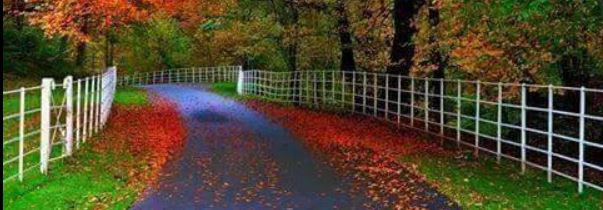
road and fences in autumnHope, Illinois, sits in the middle of the prairie east northeast of Champaign. The little settlement boasts a handful of houses and a church, and the Van Doren brothers, one of whom, Mark, made this story into a poem, but I tell it in prose as a fact.

Two farming neighbors nearly came to blows over what kind of fence should separate their properties. By law each was responsible for the right half of the fence line as they faced each other’s land. They finally stopped talking to each other after every discussion of the fence became a debate, an argument, and a trading of insults. They both agreed that a fence must be built, but they resolved their dispute in an unusual way. They each built the whole fence exactly the way each of them wanted to build it; only they built that fence a couple of feet inside their own property lines, so a no-man’s land ran the whole length of their property’s border. Neither man dared to mow or maintain the land between them, on the other side of his fence, so it grew up in weeds, shrubs, and finally trees. The strip of unkempt land harbored animals and birds that otherwise would have no shelter, but that was the only benefit of the parallel fence monument to stubbornness and a refusal to compromise.

For all of its isolation and small population Hope produced some fine, gentle, and considerate people, some of whom I have had the pleasure to know. It’s sad that it must be remembered mostly for two of its most recalcitrant members, but Hope is not alone in that, is it?

All roads going to the same place?

20 Saturday Jun 2015

Posted by chaplines2014 in Travel

≈ Leave a comment

Tags

Names and Titles

Monkeys see, hear, speak no evil, Bangra.comDriving north from Alton there are three roads. One is a picturesque road along the Illinois River. If you want to meander and enjoy spring blossoms or fall foliage Route 100 is perfect. The other two roads take you to Jacksonville eventually– Route 73 and Route 273. On various maps Route 73 is marked as 273 and vice versa, because at some point the state renamed them, but neglected to change their own maps and all of the road markers. Likewise local communities did not change all of the local signs to correspond with the renaming. The roads begin and end at Alton and Jacksonville, so what’s the difference?The low road takes 15 fewer miles to get to Jacksonville because it is relatively straight. The high road curves in a large arc to the west, passing through Jerseyville and Carrollton on the way to Jacksonville, so it adds miles to the trip, but a third of it is a four lane limited access road, so it is quicker. (It will also avoid Roodhouse, but that may not be important to you.)

The low road will not help you if your destination is Quincy. Then the curve in the high road actually puts you farther west and, combined with route 106, cuts off several miles. None of these roads is especially well-marked on either maps or signs along the way, so the confusion of road names is just an additional disadvantage for people who are first finding their way.

Especially when you are leaving Alton the choice of whether to take 73 or 273, and determining which one is which, challenges the journeyer. It’s enough to make you choose the river road, knowing at least that you will enjoy the scenery. But in order to determine the fastest way, I have taken both roads, going the opposite way than I planned the first time because my map was wrong. The next time I bought a new map at a convenience store, and it was wrong too. Then I picked up a fourth new state map, and they had finally corrected their error. The new 73 is now the high road– old 273. The new 73 is now the low road– old 73.

It makes me wonder about the saying, “We’re all going to the same place anyway, so it doesn’t matter how we get there.”  In some respects it matters, although the devil is in the details. And if you think you’re going one place and wind up in another, then it certainly might matter to you. It might even be important which roadmap you choose, since they are not all correct, at least not in all details. And it is especially disconcerting to think that you are on one road, and then to find out that you are on another, but something tells me that it is not an unusual experience. Sometimes someone has switched the roads, making a person think one is the other.

Another Stupid Thing crossed off the list

19 Friday Jun 2015

Posted by chaplines2014 in Cherokee history, Learning from mistakes

≈ Leave a comment

Tags

Books by Gary Chapman, Our Land! Our People!, The Trail of Tears

Cherokee StarThe detachment of 660 Cherokee citizens led by John Adair Bell, Jan’s 2x great uncle, crossed the Tennessee River by ferry three times in the Chattanooga region and another time in central Tennessee at Savannah. When I was first tracing the route that they followed, collecting geographic information for the book that I was writing, it was January of 2008, and the wintry weather put me and my Jeep on icy roads in east Tennessee. I had the roads to myself most of the time, and the slow journey gave me plenty of time to examine the terrain. Much of the route followed U.S. Route 64, although bridges replaced the ferry crossings. Kelly’s Ferry crossed the river about half-way between Chattanooga and Jasper, and the crossing that I intended to use on U.S. Routes 41 and 64 was Marion Memorial Bridge over the east end of Nickajack Lake, a narrow two lane metal truss bridge built in 1929 (and closed in 2012).

The bridge rose in a high arch over the river and extended 1870 feet. As I approached it, I considered the fifty mile detour that I would have to take to get to the other side, in order to resume following the Bell route, if I did not cross the bridge that day. I sat at the café near the end of the bridge and thought about it for a while. No one crossed the bridge while I watched. Probably no one had crossed it that day. I talked to the waitress about alternate routes. She assured me that she would not cross the bridge, but she lived walking distance away from the restaurant, and wouldn’t dream of going out on the roads that day anyway.

I should have taken the detour. I realized that when I was spinning my four-wheel-drive wheels up to the highest point in the arch, and then understood that, no matter whether I slid backwards or down the coming 900 feet incline, maintaining control would require the intervention of angels. I crept down the center of the bridge lanes at slower than a walking pace, praying the whole way, and with that needed intervention I reached the other side.

Driving the route in 2008 was certainly easier than driving a team of oxen and a heavily-laden wagon in a caravan seven hundred miles in the winter of 1838-39, but there were a few elements of the trip that recollected the challenges of the original one.

Just One of the Stupid Things I have done

18 Thursday Jun 2015

Posted by chaplines2014 in Cherokee history, Learning from mistakes

≈ Leave a comment

Tags

Books by Gary Chapman, Our Land! Our People!, Serendipity, The Trail of Tears

Cherokee Nation laurel and star

Charleston, Tennessee, was the site of the federal agency relating to the Cherokee Nation and Fort Cass, as the government prepared for the Cherokee Removal to the west. Since I was writing about that event, I went to investigate the geography and environment, and to discover what was left of the 1830’s era facilities. The town is small, so it is easily navigated in a few circles of about sixteen square blocks. My sources had identified a harbor that fronted Hiwassee River on the north edge; the agency building sat at the southwest corner of the harbor. I found the shallow lagoon that remains of the harbor, and a stone foundation that remains of the old agency. Across the lagoon stands the Henegar House, a fine old Victorian house with a marker in front that states that the house was originally constructed from the wood of the military barracks that had stood there.

One of the confinement stockades that housed the people of the Treaty Party supposedly stood on the hill to the east.  The hill was clearly visible above the town, but, of course, the stockade area was covered by trees and brush. Like the other stockades of the twelve or so that composed “Fort Cass,” it was probably burned as soon as it was evacuated, about five horrible months after it was supposed to be evacuated, because of delays in beginning the move west.  The dilapidated housing near the foot of the hill was the semblance of a tribute to the days when hundreds of people were confined without sanitary facilities, decent food or lodging in each of those stockades.

Down the street still stands the house that Lewis Ross built in 1820; he served as treasurer of the Cherokee Nation and brother of Chief John Ross. Like his brother, Lewis Ross prospered during that era while most of the people suffered. The original house hides within the current structure that was expanded and rebuilt many times since Ross lived there.

I decided to drive west on Cass Road, since a stockade at Mouse Creek and the Candy Creek Mission (of the American Board of Commissioners for Foreign Missions) supposedly had stood west of the Charleston settlement. I turned around at Mouse Creek, about seven miles west, which was easy to identify from the map, and stopped at the other creek I had crossed, where a large industrial complex obscured the river on the north, and a picturesque valley with a new log cabin home extended to the south. I parked at the side of the road to take some pictures.

After taking the photos, I returned to the Jeep. I had left it running, since taking pictures would be quick and easy, but I must have touched the lock button when I exited. I had locked myself out of my car while it was still running. The windows were all closed since the day was chilly. The extra key in the magnet box under the bumper must have fallen off, so the only choice left was to call AAA to come and unlock my car. My cell phone was in the seat of the car. The car wasn’t going anywhere.

I walked up the lane to the new log cabin, hoping to find someone home.  When I knocked on the door, no one answered, so I sat down on a chair nearby to decide what to do next. After a minute or so a man did come to the door, saying that he was on the phone and could not come when I knocked. What did I want?

I explained my stupid mistake and why I was in the vicinity. He seemed interested and said that he didn’t know where any of the old stockades had stood, but this was Candy Creek flowing by his house, and he had heard that there had been a school upriver that served the Cherokees. His friend owned the land where Rattlesnake Springs flowed, and, after I had made my call to reach AAA, he’d call his friend and get permission for me to visit the springs, that were south of Charleston on old Dry Valley Road. Until the AAA man arrived, we had a good visit about the area, he called his friend and made arrangements for my visit, and he gave me directions. The delay took about half an hour, and what I gained more than made up for what I lost.

Rattlesnake Springs had been a Cherokee meeting area for many generations. Its abundant water provided much of the drinking water for the stockades in that valley during the confinement. The last meeting of the people occurred there before their trek west. Although it is designated as a national landmark, and has been for several years, there has been no money to develop it, and it is still owned by the family that purchased the land after the Cherokees were forced out. I had a good visit with the owner, and we looked at the spring, and what remained of the homestead that had stood nearby .

If all of my stupid and embarrassing mistakes would have led to such discoveries, I would try to make more.

Running the Riverfront

17 Wednesday Jun 2015

Posted by chaplines2014 in Life along the River, Running

≈ Leave a comment

Tags

Mississippi River

Great River Bridge sunrise January 2015Burlington’s riverfront walkway brings those of us who use it close to the “Old Man” who dominates the Midwest. One day smooth and easy-going, the next turbulent and threatening, the Mississippi has moods enough for any temperament. The half-mile width of channel, hemmed in by the eastern levee, camouflages the real width of ten miles bank to bank, a hundred feet below the prairie plane. So those of us who associate so closely with this powerful river have a privilege that bears acknowledging.

Likewise the many people who have used this landing space and left it to us in its current shape bear some consideration. The foundations and landfills of many docks and businesses, boathouses and warehouses now lie under the grass and trees of parks and boat ramps and parking lots. A few remaining structures remind us of the energized industry required to open this frontier. But it also took much concerted action to clean up the ugly refuse and stifling crowdedness of that industry and make pleasant space for appreciating the river, not as much a mode of access as it was on the frontier, but still the primary source of the life of this region.

I try to generate some energy by running the path that winds along the riverfront, but mostly use up energy left over from earlier days. How can I or any of us add to the legacy of hundreds of thousands who have come this way in search of a fuller, better life?

We have little sense of who came here first. When Euro immigrants first saw Hawkeye Creek the burial platforms of the resident Sauk and Fox peoples lined the banks. The ravines provided shelter for winter lodges and hogans as well as plentiful springs and cover for game. One special notch in a northside cliff opened into the Council Rock natural amphitheater  held sacred by unknown generations of inhabitants. Tools left hereabout date back over ten thousand years.

There has always been a seamier side to old river towns like this. Too raw and unfinished for the control and manners of more staid and civilized communities, people ran off to Burlington with floosies and rascals. Doss houses, taverns and gambling rooms filled the niches between more respectable enterprises, and the jail was always occupied. Tawdry affairs provide plenty of fodder for “Good Old Days” reminiscences.  “Fun City” had another set of meanings in earlier days, but people did indeed come, and the latter day name recalls the earlier reputation. Today’s social problems echo those of earlier times. They are not quite buried under the lovely landscape.

Many people, headstrong and gracious, creative and opportunistic, made a way before us, cluttering or clearing the way. Some, though who knows how many, will come after. What part of building an enduring community will we play? There is always plenty to think about and pray about while running!

Our Dear Departed Sam

16 Tuesday Jun 2015

Posted by chaplines2014 in fighting fires, Learning from mistakes, Small town life

≈ Leave a comment

Tags

The Volunteer Fire and Rescue Squad

Yellowstone Pool

I had just driven home for lunch, when Jan looked out the kitchen window and commented, “Smoke is coming out of Sam’s hood.” Sam was our 1960 Ford Falcon, and the year was 1976. I had just parked Sam in the driveway behind our house.

I grabbed the multi-purpose fire extinguisher and headed for Sam. The likely embarrassment of calling the fire department for a fire in my own backyard, when I was a volunteer firefighter, kept me from making the wise decision, which would have been to call the fire department. Sure enough, smoke was pouring out when I popped the hood, and I took the risk to do it all myself, and I did succeed in putting out the fire before it did a lot of damage or spread to the nearby dry field of grass.

I was lucky. No burns on me, no explosions, no fire spreading across the field and threatening our neighbors’ houses or the farmer’s livelihood behind us. It could have been much worse, and it probably should have been, to teach me a lesson. Sam was a leaky old car that left its mark on many a clean parking pad. She had covered a lot of miles, survived a windstorm that blew a camper off a truck in front of us on the Mackinaw Straits bridge, endured mistreatment at the hands of a street gang on Chicago’s south side, and, in spite of her plain habit—no radio, no air conditioning, no accessories—she was a member of the family. I sold her to a guy who had the time and know-how to put her back on the road.

After that, I always carried a fire extinguisher in my car.

We Thought You Were Just Kidding

14 Sunday Jun 2015

Posted by chaplines2014 in Forest, Learning from mistakes, Nature, People, Travel

≈ Leave a comment

Tags

A License to Preach, events, Serendipity

3 Owls

For forty-some years I took church youth groups on trips, accompanied by several adults, of course, on short trips, long trips, and in-between trips, for service, for learning, for recreation, for fellowship. The trip that took us to the Great Smoky Mountains National Park included some of all of these purposes. We devoted four days to work on houses that needed help—painting, repairing, building a wheelchair ramp. Then we had one full day and two nights in the Smokies.

We stayed in the national park campground. I gave the usual warnings, that included not keeping food of any kind in your tent. We would even keep the food we prepared together locked in the cars, out of reach of the bears, we hoped, though we had heard stories of bears breaking into cars. I repeated those instructions several times ahead of the trip, put them in writing, repeated them before we entered the park, and in the campground before we set up tents.

Shortly after we had our tents and equipment set up, sure enough, a bear came ambling through the campground. Everyone scurried out of the way, into the cars or behind them, giving the bear plenty of room. That bear seemed intent on a mission, heading straight toward one tent, which he circled for several minutes, stopped at the front tent flap, and poked his nose through the flap into the tent. He seemed to be pondering whether he should enter it or not, whether he dared to get into trouble with the park ranger or not, whether it would be worth it or not. Finally, he withdrew from the tent and continued on his way toward the deeper woods on the other side of the campground.

I gathered the group together at that point and asked the girls, whose tent it was, what food  they had hidden inside their tent. They shyly admitted that they had candy bars stored in their knapsacks.

“Didn’t I tell you that there were bears here, they had a keen sense of smell, and they enjoyed candy best of all?”

“We thought you were just kidding,” one of them answered.

← Older posts

Subscribe

  • Entries (RSS)
  • Comments (RSS)

Archives

  • February 2022
  • May 2020
  • October 2018
  • December 2017
  • November 2017
  • October 2017
  • June 2017
  • April 2017
  • March 2017
  • February 2017
  • January 2017
  • November 2016
  • October 2016
  • September 2016
  • August 2016
  • July 2016
  • June 2016
  • May 2016
  • April 2016
  • March 2016
  • February 2016
  • January 2016
  • December 2015
  • November 2015
  • October 2015
  • September 2015
  • August 2015
  • July 2015
  • June 2015
  • May 2015
  • April 2015
  • March 2015
  • February 2015
  • January 2015
  • December 2014
  • November 2014
  • October 2014

Categories

  • beach
  • Books by Gary Chapman
  • canoeing
  • Caring
  • Cherokee history
  • Church
  • Citizenship
  • Death
  • Disabilities
  • Events
  • Faith
  • Farm
  • fighting fires
  • Forest
  • Garden
  • Growing up
  • Gullibility
  • guns
  • Health
  • Hiking
  • House
  • Innocence
  • Learning from mistakes
  • Life along the River
  • Miracles
  • Nature
  • Patience
  • People
  • Prayer
  • Racial Prejudice
  • rafting
  • Running
  • Seasons
  • Small town life
  • Suffering
  • Travel
  • Uncategorized
  • Vehicles
  • Volunteering
  • Words
  • Yard

Meta

  • Create account
  • Log in

Create a free website or blog at WordPress.com.

Privacy & Cookies: This site uses cookies. By continuing to use this website, you agree to their use.
To find out more, including how to control cookies, see here: Cookie Policy
  • Subscribe Subscribed
    • chaplinesblog
    • Join 71 other subscribers
    • Already have a WordPress.com account? Log in now.
    • chaplinesblog
    • Subscribe Subscribed
    • Sign up
    • Log in
    • Report this content
    • View site in Reader
    • Manage subscriptions
    • Collapse this bar
 

Loading Comments...