• About
  • Celebrating our decades…
  • Welcoming all and inclusiveness

chaplinesblog

~ everyday and commonplace parables

chaplinesblog

Monthly Archives: August 2015

The springs that fed the villages

30 Sunday Aug 2015

Posted by chaplines2014 in Farm, Growing up

≈ Leave a comment

Tags

Memories, Serendipity

cornfields

I was one of those boys who spent a lot of my time roaming around the farm. When I wasn’t in school or doing chores, I was usually in the woods or along (or in) the streams, or examining the earth to see what I could find. Since there was evidence of the human occupation of that land for at least 3,000 years or so, there was plenty to find. Rocks of all kinds sat in the landscape, many on the surface, especially around the streams, mostly because the land had been covered by glaciers that had deposited that variety of rocks from a vast distance.

Rocks with special shapes captured my attention. From sandstone to granite, heavy large rocks that had bowls shaped into their surface often served as grinding stones for grains and nuts that were gathered or grown. Hand-sized round rocks with grooves or indentations had a useful life as anything from hammers to shaft-sharpeners. Worked flint came in the form of knives, projectile points, and hide scrapers. Broken shards of pottery showed the workmanship that had once shaped a vessel or an ornament. Rarely did I walk across the land and not find something that had been used by someone long ago.

Where clusters of tools showed up in one place the earth itself often showed the marks of human occupation with berms of soil shaped into circles and rectangles where lodgings had once stood. These remains clustered in three areas, each where a spring still kept the soil moist through summer seasons, even though farmers had for eighty years stripped the land of trees, cultivated, and shaped grass waterways into the middle of those fields, where once those springs had bubbled to the surface.

It impressed me that where my parents, two brothers, and I lived, many hundreds of people had lived for uncounted generations, leaving their marks. Where had they all gone? For only a few years heavy machinery had plowed and prepared those fields, and large barns, cribs, and a house or two had stood, providing a livelihood for a handful of people. For hundreds of years that same land had fed, sheltered, and provided for hundreds, using only what they found there, living simply “off the land.” They had to understand a lot in order to accomplish what they did.

Modern civilization depends on a complexity of specialized and diversified tasks, with a comparatively small number of people providing food for a multitude. Living off the land now means leaving the land behind, but by doing that, we know less and less about what sustains our lives, and more and more about the tiny components of our own specializations. Where is the progress in that?

Driving Robert Mann

29 Saturday Aug 2015

Posted by chaplines2014 in Events, Growing up, People

≈ Leave a comment

Tags

Life in the City, Serendipity

Chicago skyline 1970

Returning to Chicago in the fall of 1970, after a year-long internship in Danville, Illinois, I concentrated my attention on my studies, my fellowship (which involved organizing the church-related archives of the seminary), and the immediate neighborhood of the south side. State Representative Robert Mann shocked the democratic machine by declaring his political independence and refusing machine support. They promptly selected a black candidate from the largely black district, but one who promised to be more amenable to party direction. Mann’s record was irreproachable from a liberal reformer perspective, and I decided to spend some of my “free” time volunteering for this new Independent.

We had replaced our 1960 Ford Falcon with a brand new Plymouth Valiant during my internship. When Mann’s campaign team asked for volunteer drivers, who could also provide a car, I volunteered. By that time I knew the south side streets well. I cleared a week of evenings and signed up to drive Representative Mann.

On our first evening Mann noted that their wasn’t quite as much room in the back seat of a Valiant as there was in a Checker Marathon, a first taste of his droll sense of humor. We paid a visit to a meeting of the United Steelworkers on the far south side, and Mann let me listen to a private conversation with Edward `Sadlowski (“oil can Eddie”). Sadlowski eventually led the union to a more active advocacy role during the massive layoffs and transition to overseas manufacturing during the 1980’s and 90’s. Mann, himself an attorney, reminded me that ministers must learn how to keep confidences and I should do that here. I was impressed that they were talking about a future ten to twenty years ahead of events, and how unions should try to prepare for the transition that was coming as major corporations were making plans for replacing and avoiding union contracts.

Small group gatherings in churches, civic organizations, and homes filled the next few nights. Sometimes I had to double park on the street waiting for Mann to finish and move on to the next location. When I found a convenient close parking place, I got to observe Mann’s careful handling of the issues, including facing an opponent whose racial identity matched the majority of the district, but whose political positions did not necessarily match their interests.

On Thursday evening we were driving through a Woodlawn neighborhood, not more than a mile from my apartment when a loud bang and hit to the rear of the car alarmed us both. I just kept driving. When we reached a lighted area a few blocks away, we checked and found a bullet dent in the rear panel. That evening Mann thanked me for the week of transportation, but thought he might need a heavier vehicle in the future, maybe with some bullet-proof glass.

I didn’t drive for him again, but I did vote for him, and he did win the election. Eventually he yielded his position to another independent and African-American candidate.

Too Many Teasets, Never Enough Tea

28 Friday Aug 2015

Posted by chaplines2014 in Caring, Growing up, People

≈ Leave a comment

Tags

Memories

cropped-circledance.jpg

The first tea set came from Italy, a poignant reminder from Jan’s brother Rod that he could not come to our wedding because he was serving the U S Navy on a destroyer tender in the Mediterranean that year. He thought of his sister when he shopped on shore leave, and found a white china tea set elaborately decorated with silver vines and flowers. His taste was exquisite, and the set was too pretty to use every day, so it has been prominently displayed wherever we lived, and used for special occasions.

The second tea set came from our seminary neighbors and friends; he had grown up in Thailand and India while his father had served as a missionary. The china teapot was a rich, mottled blue, and the cups small and with no handles, with the white and black figures of pussy willow branches climbing their sides—broadly Asian in inspiration—they easily served us every day and got a lot of use while we thought of ourselves as distant from the world around us but alive in our private garden.

The third tea set was plastic pink and white and a child’s plaything as our daughter went through the terrible two’s, but somehow she settled down to play with her future set before her, among her friends or by herself. The set itself hung around our house for more than two decades until it was replaced by a small, miniature, plain china set that our three granddaughters could use when they held elaborate tea parties, as they dressed to the nines while their grandparents served them as their butler and maid.

We inherited the fourth tea set when my parents died, first my mother, then my father. It came to my house with Father, when he had to leave his own farm home and come to live with us. My mother had chosen the silver tea service as they celebrated their twenty-fifth wedding anniversary, and it served many neighborhood and church group teas from then until they passed their fifty-sixth anniversary and she died unexpectedly.

Now those tea sets sit in their various places, while we enjoy our morning tea, without caffeine, steeped in cups that come from none of the tea sets, but they each have their own history, too. Each marks a special time in our lives that is fondly remembered. When we finally put them away, delivering them to someone else to use, the memories will remain with us, tucked away somewhere inside our brains. Tea and those we love.

Instead of going to the 1968 Democratic National Convention

27 Thursday Aug 2015

Posted by chaplines2014 in Growing up, Learning from mistakes, People

≈ Leave a comment

Tags

events, Memories

cropped-chicago-skyline-1970.jpgI made a life-changing choice for the end of August, 1968. When I proposed to Jan in November, 1967, my proposal was not a romantic winner, even though we went to Bloomington’s Miller Park and sat at the edge of the lake. I had almost run into a tree driving through Miller Park, so Jan knew something was on my mind. (She said later she thought I might be breaking up with her.) I ruminated with Jan about the uncertainties of the future. I had just finished several months serving a small rural town congregation, but I had no other job prospects. My own anti-war choices that had placed me in some jeopardy with the Selective Service System and some administrators of Illinois Wesleyan University, but I still resolved to continue in my plan to go to seminary and pursue a career as a minister. At that point I had nothing to offer Jan except the impoverished life of a graduate student with the possibility of a study fellowship and stipend. If the fellowship materialized, we might have a small studio apartment near the University of Chicago, but she would have to find a job to support her own needs.

Whether I could stay out of trouble was not certain, having just had my first interview with an FBI agent, concerning my work with the Students for a Democratic Society, organizing an IWU Symposium on the Vietnam War, and inviting Staughton Lynd, a vigorous opponent of the war, to the campus to speak. At first I didn’t take the veiled threats of the agent and the Dean of Students seriously, but “the times…they were a’changin’.” Who knew what the future held? I just knew my own situation had begun to appear precarious after I had returned my draft card to my local draft office. (Nothing ever came of that action. The members of the local draft board knew me, my seminary plans, and my health disqualification already. ) Would Jan want to marry me when she really considered what she might face in the early days of our marriage, or the later days for that matter?

She said ‘yes.’ Would I want to marry her when she was able to make such a foolish decision? I said ‘yes, definitely.’ We proceeded to make plans to be married toward the end of the next summer, allowing time for Jan to finish her work at the Waterloo, Iowa, YWCA, and for me to make as much money as I could during the summer, painting barns, cribs, and other farm buildings, and working at Arby’s.

Many invitations arrived to come to Chicago to join in demonstrations against the war during the Democratic National Convention. The event promised to mark a momentous turning point in our nation’s history. Our own event promised to make a momentous turning point in our personal history, and who knew how much influence upon others might follow?

We arrived at our apartment in Chicago just a couple of days after the convention and the demonstrations concluded their tormented run.

The Different Dogs of Chicago Politics

22 Saturday Aug 2015

Posted by chaplines2014 in Caring, Church, Faith, People

≈ Leave a comment

Tags

A License to Preach, Community Development, Life in the City, Urban Renewal

Chicago skyline 1970Dick Simpson, a political science professor at University of Illinois Circle Campus in Chicago, called Chicago “the most corrupt city in the country, and Illinois the third most corrupt state” in a February 2012 report for the Chicago Journal. “The truth is that the governor’s mansion and the city council chambers have a far worse crime rate than the worst ghetto in Chicago.” http://chicagoist.com/2012/02/17/dick_simpson_study_says_chicago_is.php

I met Professor Simpson in January of 1969, when he was instrumental in organizing the Independent Precinct Organization, and I was a student at Chicago Theological Seminary. The seminary encouraged students to get involved in churches , community and political organizations, and to engage in cycles of action and reflection (theological and ethical) with other students. I had worked, successively but not successfully, with the Eugene McCarthy and the Hubert Humphrey campaigns in 1968. The Chicago democratic machine held no attraction for me, but independent community-based politics was a different matter. Many local churches were involved in our own 5th Ward and in the 43rd Ward on Chicago’s North side, and it was easy to volunteer.

The first campaign for the IPO backed Bill Singer for Chicago Alderman for the 43rd Ward against the democratic machine. Singer had been a protege of Senator Paul Douglas and a friend of 5th Ward Alderman Leon Despres. I admired both of them, so I signed up to help with the Singer campaign, door to door canvassing and poll watching. Against odds, Singer was successful. The most inspiration, however, came from Dick Simpson, and his encouragement of young people and community residents to take part in the political process, in spite of the cynicism and despair that had gripped most reform efforts during those years. When other organizations gave up (the University Christian Movement among them), and others went underground (Students for a Democratic Society), the IPO offered hope to those of us who were inclined to believe that change would eventually come if we just kept working, even if it was only on a small local scale. Where else would it begin?

Change came, and it didn’t. Dick Simpson ran for alderman and joined the City Council for several years. Other independent candidates for mayor succeeded after Mayor Richard J. Daley’s death, and positive results followed, but corruption has continued to dog Chicago and Illinois politics. I and many others can take inspiration from the dogged determination of people like Dick Simpson, who are still involved and working.

Growing Catnip

22 Saturday Aug 2015

Posted by chaplines2014 in Church, Faith, Garden, Yard

≈ 1 Comment

Tags

A License to Preach, Serendipity

park bench in spring

Catnip is one of those weeds that I enjoy having around. I planted some in my herb harden. At former homes in Paxton and Minonk, catnip grew all over the place, and I pulled it out except where I wanted it to grow. Once before, when I lived at Tilton, and tried to grow catnip, the same thing happened. It got a good start and was growing beautifully. One morning I looked out and it had disappeared. In its place was a well-satisfied tabby, new to the neighborhood. She had eaten every particle of the catnip.

Some things are just too good to pass up. Some things attract would-be connoisseurs from a distance. I have dreamt about being that kind of preacher and leading the kind of congregation that would be one of those attractive entities. Some characteristics of ours would simply attract without our having to do the work of listening, relating, interpreting, and living out the faith. Like catnip.

In the real world we must sow seeds with such abandon and in such abundance that there will be plenty to take hold, survive, and grow regardless of who shows up to take voracious advantage of the crop. We cannot hope to grow it in one small space and have it flourish.

I know I could have catnip if I fenced it in, protected it, and really tried to preserve it from contact with the cats who really seemed to need it. Instead I have decided that catnip does better as a weed growing all over the place than as a protected herb, confined to one small garden spot. Even so, most things faithful.

Lake Michigan dunes reverie

21 Friday Aug 2015

Posted by chaplines2014 in beach, Nature

≈ Leave a comment

Tags

Memories, Serendipity

lakeshore

The forecast called for rain for most of the six days we stayed in the Michiana dunes along the southeast shore of Lake Michigan, but rain only fell during the first night, and the next morning dawned fresh and breezy. When we arrived on the shore that first morning the waves that greeted us the previous afternoon continued to crash against the shore loudly and strongly, enough for some body surfing for those not minding the chill. Every day afterward the wind slowed, the waves calmed, the water warmed, the sky cleared, until the last two days provided a lake so still that the lapping against the shore made barely a whisper. The temperatures every day were warm enough for a first week in August not to need a shirt or wrap, and cool enough in the reflected sunrays against the white sand never to feel oppressively hot. Out of twenty-five years of spending a week or two on the dune area beaches, I do not remember such a stretch of opportunities for beachcombing, resting, reading, swimming, sunbathing, or anything else we were prepared to do in or near the water.

Not a trace of alewives showed up on the beach, which in the early years of our visits met us in smelly die-off by the thousands. They hadn’t invaded the Great Lakes until the St. Lawrence Seaway made their incursion from the Atlantic possible in the 1950’s, when I paid my first visit, but the lake trout had also disappeared through over-fishing, so the alewives didn’t have any predators until Coho and Chinook salmon were brought into Lake Michigan. As those game fish became established, the alewife die-off slowly subsided, and the beaches depended on the cleanliness of their human occupants. Apart from an occasional piece of trash arriving with the waves, the Michiana shores were clean, and the users kept them so. An active storm season had left evidence along the tide zone, where a strip of heavier rocks interrupted the smooth sand of the beach. That rocky border, from two to ten feet wide, made the approach to the water a little painful for those of us with tender feet. We either walked gingerly through that zone, or we wore our sandals and beach slippers into the water. Either way the journey was worth it, as the lake water became unusually clear and warm during those days.

Even in such mild weather, every day proved different for those of us living on the beach. From noisy to nearly silent, from heavy waves to barely a ripple, from cloudy to clear skies, from cold water to warm, each day brought its variations. Never was it easy to leave the beach on the last day of our scheduled time. This year brought no difference at all in that respect.

Persistent Welcomers

19 Wednesday Aug 2015

Posted by chaplines2014 in Farm, Growing up, House, Seasons

≈ Leave a comment

Tags

A License to Preach, Memories, Serendipity

Burlington house in fall

They welcomed us in great numbers when we arrived in August, 1988. Throughout the fall they kept coming, sometimes pestering us to the point that we wondered whether we would ever be rid of their nuisance. Even in January they kept moving, popping up at odd times and places, such as on my collar during a children’s sermon at a Sunday morning service. If I had been quick-witted, I would have turned that moment into an object lesson on persistence. When winter came in its fullness of ice and snow, they still persisted, although I saw only one every day or so. Boxelder bugs.

As a child I became acquainted with them. They were more numerous and lasted longer than lightning bugs, so when it was no longer possible to collect the more illuminating lightning bugs, I turned my acquisitive attention to boxelders, seemingly harmless, and only slightly stinky, but certainly persistent and ubiquitous. The worst weather in heat and dryness brought out the best in them, but they made themselves known even in cold and icy times in the warm comfort of the house. In Burlington the bugs had occupied the soft maple trees that grew along the berm immediately north of our house. On the farm they had occupied the namesake boxelder trees that grew along the river bank not far from the house. In both cases they moved inside when they decided the conditions were better there. For whatever reason the bugs left our Burlington house the next spring and have never returned.

I want such long-lasting determination, such unexpected perseverance, for my faith. When I am caught in mundane, day-to-day tasks that seem to drag on endlessly, I need the unexpected reappearances of joy and surprise that persist in spite of all I do to suppress them or tame them or forget about them. When I am overcome by the scale of problems that seem insurmountable, I need the confident will to see a victory that gives meaning to my feeble and uncertain movements. Sometimes such faith does appear in solitary heroic figures battling all odds. Sometimes such faith comes in masses of individuals filling every corner and space with their relentless march of life conquering death. Even such lowly creatures as the boxelder bug encourage us by the nuisance of their example.

You have to be “on the inside”

18 Tuesday Aug 2015

Posted by chaplines2014 in Caring, Church, House, Learning from mistakes

≈ Leave a comment

Tags

A License to Preach, Serendipity

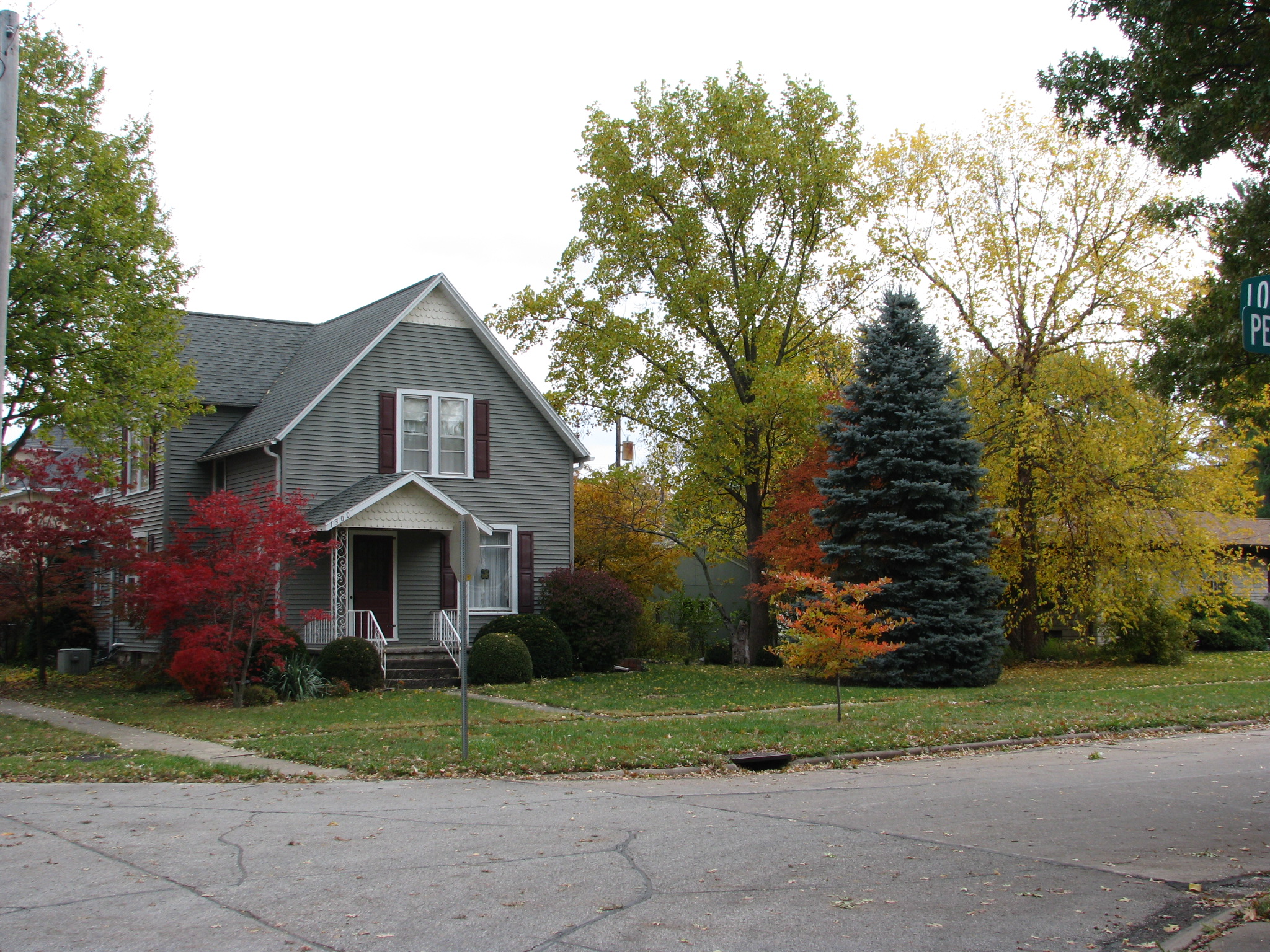
Burlington house in fall

We moved into our old house in Burlington in August of 1988, twenty-seven years ago. Friends helped us to move from Minonk, Illinois, and we sat together on folding picnic chairs on the back porch and had lunch. They noticed that there was a doorbell on the back porch, just outside the kitchen. It worked well, making a “dong” sound, and when the front doorbell sounded it made a “ding-dong” sound.

The doorbell location presented a problem. You had to go through the rear door of the house to get to the doorbell. By the time you made it to the kitchen door, you were already inside the house, and since the kitchen was usually the center of activity in the house, most of the time you could just say hello to anyone who was working or sitting around the kitchen table. You wouldn’t need to use the doorbell.

Like many old farmhouses, most people who know us come to the back door anyway, but the fact is that, unlike when we lived in the country, we usually lock the back door, so getting to the doorbell presented a challenge. You would have to knock on the door in order to get us to let you in so that you could press the doorbell.

Many years ago the back porch was really an open porch. There was no door because there were no walls. The kitchen door was the back door. Sometime in the 1960’s, the Nelsons hired a young Jim Wilson to enclose the back porch, build walls, and put in a row of casement windows to make a three season unheated room. (We liked it so much that we added insulation and a heating vent and made it into an all-season room.) But no one bothered to move the doorbell.

Maybe the previous residents were so friendly that people could just open the door and walk in. Ideally we would like to live that way, but we tend to live a bit more privately, even though the large windows on all sides of the house make it a see-through first floor when the curtains are pulled to the side.

We don’t always make it easy for people to get inside. With the door locked, you had to raise a ruckus to get our attention. It would be a lot more welcoming to place a doorbell in a convenient location, so that is what I did, among one of the top items on my “to do” list.

We don’t always make it easy for people to get inside other things either, but hospitality means making the changes that make it easier to get in.

Loads in Need of Redistribution

17 Monday Aug 2015

Posted by chaplines2014 in Caring, House, Learning from mistakes

≈ Leave a comment

Tags

A License to Preach, Serendipity

Burlington house in fall

My house in Burlington is now 115 years old, but I installed a new 200 amp circuit box several years ago, and the panel of circuit breakers was impressive—23 circuits with room for 28. Only one circuit kept blowing, and when it blew just about everything went with it. The television, the dishwasher, the electric heater, lights and outlets all over the place—all went out. Since something was amiss, I put on my electrician’s sleuthing hat.

The air conditioner, refrigerator, freezer, furnace, clothes dryer, electric range, hot tub, and the clothes washing machine each had its own own circuit. They were dedicated circuits serving major appliances and ones that had enough of a load to justify their single purpose and that was appropriate. They kept doing their own jobs even when the other circuit blew. That totaled eight dedicated workhouse circuits—four of which were double or 220 circuits, so those and the one that blew accounted for thirteen spaces in the box. What about the other ten?

One took care of the outlets and lights in three rooms upstairs. We didn’t use them a lot, but there were times when the whole family came to visit, and then they got put to use. They were there, ready to serve, even when the rest of the house shut down. Then there was one circuit serving one outlet in the half-bath downstairs, and one serving an outlet in the kitchen corner, and another serving another outlet behind the antique Hoosier in the kitchen, and another serving one outlet in a corner of the basement. They seldom served any purpose, so it was plain that they were far from being overloaded. They were seriously underloaded. There was one serving a small fluorescent light fixture above the kitchen sink, which explained why it continued to shine when everything else went dark, but in spite of its perpetual and faithful shining, it was definitely an underused circuit. There were two circuits available for the garage, which took a few years to put into service. Then there was one that went upstairs to the master bedroom where a window air conditioner used to sit. Every one of these circuits was added when someone wanted to add one more light or outlet or appliance to the house. The tenth one served the lights, ventilating fan, and outlets in a new addition that was added several years ago.

Yes, something was amiss when over half of the available circuits were completely idle most of the time, and when one—obviously the original house circuit—was trying to carry too much of the load. I had to spread the load around so that the underused circuits could carry their share, before the breakdown of the one circuit led to more disastrous results.

It made me wonder how much of the power distribution in the organizations and churches in which I have taken part resembled my old house. Perhaps some load redistribution has been in order in other places too?

← Older posts

Subscribe

  • Entries (RSS)
  • Comments (RSS)

Archives

  • February 2022
  • May 2020
  • October 2018
  • December 2017
  • November 2017
  • October 2017
  • June 2017
  • April 2017
  • March 2017
  • February 2017
  • January 2017
  • November 2016
  • October 2016
  • September 2016
  • August 2016
  • July 2016
  • June 2016
  • May 2016
  • April 2016
  • March 2016
  • February 2016
  • January 2016
  • December 2015
  • November 2015
  • October 2015
  • September 2015
  • August 2015
  • July 2015
  • June 2015
  • May 2015
  • April 2015
  • March 2015
  • February 2015
  • January 2015
  • December 2014
  • November 2014
  • October 2014

Categories

  • beach
  • Books by Gary Chapman
  • canoeing
  • Caring
  • Cherokee history
  • Church
  • Citizenship
  • Death
  • Disabilities
  • Events
  • Faith
  • Farm
  • fighting fires
  • Forest
  • Garden
  • Growing up
  • Gullibility
  • guns
  • Health
  • Hiking
  • House
  • Innocence
  • Learning from mistakes
  • Life along the River
  • Miracles
  • Nature
  • Patience
  • People
  • Prayer
  • Racial Prejudice
  • rafting
  • Running
  • Seasons
  • Small town life
  • Suffering
  • Travel
  • Uncategorized
  • Vehicles
  • Volunteering
  • Words
  • Yard

Meta

  • Create account
  • Log in

Create a free website or blog at WordPress.com.

Privacy & Cookies: This site uses cookies. By continuing to use this website, you agree to their use.
To find out more, including how to control cookies, see here: Cookie Policy
  • Subscribe Subscribed
    • chaplinesblog
    • Join 71 other subscribers
    • Already have a WordPress.com account? Log in now.
    • chaplinesblog
    • Subscribe Subscribed
    • Sign up
    • Log in
    • Report this content
    • View site in Reader
    • Manage subscriptions
    • Collapse this bar
 

Loading Comments...