• About
  • Celebrating our decades…
  • Welcoming all and inclusiveness

chaplinesblog

~ everyday and commonplace parables

chaplinesblog

Monthly Archives: January 2016

Heat Pump Heaven

27 Wednesday Jan 2016

Posted by chaplines2014 in House, Learning from mistakes, Seasons

≈ Leave a comment

Tags

events

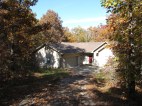
IMG_2080.JPG

We appreciate our heat pumps. The theory behind them is irreproachable—reverse refrigeration—taking heat from the outside and putting it inside in winter, and taking heat from the inside and putting it outside in summer. A local company installed our main floor unit fifteen years ago and the lower level unit fourteen years ago and then promptly went bankrupt. We found a good serviceman to keep the units in repair, after lightning did some damage to the upper unit’s electronic components. Although the manufacturer was a reputable company, he reported that it contained several outdated parts. He kept it going for us nonetheless. The lower unit, on the hand, has never given us a bit of trouble. It keeps plugging along, passing every inspection.  Finally, a year ago in the fall, when the upper unit fan and compressor warned that they did not want to survive another winter, we decided to find a replacement.

We examined several alternatives and finally narrowed the search to another major manufacturer. A Trane would replace a Carrier. It sounded like a very good system, but when it was installed it did indeed sound like a train. The blower, starting out as barely a whisper, built up the wind pressure of a gale in a Midwestern thunderstorm, pillowing the vinyl flooring in the bathroom and kitchen. A few days later we recalled the installer, who adjusted it to a moderate wind, saying that it had been set for Florida, instead of an Arkansas setting. Florida homes require such a tempest because of their high humidity. I accepted the explanation. The Arkansas setting provided a tolerable breeze, and the flooring stayed where it belonged.

We finally got the missing panel delivered for the air handler, which somehow had gotten lost in New Orleans, and the programmable thermostat that had been promised finally replaced the temporary manual adjustment model. By that time, our winter stay concluded, and the need for neither heat nor cool was evident in the mild spring, summer, and early fall visits that followed.

Our November stay provided the first serious test of our new system since February as the outside temperature fell to freezing, and we let the thermostat kick into action. Very little happened. The blower provided markedly less sound than it had, and the heat, drifting out of the vents, was warm enough, but lacked motivation. When I checked the crawl space where the air handler is located, I found the problem. The return air vent, stressed by the new fan pressure, had collapsed, flatter than a proverbial pancake. Not much air was going to get through that vent, which had severed its connection to the rest of the house.

We called back to the installer who was very quick to come and replace the return air vent with a solid metal vent wrapped with thick insulation. They took no responsibility for the collapse of the earlier system, which probably would not have held up in either Arkansas or Florida, so another investment was needed on my part, making this the equal to earlier estimates for a geothermal replacement, much to my chagrin, although who knows what unforeseen costs would have come with that installation?

Now, comfortably ensconced in our Ozark home with a balmy 72 degrees inside while the wind blows at 25 mph in the 25 degree temperature outside, all is right with the world.


The Doors Came Home

25 Monday Jan 2016

Posted by chaplines2014 in Church, House, People, Small town life

≈ Leave a comment

Tags

Memories, Synchronicity

Burlington house in fall

Our 1899 eclectic house was not built for the preference for open floor plans, but some former occupants decided that the next best thing was to remove as many doors as they could. The large pocket doors between the two living rooms disappeared, as did the door between the front hall and the dining room, and the swinging door between the dining room and the kitchen, and the upstairs doors between the central sitting room and the front and rear hallways. Air flowed freely between all of the rooms, especially the cold winds of winter, and with the large loosely-double-hung windows on every side of the house, winter wind did not stay outside.

Between the front hall and the middle bedroom, not only did the door disappear, but the doorway did, too, giving access to that bedroom only through the sitting room, which could no longer double as a private bedroom for guests or anyone else.

Finding the alternative of removing walls and creating a modern openness too costly—the apparent solution for every remodeling show now on House TV, which had not yet appeared in 1988—the solution seemed to be replacing doors (and doorway). Restoration stores and preservation stations with old building parts had not appeared yet either, so I went begging.

Church members came to the rescue.  Dean Moberg mentioned that he had a set of big pocket doors stored in the rafters of his garage. A former owner of his 1900-era house had removed not only the doors, but the entire wall between his dining room and living room, giving them a nice open space.  That was another option, but the structure of my house still needed those walls. They were dirty and ugly, but the right size. Thank you, Dean! They cleaned up well, and I do enjoy refinishing. The doors required a new set of rollers to work on the track that still existed, but a renovation specialist helped assemble those.

Jim Ritters had four doors and a quantity of old woodwork in the attic of his house, which also matched our house for age and woodwork. He just about had to tear out a window to get them out of his attic, but they cleaned up so well that they didn’t need refinishing. The small wall that filled the old doorway came out easily, and the woodwork helped to shape an opening that matched the rest of the house. Thank you, Jim!

Work on insulation and tightening windows came later, but our comfort and enjoyment of “This Old House” increased enormously. It’s good to be able to count on the help and generosity of church people when you need them.

The Church between the police and the hood

23 Saturday Jan 2016

Posted by chaplines2014 in Caring, Church, Faith, guns, Learning from mistakes

≈ Leave a comment

Tags

Life in the City, Memories

 cropped-chicago-skyline-1970.jpg

We smelled smoke as soon as we entered the church. It was the fall of 1968, and the fourth Sunday that we went to worship at First Presbyterian Church of Chicago, located in the middle of the south side community of Woodlawn, a few blocks from our apartment. The usher said that someone had firebombed the church office, and many of the records had been removed before the fire, so it was clearly an effort to cover the theft of the records; more than likely it was the Red Squad, a unit of the Chicago Police Department. Fortunately, the fire had been reported and firemen had arrived to put out the fire before a lot of damage occurred.

The Chicago Police had entered the church a few months before and confiscated the weapons that the church had collected from members of the area gang that had taken the name “BlackPStone Nation” as part of an agreement to trade weapons for jobs and opportunities. The “P” in their name supposedly meant “Peace,” but not everyone was persuaded of their intent. The church had objected to the way the police had acted, but not the idea of removing weapons, because that was their plan all along, and they hadn’t decided what how they were going to eliminate the weapons in their possession.

Whatever the church had tried in order to create peace in the neighborhood and that necessarily involved working with the neighborhood gangs, had come under suspicion by the police and some of the political leaders of the city, although other leaders had encouraged their efforts; the church and its pastor, John Fry, kept trying. If the gang leaders ever had good intentions, in cooperating with the jobs and opportunities programs, some of which were funded through the federal government, they eventually gave up when the church came under relentless criticism and was subjected to warrantless searches and fire-bombings.

So we worshipped, prayed for peace in the neighborhood and jobs for the young people, and listened to amazing and prophetic preaching from Pastor Fry. Fry published some books about the issues, notably, Fire and Blackstone, testified before a Congressional Committee, and lectured around the country on efforts to work with one’s neighborhood.

Months later Jan got a job as interviewer with the Illinois State Employment Service on 63rd Street, and she tried for a year to combat the hurdles of inadequate resources, job discrimination, and miles to go within the city environment for people to get to job interviews, much less to land a job that paid enough to keep making the trip. By that time, I was working on projects that took us to other churches within the city. Pastor Fry moved on. Efforts to establish peaceful work and education programs for the young adults of the South Side largely fell apart. Gang leaders and many of its members eventually landed in a cycle of prison, release, and more prison, until they either died or retired. Last time I checked, First Presbyterian was still there, smaller and older, trying to serve the neighborhood, gangs are still operating in the neighborhood, and politicians still are covering their….

Becoming a Draft Counselor

18 Monday Jan 2016

Posted by chaplines2014 in Citizenship, Events, Faith, Growing up, Learning from mistakes

≈ Leave a comment

Tags

Books by Gary Chapman, Memories, Out of My Hands, The River Flows Both Ways, Vietnam and Cambodia

Chicago skyline 1970

I was almost finished with applications for conscientious objector status when a physician informed me that the question had no personal significance since I would not pass the physical examination anyway, even if I wanted to serve in a non-combatant role. Since I was opposed to the U.S. involvement in the war in Vietnam, I looked for other constructive ways to be involved. In the fall of 1968, as we took up residence in Chicago and I continued graduate studies for ministry, I entered the American Friends Service Committee training for draft counselors.

Having training in law would have been an advantage in dealing with the selective service system and legal precedents in the cases that we studied, in order to give helpful information to people who came with concerns, both draft-eligible men and their families. Having more experience in counseling also would have been useful, but some of that came with the counselees as they presented their questions. Motivations and concerns varied greatly, and responding equitably and sympathetically to people who held different beliefs and values was challenging. Enough trained people participated as counselors that it was not overly demanding for each of us who entered the volunteer AFSC network, and that was important as I tried to balance all of the requirements of study, work, service to others, and being a new husband. It could have been much harder, and I still would not have faced a fraction of the hardships that several of my friends and family, and especially my family-members-to-be, were facing in Vietnam.

Those who came with questions included people who were conscientious objectors, people who were simply draft avoiders, people who wanted to help others in their family or friendship circles who were having trouble dealing with the variety in draft boards and their practices, people who were in the military service but unwilling to fight in Indochina, people who were already in trouble one way or another, and those who were interested in all the options that were available before they committed themselves. We all had a lot at stake, and, although I was glad that an all-volunteer force replaced the selective service system, finding ways to serve our country as good citizens was in front of all of us in ways that have not been matched afterward.

Serving our country as citizens remains a universal duty, but being willing to kill people who differ with us in perspective, who are not threatening us, as persons or as a nation, in any direct or meaningful way, is not justifiable. Often personal judgment must be set aside, but too often conscience has been set aside as well, in responding to the orders that come from a chain of command.

We are now in the gap between the Vietnam War’s foggy beginnings and ignominious ending fifty years ago. I still puzzle about how to honor those who served their country as soldiers and those who served their country as resistors, then and now. The phrases “serving our country” and “defending our freedoms” pass easily off the lips of many people. The reality is much more complicated and difficult.

The Youth Trip of a Lifetime

14 Thursday Jan 2016

Posted by chaplines2014 in Church, Citizenship, Events, Faith, Growing up, People, Travel

≈ Leave a comment

Tags

Memories, Serendipity

cropped-great-river-bridge-sunrise-january-2015.jpg

Last night I dreamed about a youth trip that didn’t turn out so well, but often I think about the scores of trips that I led (with the assistance of many helpers!!) that went better than I had any right to expect, and the first trip (led by others when I was seventeen) that set the stage for all of the rest. It was 1963, and a couple of Methodist minsters had a brainstorm that the Central Illinois Conference would send a bus-full of high school juniors and seniors to New York City and Washington, D.C., in January of 1964, to experience a seminar on religion and current events.  With their plan, they were braver than I ever became, but I was privileged to be on the bus. This was entirely due to the benevolence of my pastor at the time, Rev. Glen Sims, and a generous older member of my congregation at Paxton Methodist Church, Gladys White.  All of my expenses were paid.

Many of the teenagers on board that week knew each other from camps and youth fellowships, but we all got to know each other, and at least one became a friend for life. The bus travelled all day and night, and those couples who knew each other found not-so-quiet corners of the bus to expose their raging hormones during the long dark hours, but that was not me (or the aforementioned friend). I just noted the consternation of some of the adults who didn’t foresee this aspect of packing so many teens so closely together for so many hours.

We arrived in New York in time to attend worship and the site chosen was Marble Collegiate Church where Norman Vincent Peale was continuing to share his “power of positive thinking.” Peale’s center-stage style and the white-gloved, tuxedoed ushers made an impression.  There, too, some of the adults had preferences in other directions that were fulfilled when we visited Riverside Church and the Interchurch Center, headquarters at the time of the National Council of Churches and several denominational offices, and a Methodist Church in Manhattan that sponsored many outreach services to needy people.

The next two days saw us spending time at the United Nations and the Church Center for the United Nations, where we heard presentations and engaged in discussions about current affairs involving church interests, especially the Conventions on Human Rights that were in the process of development. We stayed in small crowded rooms in a hotel just off Broadway, and we must have eaten somewhere, but, surprisingly for me and my appetite, I do not remember any food. I do remember our exposure to Charles Wells, a Pennsylvania Quaker who posted a newsletter to which I promptly subscribed until he retired years later and my subscription transferred to his compatriot , I. F. Stone.

We again boarded the bus for the shorter trip to Washington, D.C., where our itinerary took us on a tour of the White House and several sights—the Lincoln Memorial, of course—and we listened to church lobbyists at the Methodist center across the street from both Capitol and the Supreme Court. Desegregation, plans for the war on poverty under the new president, Lyndon Johnson, and international affairs in the Cold War were high on the agenda. We went across the street for a meaningful discussion with Illinois Senator Paul Douglass, who supported the U.N. Conventions, but did not see a path for their early approval, and another but less meaningful meeting with Senator Everett Dirksen, whose memorable words focused on his sympathy for us being there in winter and missing the cherry blossoms in bloom. The Soviet Embassy provided an interesting stop, and I was impressed with the many publications in English and the ambassador’s efforts to impress us with how friendly and progressive Russians could be. In the light snow of a gray afternoon, we visited Arlington Cemetery, the Tomb of the Unknown Soldiers, and freshly turned earth and eternal flame of President John F. Kennedy, whose efforts I had just begun to appreciate when he was assassinated.

I did not realize at the time how much of my world shifted during that week, how much larger it became, how many of my thoughts about church, state, national and international concerns began. We talked for a while as the bus turned toward Illinois, but mostly we slept. We were very tired.

[C1]

Mumps the Second Time Around

09 Saturday Jan 2016

Posted by chaplines2014 in Growing up, Learning from mistakes

≈ Leave a comment

Tags

Memories

Bridge in Autumn

We had lived in the Paxton area for several months but had not yet established a family doctor. Doctor Hilgenberg at Tolono, Illinois, had served our growing family for twelve years before we moved to Paxton. He had delivered two babies, David and me, and seen my family through a multitude of young adult and childhood illnesses, but we needed a doctor close to our new home. Our neighbors recommended Dr. Peterson, who had earned their loyalty through many years of sacrificial service.

I had been ill for a several days with an increasingly severe sore throat. Dad and I climbed the long dark stairway to Dr. Peterson’s office on the second floor of a downtown business—he carried me the last half of the stairs. We entered a crowded waiting room and sat for what seemed like an eternity to my seven year old internal clock. Finally the nurse called us into the doctor’s examining room, and Dr. Peterson gave his diagnosis. It was a simple case of the mumps.

“He’s already had the mumps,” my father answered. He had them a year ago when his brother did.”

Dr. Peterson was not perturbed. “He has them again. It happens sometimes.”

We went home and resumed the waiting for the mumps to take their course. As the days wore on, the fever increased, as did the swelling and pain, not only of my throat, but in my chest and in the joints in arms and legs. Mom and Dad became more anxious as I became sicker, and they decided to try the new clinic that had just opened with some physicians new to the community.

Dr. Noble was not well-known, as Dr. Peterson had been, and he was exceptionally sober and reserved. “Not mumps.”  I recall that he mentioned two more words—penicillin and hospital, which led to a conversation about how to care for me at home and come in for a shot and exam every day for the next as yet undetermined number of days.

That is how I began second grade, at home, making regular trips to the clinic for shots in my sore butt, and doing homework assignments while lying on the couch, with occasional drawings and letters from my classmates that my teacher, Mrs. White, included with the assignments  sent home with Mom. As I gradually began to feel better, it was a treat to receive the attention of classmates from a distance. I was ready some weeks later to go back to school, but I soon learned that I was behind everyone else in my class and had some catching up to do. When reading aloud I was the slowest and far from the smoothest.

Dr. Noble listened to my heart everyday and told me that I had developed  a murmur, but it wasn’t too bad. From that point on I could always feel my own heartbeat and assumed that everyone else could, too.  

Subscribe

  • Entries (RSS)
  • Comments (RSS)

Archives

  • February 2022
  • May 2020
  • October 2018
  • December 2017
  • November 2017
  • October 2017
  • June 2017
  • April 2017
  • March 2017
  • February 2017
  • January 2017
  • November 2016
  • October 2016
  • September 2016
  • August 2016
  • July 2016
  • June 2016
  • May 2016
  • April 2016
  • March 2016
  • February 2016
  • January 2016
  • December 2015
  • November 2015
  • October 2015
  • September 2015
  • August 2015
  • July 2015
  • June 2015
  • May 2015
  • April 2015
  • March 2015
  • February 2015
  • January 2015
  • December 2014
  • November 2014
  • October 2014

Categories

  • beach
  • Books by Gary Chapman
  • canoeing
  • Caring
  • Cherokee history
  • Church
  • Citizenship
  • Death
  • Disabilities
  • Events
  • Faith
  • Farm
  • fighting fires
  • Forest
  • Garden
  • Growing up
  • Gullibility
  • guns
  • Health
  • Hiking
  • House
  • Innocence
  • Learning from mistakes
  • Life along the River
  • Miracles
  • Nature
  • Patience
  • People
  • Prayer
  • Racial Prejudice
  • rafting
  • Running
  • Seasons
  • Small town life
  • Suffering
  • Travel
  • Uncategorized
  • Vehicles
  • Volunteering
  • Words
  • Yard

Meta

  • Create account
  • Log in

Create a free website or blog at WordPress.com.

Privacy & Cookies: This site uses cookies. By continuing to use this website, you agree to their use.
To find out more, including how to control cookies, see here: Cookie Policy
  • Subscribe Subscribed
    • chaplinesblog
    • Join 71 other subscribers
    • Already have a WordPress.com account? Log in now.
    • chaplinesblog
    • Subscribe Subscribed
    • Sign up
    • Log in
    • Report this content
    • View site in Reader
    • Manage subscriptions
    • Collapse this bar
 

Loading Comments...