
 “Something there is that doesn’t love a wall, that wants it down.”
Robert Frost penned those lines in his meditation on neighboring titled “Mending Wall.” The poem seems to contradict itself with its other famous line, “Good fences make good neighbors.”
Burlington is busily building a new wall out of steel and concrete, a floodwall protecting us from our source as a community and a periodic threat to our central downtown as well, the Mississippi River. We may wonder how long this new wall will serve its purpose. Will it be high enough, strong enough, good enough? The designers promise that it will not hide us from the beauty of the river, and we are waiting to see.
Many of the old walls have fallen in the last thirty years. They were mostly walls of limestone, placed carefully without mortar in many cases, and gravity has gradually taken its toll. The limestone, so prevalent and so full of Burlington’s famous crinoid fossils, has been an abundant resource for wall construction. Walls served the purpose of confining the chickens, horses, and hogs, or they simply helped to clean up lots that were covered with limestone.
In June, 1992, Zion’s High School youth tackled the project of removing one such wall. The old limestone wall fronting Zion’s parking lot had shown a determination to change its position. Zion’s section was moving to the west, an inch or two a year, while next door Victoria Apartments’ section was moving to the east. Two major cracks exposed the conflict. The young people speeded up the process, adding their brawn. We fantasized the possibility of circling the wall seven times and blowing a trumpet, especially when considering the four 300-pound stones that topped the eight-foot high wall. In the end a more direct and tiring approach pulled those heavy stones down with ropes from a safe distance. It was tug of war with us on one side, the wall on the other, putting up a good fight.
After that Mathew Johnson sat atop the middle section attacking with a heavy hammer and chisel. Most of the stones needed just a nudge, for a hundred years reduced the original mortar to powder. He soon found another force at work as a million angry ants made his seat untenable. They were not happy with any of us who were destroying their dry and happy home. We further meditated on upsetting the biosystem that the wall represented, pausing often to shake the tiny defenders off our clothing, but we continued our assault. One by one we carted the stones away, loading a pickup truck several times, leaving only the foundation for another day, and leaving the northern section on our neighbor’s property to go its own way.
We admit that we did not like that wall. It had stopped serving whatever purpose it originally had. Over decades people had made many efforts to keep it intact and oppose its own desire to obey the laws of gravity. A layer of concrete smoothed over the outside of the rock, so it did not have the charm of the rear wall of the parking lot with its vines and decrepitude.
After we thought about that day of practicing our faith, we named and recognized other walls that remain in our lives. Walls without purpose are leftover from earlier ages, without honor or beauty, with defenders aplenty, but they too will succumb to the laws of nature and spirit. We have seen some of those walls fall as easily as Jericho’s, but we cannot expect to walk around all of those walls and find the same result. Some require more concerted and strenuous efforts. Sledgehammer anyone?
Walls Go Up and Walls Come Down
21 Tuesday Nov 2017
Posted in Church, Faith, Life along the River, Nature, Volunteering, Yard
 A six-year old boy put his name in the box for a drawing at the Grab-It-Here grocery store in Paxton. The prize he was hoping for was the shiny new Schwinn bicycle in the store window. Other prizes were on display, but the bike was the one that had his full attention. A couple of weeks later he learned that his name was drawn. He was a lucky winner, but not the winner of a bicycle. He won a stuffed clown, about half as big as he was. His mother brought it home, and he kept it for many years, since it was and remained the only thing he was lucky enough to win. Some luck, he thought.
 The church youth group was on its way from Burlington, Iowa, to Colorado for some camping, rafting, horseback riding, and other mountain-loving activities cherished by flatlanders. We stopped to camp on our first night at Milford State Park in central Kansas and set up on a gentle slope overlooking the lake. During the night a five-inch deluge left our campground looking like stacks of cast-off clothing after a flood. One of our teenage campers was heard saying, “If I had a bus ticket I’d be on my way home now.” Old hands at camping, of which we had only a few, said, “There, there, now, in a day or two, when we’ve had a chance to dry out, everything will look brighter.”
 Several years ago on a lovely summer evening several of us sat on the wooded banks of the New River in West Virginia, relaxing and enjoying the quiet after the first of our planned two days of rafting. During that day we had floated a relatively smooth portion of the river. We had visited some of the ruins of the old riverside mining towns that played a part in the struggle between management and miners in the formative days of the unions that finally succeeded in improving the conditions that workers and their families faced. The rafting outfitters had prepared for us a delicious steak dinner on their portable grills, they had erected tents for us, furnished a blazing campfire, and one of them was warming up on the guitar for some singing. We looked forward to the next day when the rough and tumble part of the river would show us why the New River is a popular rafting destination. We needed our rest to prepare for it.
 Thermostats are attractive nuisances. They are dangerous instruments and touching one can put you in serious jeopardy. Therefore we have tried in public institutions, like churches, to surround them with fences in the form of plastic lockable boxes, so that people will leave them alone. To no avail. We misplaced the keys long ago, and it’s easier just to take that silly lid off and reset the dial where we want it. Now that we have thermostats that can be preset for both summer and winter, the feud between the hot-blooded and the cold-blooded can go on in all seasons. (I will not admit to being cold-blooded.)
 We reoccupied the farmhouse in October of 2016, after sixteen years of renting the house to two other families. We could not continue to rent the house to others when many major repairs and updates were required. We decided to live at the house a good share of the time while we work on it, enjoy the farm environment, and appreciate the memories made in the only house that my parents ever owned.
 In 1985, while Jan and I were living at Minonk, Illinois, I read an article in the Bloomington Pantagraph about a skilled organist who drove himself in an adapted van back and forth thirty miles to Illinois Wesleyan University. There he played the organ and instructed students, which was remarkable because he was partially paralyzed due to ALS, and he had been dealing with this progressive disease for sixteen years after his diagnosis. To my surprise the subject was my friend Philip, whom I had not seen or talked to since 1968. I had no idea what had happened to him, but I had a clue to why he had seemed to disappear.
  When I was fifteen, my pastor, Glen Sims, introduced me to one of the potentially high and holy moments that ministers get to experience. He took me to visit an elderly woman near death. “If you are thinking about becoming a minister, you must be able to be with people in their most difficult times.” The woman was herself the wife of a minister who had died several years before. She observed my youth, naivete, and shyness with her own years of experience, wisdom, and serenity. “You have a wonderful life ahead of you. I enjoyed almost all of it myself. But I have a wonderful life ahead of me, too.” Such was her faith.
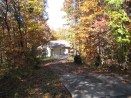 Here in the last days of autumn I look at the variety of leaves remaining on the trees and marvel at the multiple colors. Hidden within the leaves under vibrant greens thoughout the spring and summer were all of these shades of yellow, orange, red, and brown.
 chaplinesblog