
Tags
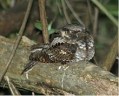 Eastern whip-poor-wills provide an enchanting onomatopoetical tune for summer evenings whenever we are fortunate enough to hear them. Echoing through wooded valleys, their melody stirs our spirits. We appreciate the more prosaic “Who cooks for you?” of barred owls, but that familiar call is not as delightful, even to my food-oriented senses, as the call of whip-poor-wills. Among other familiar night bird sounds—the screeches and hoots of other owls, the swoosh and buzz of night jars as they dive bomb their insect prey, or the whistle of bob-whites—we find no qualified competitor.
That was my opinion for many years. When we arrived at my brother’s cabin in the mountains near Townsend, Tennessee, we were pleased to hear the call of a whip-poor-will. Having no visible neighbors within a mile of the cabin, that bird provided our welcome. With so much natural beauty around us, we couldn’t be happier for the greeting.
The whip-poor-will came close to the cabin to greet us, though we could not pinpoint its exact location. We scouted the area around the cabin, followed the trail that circled the pond, and found tracks of deer, smaller mammals, and wild turkeys. Naturally we were relieved not to find bear or large cat tracks. After a light supper and reading time with the children we prepared for bed and a big day tomorrow.
When we were ready to fall asleep the whip-poor-will again began to serenade us. That would have lulled us to sleep if the bird had been calling from a discrete distance. Instead, it had taken up residence just outside our bedroom window. Only a few feet away, the call was much louder than expected. Excited at first, we tired of it quickly when the bird persisted. I tried to quiet it or persuade it to move farther away. Dressed in mottled brown and gray feathers it blended into the darkness of the undergrowth and remained still only while I was tromping around nearby. We supposed that the bird must have been frustrated in its search for a mate, and as new arrivals we were possible substitutes. We were more than frustrated as the hours passed. The bird would not go away. During the night we finally fell asleep in the moments when the bird allowed when it too must have grown tired. We did not go insane like Mr. Kinstrey in James Thurber’s short story titled for the whip-poor-will, nor did we consider anything as drastic as he did.
We awoke bleary-eyed the next morning, not quite ready to tackle the trails and discoveries of the Great Smoky Mountains. The next night the bird had departed, and we caught up on sleep. The whole experience reminded us of sleepless camping trips from earlier years. Before my brother had a cabin nearby, we pitched our tent in a Townsend campground alongside a lovely gurgling brook. During the evening the sounds of campground activity blended harmoniously with the sound of water flowing over rocks in the brook. After quiet hours began, we heard the stream sounds as if someone had turned up the volume on an amplifier. The next night we moved the tent to a quieter campground.
The worst night of all came in Gettysburg, Pennsylvania, on the evening of July Fourth. A Civil War reenactment occupied the area during the day, and at night the reenactors, drinking heavily and persisting in their blue and gray roles, yelled profanities and threats through much of the night. We huddled in our little tent and worried for the safety of our two small children. Our first act the next morning was to move our tent to the farthest reaches of that campground. Meanwhile the reenactors slept late and then departed for their homes.
Even with that unfortunate night and its frustrated bird, I am sorry to hear that the whip-poor-will is becoming rare in many areas. Supposed causes for the decline are familiar—habitat destruction, predation by feral cats and dogs, and poisoning by insecticides—but the actual causes remain unproven. I would endure many sleepless nights for the opportunity to listen to a choir of whip-poor-wills.
 chaplinesblog