• About
  • Celebrating our decades…
  • Welcoming all and inclusiveness

chaplinesblog

~ everyday and commonplace parables

chaplinesblog

Author Archives: chaplines2014

Broken Plates: Reflections of a Civil War Veteran, John Dougherty Warfel

05 Saturday Feb 2022

Posted by chaplines2014 in Books by Gary Chapman

≈ 1 Comment

Tags

Books by Gary Chapman, life experiences

My new book has been published and will be available soon from Amazon, Kindle, the local bookstore, or me.

J.D., my Great-Grandfather, lived from 1844 to 1932, grew up in a sectarian pacifist and abolitionist environment, enlisted in the 71st Ohio Volunteer Infantry, and served throughout the Civil War. Afterward he moved with his family to Illinois, married and raised a family of 14 children. Based on war records, his letters, and family stories, I have imagined his reflections as he reviews his life when he nears the end.

John Dougherty Warfel served nearly five years in the 71st Ohio Infantry, which did not deactivate until December of 1865. He had to resolve the conflicts between the religious pacifism and abolitionism of his family background. He lived to be 88 years old, raising a large family on a farm in Jasper County, Illinois.  This book frames the actual experiences of his life as a first person and fictional narrative as he reviews his legacy and approaches his death. He realizes that the conflicts he tried to resolve in himself and in the world around him will continue far into the future.

As a great-grandson of the abolitionist, Lincoln partisan, and Civil War veteran whose experiences form the historical core of Broken Plates, Gary Chapman grew up with stories about his ancestor. Chapman became a minister and teacher of philosophy and religion. In retirement he has published six previous books on A Family’s Heritage.

Rescue Call #6

05 Tuesday May 2020

Posted by chaplines2014 in Church, People, Small town life, Uncategorized, Volunteering

≈ Leave a comment

Tags

Rescues

Opal Alwashousky* was an abundant lady, not morbidly but pleasantly obese. Some condition had eliminated most of her hair, leaving a few strands on top that went wherever they wanted to go. But these were merely first impressions, put aside when one got to know her exuberant affable personality

I recognized her address at the edge of town when the call came late morning. I ran the two blocks to the ambulance garage, glad to see Steve arriving. At that hour few volunteers were around, most working daytime shifts. A neighbor had heard Opal yelling from her bathroom, where she had fallen in her tub and couldn’t move without torment. Opal had called for a long time; her voice was hoarse. She said later that she thought she’d probably die there, and a part of her wanted to.

When Steve and I arrived a few minutes after the call, the neighbor met us and sent us inside. We brought a neck brace, stretcher and backboard, a couple of blankets and lifting straps. Opal was naked and—for the time being—beyond embarrassment. She had managed to empty the water and toweled herself mostly dry. Bruises were beginning to show in large patches.

Slowly and carefully we put on the neck brace, maneuvered a blanket and straps under her body and lifted her out, apologizing all the way for the hurt we were causing, and encouraging her to yell all she wanted. Somehow we got her out, onto a stretcher, covered with blankets, into the ambulance, and on the way to the hospital. It was a miracle. She asked Steve and me to promise not to tell anyone the condition in which we found her. We promised, as was our duty anyway.

I had served Opal communion in regular pastoral visits, so it was natural to visit her in the hospital afterward. She had broken a hip, but everything else was intact, including her sense of humor. She recovered and lived a few more years. I had the privilege of returning to her home, accompanied by a deacon, to share communion. She would always ask, in front of the deacon, with a wink, if I had told her secret.

“Definitely not,” I would answer.

To which the deacon would ask, “What secret?”

“If you only knew,” she would say.

Now, nearly fifty years later, and Opal long gone to a larger bathroom in the sky, I’m telling.

*Names changed for obvious reasons.

Too Much of a Good Thing

07 Sunday Oct 2018

Posted by chaplines2014 in Nature, Patience

≈ Leave a comment

Tags

life experiences, Memories

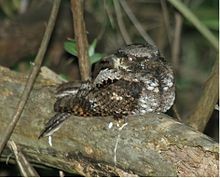
whip-poor-willEastern whip-poor-wills provide an enchanting onomatopoetical tune for summer evenings whenever we are fortunate enough to hear them. Echoing through wooded valleys, their melody stirs our spirits. We appreciate the more prosaic “Who cooks for you?” of barred owls, but that familiar call is not as delightful, even to my food-oriented senses, as the call of whip-poor-wills. Among other familiar night bird sounds—the screeches and hoots of other owls, the swoosh and buzz of night jars as they dive bomb their insect prey, or the whistle of bob-whites—we find no qualified competitor.

That was my opinion for many years. When we arrived at my brother’s cabin in the mountains near Townsend, Tennessee, we were pleased to hear the call of a whip-poor-will. Having no visible neighbors within a mile of the cabin, that bird provided our welcome. With so much natural beauty around us, we couldn’t be happier for the greeting.

The whip-poor-will came close to the cabin to greet us, though we could not pinpoint its exact location. We scouted the area around the cabin, followed the trail that circled the pond, and found tracks of deer, smaller mammals, and wild turkeys. Naturally we were relieved not to find bear or large cat tracks. After a light supper and reading time with the children we prepared for bed and a big day tomorrow.

When we were ready to fall asleep the whip-poor-will again began to serenade us. That would have lulled us to sleep if the bird had been calling from a discrete distance. Instead, it had taken up residence just outside our bedroom window. Only a few feet away, the call was much louder than expected. Excited at first, we tired of it quickly when the bird persisted. I tried to quiet it or persuade it to move farther away. Dressed in mottled brown and gray feathers it blended into the darkness of the undergrowth and remained still only while I was tromping around nearby. We supposed that the bird must have been frustrated in its search for a mate, and as new arrivals we were possible substitutes. We were more than frustrated as the hours passed. The bird would not go away. During the night we finally fell asleep in the moments when the bird allowed when it too must have grown tired. We did not go insane like Mr. Kinstrey in James Thurber’s short story titled for the whip-poor-will, nor did we consider anything as drastic as he did.

We awoke bleary-eyed the next morning, not quite ready to tackle the trails and discoveries of the Great Smoky Mountains. The next night the bird had departed, and we caught up on sleep. The whole experience reminded us of sleepless camping trips from earlier years. Before my brother had a cabin nearby, we pitched our tent in a Townsend campground alongside a lovely gurgling brook. During the evening the sounds of campground activity blended harmoniously with the sound of water flowing over rocks in the brook. After quiet hours began, we heard the stream sounds as if someone had turned up the volume on an amplifier. The next night we moved the tent to a quieter campground.

The worst night of all came in Gettysburg, Pennsylvania, on the evening of July Fourth. A Civil War reenactment occupied the area during the day, and at night the reenactors, drinking heavily and persisting in their blue and gray roles, yelled profanities and threats through much of the night. We huddled in our little tent and worried for the safety of our two small children. Our first act the next morning was to move our tent to the farthest reaches of that campground. Meanwhile the reenactors slept late and then departed for their homes.

Even with that unfortunate night and its frustrated bird, I am sorry to hear that the whip-poor-will is becoming rare in many areas. Supposed causes for the decline are familiar—habitat destruction, predation by feral cats and dogs, and poisoning by insecticides—but the actual causes remain unproven. I would endure many sleepless nights for the opportunity to listen to a choir of whip-poor-wills.

The Dove that Would Not Fly Away

03 Sunday Dec 2017

Posted by chaplines2014 in Caring, Church, Death, Faith, People, Prayer

≈ Leave a comment

Tags

Memories, Serendipity, Synchronicity

dove   As a participant in church youth activities and outings, he was one of those young men who was always athletic, good-natured, cooperative, and congenial. When he graduated from high school and enlisted in the Army, following in the military footsteps of his relatives, we sent him off with every expectation that he would succeed and serve admirably. Toward the end of his basic training we received the terrible news that he had killed himself, alone in his barracks, when everyone else was away on leave. Family and friends were devastated. As his pastor officiating at his funeral I also was at a loss to speak much more than our affection and appreciation for the young man we knew and to pray that God heal his and our broken hearts.
People took part in the funeral with the open emotions and incredulity that come with a largely young adult crowd. Even those of us who were much older could only register our questions and grief. Tears and comforting hugs passed abundantly. The crowd moved to the cemetery in old Aspen Grove, where the trees provided graveside shade on a sunny afternoon, on the edge of a slope into a sheltered valley.
The family had chosen a symbol that seemed fitting of the idea of the spirit’s release into the heavens—a white dove, actually a homing pigeon, freed at the end of the graveside committal service to fly away. Only the bird, once freed, made a circle and came right back to the casket to perch. A little polite waving had no effect on the bird. We proceeded, of course, to complete the actions at the cemetery, accommodating the presence of the white dove.
Family and friends returned to the grave in the following days, only to find the dove nearby or at the marker. “What does this mean?” they asked each other, until presumably the owner of the pigeon came to claim his bird and take him home. Not believing that everything necessarily has a meaning, I deferred to others’ answers. Still, I heard people say often enough that he did not really want to leave us and needed to find a way to let us know.

Walls Go Up and Walls Come Down

21 Tuesday Nov 2017

Posted by chaplines2014 in Church, Faith, Life along the River, Nature, Volunteering, Yard

≈ Leave a comment

Tags

A License to Preach, life experiences, Memories, Mississippi River, Serendipity

trump's wall   “Something there is that doesn’t love a wall, that wants it down.”
Robert Frost penned those lines in his meditation on neighboring titled “Mending Wall.” The poem seems to contradict itself with its other famous line, “Good fences make good neighbors.”
Burlington is busily building a new wall out of steel and concrete, a floodwall protecting us from our source as a community and a periodic threat to our central downtown as well, the Mississippi River. We may wonder how long this new wall will serve its purpose. Will it be high enough, strong enough, good enough? The designers promise that it will not hide us from the beauty of the river, and we are waiting to see.
Many of the old walls have fallen in the last thirty years. They were mostly walls of limestone, placed carefully without mortar in many cases, and gravity has gradually taken its toll. The limestone, so prevalent and so full of Burlington’s famous crinoid fossils, has been an abundant resource for wall construction. Walls served the purpose of confining the chickens, horses, and hogs, or they simply helped to clean up lots that were covered with limestone.
In June, 1992, Zion’s High School youth tackled the project of removing one such wall. The old limestone wall fronting Zion’s parking lot had shown a determination to change its position. Zion’s section was moving to the west, an inch or two a year, while next door Victoria Apartments’ section was moving to the east. Two major cracks exposed the conflict. The young people speeded up the process, adding their brawn. We fantasized the possibility of circling the wall seven times and blowing a trumpet, especially when considering the four 300-pound stones that topped the eight-foot high wall. In the end a more direct and tiring approach pulled those heavy stones down with ropes from a safe distance. It was tug of war with us on one side, the wall on the other, putting up a good fight.
After that Mathew Johnson sat atop the middle section attacking with a heavy hammer and chisel. Most of the stones needed just a nudge, for a hundred years reduced the original mortar to powder. He soon found another force at work as a million angry ants made his seat untenable. They were not happy with any of us who were destroying their dry and happy home. We further meditated on upsetting the biosystem that the wall represented, pausing often to shake the tiny defenders off our clothing, but we continued our assault. One by one we carted the stones away, loading a pickup truck several times, leaving only the foundation for another day, and leaving the northern section on our neighbor’s property to go its own way.
We admit that we did not like that wall. It had stopped serving whatever purpose it originally had. Over decades people had made many efforts to keep it intact and oppose its own desire to obey the laws of gravity. A layer of concrete smoothed over the outside of the rock, so it did not have the charm of the rear wall of the parking lot with its vines and decrepitude.
After we thought about that day of practicing our faith, we named and recognized other walls that remain in our lives. Walls without purpose are leftover from earlier ages, without honor or beauty, with defenders aplenty, but they too will succumb to the laws of nature and spirit. We have seen some of those walls fall as easily as Jericho’s, but we cannot expect to walk around all of those walls and find the same result. Some require more concerted and strenuous efforts. Sledgehammer anyone?

The Luck of a Clown

20 Monday Nov 2017

Posted by chaplines2014 in Church, Faith, Growing up, Health, Prayer

≈ Leave a comment

Tags

life experiences, Memories, Serendipity, Synchronicity

Self-potrait 1988  A six-year old boy put his name in the box for a drawing at the Grab-It-Here grocery store in Paxton. The prize he was hoping for was the shiny new Schwinn bicycle in the store window. Other prizes were on display, but the bike was the one that had his full attention. A couple of weeks later he learned that his name was drawn. He was a lucky winner, but not the winner of a bicycle. He won a stuffed clown, about half as big as he was. His mother brought it home, and he kept it for many years, since it was and remained the only thing he was lucky enough to win. Some luck, he thought.

Probably many objects attracted his attention and his hopes that he might be lucky enough to gain, but most were insubstantial, and their unimportance made them forgettable. The important things, he realized somewhere along the way, exceeded the realm of luck. To go to college and graduate school and get the scholarships, grants and fellowships to pay for them, to find a loving mate and to have her willing to marry him, even with the poverty and insecurity of the times in which they lived, to study for the ministry and find three churches that would accept him as their pastor, to have children and raise them to be responsible and successful adults—these were beyond the luck of the draw. In applying for a doctoral program, he was asked what he expected to be doing in ten, twenty, thirty years, and he answered that he expected to be a pastor doing his work well, and part of the time he wanted to teach philosophy, ethics, or bible, his academic interests, possibly at a community college, where a variety of ages and interests would be present. He was admitted to the doctoral program, and he completed it.
Ten years later he found himself in emergency rooms, successively on several occasions, until enough information accumulated to provide a diagnosis of the heart problems involved, stemming from childhood infections. The cardiologist told him that if he was lucky, without changing his lifestyle, he would probably live about seven years until he required at least an open-heart surgery. Not believing in luck, he chose to change his lifestyle—eating, drinking, exercising, and dealing with stress.
In all of these matters he was more than lucky, although not one of these was something that he could have completed by himself. If he had been confident enough to call this his life plan, then he also would have to be exceedingly happy to realize that the plan had been fulfilled even beyond his dreams. Now that boy is a seventy-one-year old man, still marveling that he has been, not so lucky, but so blessed to have had his dreams realized, and then some.
The future is still open and unknown, and his aims seem to be transforming the earlier goals into forms that are more limited and manageable in the years to come, according to the strength and breath that remain—still exercising, more slowly, and writing, teaching, finding ways to be helpful to family, friends, and the world beyond.

An Answer to Prayer

15 Wednesday Nov 2017

Posted by chaplines2014 in Forest, Growing up, Hiking, Nature, Prayer

≈ Leave a comment

Tags

life experiences, Memories, Serendipity

deer & fawn
I rolled out my sleeping bag on the wooden planks of the log cabin porch at Morgan-Monroe State Forest in Indiana. Nestled in a wooded valley next to a loudly gurgling brook, the cabin was a century old, but I was barely thirteen. I felt much older because the other Boy Scouts and I had hiked twenty-five miles that day. The back-country sheds and shacks we had passed, with roaming cows, pigs, chickens, and assorted other creatures, must have been like the little farmsteads my people had come from many decades before in Ohio and Pennsylvania and Virginia, unlike the treeless prairie in central Illinois where I was born. The autumn splendor of the trees and hills surpassed anything I had yet seen.
The night was cool and star-studded, and the porch was more inviting to me than the dark interior of the cabin. Wherever we chose, we lay down to sleep. The attempts to whisper inside the cabin were just audible. They thought I couldn’t hear, and they were talking about me. They were telling a lie about something I had done, poking fun at it. It was something important to me, one of the first things in my life that I was really proud of doing. I was angry and ready to go in and set them straight. But the plank floor was too comfortable, and the stars were shining brightly, and I asked God how I should defend myself, and all I heard was the music of the stars and the distant whippoorwill.
The next morning I awoke before anyone else to a misty sunrise filtering through the trees. To my surprise there was a doe and fawn drinking from the brook barely twenty feet from the porch where I was lying. I had never before seen deer in the wild. They finished drinking and the doe wandered toward me and stopped at the railing and looked at me, our eyes meeting. Then she slowly turned and nudged the fawn and bounded away.
Life was good, and life has remained so. Some things are so beautiful that they erase all thoughts of the ugly. I no longer felt the need to correct the misinformation that the boys had spoken about me. Nor did I tell them about the deer. I just proceeded to fix the best breakfast outdoors that those fellows had ever eaten, and I said the blessing.

Showers of Blessing? September 1998

15 Wednesday Nov 2017

Posted by chaplines2014 in Church, Faith, Growing up, Nature, Prayer, rafting, Seasons, Travel

≈ Leave a comment

Tags

life experiences, Memories, Serendipity

Milford 2  The church youth group was on its way from Burlington, Iowa, to Colorado for some camping, rafting, horseback riding, and other mountain-loving activities cherished by flatlanders. We stopped to camp on our first night at Milford State Park in central Kansas and set up on a gentle slope overlooking the lake. During the night a five-inch deluge left our campground looking like stacks of cast-off clothing after a flood. One of our teenage campers was heard saying, “If I had a bus ticket I’d be on my way home now.” Old hands at camping, of which we had only a few, said, “There, there, now, in a day or two, when we’ve had a chance to dry out, everything will look brighter.”
We had rain every day except one. Mostly we got used to it and adapted, using coin-operated laundries when necessary, and learning how to set up tents so the contents would stay dry…mostly. Every major activity that we planned, including the rafting, we got to enjoy without the rain’s interference. When rafting, the first thing we learn anyway is that we get wet. We read Psalms each morning and evening, and several passages claimed that God was in charge of the clouds and the rain. That made us wonder a bit about the messages we were getting.
We also read Ezekiel 34:26 about the “showers of blessing” God brings. The Gospel song of course came to mind. The trip proceeded as smoothly as any we had planned, either for service or for fellowship. No vehicles broke down. Everyone cooperated with few moments of tension. We kept the schedule of reservations and plans for each day. We covered 2500 miles in nine days. The showers kept us on our toes, depending on God to provide, which God did, as far as we were concerned. Getting wet unintentionally and getting wet purposely didn’t make much difference after a while.
When we got home to Iowa we found that Iowa was dry as a bone. Until the end of August it remained so. Somehow the field crops continued to grow, with just enough moisture to keep going. One of the congregation’s farmers, Don Thie, came dripping wet into the first fall choir rehearsal, and he said, “Since I prayed for rain, I guess I should learn to carry an umbrella.”
We also found that, while we were on the road, one of the church members, Chuck Murray, had installed a shower in our basement restroom, so that our overnighters, drop-in-travelers, service project workers, runners, and any other sweaty folks would have a convenient place to clean up.
So we began the fall season that year with dozens of plans that we hoped would recharge and enhance the life of our community, and we sang the old song with renewed hope, “Showers of blessing; showers of blessings we need; mercy drops ‘round us are falling, but for the showers we plead.”

Corporate Efficiency

13 Monday Nov 2017

Posted by chaplines2014 in Learning from mistakes, Life along the River, People, rafting, Travel

≈ Leave a comment

Tags

life experiences, Memories, Serendipity

New River WVA   Several years ago on a lovely summer evening several of us sat on the wooded banks of the New River in West Virginia, relaxing and enjoying the quiet after the first of our planned two days of rafting. During that day we had floated a relatively smooth portion of the river. We had visited some of the ruins of the old riverside mining towns that played a part in the struggle between management and miners in the formative days of the unions that finally succeeded in improving the conditions that workers and their families faced. The rafting outfitters had prepared for us a delicious steak dinner on their portable grills, they had erected tents for us, furnished a blazing campfire, and one of them was warming up on the guitar for some singing. We looked forward to the next day when the rough and tumble part of the river would show us why the New River is a popular rafting destination. We needed our rest to prepare for it.
Across the river ran the railroad tracks that had served the New River Valley since early coal mining days, and, sure enough, along came a train with cars full of coal headed north, filling the world with roar and rumble. We supposed correctly that the trains we had not noticed during the day of rafting would make some unpleasant appearances during the night, interrupting the restful sleep we craved.
About thirty minutes later another train rounded the bend, with its coal cars also loaded, headed south. It was not enough that the peace of that lovely ancient valley would be interrupted regularly by noisy trains, whose places of origin had to be separated by many miles in either direction. They were both carrying the same commodity in opposite directions!
Hold on. Wait a minute. What’s going on here, we asked. What sense does it make that coal mined far north would pass coal mined in the far south to get to places in the far north and the far south? Who organized that? They need some help. Keep the coal mined in the north in the north. Keep the coal mined in the south in the south. Forget hauling all this heavy stuff through this long meandering valley, where we want to rest and sleep and enjoy the beauty of nature.
There may be, possibly is, a reasonable and legitimate explanation somewhere, but it sticks in my mind as an example of human efficiency, planning, and cooperation. Carrying the same commodity, passing in the night, going in opposite directions, carrying resources to places they already exist, people expend their energies. A variation of the Greek myth of Sisyphus seemed to be replaying before our eyes. Does God have a sense of humor, or what?

Attractive Nuisances, January 2002

12 Sunday Nov 2017

Posted by chaplines2014 in Caring, Church, Faith, House, Learning from mistakes, People, Seasons

≈ Leave a comment

Tags

Memories, Synchronicity

cropped-bell-route.jpgThermostats are attractive nuisances. They are dangerous instruments and touching one can put you in serious jeopardy. Therefore we have tried in public institutions, like churches, to surround them with fences in the form of plastic lockable boxes, so that people will leave them alone. To no avail. We misplaced the keys long ago, and it’s easier just to take that silly lid off and reset the dial where we want it. Now that we have thermostats that can be preset for both summer and winter, the feud between the hot-blooded and the cold-blooded can go on in all seasons. (I will not admit to being cold-blooded.)
Whoever is first to set the thermostat never has the final word. In a building that is big and complicated, like Zion Church, there is no available science that can indicate a comfort zone that fits everyone. One must also consider the delay factor. Since it takes about thirty minutes to reach the indicated temperature, those who are chilly may reset the thermostat a dozen times while waiting for it to reach their goal, not knowing that they may have passed their own target temperature several times. When the temperature finally reaches the last setting, and the room fills with people and the body heat they bring into it, those who enjoy the climate a little cool have baked to a crisp.
The problem in these days is aggravated by the need to save energy and not add more carbon to the atmosphere. One side pretends to be more righteous when they want to turn the heat down. The other responds with “Insulate! Insulate! Insulate!” as they turn the heat up.
It is not an easy compromise in a building as small as my house, where two people do not agree on a satisfactory setting. One likes the stat set at 62, the other 72. Guess who? “Put on more clothing.” “Wrap up in a blanket.” And that’s for mid-summer. “It’s easier to put clothing on than to take it off.” “Who says so?” This is conversation?
Do you snowbirds in the Sunbelt have this problem? I reckon you do.
How many other opinionated preference issues are like this? Don’t even get started trying to make a list.
Who knew that the thermostat would be the most divisive issue that a couple would face in their long and enjoyable marriage? Who knew that a church, of all places, would find that a temperature setting would be the best indicator of their spiritual capacity for mutual love and understanding?
“Turn up the heat” faces off with “Let’s be cool!” Lord Jesus, will you help us figure out what energy setting keeps us from being lukewarm in our faith?

← Older posts

Subscribe

  • Entries (RSS)
  • Comments (RSS)

Archives

  • February 2022
  • May 2020
  • October 2018
  • December 2017
  • November 2017
  • October 2017
  • June 2017
  • April 2017
  • March 2017
  • February 2017
  • January 2017
  • November 2016
  • October 2016
  • September 2016
  • August 2016
  • July 2016
  • June 2016
  • May 2016
  • April 2016
  • March 2016
  • February 2016
  • January 2016
  • December 2015
  • November 2015
  • October 2015
  • September 2015
  • August 2015
  • July 2015
  • June 2015
  • May 2015
  • April 2015
  • March 2015
  • February 2015
  • January 2015
  • December 2014
  • November 2014
  • October 2014

Categories

  • beach
  • Books by Gary Chapman
  • canoeing
  • Caring
  • Cherokee history
  • Church
  • Citizenship
  • Death
  • Disabilities
  • Events
  • Faith
  • Farm
  • fighting fires
  • Forest
  • Garden
  • Growing up
  • Gullibility
  • guns
  • Health
  • Hiking
  • House
  • Innocence
  • Learning from mistakes
  • Life along the River
  • Miracles
  • Nature
  • Patience
  • People
  • Prayer
  • Racial Prejudice
  • rafting
  • Running
  • Seasons
  • Small town life
  • Suffering
  • Travel
  • Uncategorized
  • Vehicles
  • Volunteering
  • Words
  • Yard

Meta

  • Create account
  • Log in

Create a free website or blog at WordPress.com.

Privacy & Cookies: This site uses cookies. By continuing to use this website, you agree to their use.
To find out more, including how to control cookies, see here: Cookie Policy
  • Subscribe Subscribed
    • chaplinesblog
    • Join 71 other subscribers
    • Already have a WordPress.com account? Log in now.
    • chaplinesblog
    • Subscribe Subscribed
    • Sign up
    • Log in
    • Report this content
    • View site in Reader
    • Manage subscriptions
    • Collapse this bar
 

Loading Comments...