• About
  • Celebrating our decades…
  • Welcoming all and inclusiveness

chaplinesblog

~ everyday and commonplace parables

chaplinesblog

Author Archives: chaplines2014

When Notes are Unsigned and the Preacher Still Has a Pulpit

08 Wednesday Jul 2015

Posted by chaplines2014 in Caring, Church, Learning from mistakes, Small town life

≈ Leave a comment

Tags

A License to Preach, events, Serendipity

Self-potrait 1988

I had spent a few days in the hospital with some significant heart symptoms. When I returned to the pulpit after my release, I thanked the people for the many get-well cards, encouraging words, and generous offers of help that came to my wife and me, but I told them that there was also one card that had come with the others. Unsigned, it had asked, “What are we supposed to do, if our pastor is ill? We can’t get the help that we need when we have a sick pastor.”

In my notes for that Sunday in winter, 1984, I said that I must try to answer this question, as much for myself as for whoever wrote it. First, my physicians assured me that I could expect to get control of this issue if I took certain steps and continued doing so the rest of my life. I could return to work and have the heart to do it. Second, ministers are human and will get sick, some more often than others. The church will survive, and sometimes it will prosper, as people share more of the load and cooperate with one another in getting things done that the minister cannot do. Third, we are in this church together in all circumstances, good and bad, much like a marriage, and God’s power is most visible when we are at our weakest.  I had certainly felt that power, during the previous two weeks, when so many had taken time to provide what was needed, and I had gained in understanding of what I faced and what I needed to do about it.

I never learned who had expressed those fears in the “get well card,” and I don’t know whether the writer was embarrassed or not about my reference to those words from the pulpit, but the sentiment probably did everyone a favor.

Rethinking the Melting Pot

07 Tuesday Jul 2015

Posted by chaplines2014 in Events, Learning from mistakes, Racial Prejudice, Travel

≈ Leave a comment

Tags

Serendipity

3 Owls

“33 Flavors,” Baskin-Robbins used to advertise, and I probably liked them all. Years ago, ice cream came in vanilla, chocolate and strawberry. Now it comes not only in multitudinous flavors, but in low and no (as well as high?) fat varieties, frozen yogurt, ice milk, and other variations. When people are put together for any long, intense period of time, you begin to note how many variations there are in us.

When many varieties of ice cream first became available, Jan and I splurged one time by each ordering a concoction. The location was Mackinaw City as we viewed the great bridge over the Straits of Mackinac. We were celebrating our safe landing after being caught in the middle of that five miles long bridge in a windstorm and watching a camper blow off a truck onto the roadway ahead of us. The fear of having our 1960 Falcon take flight off that bridge might be supposed to remove appetites, but we were on our honeymoon, so we were believers in letting our appetites expand.

In our celebration we each ordered about seven scoops of different flavors of ice cream. (They were small scoops.) They came with names like Bat Girl (licorice), Fudge Brownie, Candy Stripers (peppermint), and Black Walnut. I just remember the appearance of the bowl as they began to melt together–black, green, red, and yellow mixing. I ate mine and Jan handed hers to me to finish, after it had begun to turn into one blended shade of brownish-grayish.

Then and there I had a revelation. The melting pot was an inadequate image for people getting along together. One has to recognize and accept the differences—the different flavors—in order to enjoy being together. (Revelations after all are hard to come by.) Trying to force everyone into one “mold” is likely to produce something that looks a bit moldy. We try to remember that when we live and work intensely together. The flavors are all there to be enjoyed. Attempts to put everything together all at once may put a strain even on great lovers (of ice cream). Everything works out in due time, with patience and flexibility and fixed purpose.

Climbing into the Haymow

01 Wednesday Jul 2015

Posted by chaplines2014 in Farm, Growing up

≈ Leave a comment

Tags

A License to Preach

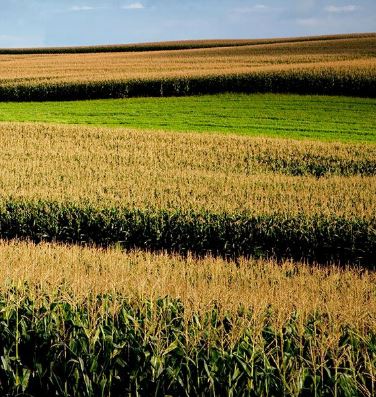
cornfieldsThis season brings back memories of baling hay and storing it in the haymow. The haymow in one of the four barns on the farm where I grew up was a mysterious and inaccessible place. The ladder that provided access had rungs placed far apart, so only children who were older and stronger  could climb. They would play amid the bales of straw—hiding, building forts, castles and towers. I could listen and barely see through the opening in the center of the floor. All that I could do was imagine the fun of a forbidden zone.

By the time I gained the size and strength to climb the ladder, the neighborhood children had grown too old to play haymow games, and my allergies to dust and mold paid me a day of misery for every minute in close confines with hay. Still, the haymow held an attraction for a curious explorer.

As soon as my legs could reach the tractor peddles I was allowed to work in baling season. I put the tractor in reverse and pulled the forked- together bales of hay from the hayrack up to the rail at the peak of the barn, through the large open door into the dark recesses of the haymow itself. When I heard the yell from inside the maymow, I stopped the tractor and waited for the hayforks to be tripped and the bales to fall to the floor. It was an exciting operation. Later I was assigned the task of pulling the trip cord. I knew I had reached maturity when I was allowed to insert those large steel tines of the hayfork into the bales to be lifted from the wagon, like some giant spider enfolding its prey. But I could never spend any time in the haymow itself, and my fascination with it only grew.

In the field I could load bales on the rack easily, especially when the breeze blew the dust away, but work in the haymow was off-limits.

The haymow represents to me all of those special places where mysterious activities continue unobserved and inaccessible to the rest of us. Surgery rooms, political strategy spaces, board rooms of major corporations, and scientific laboratories all hold such mysteries. Many important decisions that affect our lives are made beyond the reach of masses of people. Much of religion has been controlled in that way in past centuries, but openness and democracy has infiltrated many denominations in recent decades. Still the end of our years and the destiny of heaven remain shrouded in mystery as unfathomable as a haymow to a small child.

I hold onto a sense of mystery as one of the deep sources of wonder and joy. The vast universe and the discoveries of science call out for more exploration and determined pursuit, but they also leave much room for bewilderment. Many places are beyond our scope and capacity to understand.

We sing about the mysteries of struggle and work and the direction we are headed in the spiritual “We are climbing Jacob’s ladder.” Most people understand that the goal of the song is heaven. As for me my sights are lower. I would just like to be able to reach the haymow.

A Conspiracy to Cover with water and oil?

29 Monday Jun 2015

Posted by chaplines2014 in Cherokee history, People, Travel

≈ 5 Comments

Tags

Our Land! Our People!, The Trail of Tears

Red Wolf2

I was hunting for the places where John Bell, the son and father, grandfather and great-grandfather of other John Bells, and the husband of Charlotte Adair (and the 4th great grandfather of Janet Chapman) had lived and worked. He was born in South Carolina, the son of a Scot trader and a Cherokee woman of the Deer Clan, in Greenville County, but the exact location is unknown. The Greenville records of land transactions and other legal matters before 1840 were destroyed in the 1990’s. They mostly dealt with Native Americans and African slaves, and so they were considered unnecessary and too expensive to maintain.

The journey took me to Coosawattee Town in Georgia, an ancient city that made documented history when DeSoto temporarily occupied it. John Bell and his son John Adair Bell centered their trading activity there before 1839.The strategic location between two mountains (Bell and Martin) made it too attractive to engineers, who built a dam and flooded the site, so all that I could see was Carter Lake.

Next I went to the Coosa River Plantation that John Bell developed in his middle years, when he devoted his work to blacksmithing and farming. That location near the foot of Lookout Mountain provided an easy place to locate a dam, so all I could see of the Bell plantation was the surface of Weiss Lake, about fifty feet above the old river bank.

The Bell family left Georgia and Alabama in the Cherokee Removal in a detachment directed by John Adair Bell (an uncle to Jan’s 2nd great-grandfather), and old John Bell relocated in what became Delaware County in Oklahoma along the Grand River. The Grand River plantation, where David Bell (Jan’s 3rd G-G) and Sarah Caroline Bell Waite (aunt) were buried, where members of the family continued to live for fifty years, became a casualty of the plans to build the Grand Lake of the Cherokee, so all of the original site as well as the cemetery is under water.

You can imagine what I expected when I planned to visit the cemetery in Rusk County, Texas, where John Bell and John Adair Bell moved in 1850 to escape continuing death threats. Nevertheless, the cemetery and the land that they farmed is not under water. An oil company in the 1950’s purchased the land, destroyed the Indian cemetery, and drilled for oil there. Nothing remains but photos of one tombstone in an otherwise empty oil drum, the tombstone of John Bell.

I began to think there was a conspiracy. There was, of course—a conspiracy to ignore and forget the Native American history of much of our country and the people who lived and worked here long before the current generations.

The Miracle of the Broken-down Weed Chopper

25 Thursday Jun 2015

Posted by chaplines2014 in Events, Farm, Forest, Seasons, Yard

≈ Leave a comment

Tags

A License to Preach, Serendipity, Synchronicity

redwood treesI was ready to start the weed chopper and mow the strip at the sides of the Shepherd’s Gate house and driveway. Two or three mowings a season is enough to keep new trees and plants from encroaching “my” space, which is fifteen to twenty feet around the perimeter of the house. The rest of the surrounding acres remain wild woodland and take care of themselves. The engine started well, but the mounted mower whiplines did not engage. Turning off the engine I found the belt had slipped off its pulley. If I had not already been thinking about my father, this could easily have reminded me of the many times some piece of equipment broke down and delayed the work of planting or harvest or general farm maintenance.

When it came to tools my father was not the most organized. Keeping the right tool in the right location was a challenge, and as a result there were usually a dozen places where that tool might be. The tool house was well-organized, thanks to the my older brother’s intervention, but tools tended to migrate from there to every tractor, barn, crib and shed which had its own specialized tool collection. It was always frustrating to run into a task that required the tool that was somewhere on the other side of the farm. In my case on this day, the small tool box I had with me held only  pliers, inadequate to the task of removing the cover to reinstall the belt. The plumbing kit, ready for the bathroom fixture installation tasks that I had planned for this trip,  had wrenches that were much too large to reach the bolts I had to loosen.

Then I thought of the small toolbox Dad gave me to use at Shepherd’s Gate. It had a few well-worn basic tools. Did I remember that it had a driver and socket set? I looked and it had only two sockets, but what were the chances that these were the ones that would fit? I took them out to the chopper, and one fit the larger bolts, and the other one fit the smaller bolts perfectly! Thereafter the job was a snap. Thanks, Dad.

This is hardly evidence convincing to anyone of a surrounding cloud of witnesses or an angelic host. Plenty of times I have had to learn from my oversights, go out and buy or borrow the necessary tool, or take that extraordinary amount of time to complete the simplest task. But this time Dad was definitely present, patiently gazing over my shoulder, and chuckling, so I add it to the list of revealing moments when I speak my grateful dues and recognize the continuing influence of the unseen. Thank you, Abba!

Fire Call #6, a Train Derailment

24 Wednesday Jun 2015

Posted by chaplines2014 in Events, fighting fires, Learning from mistakes, Small town life

≈ Leave a comment

Tags

The Volunteer Fire and Rescue Squad

Yellowstone Pool

Tilton was a village of heavy industry at the edge of a larger populated area, and train tracks crisscrossed the village, as well as a switchyard planted in the middle of it, so a train derailment was not an unexpected event. Minor derailments were common, and this call, that came late one evening,  described a minor derailment. The problem arose when one of the tanker cars bumped into another, and a leak developed. In those days there was no identifying information on the tanker car itself, describing the nature of the liquid contained in it, and the railroad personnel, who presumably called the volunteer fire department in the first place, were nowhere to be found.

The smell coming from the car was not extremely pungent, but sufficiently strong to make us wonder whether we and the neighborhood were in danger from the fumes. We kept our distance, knowing that the water that we had available, with our hoses ready to be charged, might not be usable for certain chemicals that were transported through the village, although diluting the chemical would be useful in most cases. The leaking chemical did seem to sizzle and foam when it touched the ground, but that in itself might not indicate severe danger. Without any information about the nature of the chemical, we were not in a position to know what the correct course of action might be. Evacuating the neighborhood, even the whole town, was not out of the question, but we didn’t want to be alarmists if it was simply a mild acid.

For thirty minutes we waited, trying to find and contact someone with accurate information so that a proper course of action could be followed. Finally a railroad representative arrived. It seemed that no one on the train itself had the correct information about the leaking chemical, and they decided to keep their distance until they could learn about it. They finally had discovered at there was no danger and that we could hose it down. It was instructive for us to learn that the local firefighters and the community itself were considered expendable if the information had turned out to be different, and a dangerous chemical had been involved.

We poured on some water, packed up our equipment and returned to the station, not much older but wiser.

A Dispute About a Fence

23 Tuesday Jun 2015

Posted by chaplines2014 in Farm, Learning from mistakes, Small town life

≈ Leave a comment

Tags

events

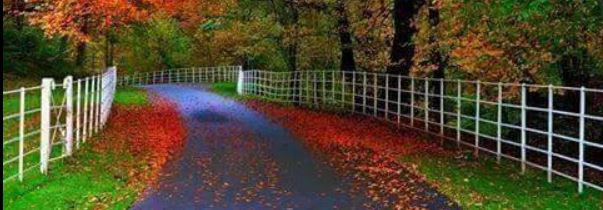
road and fences in autumnHope, Illinois, sits in the middle of the prairie east northeast of Champaign. The little settlement boasts a handful of houses and a church, and the Van Doren brothers, one of whom, Mark, made this story into a poem, but I tell it in prose as a fact.

Two farming neighbors nearly came to blows over what kind of fence should separate their properties. By law each was responsible for the right half of the fence line as they faced each other’s land. They finally stopped talking to each other after every discussion of the fence became a debate, an argument, and a trading of insults. They both agreed that a fence must be built, but they resolved their dispute in an unusual way. They each built the whole fence exactly the way each of them wanted to build it; only they built that fence a couple of feet inside their own property lines, so a no-man’s land ran the whole length of their property’s border. Neither man dared to mow or maintain the land between them, on the other side of his fence, so it grew up in weeds, shrubs, and finally trees. The strip of unkempt land harbored animals and birds that otherwise would have no shelter, but that was the only benefit of the parallel fence monument to stubbornness and a refusal to compromise.

For all of its isolation and small population Hope produced some fine, gentle, and considerate people, some of whom I have had the pleasure to know. It’s sad that it must be remembered mostly for two of its most recalcitrant members, but Hope is not alone in that, is it?

All roads going to the same place?

20 Saturday Jun 2015

Posted by chaplines2014 in Travel

≈ Leave a comment

Tags

Names and Titles

Monkeys see, hear, speak no evil, Bangra.comDriving north from Alton there are three roads. One is a picturesque road along the Illinois River. If you want to meander and enjoy spring blossoms or fall foliage Route 100 is perfect. The other two roads take you to Jacksonville eventually– Route 73 and Route 273. On various maps Route 73 is marked as 273 and vice versa, because at some point the state renamed them, but neglected to change their own maps and all of the road markers. Likewise local communities did not change all of the local signs to correspond with the renaming. The roads begin and end at Alton and Jacksonville, so what’s the difference?The low road takes 15 fewer miles to get to Jacksonville because it is relatively straight. The high road curves in a large arc to the west, passing through Jerseyville and Carrollton on the way to Jacksonville, so it adds miles to the trip, but a third of it is a four lane limited access road, so it is quicker. (It will also avoid Roodhouse, but that may not be important to you.)

The low road will not help you if your destination is Quincy. Then the curve in the high road actually puts you farther west and, combined with route 106, cuts off several miles. None of these roads is especially well-marked on either maps or signs along the way, so the confusion of road names is just an additional disadvantage for people who are first finding their way.

Especially when you are leaving Alton the choice of whether to take 73 or 273, and determining which one is which, challenges the journeyer. It’s enough to make you choose the river road, knowing at least that you will enjoy the scenery. But in order to determine the fastest way, I have taken both roads, going the opposite way than I planned the first time because my map was wrong. The next time I bought a new map at a convenience store, and it was wrong too. Then I picked up a fourth new state map, and they had finally corrected their error. The new 73 is now the high road– old 273. The new 73 is now the low road– old 73.

It makes me wonder about the saying, “We’re all going to the same place anyway, so it doesn’t matter how we get there.”  In some respects it matters, although the devil is in the details. And if you think you’re going one place and wind up in another, then it certainly might matter to you. It might even be important which roadmap you choose, since they are not all correct, at least not in all details. And it is especially disconcerting to think that you are on one road, and then to find out that you are on another, but something tells me that it is not an unusual experience. Sometimes someone has switched the roads, making a person think one is the other.

Another Stupid Thing crossed off the list

19 Friday Jun 2015

Posted by chaplines2014 in Cherokee history, Learning from mistakes

≈ Leave a comment

Tags

Books by Gary Chapman, Our Land! Our People!, The Trail of Tears

Cherokee StarThe detachment of 660 Cherokee citizens led by John Adair Bell, Jan’s 2x great uncle, crossed the Tennessee River by ferry three times in the Chattanooga region and another time in central Tennessee at Savannah. When I was first tracing the route that they followed, collecting geographic information for the book that I was writing, it was January of 2008, and the wintry weather put me and my Jeep on icy roads in east Tennessee. I had the roads to myself most of the time, and the slow journey gave me plenty of time to examine the terrain. Much of the route followed U.S. Route 64, although bridges replaced the ferry crossings. Kelly’s Ferry crossed the river about half-way between Chattanooga and Jasper, and the crossing that I intended to use on U.S. Routes 41 and 64 was Marion Memorial Bridge over the east end of Nickajack Lake, a narrow two lane metal truss bridge built in 1929 (and closed in 2012).

The bridge rose in a high arch over the river and extended 1870 feet. As I approached it, I considered the fifty mile detour that I would have to take to get to the other side, in order to resume following the Bell route, if I did not cross the bridge that day. I sat at the café near the end of the bridge and thought about it for a while. No one crossed the bridge while I watched. Probably no one had crossed it that day. I talked to the waitress about alternate routes. She assured me that she would not cross the bridge, but she lived walking distance away from the restaurant, and wouldn’t dream of going out on the roads that day anyway.

I should have taken the detour. I realized that when I was spinning my four-wheel-drive wheels up to the highest point in the arch, and then understood that, no matter whether I slid backwards or down the coming 900 feet incline, maintaining control would require the intervention of angels. I crept down the center of the bridge lanes at slower than a walking pace, praying the whole way, and with that needed intervention I reached the other side.

Driving the route in 2008 was certainly easier than driving a team of oxen and a heavily-laden wagon in a caravan seven hundred miles in the winter of 1838-39, but there were a few elements of the trip that recollected the challenges of the original one.

Just One of the Stupid Things I have done

18 Thursday Jun 2015

Posted by chaplines2014 in Cherokee history, Learning from mistakes

≈ Leave a comment

Tags

Books by Gary Chapman, Our Land! Our People!, Serendipity, The Trail of Tears

Cherokee Nation laurel and star

Charleston, Tennessee, was the site of the federal agency relating to the Cherokee Nation and Fort Cass, as the government prepared for the Cherokee Removal to the west. Since I was writing about that event, I went to investigate the geography and environment, and to discover what was left of the 1830’s era facilities. The town is small, so it is easily navigated in a few circles of about sixteen square blocks. My sources had identified a harbor that fronted Hiwassee River on the north edge; the agency building sat at the southwest corner of the harbor. I found the shallow lagoon that remains of the harbor, and a stone foundation that remains of the old agency. Across the lagoon stands the Henegar House, a fine old Victorian house with a marker in front that states that the house was originally constructed from the wood of the military barracks that had stood there.

One of the confinement stockades that housed the people of the Treaty Party supposedly stood on the hill to the east.  The hill was clearly visible above the town, but, of course, the stockade area was covered by trees and brush. Like the other stockades of the twelve or so that composed “Fort Cass,” it was probably burned as soon as it was evacuated, about five horrible months after it was supposed to be evacuated, because of delays in beginning the move west.  The dilapidated housing near the foot of the hill was the semblance of a tribute to the days when hundreds of people were confined without sanitary facilities, decent food or lodging in each of those stockades.

Down the street still stands the house that Lewis Ross built in 1820; he served as treasurer of the Cherokee Nation and brother of Chief John Ross. Like his brother, Lewis Ross prospered during that era while most of the people suffered. The original house hides within the current structure that was expanded and rebuilt many times since Ross lived there.

I decided to drive west on Cass Road, since a stockade at Mouse Creek and the Candy Creek Mission (of the American Board of Commissioners for Foreign Missions) supposedly had stood west of the Charleston settlement. I turned around at Mouse Creek, about seven miles west, which was easy to identify from the map, and stopped at the other creek I had crossed, where a large industrial complex obscured the river on the north, and a picturesque valley with a new log cabin home extended to the south. I parked at the side of the road to take some pictures.

After taking the photos, I returned to the Jeep. I had left it running, since taking pictures would be quick and easy, but I must have touched the lock button when I exited. I had locked myself out of my car while it was still running. The windows were all closed since the day was chilly. The extra key in the magnet box under the bumper must have fallen off, so the only choice left was to call AAA to come and unlock my car. My cell phone was in the seat of the car. The car wasn’t going anywhere.

I walked up the lane to the new log cabin, hoping to find someone home.  When I knocked on the door, no one answered, so I sat down on a chair nearby to decide what to do next. After a minute or so a man did come to the door, saying that he was on the phone and could not come when I knocked. What did I want?

I explained my stupid mistake and why I was in the vicinity. He seemed interested and said that he didn’t know where any of the old stockades had stood, but this was Candy Creek flowing by his house, and he had heard that there had been a school upriver that served the Cherokees. His friend owned the land where Rattlesnake Springs flowed, and, after I had made my call to reach AAA, he’d call his friend and get permission for me to visit the springs, that were south of Charleston on old Dry Valley Road. Until the AAA man arrived, we had a good visit about the area, he called his friend and made arrangements for my visit, and he gave me directions. The delay took about half an hour, and what I gained more than made up for what I lost.

Rattlesnake Springs had been a Cherokee meeting area for many generations. Its abundant water provided much of the drinking water for the stockades in that valley during the confinement. The last meeting of the people occurred there before their trek west. Although it is designated as a national landmark, and has been for several years, there has been no money to develop it, and it is still owned by the family that purchased the land after the Cherokees were forced out. I had a good visit with the owner, and we looked at the spring, and what remained of the homestead that had stood nearby .

If all of my stupid and embarrassing mistakes would have led to such discoveries, I would try to make more.

← Older posts
Newer posts →

Subscribe

  • Entries (RSS)
  • Comments (RSS)

Archives

  • February 2022
  • May 2020
  • October 2018
  • December 2017
  • November 2017
  • October 2017
  • June 2017
  • April 2017
  • March 2017
  • February 2017
  • January 2017
  • November 2016
  • October 2016
  • September 2016
  • August 2016
  • July 2016
  • June 2016
  • May 2016
  • April 2016
  • March 2016
  • February 2016
  • January 2016
  • December 2015
  • November 2015
  • October 2015
  • September 2015
  • August 2015
  • July 2015
  • June 2015
  • May 2015
  • April 2015
  • March 2015
  • February 2015
  • January 2015
  • December 2014
  • November 2014
  • October 2014

Categories

  • beach
  • Books by Gary Chapman
  • canoeing
  • Caring
  • Cherokee history
  • Church
  • Citizenship
  • Death
  • Disabilities
  • Events
  • Faith
  • Farm
  • fighting fires
  • Forest
  • Garden
  • Growing up
  • Gullibility
  • guns
  • Health
  • Hiking
  • House
  • Innocence
  • Learning from mistakes
  • Life along the River
  • Miracles
  • Nature
  • Patience
  • People
  • Prayer
  • Racial Prejudice
  • rafting
  • Running
  • Seasons
  • Small town life
  • Suffering
  • Travel
  • Uncategorized
  • Vehicles
  • Volunteering
  • Words
  • Yard

Meta

  • Create account
  • Log in

Create a free website or blog at WordPress.com.

Privacy & Cookies: This site uses cookies. By continuing to use this website, you agree to their use.
To find out more, including how to control cookies, see here: Cookie Policy
  • Subscribe Subscribed
    • chaplinesblog
    • Join 71 other subscribers
    • Already have a WordPress.com account? Log in now.
    • chaplinesblog
    • Subscribe Subscribed
    • Sign up
    • Log in
    • Report this content
    • View site in Reader
    • Manage subscriptions
    • Collapse this bar
 

Loading Comments...