• About
  • Celebrating our decades…
  • Welcoming all and inclusiveness

chaplinesblog

~ everyday and commonplace parables

chaplinesblog

Category Archives: Books by Gary Chapman

Broken Plates: Reflections of a Civil War Veteran, John Dougherty Warfel

05 Saturday Feb 2022

Posted by chaplines2014 in Books by Gary Chapman

≈ 1 Comment

Tags

Books by Gary Chapman, life experiences

My new book has been published and will be available soon from Amazon, Kindle, the local bookstore, or me.

J.D., my Great-Grandfather, lived from 1844 to 1932, grew up in a sectarian pacifist and abolitionist environment, enlisted in the 71st Ohio Volunteer Infantry, and served throughout the Civil War. Afterward he moved with his family to Illinois, married and raised a family of 14 children. Based on war records, his letters, and family stories, I have imagined his reflections as he reviews his life when he nears the end.

John Dougherty Warfel served nearly five years in the 71st Ohio Infantry, which did not deactivate until December of 1865. He had to resolve the conflicts between the religious pacifism and abolitionism of his family background. He lived to be 88 years old, raising a large family on a farm in Jasper County, Illinois.  This book frames the actual experiences of his life as a first person and fictional narrative as he reviews his legacy and approaches his death. He realizes that the conflicts he tried to resolve in himself and in the world around him will continue far into the future.

As a great-grandson of the abolitionist, Lincoln partisan, and Civil War veteran whose experiences form the historical core of Broken Plates, Gary Chapman grew up with stories about his ancestor. Chapman became a minister and teacher of philosophy and religion. In retirement he has published six previous books on A Family’s Heritage.

Curt Gave Me a Round Tuit

17 Tuesday Oct 2017

Posted by chaplines2014 in Books by Gary Chapman, Citizenship, Events, Growing up, Learning from mistakes

≈ Leave a comment

Tags

Books by Gary Chapman, life experiences, Memories, The River Flows Both Ways, Vietnam and Cambodia

TRFBWcover

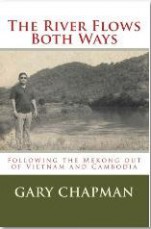
Curt Williams was one of the peculiar elder saints of the United Church of Tilton. In 1973, a few months after I arrived there, he gave me a wooden coin with the letters “TUIT” on one side, when I admitted, “I didn’t get around to doing that.” “You’ll never have to say that again,” he responded with a smile.
Over the years the need for that round TUIT has returned many times, especially when a stack of unread material and unfinished projects has piled up. The only advantage of procrastination has been that some items are so outdated they can be filed quickly in File 13.
One such set of files was marked “Selective Service 1964 to 1972.” That file used to seem so significant. I was a volunteer draft counselor with the American Friends Service Committee, talking to dozens of peers who were looking at their options. I was the potential holder of four deferments—student, medical, conscientious objector, and theological student. There had been many letters, reclassifications, and everyone on my draft board knew me. Even when I stopped responding to their letters, they ignored my non-cooperation. The whole extended episode was a time to be forgotten, and I succeeded in forgetting most of it. Twenty years later I discarded the file.
The letters from friends serving in Vietnam was another matter, still on file. I proposed to my wife just before Thanksgiving of 1967, confessing to her that I didn’t know what the war would do to us. We married during the Democratic National Convention in Chicago, so I did not join my fellow members of the Students for a Democratic Society in Grant Park. Our daughter was born immediately after the Kent State killings when University of Chicago students had dug trenches into the empty lot a block from our apartment building. Our son was born in 1973, just after the Paris Accords were signed and America’s soldiers were being withdrawn. When I got around to it, I told myself, I should write something about those times. In 2007 I did, although it took shape around the experiences of my son-in-law and his brother and became the book The River Flows Both Ways.
President George H.W. Bush said in 1988, “No great nation can long be sundered by a memory.” More than fifty years after those days, “The Vietnam War,” the documentary film from Ken Burns and Lynn Novick, finally puts a comprehensive review of that war before the world.
Some psychologists say that we forget things for reasons that are unconsciously hostile. We also postpone forgetting things, remembering certain things with hostility. Is there not a time peacefully to remember, releasing hostility in the creative act of beating swords into plowshares and spears into pruning hooks? Sometimes it takes a while to get around to it. We wait until the lessons we should have learned earlier are repeated before our eyes.

Which John Bell?

09 Thursday Mar 2017

Posted by chaplines2014 in Books by Gary Chapman, Citizenship, Events, Learning from mistakes, People, Racial Prejudice

≈ 3 Comments

Tags

Books by Gary Chapman, events, life experiences, Memories, Our Land! Our People!, The Trail of Tears

OLOP Cover Photo 3

John Bell was such a popular name in the 1800’s that hundreds of references to that name show up in southern and Midwestern records. Many can be eliminated as related to one another because of birthdates, locations of death, and other indicators that they are not related to the John Bells that are part of our own family, but many remain single references that are unconnected to any other data.


We began with confidence in our own closest ancestors with that name, the great-uncles and great-great-father who are buried in the family cemetery near New Salem, Illinois. From where did that Great-great grandfather come? There were other Bells and even John Bells in the immediate vicinity and surrounding counties who could be easily disregarded because there were no plausible family connections.


You can imagine my excitement when I found a ‘John Francis Bell’ born in the Cherokee Nation with the same birthdate as the Grandfather John F. Bell, reported by his grandson (our Grandpa Hillmann) to be raised among the Cherokees with twenty-one siblings. Then I found a maternal uncle, James Starr, traditionally responsible for his nephews’ upbringing, with twenty-one children of his own. The name ‘John Bell’ also appeared as one of the youthful protectors (or was it a gang?) of the Cherokee Nation’s eastern border, along with Starr’s own sons and several other relatives and neighbors. These instances provided a connection to a full line of John Bells well-documented in Cherokee records. John Francis Bell also disappeared from Cherokee Nation records in 1848 just after the murder of his father, and just before our John Francis Bell appeared in the New Philadelphia-New Salem area.


It was not the case that the records were entirely in agreement with each other. Sometimes two John Bells in the same Bell family appeared in each generation. John Francis Bell had a younger brother named John Martin Bell. They had an uncle named John Adair Bell who had first cousins named John Bell. Often the middle names were not used in separate records.


John Adair Bell was the most famous among them since he and his brother Samuel Bell signed the New Echota Treaty with the Federal Government in 1835. John Adair Bell led one of the large detachments of Cherokee people in the 1837-38 Removal, usually called the Trail of Tears. Members of the Bell detachment were mostly residents of the ancient city of Coosawattee in Georgia, and John Adair’s father, and his brothers, including David Henry Bell, and David’s son, John Francis Bell, were probably among its numbers. I must add ‘probably’ because no full listing of the detachment members has been recovered, and other circumstantial information has been assembled that points to their presence.


The John Bell who was the grandfather of the grandfather of our grandfather, in other words the father of John Adair Bell, has often been mistakenly identified as the signer of the New Echota Treaty and the leader of the detachment, instead of his son. To add to the confusion, his middle name may or may not be the John ‘Christopher’ Bell, born in Greenville, South Carolina, in May 1, 1782, although that date seems to be firm as the grandfather’s birthdate, so I will use that name for the sake of identification. John C. Bell married Charlotte Adair, the mixed Scot and Cherokee daughter of John Adair (the founder of Adairsville, Georgia), and their children included John Adair, David, Samuel, and Devereaux Jarrett, as well as several other well-documented men and women.


John C. Bell’s 1842 Registered Claim clears some additional confusion about his life. He gives reasons for his 1833 move from Coosawattee to Alabama, where his brother Francis Bell was residing in that part of the Cherokee Nation, and the claim clearly indicates that John C.  Bell was ‘white,’ although his family is Indian. John C. Bell is a member of the Cherokee Nation because of his marriage to Charlotte, not because he was born into it. The Georgia legislature’s claim on John C. Bell, later declared unconstitutional by the Federal Court, was a claim on him as a white man and citizen of Georgia. This is interesting because many Cherokee records, dating from around 1900, claim that John C. Bell was half-Scot and half-Cherokee, like his wife. They often say that John C. was the half-blood son of John Bell, the Scotsman, who married a Cherokee woman of the Deer Clan.  This would make John C. commit incest, according to Cherokee tradition, when he married Charlotte Adair, who was also a member of the Deer Clan. I account for this lapse in Our Land! Our People! with the documented incidents later when families in the next generation disregarded clan membership when marrying, as the clan system was breaking down, and people were adopting the English familial system and different definitions of incest, but there was no corroboration of this with regard to John C. Bell and Charlotte Adair, and it is more likely that people later just got confused about which John Bell was which. John C. Bell, a Scot, married a woman of the Deer Clan, Charlotte Adair, and their children, observed the clan traditions and married spouses of the Wolf Clan, or other clans that were not Deer. John C. Bell’s father may have been named John Bell, or he may have been another David Bell; this is where the lines become unclear again, but neither married a Cherokee woman.


If I were to rewrite Our Land! Our People! I would consider John C. Bell as a full-blooded Scotsman, still with his Scot accent, who was one among several men who married Cherokee women and were adopted into the Nation. He was a well-known traveler, trader, farmer, and blacksmith who fell in love with a Cherokee woman, who was the daughter of another well-known Scot trader and traveler, John  Adair. That was enough of a challenge for their lives at the time without the additional burden of an accusation of incest.


It would have been a lot easier if there were not so many ‘Johns Bells’ in and out of the family.


Filling In the Aporiae

24 Friday Feb 2017

Posted by chaplines2014 in Books by Gary Chapman, Cherokee history, Learning from mistakes, People, Words

≈ Leave a comment

Tags

Books by Gary Chapman, life experiences, Memories, Names and Titles, Our Land! Our People!, Out of My Hands, Serendipity, The River Flows Both Ways, The Trail of Tears


OLOP Cover Photo 3 OOMH TRFBWcover

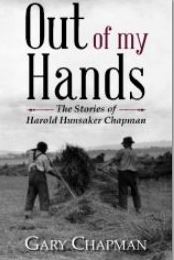
A Chapman is literally and historically a peddler, often of books as well as other trifles. That is how we began anyway, and I have been continuing the tradition. The first popular books for public consumption were chapbooks. Today we would call them pamphlets or paperbacks. One of my favorite Seventeenth Century chapbooks, held in the Lowenbach Collection in Chicago when I was the curator, was titled “Cures for the Plague,” and of course none of the cures would have worked.

One of the advantages of travelling around the country peddling my books is finding out where I have made mistakes in writing them. This has got to be as true when a person writes historical fiction as when writing legitimate history, if that person is concerned about getting as close to the truth as possible, both in telling a good story and in telling an accurate one.

I have known that the stories I have written in my retirement years have been about histories that will never be totally accurate, but are important nonetheless. I have tried to write my father’s early life stories so that they would be interesting and faithful to his spirit, my son-in-law’s and his brother’s emigration from Vietnam and Cambodia so that the stories would honor the ancestors who made their lives possible, and my wife’s Cherokee ancestry so that more contemporary people would appreciate the real sacrifices that have been made in building our country and the values that we should try to serve, even when they have not been served well in the past.

Talking to other people who know some of these backgrounds can be humbling. The soldier who served in Vietnam told me that he doesn’t want to listen to someone who wasn’t there, and he doesn’t want to hear the stories of his enemies, and I can understand his reasons. The family member doesn’t want to have the privacy of her dear deceased grandparents invaded, and I sympathize with that motivation as well, although our grandparents had nothing to be ashamed of and  much to make them proud. The active member of the Cherokee Nation doesn’t need another white man making money off of his people. I can only reassure him that I am not making any money.

I am learning and correcting as I go. I am finding out much that I could not have if I had not published. I am discovering that it is good to write on matters in which you have little prior knowledge or experience, because you begin to fill the holes in your own ignorance.


Where Was Chicken Trotter and When?

24 Friday Feb 2017

Posted by chaplines2014 in Books by Gary Chapman, Cherokee history, Citizenship, Death, Events, Learning from mistakes, People, Racial Prejudice, Small town life, Suffering, Travel

≈ 2 Comments

Tags

Books by Gary Chapman, events, life experiences, Our Land! Our People!, Serendipity, The Trail of Tears

OLOP Cover Photo 3

Recently I was presenting Our Land! Our People! at the Talbot Library and Museum in Colcord, Oklahoma. I did not expect to find much in the little town of Colcord, Oklahoma, but I was wrong. Talbot publishes some significant works on Cherokee history, and their facsimile editions of the 1843 Claims were illuminating on the John Bell family in several respects. For the first time I could actually see the English and Cherokee handwriting of four key family members—John Bell, the father, and three of his Bell sons—John Adair, David Henry, and Devereaux Jarrett (better known as Chicken Trotter).

The 1843 Claims record unreimbursed losses prior to the Cherokee Removal in 1838-39, usually due to thefts or confiscations of property by non-Cherokee white men. They were submitted to recover those losses, and they had to be witnessed by at least two other reputable citizens. The Bells served as reporters of their own claims, witnesses to others, and, in the case of Chicken Trotter, an official recorder of several dozen claims by others.

Chicken Trotter’s reports are some of the clearest and most beautifully written in all of the volumes. Deciphering other writing was sometimes impossible, but “D. J. Bell” provided some of the best. That surprised me, because in other places he is recorded by the simple notation “his mark,” and I never found evidence that he had attended any of the Cherokee schools. It is no wonder that he didn’t sign his work “Devereaux Jarrett” but “D. J. Bell” works well, and there is no competitor for the use of those initials among the Bell family. David Henry Bell would be “D. H.” and he just signed as “David Bell.” As these claims were recorded in the first few months of the year, there was enough time for Chicken Trotter to get back to Texas in order to work with Governor Sam Houston to conclude the Treaty of Bird’s Fort on September 29, 1843, which ended the four years of conflict between the Texas government and several tribes. Conflict followed the second Texas governor, Mirabeau Lamar’s attempt to eradicate the native population. Sam Houston, the first governor, an official Cherokee himself,  had tried to grant reservation status to the Cherokees among others. From one administration to the next, the policies reversed from welcoming people of different cultures to trying to destroy them, and back again.

Chicken Trotter, according to the records of the Texas Cherokee population, had come to Texas during the mid-1830’s, when Chief Duwali (or Bowle, as he was also known), led the tribe. They were and continue to be located in Rusk, Cherokee and Smith Counties, as the areas are known today. When in 1839 Governor Lamar and the Texas militia killed Duwali and at least half of the tribe in a genocidal attack, Chicken Trotter soon became one of the remaining leaders.

Because of the Texas Cherokee account I rewrote Our Land! Our People! removing Chicken Trotter from Alabama, where his father lived, and from the Bell Detachment on the Trail of Tears, and putting him in Texas through the late 1830’s. After publishing, I found evidence that Chicken Trotter served his brothers in the Bell Detachment as a treasurer paying bills along the route. If he accompanied the group the whole way, he was travelling to Indian Territory from September 1838 through early January 1839, before returning to Texas in time to be in danger during the massacre of Duwali and the Cherokees in July.

When a group of Cherokees, including John Adair Bell and David Bell travelled to Texas in September and October of 1845, accompanied by the diarist and newspaper reporter William Quesenbury, they visited the northeast Texas Cherokee settlement, and Chicken Trotter was there leading the group, having established a community farm, including watermelons and pumpkins as Quesenbury notes, because some of their horses got loose and tore up the patch.

In 1848, Chicken Trotter was again in Indian Territory, joining his brother Sam and other Cherokees planning a journey to California to prospect for gold. Sam died on the way but Chicken Trotter and his wife Juliette got there before returning to their people in Texas a year or so later. There is no record about his success or failure in finding gold.

Chicken Trotter was a busy man, travelling back and forth quickly in days when travel was difficult. Maybe that is how he acquired his name.

Our Land! Our People! A Trail of Tears Narrative

01 Friday Apr 2016

Posted by chaplines2014 in Books by Gary Chapman, Cherokee history, Faith, Growing up, Racial Prejudice

≈ Leave a comment

Tags

Our Land! Our People!, The Trail of Tears

OLOP Cover Photo 3

Our Land! Our People! A Trail of Tears Narrative
is now  available from:
https://www.createspace.com/6014646
Amazon.com by title
and…
Burlington By the Book

June 22, 1839, at James Starr’s Farm, Western Cherokee Nation

26 Tuesday May 2015

Posted by chaplines2014 in Books by Gary Chapman, Cherokee history, Death

≈ 1 Comment

Tags

Books by Gary Chapman, Our Land! Our People!, The Trail of Tears

  Cherokee Nation laurel and star

 James and all the men of the household were in the hayfield, cutting and forking hay into stacks in the late Saturday afternoon, when Caleb Starr drove his horse at a fast pace up the path in his carryall. Drawing near James he waved his arms for everyone to come near, looking grave and saying nothing in greeting. The boys—family and slave—stripped to their waists and covered in dust and sweat drew close to the grandfather.

“I want everyone to hear this together,” he said, waiting until the farthest workers had hurried near before continuing to speak. “Major Ridge was murdered this morning just a few miles north of here at Rocky Creek.”

James staggered and slowly lowered himself to the ground. A chorus of exclamations and questions followed—Why? Who did it? Why him? Why now? What were they trying to prove? Is Ross behind this? While Caleb continued to sit on the carryall seat, the rest of them sat on the ground around James and waited for their Grandfather to tell them more. He cleared his throat and remained silent for a finger of time.

“I don’t know much. The Major stayed overnight at Ambrose Harnage’s cabin at Cincinnati. He was heading south to Van Buren to check on the slave Daniel. Daniel had fallen ill after Major sent him there on an errand,. The slave boy named Apollo was with Ridge; he’s about your age, Will.  The boy said they were crossing White Rock Creek when several shots rang out, Ridge slumped in his saddle, and then toppled off. When he saw that Ridge was dead, he high-tailed it to Dutchtown, said Ridge had been shot and killed, and he needed help.”[i]

“Poor fellow was probably scared to death,” interjected Sam.

“I suppose so,” Grandfather Caleb continued.  “I don’t know for sure but I think this be an execution for Ridge’s signing the treaty. I don’t know if Ross has anything to do with it, but I’m thinking he does. But What we have to consider is how many more treaty-signers may be in danger, and that list has you on it, James. You spoke out about the need for the treaty long before it was signed.”

“That’s the truth, Father, We all knew the risk we took when we signed it, so I’m not going to run away from it now.”

“Son, you have to take measures to protect yourself. I just want you to be alert. I do not want you to run away. I want you to be watchful and not take risks if you can steer clear.”

“I’ll keep my men around me.”

They talked for two hands of time about the killing of the man who had for years served as the official Speaker for the Cherokee Nation.  His popularity spread far until he began to speak in favor of negotiating a treaty that would make the best terms they could expect. When Grandpa Caleb took his leave, they had no more interest in the hay. No clouds were in the sky to threaten, so they stopped work for the day and began their return to the house and barns.

Sam, Red Wolf, and Will were walking together. Red Wolf said, “I can’t believe the Major is gone. He was like a grandfather for the whole nation.”

Sam said, “I always heard his name spoken with respect. It is a dishonor to all of us.”

“No honor in it,” Red Wolf responded. “I remember there was much talk when the treaty was signed. Some people expected all the signers would be killed. There was a law that no one could sign away the Cherokee lands for their own benefit. The Major had proposed the law himself. On penalty of death, it was said. My grandfather said all the signers knew that some people would bear a grudge—they wanted blood, and now they have it.”

“Grudges can work both ways,” said Sam. “Where will it stop? Will they kill my father too?” They were quiet after that, until they reached the barn to do their chores

[i] This account comes from p. 338, Cherokee Tragedy by Thurman Wilkins.

Labor Saving Devices (Chapter 28, Out of My Hands)

25 Monday May 2015

Posted by chaplines2014 in Books by Gary Chapman, Farm

≈ Leave a comment

Tags

Books by Gary Chapman, Out of My Hands

OOMH

Riding the sulky plow and the disk and the harrow behind the horses, I was relieved to be preparing the soil for planting. Earl helped a lot with the disking and harrowing. We used both spring tooth and spike tooth harrows to break up the soil into a fine mix, and we usually had two or even three teams of horses working in the field. Grandpa had bought a “Combined Check Row Corn Planter” made by the Chambers, Bering, Quinlan Company at Decatur, and we had to learn how to use it. The planter used wire-tripped check plates and a wheel driven chain to create a planting pattern that made cultivation in more than one direction possible. If it worked the way it was supposed to, we would not have to follow the cultivator with hoes and clear the weeds by hand in the row near the new stalks. We finally figured out how to use it. When we cultivated we still had to do some hand-hoeing and weed-pulling, but the cultivator did more of the weeding than it could do before.

When time came to cut the winter wheat Grandpa brought home a new McCormick Deering mechanical binder.

“What’s going on, Grandpa? You never bought so much new equipment at one time,” I said.

“I’m looking ahead. If these machines can save half as much labor as they say they can, I’ll be able to keep farming and supporting myself after you boys have gone out on your own. You won’t have to worry about your Grandpa when the machinery does the farming. The farm will take care of me, instead of vice versa.”

“That will be the day, won’t it?” I replied. I didn’t know whether there was such a thing as a labor-saving device. Most of the machines that I had seen working soon broke down and took even more work to fix. Yet machines fascinated me, and I enjoyed seeing new inventions operate.

The mechanical binder looked like a platform on wheels, with a windmill apparatus at the front and on top. In front of the platform, a mowing sickle slid back and forth, as the horse pulled the machine. A chain drive from the wheel-shaft powered several pulleys and steel belts that moved the sickle and cut the wheat stalks. The drive also powered the mill as it laid the wheat neatly onto the platform that moved the wheat back into a collector that rolled and tied each bundle of wheat sideways. The bundle either fell to the ground or a man could pick up a completed wheat bundle at the side of the platform and place it on a rack. The machine, if it worked properly, would eliminate the separate mowing with a scythe or cradle, the raking of the cut stalks, the hand tying of bundles, the forking of the bundles onto a hayrack, and the losing of a lot of wheat grain on the ground.   Three workers could still help—one to drive the team that pulled the machine, one to pick up the bundles and toss them onto the rack with the seed heads pointed toward the center of the rack, and one to drive the team that pulled the rack and stack the seed as high as it could go. In a pinch, one person could operate the machine by himself, and come back later to pick up the bundles, but that was a lot to try to do by oneself.

The machine operated beautifully through nineteen acres of wheat, while Grandpa, Earl, and I worked. Then the tying apparatus began to malfunction, and the twine got fouled and knotted into such a mess that I had to use my pocket knife to cut the knots apart. We finished the last acre with me hand-tying the bundles that rolled up to me on the conveyor, and tossing the bundles onto the rack. That was still easier than the old method.

Two full racks of wheat, with bundles stacked to three times my height, waited in the shed until the threshing machine was available.

Grandma Tien Reflects on the Plight of Her Children

24 Sunday May 2015

Posted by chaplines2014 in Books by Gary Chapman, Caring, People

≈ Leave a comment

Tags

Books by Gary Chapman, The River Flows Both Ways, Vietnam and Cambodia

TRFBWcover

If I had known what they would be facing I could never have let them go. How could I have a moment’s peace when my youngest son and oldest grandson faced such dangers?  Not that I expected their journey to be easy. I just didn’t expect them to be at the mercy of men so cruel.

When you and Hue named your boy “Long” I did not know he would have to live up to his dragon name so early in his life. He had to be brave and hold onto his life with stubbornness and patience. You must have been proud to watch him, even as your heart was in your throat. Dragons had been so much a part of our Chinese heritage, and when we came to Vietnam we saw how the people drew strength from this symbol for their land. Even the shape of the country reminded people of a dragon. Yet politics had cleaved the land in two. We yearned for it to be whole, and despaired when we remained a broken and wounded people even after the “reunification.”

Through those days when I did not know what had happened to Phuong and Long, I felt such sadness that they could become dragon people only by leaving their home and struggling to find a way out. I looked into the waters of the river nearby, meditating on the flowing Great Mekong itself, always flowing one way and then another, spreading out into the Cu’u Long, the nine dragons of its delta. Though people have lived long by these waters, along which my children were now treading, they have never stood still. They have always been moving, spreading out, and finding new paths to follow.

One day I heard an old folksong carried on the breeze, sung in the pleasant, tired voice of an old woman like me, my neighbor who had lost several people to the war:      “We will go on living,   Though Mother Mekong     Flows out to sea,   Or turns     back to the setting sun.   We will go on loving,   Though thieves and    aiders   Descend from hills,  Or rains flood down from dark’ning skies.   We will go on working,   Though raging fires   Burn roofs from homes,   Or drought dries the rice paddies.   We will go on singing,   Though endless tears   Fall down our cheeks,      Or strong hands try to shut our mouths.   We will go on. We will go on.   We will go on. We will go on.”

I heard her words as if they were sung on my behalf. I realized that all I had left to do was to look out with longing and with love for the children of my heart. All anyone has to do is to love and cherish the people given to her, if only for the little while that she has them and has sense enough to pray for them.

Bootlegging…the Family Business

23 Saturday May 2015

Posted by chaplines2014 in Books by Gary Chapman, Events, Growing up, Gullibility, Learning from mistakes

≈ Leave a comment

Tags

Books by Gary Chapman, Out of My Hands

OOMH

My Uncle Albert Hunsaker had sold his share in the railroad as it was going bankrupt, and I didn’t know how he was making a living. He and Mary had gotten a divorce. She and the four children still at home continued to live where they had at Yale, but Albert rented a room in an old boarding house nearby with three other guys. Grandpa had suspected that he was making his living by bootlegging, and mentioned it to me, but we did not really know what he was doing. He had lost his car, so he approached me for a ride. He said he had a job over in Indiana. “Could you take me in your Model A?”

I wondered what kind of job he was talking about, but he had helped me get to my jobs years ago, and he was my uncle, so I decided I could drive him where he needed to go. He loaded my car with his “gear and tools,” he called them, and we took off on Route 40 headed east. Meanwhile the Cumberland County sheriff had caught on to his bootlegging operation and came after him. He kept looking back at the road behind us, so I suspected something was wrong. Suddenly he ordered me to turn off the highway onto a dirt road, and he told me to look for a hiding place for the car and ourselves in a gravel pit that was at the end of that road.

“What’s going on?” I yelled at him. “I’m not going to break any laws,” I insisted, but he informed me that I already had. His “gear” included bootlegged liquor and, whether I liked it or not, I was an accessory, and the law would treat me as guilty as he was. We hid ourselves overnight. During the night, while we hid in the dark and didn’t dare even to light a fire, he told me about various trips he had made in recent years. He had carried liquor and made enough to support himself. Sometimes it was over the Canadian border between Detroit and Windsor. More often he carried between Illinois and a club in Indiana. He worked with people connected to the Chicago crime syndicates and Al Capone. He would be in worse trouble if he did not complete this delivery, so I continued the trip with him, and made it back without any further incident. I informed him that I was never going to do that again. “Don’t even think about asking!” I told him.

← Older posts

Subscribe

  • Entries (RSS)
  • Comments (RSS)

Archives

  • February 2022
  • May 2020
  • October 2018
  • December 2017
  • November 2017
  • October 2017
  • June 2017
  • April 2017
  • March 2017
  • February 2017
  • January 2017
  • November 2016
  • October 2016
  • September 2016
  • August 2016
  • July 2016
  • June 2016
  • May 2016
  • April 2016
  • March 2016
  • February 2016
  • January 2016
  • December 2015
  • November 2015
  • October 2015
  • September 2015
  • August 2015
  • July 2015
  • June 2015
  • May 2015
  • April 2015
  • March 2015
  • February 2015
  • January 2015
  • December 2014
  • November 2014
  • October 2014

Categories

  • beach
  • Books by Gary Chapman
  • canoeing
  • Caring
  • Cherokee history
  • Church
  • Citizenship
  • Death
  • Disabilities
  • Events
  • Faith
  • Farm
  • fighting fires
  • Forest
  • Garden
  • Growing up
  • Gullibility
  • guns
  • Health
  • Hiking
  • House
  • Innocence
  • Learning from mistakes
  • Life along the River
  • Miracles
  • Nature
  • Patience
  • People
  • Prayer
  • Racial Prejudice
  • rafting
  • Running
  • Seasons
  • Small town life
  • Suffering
  • Travel
  • Uncategorized
  • Vehicles
  • Volunteering
  • Words
  • Yard

Meta

  • Create account
  • Log in

Blog at WordPress.com.

Privacy & Cookies: This site uses cookies. By continuing to use this website, you agree to their use.
To find out more, including how to control cookies, see here: Cookie Policy
  • Subscribe Subscribed
    • chaplinesblog
    • Join 71 other subscribers
    • Already have a WordPress.com account? Log in now.
    • chaplinesblog
    • Subscribe Subscribed
    • Sign up
    • Log in
    • Report this content
    • View site in Reader
    • Manage subscriptions
    • Collapse this bar
 

Loading Comments...