• About
  • Celebrating our decades…
  • Welcoming all and inclusiveness

chaplinesblog

~ everyday and commonplace parables

chaplinesblog

Category Archives: Caring

You have to be “on the inside”

18 Tuesday Aug 2015

Posted by chaplines2014 in Caring, Church, House, Learning from mistakes

≈ Leave a comment

Tags

A License to Preach, Serendipity

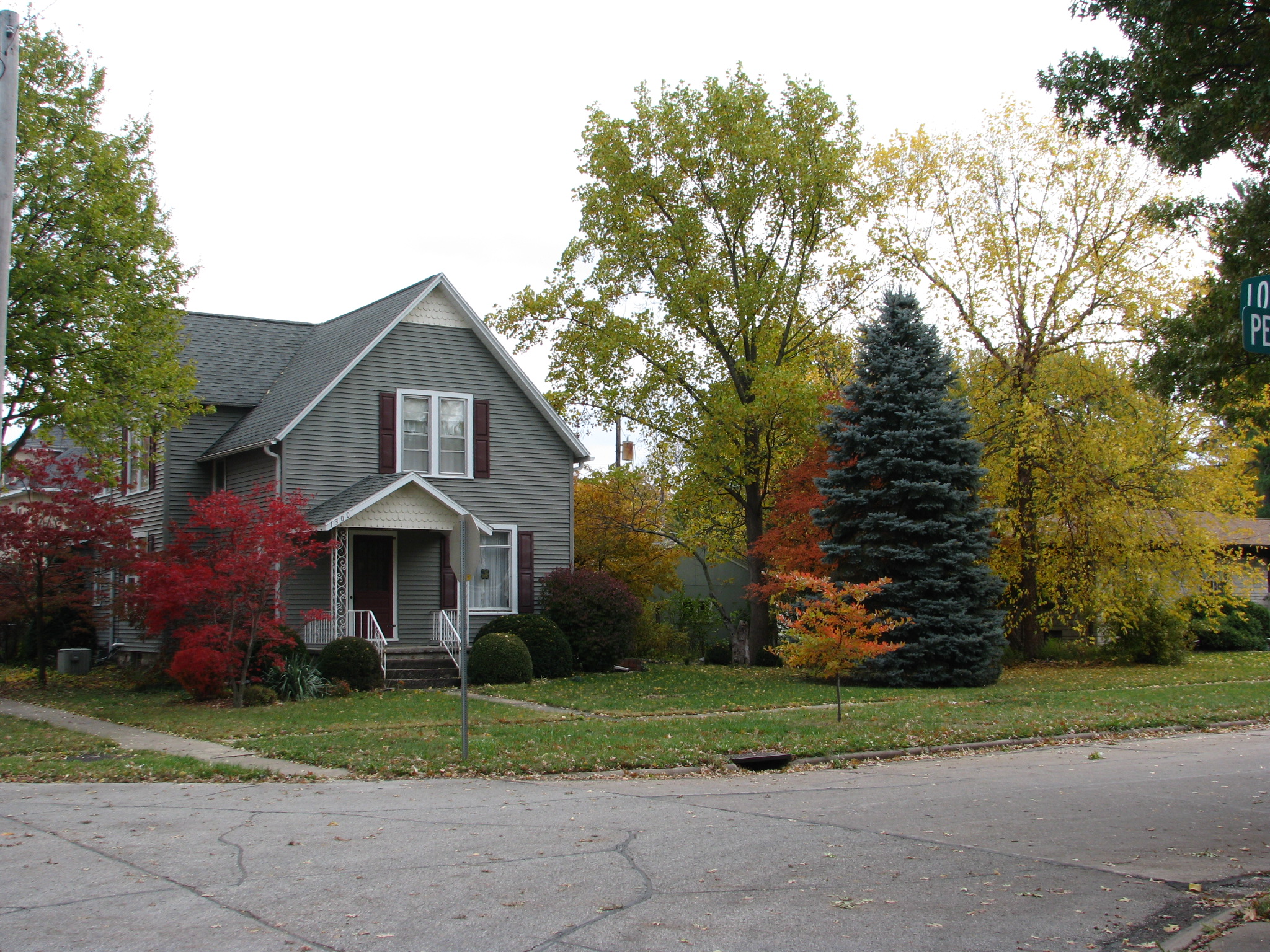
Burlington house in fall

We moved into our old house in Burlington in August of 1988, twenty-seven years ago. Friends helped us to move from Minonk, Illinois, and we sat together on folding picnic chairs on the back porch and had lunch. They noticed that there was a doorbell on the back porch, just outside the kitchen. It worked well, making a “dong” sound, and when the front doorbell sounded it made a “ding-dong” sound.

The doorbell location presented a problem. You had to go through the rear door of the house to get to the doorbell. By the time you made it to the kitchen door, you were already inside the house, and since the kitchen was usually the center of activity in the house, most of the time you could just say hello to anyone who was working or sitting around the kitchen table. You wouldn’t need to use the doorbell.

Like many old farmhouses, most people who know us come to the back door anyway, but the fact is that, unlike when we lived in the country, we usually lock the back door, so getting to the doorbell presented a challenge. You would have to knock on the door in order to get us to let you in so that you could press the doorbell.

Many years ago the back porch was really an open porch. There was no door because there were no walls. The kitchen door was the back door. Sometime in the 1960’s, the Nelsons hired a young Jim Wilson to enclose the back porch, build walls, and put in a row of casement windows to make a three season unheated room. (We liked it so much that we added insulation and a heating vent and made it into an all-season room.) But no one bothered to move the doorbell.

Maybe the previous residents were so friendly that people could just open the door and walk in. Ideally we would like to live that way, but we tend to live a bit more privately, even though the large windows on all sides of the house make it a see-through first floor when the curtains are pulled to the side.

We don’t always make it easy for people to get inside. With the door locked, you had to raise a ruckus to get our attention. It would be a lot more welcoming to place a doorbell in a convenient location, so that is what I did, among one of the top items on my “to do” list.

We don’t always make it easy for people to get inside other things either, but hospitality means making the changes that make it easier to get in.

Loads in Need of Redistribution

17 Monday Aug 2015

Posted by chaplines2014 in Caring, House, Learning from mistakes

≈ Leave a comment

Tags

A License to Preach, Serendipity

Burlington house in fall

My house in Burlington is now 115 years old, but I installed a new 200 amp circuit box several years ago, and the panel of circuit breakers was impressive—23 circuits with room for 28. Only one circuit kept blowing, and when it blew just about everything went with it. The television, the dishwasher, the electric heater, lights and outlets all over the place—all went out. Since something was amiss, I put on my electrician’s sleuthing hat.

The air conditioner, refrigerator, freezer, furnace, clothes dryer, electric range, hot tub, and the clothes washing machine each had its own own circuit. They were dedicated circuits serving major appliances and ones that had enough of a load to justify their single purpose and that was appropriate. They kept doing their own jobs even when the other circuit blew. That totaled eight dedicated workhouse circuits—four of which were double or 220 circuits, so those and the one that blew accounted for thirteen spaces in the box. What about the other ten?

One took care of the outlets and lights in three rooms upstairs. We didn’t use them a lot, but there were times when the whole family came to visit, and then they got put to use. They were there, ready to serve, even when the rest of the house shut down. Then there was one circuit serving one outlet in the half-bath downstairs, and one serving an outlet in the kitchen corner, and another serving another outlet behind the antique Hoosier in the kitchen, and another serving one outlet in a corner of the basement. They seldom served any purpose, so it was plain that they were far from being overloaded. They were seriously underloaded. There was one serving a small fluorescent light fixture above the kitchen sink, which explained why it continued to shine when everything else went dark, but in spite of its perpetual and faithful shining, it was definitely an underused circuit. There were two circuits available for the garage, which took a few years to put into service. Then there was one that went upstairs to the master bedroom where a window air conditioner used to sit. Every one of these circuits was added when someone wanted to add one more light or outlet or appliance to the house. The tenth one served the lights, ventilating fan, and outlets in a new addition that was added several years ago.

Yes, something was amiss when over half of the available circuits were completely idle most of the time, and when one—obviously the original house circuit—was trying to carry too much of the load. I had to spread the load around so that the underused circuits could carry their share, before the breakdown of the one circuit led to more disastrous results.

It made me wonder how much of the power distribution in the organizations and churches in which I have taken part resembled my old house. Perhaps some load redistribution has been in order in other places too?

Shoestrings

01 Saturday Aug 2015

Posted by chaplines2014 in Caring, Learning from mistakes, People, Words

≈ Leave a comment

Tags

A License to Preach

3 Owls

Shoestrings are those things that some people live on, some people trip over, and some people tie more or less successfully. My wife has observed that unsuccessful tying seems to be my habit. Using some of the more advanced techniques does not always seem to help. Eventually they come undone and trail awkwardly, close to and akin to an Achilles heel.

The fancier types of shoestrings are the worst. Finished leather, polished and decorated shoestrings slide out of knots like sleight of hand. Plain old cheap ones hold the longest. Bending down and retying regularly would seem the obvious solution, but there are so many other things to do. Why allow such a distraction to interrupt the more important things, that is until the shoes themselves threaten to slip off.

Shoestrings have a life of their own, which makes “living on them” slippery indeed. Pity those who must. Pity the poor. Pity the state and national governments who must, and who find the easiest place to tighten their belts (mixing metaphors) is to cut programs that assist those who already live on shoestrings. That is slippery! Those who make such decisions are far enough away that they do not have to worry about tripping over those shoestrings, more’s the pity.

Living on shoestrings among people who also live on shoestrings, in a society of people who willingly live on shoestrings so that everyone can have shoes, is much to be preferred to the alternative—loafers, whether they are expensive fancy loafers or not.

When Notes are Unsigned and the Preacher Still Has a Pulpit

08 Wednesday Jul 2015

Posted by chaplines2014 in Caring, Church, Learning from mistakes, Small town life

≈ Leave a comment

Tags

A License to Preach, events, Serendipity

Self-potrait 1988

I had spent a few days in the hospital with some significant heart symptoms. When I returned to the pulpit after my release, I thanked the people for the many get-well cards, encouraging words, and generous offers of help that came to my wife and me, but I told them that there was also one card that had come with the others. Unsigned, it had asked, “What are we supposed to do, if our pastor is ill? We can’t get the help that we need when we have a sick pastor.”

In my notes for that Sunday in winter, 1984, I said that I must try to answer this question, as much for myself as for whoever wrote it. First, my physicians assured me that I could expect to get control of this issue if I took certain steps and continued doing so the rest of my life. I could return to work and have the heart to do it. Second, ministers are human and will get sick, some more often than others. The church will survive, and sometimes it will prosper, as people share more of the load and cooperate with one another in getting things done that the minister cannot do. Third, we are in this church together in all circumstances, good and bad, much like a marriage, and God’s power is most visible when we are at our weakest.  I had certainly felt that power, during the previous two weeks, when so many had taken time to provide what was needed, and I had gained in understanding of what I faced and what I needed to do about it.

I never learned who had expressed those fears in the “get well card,” and I don’t know whether the writer was embarrassed or not about my reference to those words from the pulpit, but the sentiment probably did everyone a favor.

Because of a car with an eagle on the hood…

28 Thursday May 2015

Posted by chaplines2014 in Caring, Death, Events, Learning from mistakes, Racial Prejudice, Small town life

≈ Leave a comment

Tags

A License to Preach, events, Synchronicity

3 Owls

The young man was two years out of high school, making a high wage as he worked in construction on the Clinton nuclear power plant, and proud of his shiny new black Trans-Am with the large eagle design on the hood. He was a brash and mouthy country boy, which was understandable. He was young, energetic, with pockets full of cash, and he came from a small town not noted for open attitudes.

Two young men, about the same age, drove down from Chicago, looking for work, but not finding. They filled out applications, but knew they were filed away at best, often just tossed into the waste can. They had more wishes than experience, and their references were not spectacular. Their car was an old beater, barely held together by Bondo and wire. They were as brash and mouthy as the first young man.

They were on a collision course, randomly, to all appearances, not by clear intent, and they had more in common than they knew, except that one had a good paying job and the other two did not. No one witnessed the event itself. We could only imagine what was said, by whom. It was in Champaign, Illinois, outside a bar. None of the three was operating with his best behavior. Prejudices and resentments fueled their encounter.

A telephone call came to me soon afterward. Would I officiate at the funeral of a young man, killed in an angry altercation, his “pride and joy” car stolen? They didn’t know who had done it, but they had ideas. A neighbor had recommended that they call me. I didn’t know any of them, but I said “yes.” They needed someone.

There was a mob at the funeral, filling the mortuary chapel and its overflow spaces. The directors had “never seen such a crowd,” they said. The young man was well-known, if not always well-loved. Grief held center stage, but it was surrounded by a cast of anger, hatred, and fear.

After conversations with his family, I had plenty to say that appreciated his life and work. I noted the absurdity of dying because of one’s proudest possession, and I named the encounter as a tragic and devastating loss for everyone concerned. I represented a “Savior who died for all,” who loved each person, understanding the mixture of guilt and good that is in each one, and who can be trusted to take what we are and to shape it for  a better world to come. It was too early to expect anyone to understand a call for forgiveness. What did they need to forgive in the young man who was murdered? How could anyone ever forgive the murderers? Mostly the crowd was silent afterward. A few made the special effort to say that they heard what I was saying. Much later, a man said that it was the one sermon that he remembered and pondered.

Grandma Tien Reflects on the Plight of Her Children

24 Sunday May 2015

Posted by chaplines2014 in Books by Gary Chapman, Caring, People

≈ Leave a comment

Tags

Books by Gary Chapman, The River Flows Both Ways, Vietnam and Cambodia

TRFBWcover

If I had known what they would be facing I could never have let them go. How could I have a moment’s peace when my youngest son and oldest grandson faced such dangers?  Not that I expected their journey to be easy. I just didn’t expect them to be at the mercy of men so cruel.

When you and Hue named your boy “Long” I did not know he would have to live up to his dragon name so early in his life. He had to be brave and hold onto his life with stubbornness and patience. You must have been proud to watch him, even as your heart was in your throat. Dragons had been so much a part of our Chinese heritage, and when we came to Vietnam we saw how the people drew strength from this symbol for their land. Even the shape of the country reminded people of a dragon. Yet politics had cleaved the land in two. We yearned for it to be whole, and despaired when we remained a broken and wounded people even after the “reunification.”

Through those days when I did not know what had happened to Phuong and Long, I felt such sadness that they could become dragon people only by leaving their home and struggling to find a way out. I looked into the waters of the river nearby, meditating on the flowing Great Mekong itself, always flowing one way and then another, spreading out into the Cu’u Long, the nine dragons of its delta. Though people have lived long by these waters, along which my children were now treading, they have never stood still. They have always been moving, spreading out, and finding new paths to follow.

One day I heard an old folksong carried on the breeze, sung in the pleasant, tired voice of an old woman like me, my neighbor who had lost several people to the war:      “We will go on living,   Though Mother Mekong     Flows out to sea,   Or turns     back to the setting sun.   We will go on loving,   Though thieves and    aiders   Descend from hills,  Or rains flood down from dark’ning skies.   We will go on working,   Though raging fires   Burn roofs from homes,   Or drought dries the rice paddies.   We will go on singing,   Though endless tears   Fall down our cheeks,      Or strong hands try to shut our mouths.   We will go on. We will go on.   We will go on. We will go on.”

I heard her words as if they were sung on my behalf. I realized that all I had left to do was to look out with longing and with love for the children of my heart. All anyone has to do is to love and cherish the people given to her, if only for the little while that she has them and has sense enough to pray for them.

Missed Signals and What They Meant

21 Thursday May 2015

Posted by chaplines2014 in Caring, Events, Gullibility, Learning from mistakes, Small town life

≈ Leave a comment

Tags

A License to Preach, events

red footbrigde over lily pads

Many years ago a couple came seeking a wedding at the church I was serving. I had worked with the young man as his occupation crossed paths with mine. The young woman did not know me, except by reputation. They had grown up in nearby villages to the one where I lived and served.

When a couple had no experience in the church which they wanted to host their wedding, I usually asked, “Why do you want to hold your wedding here?” In this case I knew the church where she and her family had participated. It was a recent merger of two friendly congregations, who had built a beautiful new building with convenient facilities, all on accessible ground level, instead of “my” traditional Gothic  two-story building with its many steps. So I asked my question.

The bride-to-be paused momentarily, as if uncomfortable, dropping her eyes. The groom came to the rescue, saying that they planned to move to this community and expected to take part in this church, where they would make their home. She seemed to recover her composure quickly, and the rest of our conversations moved smoothly over many appropriate thoughts about marriage and the wedding service itself.

Still I puzzled about that moment and what it meant.

I knew her minister; in fact, he and I gathered with other ministers of our affiliated denominations monthly in conversation. He was popular due to the successful growth of his congregation during and after their reorganization and building program and also due to his outgoing and attractive personality. When we next met, I let him know that the couple had come to me to prepare for their wedding, and that they had shared their plans to move. He did not respond visibly. To my mind, he seemed unusually uninterested in what they were doing or planned to do.

A year later, several of the young women of his church, several of them being juveniles, accused him of sexual misconduct. He was arrested and held in jail for a few days, much to the embarrassment of his wife and children. He submitted his resignation, surrendered his credentials as a minister, and eventually moved to a distant community and took up another occupation, selling insurance. The case against him fell apart as the women, one by one, decided not to go through the visible public process of a trial.

Labor-saving devices

19 Tuesday May 2015

Posted by chaplines2014 in Caring, Learning from mistakes, People

≈ Leave a comment

Tags

A License to Preach, Serendipity

Monkeys see, hear, speak no evil, Bangra.com

When I came to Zion twenty-seven years ago I observed our secretary folding newsletters and bulletins. I thought that this was an inefficient process and could be improved by the use of a machine. We purchased a paper-folding machine similar to one I had used previously. Our secretary used this fine piece of machinery. In my enthusiasm I had forgotten how often it had to be adjusted, how the trial and error process wasted so much paper, how humidity and quality of paper affected how well it slipped through the machine and how often it jammed. It worked as well or better than my earlier experience, but it took longer than our efficient secretary to get the job done. She covered the machine with its dust cover and it occupied a place of honor in the corner of her office. Later it was sold.

Machines may do many things well for us, but they are not the answer to every need and every situation. They are not always efficient nor the final answer. They can be exasperating. They do not always meet the needs of each of us as personally as our own handy efforts. Not paper-folding machines, not computers, not I-pads, not televisions nor DVD players, not voting machines.

A flesh and blood human being, an incarnation, talented and dedicated, serves our purposes better than any mechanical and unfeeling substitute. No automaton and no robot could make a personal and loving demonstration of God’s love the way that a human being did or does.

Something prepared by hand, baked, composed, collected, artfully or even innocently manu-factured often expresses our affection and respect better than something bought from a store or a “manufacturer.”

We may well enjoy many labor-saving devices, many entertaining examples of human ingenuity and art, many elaborate contrivances that can prolong life and sometimes assist healing. They help us… sometimes, but they do not save us. Saving some time, maybe, but not saving us.

Let no machine get in the way of counting each person and each person’s life special, valuable and cared for. Let your hands become the hands of a Master.

Shall we join the demonstrators?

06 Wednesday May 2015

Posted by chaplines2014 in Caring, Events, Racial Prejudice, Words

≈ Leave a comment

Tags

A License to Preach

cropped-circledance.jpgWhat is a demonstration? Is it a showing, a calling of attention to something? Or is it a proof of the reality of something, bringing enough evidence together to be persuasive, as some of us would assert the validity of the metaphorical statement, “Christ is the light of the world?” Like most words we may use the word “demonstration” either way.

Some of us grew up in a world of demonstrations which grabbed our attention, and persisted in presenting uncomfortable truths, and made life more difficult for both demonstrators and others immediately involved, with positive results I would hurry to add. There were sit-ins, marches, and boycotts– many of which demonstrated effectively the presence of racist discrimination and injustice in our world. The demonstrators often had to pay a price in fines and imprisonments, ridicule and bodily injury,

loss of security and even life, in order to demonstrate the deprivations of dignity and opportunity to others. The people demonstrated “against” had to deal with a challenge to their authority, routines and attitudes.

We owe much to one who expressed so powerfully the rule of love as a means to effective demonstration, including self-giving, sacrifice and refusal of violence–  M L King Jr. He made his source in the love of Christ a central affirmation of his work, but he made no secret that he owed much to the influence of the Mahatma as well.

I think of Sheltered Reality with its focus on homelessness, youth and their capacity to express themselves, their songs and their drums as a form of demonstration. The sound of dozens of drums can be deafening, literally, when people do not protect of their ears. It can be uncomfortable and challenging, and those involved pay a price in time and energy for their effort. The obvious “target” is the people who ignore and dismiss the problem. Yet, as the years have  gone by since the group was formed, the problems of homelessness have continued to mount, and someone must make noise about it. As in the earlier demonstrations, youth are often more willing and ready to show their true colors than their seniors.

Many of our demonstrations are more polite and subtle, less brash and potentially offensive, and as a result often less effective. We have some noisy and obvious tools at our disposal– bells, lights, and whistles to draw attention. When and how will we use them? We come from many centuries of tradition calling for human dignity and mutual service, the relief of suffering and life in solidarity with the oppressed. We live with the benefits and burdens of mass media letting us know of innumerable insults and attacks on such values. Where shall we apply ourselves and our resources? Does it matter which situation of need we address or where we work as long as we do? Shall we join the demonstrators?

Starting a list of the odd things that happen around death

05 Tuesday May 2015

Posted by chaplines2014 in Caring, Death, Events

≈ Leave a comment

Tags

A License to Preach, Serendipity, Synchronicity

Luna mothA colleague told me about his uncle who was killed in the Battle of the Bulge during World War II. He went to visit the military cemetery in Belgium where his uncle’s body was buried along with thousands of other casualties from that battle. He entered the memorial chapel where the book is kept that records the names of all the soldiers buried there, with the locations of the graves. He approached the book. It was already open to the page with the name of his uncle, out of thousands of names, and no one there to open the book for him.

A friend’s grandfather died at the ripe age of 95. He had lived at his own home and tended his own garden until a short final hospitalization. She had lived nearby and helped him in his garden. The day of the funeral they went back to his house for a family gathering, and near the front door there was a fresh rose blooming on an old plant, but the rose showed a new combination of red and white, his favorite rose colors, on a plant that before had only produced reds.

I had spent several hours of the day at the bedside of a dear and faithful member of the church, knowing that her time was growing short. She had no family left, and her aged peers could not remain at her side. I also needed a break and took a few minutes for something to eat, and returned as quickly as I could. When I approached the door to her room, I heard lovely symphonic music coming from inside. At least I thought it was coming from inside, though no player or radio had been there before. I supposed a thoughtful nurse had brought one in, to provide the soothing sounds that sometimes calm the sufferer. When I opened the door, walked into the room and stood at her bedside, I saw that she had died, her face finally serene after her struggles with pain. Then I noted that the music had stopped; the room was utterly quiet. There was no player or radio there, and there was no music coming from outside either.

← Older posts
Newer posts →

Subscribe

  • Entries (RSS)
  • Comments (RSS)

Archives

  • February 2022
  • May 2020
  • October 2018
  • December 2017
  • November 2017
  • October 2017
  • June 2017
  • April 2017
  • March 2017
  • February 2017
  • January 2017
  • November 2016
  • October 2016
  • September 2016
  • August 2016
  • July 2016
  • June 2016
  • May 2016
  • April 2016
  • March 2016
  • February 2016
  • January 2016
  • December 2015
  • November 2015
  • October 2015
  • September 2015
  • August 2015
  • July 2015
  • June 2015
  • May 2015
  • April 2015
  • March 2015
  • February 2015
  • January 2015
  • December 2014
  • November 2014
  • October 2014

Categories

  • beach
  • Books by Gary Chapman
  • canoeing
  • Caring
  • Cherokee history
  • Church
  • Citizenship
  • Death
  • Disabilities
  • Events
  • Faith
  • Farm
  • fighting fires
  • Forest
  • Garden
  • Growing up
  • Gullibility
  • guns
  • Health
  • Hiking
  • House
  • Innocence
  • Learning from mistakes
  • Life along the River
  • Miracles
  • Nature
  • Patience
  • People
  • Prayer
  • Racial Prejudice
  • rafting
  • Running
  • Seasons
  • Small town life
  • Suffering
  • Travel
  • Uncategorized
  • Vehicles
  • Volunteering
  • Words
  • Yard

Meta

  • Create account
  • Log in

Blog at WordPress.com.

Privacy & Cookies: This site uses cookies. By continuing to use this website, you agree to their use.
To find out more, including how to control cookies, see here: Cookie Policy
  • Subscribe Subscribed
    • chaplinesblog
    • Join 71 other subscribers
    • Already have a WordPress.com account? Log in now.
    • chaplinesblog
    • Subscribe Subscribed
    • Sign up
    • Log in
    • Report this content
    • View site in Reader
    • Manage subscriptions
    • Collapse this bar
 

Loading Comments...