• About
  • Celebrating our decades…
  • Welcoming all and inclusiveness

chaplinesblog

~ everyday and commonplace parables

chaplinesblog

Category Archives: Events

Fireworks do not make a pretty fire

29 Wednesday Apr 2015

Posted by chaplines2014 in Events, fighting fires, Small town life

≈ Leave a comment

Tags

The Volunteer Fire and Rescue Squad

Yellowstone Pool

Our town, though small, about 3000 residents, lay adjacent to a town of 43,000, with other small towns nearby. The town boundaries encompassed railroad yards, an Interstate highway, a major automotive foundry, and a variety of industries, businesses, and housing stock.

When the fire alarm came, in the evening after sunset, from the fireworks factory, we expected the night might prove interesting. Knowing how many chemicals and how much explosive material could be involved, the chief did not wait to call for mutual aid from the surrounding volunteer departments. He appealed for help immediately. Memories of the Crescent City propane explosions were still fresh among the crew. Many buildings and several firetrucks had been lost in that conflagration.

Sprawling over thirty acres, the fireworks factory consisted of many small metal buildings widely separated and scattered around a level field. The distance between buildings was a benefit. When we arrived one building had already exploded, leaving small fires in evidence in several places. That looked dangerous. Surely time was short and the prediction of what might happen next, impossible.

Our vehicles provided the light beyond the fires, and we began the fight with the water from the tanker trucks, while we hooked up our hoses to the distant hydrants and ran great lengths of hoses onto the property. We had to position ourselves between the fires and the potential sources of further explosions. A trailer park and more housing sat on lots just beyond the fences. We hurried to put out a score of small fires, and grass fires, and we succeeded. We spent the next two hours combing the grounds for smoking coals and hotspots. With little fanfare, the mutual aid companies and eventually our squad rolled our hoses, packed up, and went our separate ways.

There were no multi-colored displays, no “ooh’s” and “aah’s,” no entertainments of any kind. We were glad.

The unexpected guest at the cat bowl

27 Monday Apr 2015

Posted by chaplines2014 in Events, Farm, People

≈ Leave a comment

Tags

Serendipity

Monkeys see, hear, speak no evil, Bangra.comWhen visiting the farm, I tried to fit into the family routines and help out with chores as we always did, making our visit less work for our parents, and giving us more leisure time together. This included weeding and harvesting from the gardens, chopping weeds from the soybeans, mowing the yards, painting whatever needed painting, washing dishes, and feeding the animals. The cats were fed at the back door. They fed themselves part of the time of course. Why else have cats except to reduce the rodent population? To keep the cats from wandering away, we had to provide a basic menu of some of their favorite items—mostly table scraps.

One evening I volunteered to take the cat’s portions out to their food bowl. My mother cautioned me that there might be someone else there to greet me, but not to worry, that animal would be happy just to fit in with the rest of the cats. I wondered what animal she might be talking about. They always had some raccoons and opossums nearby, and a neighborhood dog would sometimes come, so that is what I expected to see.

I turned on the light and stepped out the back door to see the circle of cats around the feeding bowl, noting that one cat had an unusual coloring—black with a white stripe down its back. The skunk’s face looked up at me, among the other hungry feline faces, with a friendly dare in its eyes, “Feed me or else.” With some trepidation I tried to act quite casually, and put the food into the bowl carefully, so as not to offend any of them by slopping too much onto their beautiful fur coats. The skunk pretended not to notice that I was new to the task, and helped itself to its share with the rest of the cats, while I slowly and courteously backed through the door, like any proper hired servant.

Sometimes you just have to chop a hole in the roof.

07 Tuesday Apr 2015

Posted by chaplines2014 in Events, fighting fires

≈ Leave a comment

Tags

The Volunteer Fire and Rescue Squad

IMG_0002Two weeks after I had volunteered for the Volunteer Fire and Rescue Squad, there was a house fire in our town, and it was my first time to suit up in my new gear. The call came in the evening just after dark. When we arrived on the scene, the floodlights illuminated the smoke curling around the edges of the roof of the one story kitchen wing of the house, while the two story section next to that wing showed no involvement yet.

The fire chief, Don, asked me to get an ax, while he carried a hose on his shoulder, and we would climb the ladder just set up onto the roof of the kitchen wing. While I was thinking to myself,  “Me? Climb onto the roof of a burning house?” he asked me, not as a question, but as a dare, “You can chop a hole in a roof, can’t you?” And I said back, “I’ve been choppin’ wood since I was ten. I guess I  can.”

All the time, I was thinking to myself, “I hate heights. What am I doing, climbing onto a roof?” But peer pressure can be a good thing, especially when there is no time to reflect. Ax in hand, onto the roof I climbed.

“The best way to learn,” Don said, “is on the job. You’re going to ventilate this attic.” So he showed me where he wanted the hole, and how big to make it, and warned me to be ready to jump back, if there were more flames than he expected, when we opened it up. Meanwhile he had signaled to charge his line, and he held that hose secure and ready to release. Then I chopped my first hole in the roof of a burning house, and stood downwind of the smoke that began to pour out of it. As the smoke began to turn red Don directed the stream into the hole in the direction of the light.

Five years later, another alarm came, this time in the afternoon, when I was the senior volunteer on duty. The fire was burning at a church down the road a mile from my own church, and when we arrived on the scene, we saw smoke pouring from the vents under the roof of the one story fellowship hall next to the main church. Only a small amount of smoke wafted into the hall underneath a false ceiling that allowed no access to the attic. We prepared to climb onto the roof and ventilate the attic.

The minister of the church stood nearby, and when he saw what we were preparing to do, he said, “You’re not going to chop a hole in my roof!” Part of me wanted to say, “O.K. I don’t want to climb up there anyway.” Instead I said, “We have to. We can pour all the water we want on the outside of this building, and all you’re going to have when we’re done, is four walls of concrete block.”

Not appreciating my vast experience, he said he’d make sure I was kicked off the squad. He thought I was just wanting to burn down his building. We saved the building, though the hole in the roof needed  some patching, and the water damage required a new ceiling, and new wiring had to be installed according to code, among other things. No one asked me to resign my unpaid volunteer job, but for several reasons it seemed a fitting time to move on to other jobs that needed doing. I left the chopping of holes in other people’s roofs to other people.

The communion wafer, the substitute piano, and the not-quite-empty tomb

05 Sunday Apr 2015

Posted by chaplines2014 in Events, Seasons

≈ Leave a comment

Tags

events

purple butterfly

Jan should tell this story, as she often has, but it’s my turn to tell it here in this space.

Jan was arriving at church on Easter morning, planning to enjoy the egg casserole at the youth-sponsored Easter breakfast, but at the same hour that the first Easter service was beginning. Meeting her at the door was a nervous Elder who let her know that “You have to save your husband (the minister), who is having to lead worship a cappella, since the pianist who promised to play for the first service did not show up.” True to her ready-for-just-about-anything role, Jan went into the sanctuary, picked up a hymnal and proceeded to provide piano accompaniment for the service. Very nicely.

Then came the communion service at the end of worship, when her husband placed the wafer and cup on the piano so that she could participate in communion, after she finished the piano accompaniment. Jan tried to pick up the bread—one of those very thin, whole grain, unleavened wafers—but it slipped out of her hand and fell between two center keys, and got stuck. The keys immediately ceased to play. It was at the end of the service so people had few chances to miss those missing notes.

Jan tried to get that wafer out but could not. Other people tried without success. The only remedy was to bring the rehearsal piano from the choir room behind the sanctuary into the sanctuary, after the choir had finished its warm-up for the second service. Jan recruited a few helpers to move that piano through the small vestibule between the two rooms.

The vestibule had been decorated as the empty tomb for a children’s activity which was to take place at the opening of the second worship service, within a few minutes, but the drapings and hangings of that “empty tomb,” had to be removed temporarily, to move the piano through that space. Jan proceeded to take the drapings down and she was in the process of putting them back in place, holding the last drapery up with her hand, when the children arrived to peer into the tomb.

There she was, caught in the empty tomb in her choir robe, with a score of children peering into the tomb and asking, “Who is that, and what is she doing?” Whereupon, Jan spoke the first thing that came to her mind, which was, “You come seeking Jesus of Nazareth who was crucified, but he is not here. He is risen!”

The children returned to the sanctuary telling about the angel who had announced the resurrection to them, much to the surprise of the children’s worship leader who expected them to say that they had found an empty tomb.

Ad libbing, improvising, and extemporizing all the way through the drama of the resurrection story—a comedy of sorts—does it sound familiar? The original actors did not have their act together, did they? It wasn’t exactly planned out to the last detail, nor are our lives. We just have to remember a few key lines.

Come to Life Again…May 14, 1901

02 Thursday Apr 2015

Posted by chaplines2014 in Cherokee history, Events, People

≈ Leave a comment

Tags

Our Land! Our People!

The Pike County Democrat, May 15, 1901, Luna mothcarried this story under the heading “Come to Life Again:”

A dispatch from New Salem under date of May 14 tells the following story of the supposed death and coming to life of a prominent lady of that village: This community has been startled by the apparent death of a well known woman and the return to life of the supposed corpse. Mrs. Anna Bell, daughter of the late Thomas Gray, a former treasurer of Pike County, and one of the most prominent women in this community has been very ill for some time and all hopes had been given up for her recovery. Mrs. Bell, a pious Christian woman, had herself given up all hope, and was calmly awaiting the end. She bade her family and friends good-bye while she still had strength to talk. Sunday she passed into a trance, which was pronounced death. The doctors were summoned, and after a close examination they said she was dead. There was no pulse and no perceptible beat of the heart. Neither did she breathe. The usual tests were made, the tests that are generally regarded as infallible, and all indicated death. A lighted candle held before her mouth and nostrils did not flicker in the least. The lighted candle was held back of her hand, and there was no dim light between the fingers. There was no doubt that she was dead, and while the family mourned, preparations were made for the funeral. The undertaker was summoned to prepare the body for burial, and it was decided that the funeral should be held Tuesday. The body grew cold while the preparations for the funeral went on, but after several hours it became warm again, and then the supposed corpse gave signs of returning life. The undertaker was sent home and the physicians were again called, and after several hours more Mrs. Bell returned to consciousness. She is still alive but is very low and weak. The family is rejoicing.[i]

[i] The Pike County Democrat, Pittsfield, Illinois, Volume XLIV, Wednesday, May 15, 1901, page 2. The Barry Adage also carried the story.

Willie Ann (Anna) Bell was the grandmother of Glen Hillmann, who was living with her at this time. Glen Hillmann was the grandfather of Janet (Kleinlein) Chapman.

The Long Walk Home… April 1, 1925

02 Thursday Apr 2015

Posted by chaplines2014 in Events, People, Seasons

≈ Leave a comment

Tags

Out of My Hands

purple butterfly

Spring was on the way again, and we were busy with the preparations. Grandma supervised the planting of the seed trays again, but she did not come out to watch the garden being plowed.

Our neighbor Elza Warfel lived a mile north of us. He came to the house on Thursday, March 19, saying he had been hearing some news and wanted to make sure we knew about it. A horrible tornado had ripped through southern Illinois just sixty miles south of us. The tornado had been worse than any storm on record.

“Even worse than the tornado that hit Mattoon and Charleston in 1917?” Grandma asked. She marveled that any storm could be worse. Nearly a hundred people had died and hundreds of homes and businesses had been lost back then. Grandma had known some of the people affected. It had been so close to home, and familiar places had disappeared.

“This is so much worse than that, people are wondering if it is a sign of the end,” Mr. Warfel said. The tornado had traveled nearly three hundred miles from Missouri through Illinois into Indiana. It hit Murphysboro, West Frankfort, and dozens of smaller towns, farms, and schools. It traveled fast, during the afternoon when everyone was busy and going about their regular jobs. A thousand people may have died, more thousands injured. Thousands of homes were gone. No one had ever seen such a storm.

“It strikes the just and the unjust,” Grandma said quietly. “In an hour when no one expects it.” And she closed her eyes and I think she may have been praying.

Why wasn’t there any warning?” Grandpa wanted to know. “They have telegraphs, and telephones along the railroad tracks, and people can see what’s happening. Why don’t they tell the people ahead that something’s coming, so they can find shelter?”

“I don’t know,” Elza said. “The government says they don’t want to alarm and frighten people, but people do need a warning. It seems that times are getting worse and worse. Things are changing.”

Grandma shed tears for the suffering she continued to hear about. The death toll reached seven hundred people, with fifteen thousand homes destroyed. We were only a few miles away, but we did not know what to do to help. She was small enough to start with. She seemed to shrink before our eyes, except for the enlargement of her legs and feet. Grandpa and Chlora wrapped her legs and feet with white gauze as the doctor had told them to do, but it didn’t seem to help much.

A week and a half later, in the evening, Grandma announced softly that it was time for her long walk. We looked at each other, puzzled, but no one asked her what she meant. She asked Mary to read to her from her old bible, the Twenty-third Psalm, which Mary did, stumbling over some of the words and needing Pearl’s help. Grandpa needed to help her move from her easy chair in the parlor into the downstairs bedroom. She didn’t wake up the next morning. Grandma died on April 1, 1925. We thought it odd that she died on the day everybody called “April Fools Day.” She could never tolerate fools.

“Grandma enjoyed these last few months, didn’t she?” Mary said.

I pictured her at the Christmas tree. “I guess she did,” I said to Mary.

The undertaker came from Hidalgo, bringing a casket, and set up the casket on a stand in the parlor. Family and neighbors came from all over the neighborhood , bringing food, and visiting through the evening, and some stayed up through the night, as we prepared for the funeral the next day.

Brother Hutson and Brother Ward and other elders of the church came and prayed with us during the evening, and they returned in the morning when we closed the casket. They walked with us as my two uncles, three cousins and I carried Grandma’s  casket to the black funeral carriage pulled by two black Belgian horses. We followed the carriage in Grandpa’s Model T. Other cars and horse-drawn buggies followed us as we drove the three and a half miles toward Aten Cemetery It was a slow ride through Hidalgo, and then we turned right on the dirt road that led to the woods northwest of Hidalgo. Her father, Solomon Cooper, had been buried back in 1899– after the service we found his old  tombstone. Grandpa Lon said he would be buried there, too, right next to Grandma. Aunt Allie and Uncle Bill said they had a plot right next to Grandma’s and Grandpa’s. It seemed strange that my Mom and Dad, and Grandma and Grandpa Hunsaker, would be in different places, but I guess it didn’t matter.


October 16, 1838, in Red Wolf’s Day Log

28 Saturday Mar 2015

Posted by chaplines2014 in Books by Gary Chapman, Cherokee history, Events

≈ Leave a comment

Tags

Books by Gary Chapman, Our Land! Our People!, The Trail of Tears

Cherokee Star

This morning at sunrise a procession of our people moved slowly and silently to the Tennessee River. Below the head of the Great Bear we dipped in the water and cleansed ourselves. Some of the women elders shed tears, knowing they will never return to this land of our ancestors.

Father tells me that we will travel several days along the river. After we leave it far behind, it will curve around so we will cross it once again in central Tennessee. Today feels like the day we have been preparing for all my life, when we leave our land behind. We embark on a long journey to a new land to call our own. Will it be a Promised Land? Will the Great Spirit provide for us as we wander through the wilderness? Will many of us die on the way?

As I watched people the last three days, I could tell that a lot of our people are weak and sick. Measles, whooping cough, bloody bowels are among the sicknesses that still are showing up. Several of us are just weak and worn out from being sick, and not having enough good food and shelter. Many of us do not have strength for such a journey. It is not a good beginning.

Grandfather was with the lead wagons today. Some people were slow to get underway, and Udoda, Jack, and even the soldiers came back and forth trying to get the slowest ones started. Uloghi Jennie—I can’t call her Uji yet—, the children, Ezekiel, Will and I are still at the tail. I began to feel impatient with those who were slow to move, because they made us wait too.

The wagon path on the south side of the river is sometimes in sight of the water. Sometimes the path moves up the mountainside into rocky areas and brush under the trees. The mountains are steep on the other side of the river. With the rocky narrow road and slow start we barely made four miles today. We cannot see the Great Bear’s head anymore.

The Discard pile at Delmo

03 Tuesday Mar 2015

Posted by chaplines2014 in Events, People, Travel

≈ Leave a comment

Delmo 1

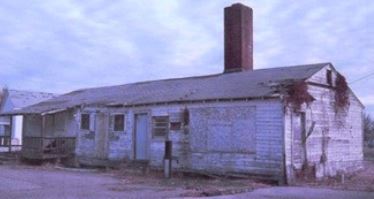
During a winter school break, back in 1977, I took a group of high schoolers from Tilton, Illinois, to Delmo Community Center, at Homestown, in the Missouri Bootheel. We loaded many boxes of good used clothing and groceries into a borrowed truck, and ten students into two cars, and headed south southwest. The weather was cool and gray overcast, but as cooperative as we could expect for midwinter. The church had contributed to Delmo for many years, but no one had visited at any time that anyone remembered.  When we arrived the first thing that we did, with the guidance of a gracious older staff member, was to tour the facilities and to drive around the area. The community center consisted of a barracks-type utility building, about sixty by thirty feet,  left over from the end of the Great Depression, a church and a bunkhouse  in varied conditions of maintenance and decay. Nearby, Pemiscot and New Madrid Counties showed several crowded housing developments of similar age and condition, filled with nearly identical four room cottages, mostly segregated by race, set in the middle of cotton and tobacco fields, a taste of the deep south in this appendage of Missouri. It was culture shock for our blue collar but relatively comfortable contingent.

Returning to the center, we entered the utility building that housed the thrift store, packed full of goods, and suffering from a leaky roof that left the unmistakable odor of mold and mildew in the place where we would be working. Instead of unloading our donations into the space, we knew that we had a major clean-up to accomplish first.

We spent a day sorting and organizing the clothing and household goods that were there. Every piece of clothing that was damaged was piled outside on the ground in the drizzling rain. The store was supposed to be open again at noon the next day, and we had a lot to do to get it ready. We organized into work crews, and after the existing goods were finally in order, we unloaded the boxes we had brought and placed them neatly onto the racks, tables, and shelves. At the end of the day, we knew that we could have it ready for the reopening the next day. The areas under the leaky roof were cleared of goods, with buckets in place, and the pile of discards outside reached above our heads. We planned to load the discards onto the truck the next day and take them to a landfill.

Our group relaxed for the night in the bunkhouse across the parking lot, enjoyed the warmth and the kitchen for our meals, played some games, sang some songs and slept till 7:30 in the morning, when we rose to a light snowfall and some noise outside. We could see that people were coming and going from the area, but we didn’t know why. When we finished breakfast we returned to the store and saw that the discard pile was almost entirely gone. Only a few of the worst items remained. Neighborhood residents had come to claim the things that we thought were too bad to sell for pennies or to give away inside. As one of the women still there explained, she could turn the things she was holding into usable items. She would wash and mend, take apart and remake, until she had children’s clothing, quilts, aprons, and all kinds of things that could be used. Her plans were multiplied many times by the others who had carried armfuls of the pile away.

We returned to our work, chastened by the new knowledge that our judgments were impaired. After the store reopened people came back, and checked out with normal armfuls of used goods, still celebrating the windfall taken from the discard pile outside and warmly welcoming us into their community.

https://preservemo.wordpress.com/most-endangered/2011-2/ and http://www.nps.gov/nr/feature/afam/2010/delmo_community_center.pdf

The day I wrecked the tractor and died

25 Wednesday Feb 2015

Posted by chaplines2014 in Death, Events, Farm, Growing up, Learning from mistakes

≈ Leave a comment

Tags

A License to Preach, events, Serendipity

IMG_0002

I was about 13 years old, and had driven the tractor, specifically the Farmall “H” tractor, for about five years. On that spring afternoon I was returning from the field at the south end of the farm where I had finished harrowing in preparation for planting. (We did that sort of thing in those days.) The smooth lane lay ahead of me along the fence line at the edge of the farm, and I was in fourth gear. I had never driven in High gear, and this was my opportunity. I slipped the gear shift into High and released the clutch and took off. The speed was exhilarating as the fence posts whizzed by. I must have been going twenty miles per hour! I pulled the throttle open a little more. Soon I was approaching the bank where the lane broadened and sloped gradually toward the river bridge, where I knew I would have to slow down.

I was already at the ridges when I realized that I should have slowed earlier. The ridges intersected the lane and were the last visible remnants of the lodges of an Indian village. I had often combed those ridges for abandoned grinding stones, celts, knives, and drills, and I should have remembered that they were there, forming a bumpy area even at slower speeds. Before I knew it I was bounced off the seat, holding onto the steering wheel with all my strength, trying to pull my legs back onto the platform to apply the brakes. Meanwhile the tractor headed toward the creek with the old spring at its head.

Somehow the tractor stopped just at the lip of the bank where the creek had eroded the field. I peered down into the creek bed twenty feet below, and I saw my body there in the creek bed underneath where the tractor had come to rest… in an alternative universe where miracles do not happen. I died that day, or I knew I would have died. My parents would have grieved long and hard and blamed themselves for letting me drive that tractor. There would have been no end to sadness, as we used to say.

I backed the tractor away from the bank and drove it slowly, very slowly, back to the farmyard. I do not know whether I was happier for having been reborn from the dead or more ashamed for having nearly wrecked my parents. I do not know whether they noticed my strange thoughtfulness as the next weeks passed. Perhaps I appeared no different than usual.

Certainly I have thought about that second chance at life many times since. One spring just before Easter fifteen years later I could not shake the memory as I headed toward a farmhouse where a couple had just lost their only son in a farm accident. He was thirteen years old, and he had fallen off the tractor under the disk. What could I say to them?

Oh yes, I still have the “H.” It is my favorite tractor of all time. Like me it has been baptized in murky water and raised from a muddy grave

Hue decides to try again to get Au out

20 Friday Feb 2015

Posted by chaplines2014 in Books by Gary Chapman, Events, People

≈ Leave a comment

Tags

Books by Gary Chapman, The River Flows Both Ways, Vietnam and Cambodia

TRFBWcover

Before making any more decisions about leaving, Hue decided to wait to hear from Phuong and Long to make certain that they had been able to emigrate. The weeks following the return to Go Dau felt longer and longer as they waited for word that Phuong and Long had made their way beyond the refugee camps in Thailand. Food and money were scarce, and hope itself became harder to find. Finally a letter from the United States arrived, and they celebrated the news that Phuong and Long were safe and secure there.

Hue decided to find Aunt Phan again to see what kind of plan of escape still made sense. Aunt Phan had a son, Trai, and his wife, Lien, and their two little boys named Anh and Ling. Trai and Lien were restless and eager to leave. They all began to search for a way out. They knew that smaller numbers would have a better chance. Girls would have a harder time making the journey, especially the journey on foot through the jungle, if that was the only way to escape.

News of families trying to escape by sea alarmed everyone, and the government published horror stories of families lost at sea, turned away at foreign ports and forced to return to Vietnam, and starving and dying of thirst. They wanted to discourage people from trying to leave. The dangers of the jungle and war in the west were frightful enough. The family had no experience with the sea, so only the land escape route made any sense. But what chance did they have to make it out of Cambodia? Civil war was raging on the western frontier. The Vietnamese Army was in charge of most of the route, and fewer people would be able to make their way through the checkpoints since they were firmly in control. Could any of them really go on that journey with Trai and Lien, people they barely knew?

Who would try to make the journey? When they weighed and considered everything, only Au had a good prospect of making it out successfully. Could they send him by himself? Hue finally decided to send Au with Aunt Phai’s son and his family. Au would soon be thirteen. He would have to cross Cambodia almost on his own, just in company with his older cousins, supposedly helping them with their little children.

Grandma Tien and Hue had a hard time saying goodbye to Au.  They felt certain that this was the last time that they would see him while either of them lived. He and Muoi were born just two months apart, and he was both son and grandson to Tien. With the situation in Vietnam growing more desperate week by week, and all the troubles they had seen, how could they keep him with them? He needed a chance to live a better life than he would face in Vietnam.

At the end of the calendar year, after farmers were harvesting the long season rice, Hue took Au to Svay Rieng, where Au climbed on board a truck used for smuggling.  She paid the smuggler the money he required, told Au that she was proud of him and knew he would succeed, and gave him a parting hug and kiss. The smuggler had his workers load large bags of rice, each weighing about one hundred kilos, onto the bed of the truck. A large piece of plywood in the center of the truck bed allowed a small open space for people to sit underneath, so sacks of rice could be stacked on top as well as on the sides of the space. Au and Trai’s family of four crammed themselves into the smuggling space. Au did not know his cousins; he did not remember meeting them before, but he soon became familiar with their smells and sounds and the feel of their bodies around him. The truck had no shock absorbers, so they became sore from riding with little room even to wiggle, although the two little children did a lot of wiggling. Confined in such a small, dark, hot space, jostled this way and that, they all felt like chunks of meat thrown into a lidded wok with frying rice.

← Older posts
Newer posts →

Subscribe

  • Entries (RSS)
  • Comments (RSS)

Archives

  • February 2022
  • May 2020
  • October 2018
  • December 2017
  • November 2017
  • October 2017
  • June 2017
  • April 2017
  • March 2017
  • February 2017
  • January 2017
  • November 2016
  • October 2016
  • September 2016
  • August 2016
  • July 2016
  • June 2016
  • May 2016
  • April 2016
  • March 2016
  • February 2016
  • January 2016
  • December 2015
  • November 2015
  • October 2015
  • September 2015
  • August 2015
  • July 2015
  • June 2015
  • May 2015
  • April 2015
  • March 2015
  • February 2015
  • January 2015
  • December 2014
  • November 2014
  • October 2014

Categories

  • beach
  • Books by Gary Chapman
  • canoeing
  • Caring
  • Cherokee history
  • Church
  • Citizenship
  • Death
  • Disabilities
  • Events
  • Faith
  • Farm
  • fighting fires
  • Forest
  • Garden
  • Growing up
  • Gullibility
  • guns
  • Health
  • Hiking
  • House
  • Innocence
  • Learning from mistakes
  • Life along the River
  • Miracles
  • Nature
  • Patience
  • People
  • Prayer
  • Racial Prejudice
  • rafting
  • Running
  • Seasons
  • Small town life
  • Suffering
  • Travel
  • Uncategorized
  • Vehicles
  • Volunteering
  • Words
  • Yard

Meta

  • Create account
  • Log in

Blog at WordPress.com.

Privacy & Cookies: This site uses cookies. By continuing to use this website, you agree to their use.
To find out more, including how to control cookies, see here: Cookie Policy
  • Subscribe Subscribed
    • chaplinesblog
    • Join 71 other subscribers
    • Already have a WordPress.com account? Log in now.
    • chaplinesblog
    • Subscribe Subscribed
    • Sign up
    • Log in
    • Report this content
    • View site in Reader
    • Manage subscriptions
    • Collapse this bar
 

Loading Comments...