• About
  • Celebrating our decades…
  • Welcoming all and inclusiveness

chaplinesblog

~ everyday and commonplace parables

chaplinesblog

Category Archives: Farm

Where the chickens cross the road

12 Saturday Sep 2015

Posted by chaplines2014 in Farm, Nature, Travel

≈ Leave a comment

Tags

events, Serendipity

Monkeys see, hear, speak no evil, Bangra.com

Staying close to the Wildlife Loop at Custer State Park in the Black Hills of South Dakota, we frequently went to see particular animals—the elk that roam the southeastern part of the park, the prairie dogs research area in the south, the wild turkeys and horses in the Bluebell area, the pronghorn, deer and bison wherever they happened to roam, the mountain goats and bighorn sheep in the steep mountains, and, of course, the burros in the southeast. We didn’t always want to travel the whole loop, so we found the shortcuts that took us in and out of the park. Our most frequent visit was to the southeast section, and Lame Johnny Road provided the seven mile shortcut.

Lame Johnny was a former sheriff who wound up hanging from a nearby tree. His road provided more than a shortcut and a sad story. Along its winding way a half mile from the park, it intersects a barnyard with a house and a couple of outbuildings on one side, and a barn and chicken house on the other. On our luckier evenings we got to see a sight that is among the rarest. Not only did we see a chicken cross the road, but we saw a flock of chickens cross the road, in single file, followed by the farmer. We did not think to ask him why the chickens were crossing the road, because we were so amazed to see him herding his chickens. On some occasions the farmer did not appear, but his chickens still crossed the road in single file.

On one occasion a guinea hen and cock provided an additional entertainment, chasing each other in loops around and under the car we were driving. We came to a quick stop, of course, but the guineas continued their chase for several minutes. It was a hold-up. We could have used Lame Johnny’s help in his sheriffing days.
Wait for me, Mary Alice.

10 Thursday Sep 2015

Posted by chaplines2014 in Caring, Farm, Growing up, People

≈ Leave a comment

Tags

Memories

farm windmill

Of the stories Mary Alice (our Mother) loves to tell, some of her most familiar tell of moving to the farm northeast of New Salem, Illinois. Glen Hillmann moved his family from Quincy, Illinois, to New Salem in 1935, leaving his job as a life insurance salesman, when life insurance was a lower priority than putting food on the table for most people, to become a farmer, with help from his father-in-law, Ezra Doane. Ezra was preparing to move into town, leaving his farms and houses to his daughters’ husbands.

The Hillmanns, Glenn and Dollie Leigh and their four daughters, moved in January, to be ready to do the field work when spring came. Mary Alice had just completed sixth grade in a program that made it possible for students to work at their own accelerated pace. That meant that seventh grade in nearby Tennariff School had already been in session for four months. She came into that grade mid-year in a one-room school, and she faced major changes from the separately graded city schools in Quincy. She wondered whether she could make it in such a strange setting, starting months behind her classmates, with all the grades in one room, and a one-eyed man named Hugh Kerr as her teacher, the first male teacher that she had. She didn’t have to worry. She excelled in her work and fit right in. When Hugh Kerr sent her out with a pail to fetch water, after she had also used the girls’ fancy outhouse, and she returned to the classroom without the pail, then was embarrassed to remember and she slipped out to return with the full pail a few minutes later, and the teacher didn’t say a word to her about it, no punishment or anything, she decided it was going to turn out all right.

Tennariff School sat just around the corner of the section from their farmhouse, an easy quarter mile walk for her and little sister Rosalyn except on the coldest of days. Barbara was still at home, too young for school. In another year Mary Alice joined her older sister Aileen in New Salem High School. That was a long two mile walk up and down the steep Rutman and Quinney Hills. Aileen was taller and her stride longer, but Mary Alice was faster, and she liked to run up the hills, much to the consternation of her less athletic sister. Aileen would whine from behind, “Wait for me, Mary Alice! Wait for me!”

Mary Alice had little patience for her older sister, who didn’t like the farm and didn’t adjust to farm life. Having no boys to help, Mary Alice was happy to become her father’s helping hand around the farm. She did chores with the animals and hitched the horse to the plow, and learned to work in the field. It wasn’t long before a tractor replaced the horses, but she didn’t mind working with either one. Aileen, on the other hand, had no interest and missed the city life.

The old memories and the feelings that came with them persist long into the dementia of aging. Aileen died nearly twenty years ago, and Rosalyn was too young to do field work until after Mary Alice had moved on to study and work at Western Illinois College and obtain her teaching certificate there, which she used for years to teach in a one room country school. Now, when she can neither farm nor teach nor run, she often tells us of the times when she could. She pictures that sister yelling “Wait for me,” every time she has to get up out of bed, use that walker, and head down the hall.

The springs that fed the villages

30 Sunday Aug 2015

Posted by chaplines2014 in Farm, Growing up

≈ Leave a comment

Tags

Memories, Serendipity

cornfields

I was one of those boys who spent a lot of my time roaming around the farm. When I wasn’t in school or doing chores, I was usually in the woods or along (or in) the streams, or examining the earth to see what I could find. Since there was evidence of the human occupation of that land for at least 3,000 years or so, there was plenty to find. Rocks of all kinds sat in the landscape, many on the surface, especially around the streams, mostly because the land had been covered by glaciers that had deposited that variety of rocks from a vast distance.

Rocks with special shapes captured my attention. From sandstone to granite, heavy large rocks that had bowls shaped into their surface often served as grinding stones for grains and nuts that were gathered or grown. Hand-sized round rocks with grooves or indentations had a useful life as anything from hammers to shaft-sharpeners. Worked flint came in the form of knives, projectile points, and hide scrapers. Broken shards of pottery showed the workmanship that had once shaped a vessel or an ornament. Rarely did I walk across the land and not find something that had been used by someone long ago.

Where clusters of tools showed up in one place the earth itself often showed the marks of human occupation with berms of soil shaped into circles and rectangles where lodgings had once stood. These remains clustered in three areas, each where a spring still kept the soil moist through summer seasons, even though farmers had for eighty years stripped the land of trees, cultivated, and shaped grass waterways into the middle of those fields, where once those springs had bubbled to the surface.

It impressed me that where my parents, two brothers, and I lived, many hundreds of people had lived for uncounted generations, leaving their marks. Where had they all gone? For only a few years heavy machinery had plowed and prepared those fields, and large barns, cribs, and a house or two had stood, providing a livelihood for a handful of people. For hundreds of years that same land had fed, sheltered, and provided for hundreds, using only what they found there, living simply “off the land.” They had to understand a lot in order to accomplish what they did.

Modern civilization depends on a complexity of specialized and diversified tasks, with a comparatively small number of people providing food for a multitude. Living off the land now means leaving the land behind, but by doing that, we know less and less about what sustains our lives, and more and more about the tiny components of our own specializations. Where is the progress in that?

Persistent Welcomers

19 Wednesday Aug 2015

Posted by chaplines2014 in Farm, Growing up, House, Seasons

≈ Leave a comment

Tags

A License to Preach, Memories, Serendipity

Burlington house in fall

They welcomed us in great numbers when we arrived in August, 1988. Throughout the fall they kept coming, sometimes pestering us to the point that we wondered whether we would ever be rid of their nuisance. Even in January they kept moving, popping up at odd times and places, such as on my collar during a children’s sermon at a Sunday morning service. If I had been quick-witted, I would have turned that moment into an object lesson on persistence. When winter came in its fullness of ice and snow, they still persisted, although I saw only one every day or so. Boxelder bugs.

As a child I became acquainted with them. They were more numerous and lasted longer than lightning bugs, so when it was no longer possible to collect the more illuminating lightning bugs, I turned my acquisitive attention to boxelders, seemingly harmless, and only slightly stinky, but certainly persistent and ubiquitous. The worst weather in heat and dryness brought out the best in them, but they made themselves known even in cold and icy times in the warm comfort of the house. In Burlington the bugs had occupied the soft maple trees that grew along the berm immediately north of our house. On the farm they had occupied the namesake boxelder trees that grew along the river bank not far from the house. In both cases they moved inside when they decided the conditions were better there. For whatever reason the bugs left our Burlington house the next spring and have never returned.

I want such long-lasting determination, such unexpected perseverance, for my faith. When I am caught in mundane, day-to-day tasks that seem to drag on endlessly, I need the unexpected reappearances of joy and surprise that persist in spite of all I do to suppress them or tame them or forget about them. When I am overcome by the scale of problems that seem insurmountable, I need the confident will to see a victory that gives meaning to my feeble and uncertain movements. Sometimes such faith does appear in solitary heroic figures battling all odds. Sometimes such faith comes in masses of individuals filling every corner and space with their relentless march of life conquering death. Even such lowly creatures as the boxelder bug encourage us by the nuisance of their example.

Drinking from the Common Cup

30 Thursday Jul 2015

Posted by chaplines2014 in Farm, Growing up

≈ Leave a comment

Tags

Memories

farm windmill

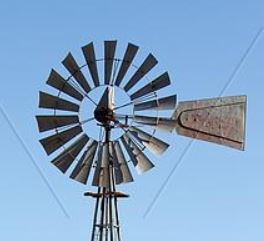
On a hot summer day, when farm work left us dirty, tired, and thirsty, nothing was more refreshing than a drink at the old well pump. A hand pump brought up cold water from a hundred feet deep where an underground river ran sixty degrees cold and seemingly inexhaustible. The tall windmill that stood above the well had served for many years, but it was disconnected in the twelve years of my childhood and youth there. There was still plenty of water available for a water fight or filling the tank nearby where we kept the turtles for a time, and sometimes took a dip ourselves.

One tin cup hung from a hook on the steel windmill frame, and it served as our common cup, in the years when we did not fear each other’s germs, but gladly took our turns for several full to overflowing cups. It was a fitting symbol of everything we shared in those days, including the work that put most of the food on our table from the garden, fields, and feedlots. No bottled water or soda pop or even fresh-squeezed country fair lemonade tasted as good or quenched thirsts as well as the water from that well.

Later a deeper well and a pressure tank was needed to sustain a constant supply for the growing herds of cows and pigs. That well was connected to a hydrant at the same location, and its lever was easy enough to open and didn’t require any pumping by hand. And that water, just as laden with iron as the first, and just as cold, served us well also, but there was a magic to that old hand pump that the new system lacked. The water splashed out of that old pump in flagrant gushes that responded to the force of our muscles, and always filled the cup in one big splash, washing our feet as well. The new well nearly knocked the cup out of our hands, but never filled it to the brim. The uncontrollable pressure gave us a shower as well, much higher than the feet. No matter, I suppose. The shower was often as welcome as thirst quenched. And the same battered tin cup still served.


Climbing into the Haymow

01 Wednesday Jul 2015

Posted by chaplines2014 in Farm, Growing up

≈ Leave a comment

Tags

A License to Preach

cornfieldsThis season brings back memories of baling hay and storing it in the haymow. The haymow in one of the four barns on the farm where I grew up was a mysterious and inaccessible place. The ladder that provided access had rungs placed far apart, so only children who were older and stronger  could climb. They would play amid the bales of straw—hiding, building forts, castles and towers. I could listen and barely see through the opening in the center of the floor. All that I could do was imagine the fun of a forbidden zone.

By the time I gained the size and strength to climb the ladder, the neighborhood children had grown too old to play haymow games, and my allergies to dust and mold paid me a day of misery for every minute in close confines with hay. Still, the haymow held an attraction for a curious explorer.

As soon as my legs could reach the tractor peddles I was allowed to work in baling season. I put the tractor in reverse and pulled the forked- together bales of hay from the hayrack up to the rail at the peak of the barn, through the large open door into the dark recesses of the haymow itself. When I heard the yell from inside the maymow, I stopped the tractor and waited for the hayforks to be tripped and the bales to fall to the floor. It was an exciting operation. Later I was assigned the task of pulling the trip cord. I knew I had reached maturity when I was allowed to insert those large steel tines of the hayfork into the bales to be lifted from the wagon, like some giant spider enfolding its prey. But I could never spend any time in the haymow itself, and my fascination with it only grew.

In the field I could load bales on the rack easily, especially when the breeze blew the dust away, but work in the haymow was off-limits.

The haymow represents to me all of those special places where mysterious activities continue unobserved and inaccessible to the rest of us. Surgery rooms, political strategy spaces, board rooms of major corporations, and scientific laboratories all hold such mysteries. Many important decisions that affect our lives are made beyond the reach of masses of people. Much of religion has been controlled in that way in past centuries, but openness and democracy has infiltrated many denominations in recent decades. Still the end of our years and the destiny of heaven remain shrouded in mystery as unfathomable as a haymow to a small child.

I hold onto a sense of mystery as one of the deep sources of wonder and joy. The vast universe and the discoveries of science call out for more exploration and determined pursuit, but they also leave much room for bewilderment. Many places are beyond our scope and capacity to understand.

We sing about the mysteries of struggle and work and the direction we are headed in the spiritual “We are climbing Jacob’s ladder.” Most people understand that the goal of the song is heaven. As for me my sights are lower. I would just like to be able to reach the haymow.

The Miracle of the Broken-down Weed Chopper

25 Thursday Jun 2015

Posted by chaplines2014 in Events, Farm, Forest, Seasons, Yard

≈ Leave a comment

Tags

A License to Preach, Serendipity, Synchronicity

redwood treesI was ready to start the weed chopper and mow the strip at the sides of the Shepherd’s Gate house and driveway. Two or three mowings a season is enough to keep new trees and plants from encroaching “my” space, which is fifteen to twenty feet around the perimeter of the house. The rest of the surrounding acres remain wild woodland and take care of themselves. The engine started well, but the mounted mower whiplines did not engage. Turning off the engine I found the belt had slipped off its pulley. If I had not already been thinking about my father, this could easily have reminded me of the many times some piece of equipment broke down and delayed the work of planting or harvest or general farm maintenance.

When it came to tools my father was not the most organized. Keeping the right tool in the right location was a challenge, and as a result there were usually a dozen places where that tool might be. The tool house was well-organized, thanks to the my older brother’s intervention, but tools tended to migrate from there to every tractor, barn, crib and shed which had its own specialized tool collection. It was always frustrating to run into a task that required the tool that was somewhere on the other side of the farm. In my case on this day, the small tool box I had with me held only  pliers, inadequate to the task of removing the cover to reinstall the belt. The plumbing kit, ready for the bathroom fixture installation tasks that I had planned for this trip,  had wrenches that were much too large to reach the bolts I had to loosen.

Then I thought of the small toolbox Dad gave me to use at Shepherd’s Gate. It had a few well-worn basic tools. Did I remember that it had a driver and socket set? I looked and it had only two sockets, but what were the chances that these were the ones that would fit? I took them out to the chopper, and one fit the larger bolts, and the other one fit the smaller bolts perfectly! Thereafter the job was a snap. Thanks, Dad.

This is hardly evidence convincing to anyone of a surrounding cloud of witnesses or an angelic host. Plenty of times I have had to learn from my oversights, go out and buy or borrow the necessary tool, or take that extraordinary amount of time to complete the simplest task. But this time Dad was definitely present, patiently gazing over my shoulder, and chuckling, so I add it to the list of revealing moments when I speak my grateful dues and recognize the continuing influence of the unseen. Thank you, Abba!

A Dispute About a Fence

23 Tuesday Jun 2015

Posted by chaplines2014 in Farm, Learning from mistakes, Small town life

≈ Leave a comment

Tags

events

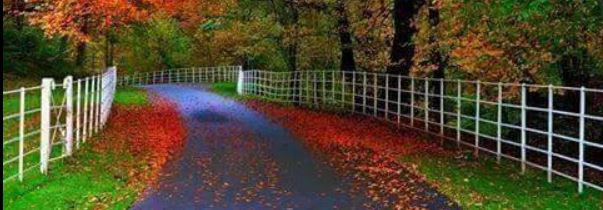
road and fences in autumnHope, Illinois, sits in the middle of the prairie east northeast of Champaign. The little settlement boasts a handful of houses and a church, and the Van Doren brothers, one of whom, Mark, made this story into a poem, but I tell it in prose as a fact.

Two farming neighbors nearly came to blows over what kind of fence should separate their properties. By law each was responsible for the right half of the fence line as they faced each other’s land. They finally stopped talking to each other after every discussion of the fence became a debate, an argument, and a trading of insults. They both agreed that a fence must be built, but they resolved their dispute in an unusual way. They each built the whole fence exactly the way each of them wanted to build it; only they built that fence a couple of feet inside their own property lines, so a no-man’s land ran the whole length of their property’s border. Neither man dared to mow or maintain the land between them, on the other side of his fence, so it grew up in weeds, shrubs, and finally trees. The strip of unkempt land harbored animals and birds that otherwise would have no shelter, but that was the only benefit of the parallel fence monument to stubbornness and a refusal to compromise.

For all of its isolation and small population Hope produced some fine, gentle, and considerate people, some of whom I have had the pleasure to know. It’s sad that it must be remembered mostly for two of its most recalcitrant members, but Hope is not alone in that, is it?

Picking corn by hand

30 Saturday May 2015

Posted by chaplines2014 in Farm, Growing up

≈ Leave a comment

cornfields

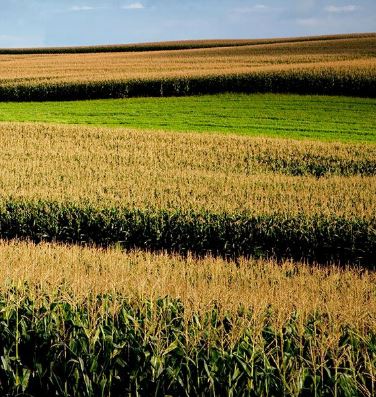
From the middle of the cornfield the tall rows seemed to go on forever. Walking down the rows, reaching up to pluck and shuck the corn by hand, hearing the endless rustling of the dried leaves and stalks in the chill breeze, perhaps an eight year old boy could be forgiven for thinking the task would go on forever also. The John Deere Model `A’ pulled a green wooden wagon, into which we boys pitched the ears. I sometimes overshot, earning the ridicule of my older brothers. Would this job never end?

I was enthusiastic in the beginning, not knowing what I was getting myself into. Reaching the row’s end I had the momentary hope that now we could stop. But we had many more rows to cover, and soon we were lost somewhere in the middle of the field again.

We were just opening the fields so that the combine could have the room to be pulled into the fields and along the rows, but to a little boy the half-mile rows seemed endless.

Only a few years earlier no combine was available and teams of horses pulled the wagon through the field. But that was as unimaginable as having to do the whole field by hand. Somebody else with a longer view of things might say that this was an easy job now, that we should appreciate the new machines that made the task so easy, but all I could feel was the sense of being lost in the middle of cornfields and having to walk for miles, stripping one stalk at a time, throwing at least a million ears of corn into a wagon, believing I would never again sit at a supper table.

Sometimes the feeling returns. I am a little child, trying to do tasks of faithfulness one stalk at a time in the middle of an endless sea of corn, thinking that an end and a reward is beyond belief. Someone else must see the larger picture, someone who has been around a while, who knows what the corn is for, how much each bushel is worth in the scheme of things.

Are we all little children in a huge field, finding the job is well beyond us at times? Then at last we again come to the end of the row, and the sun is getting low, and Dad says it is time to head for the house and supper.

Labor Saving Devices (Chapter 28, Out of My Hands)

25 Monday May 2015

Posted by chaplines2014 in Books by Gary Chapman, Farm

≈ Leave a comment

Tags

Books by Gary Chapman, Out of My Hands

OOMH

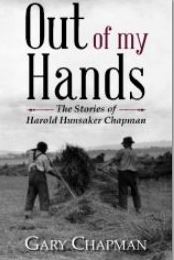
Riding the sulky plow and the disk and the harrow behind the horses, I was relieved to be preparing the soil for planting. Earl helped a lot with the disking and harrowing. We used both spring tooth and spike tooth harrows to break up the soil into a fine mix, and we usually had two or even three teams of horses working in the field. Grandpa had bought a “Combined Check Row Corn Planter” made by the Chambers, Bering, Quinlan Company at Decatur, and we had to learn how to use it. The planter used wire-tripped check plates and a wheel driven chain to create a planting pattern that made cultivation in more than one direction possible. If it worked the way it was supposed to, we would not have to follow the cultivator with hoes and clear the weeds by hand in the row near the new stalks. We finally figured out how to use it. When we cultivated we still had to do some hand-hoeing and weed-pulling, but the cultivator did more of the weeding than it could do before.

When time came to cut the winter wheat Grandpa brought home a new McCormick Deering mechanical binder.

“What’s going on, Grandpa? You never bought so much new equipment at one time,” I said.

“I’m looking ahead. If these machines can save half as much labor as they say they can, I’ll be able to keep farming and supporting myself after you boys have gone out on your own. You won’t have to worry about your Grandpa when the machinery does the farming. The farm will take care of me, instead of vice versa.”

“That will be the day, won’t it?” I replied. I didn’t know whether there was such a thing as a labor-saving device. Most of the machines that I had seen working soon broke down and took even more work to fix. Yet machines fascinated me, and I enjoyed seeing new inventions operate.

The mechanical binder looked like a platform on wheels, with a windmill apparatus at the front and on top. In front of the platform, a mowing sickle slid back and forth, as the horse pulled the machine. A chain drive from the wheel-shaft powered several pulleys and steel belts that moved the sickle and cut the wheat stalks. The drive also powered the mill as it laid the wheat neatly onto the platform that moved the wheat back into a collector that rolled and tied each bundle of wheat sideways. The bundle either fell to the ground or a man could pick up a completed wheat bundle at the side of the platform and place it on a rack. The machine, if it worked properly, would eliminate the separate mowing with a scythe or cradle, the raking of the cut stalks, the hand tying of bundles, the forking of the bundles onto a hayrack, and the losing of a lot of wheat grain on the ground.   Three workers could still help—one to drive the team that pulled the machine, one to pick up the bundles and toss them onto the rack with the seed heads pointed toward the center of the rack, and one to drive the team that pulled the rack and stack the seed as high as it could go. In a pinch, one person could operate the machine by himself, and come back later to pick up the bundles, but that was a lot to try to do by oneself.

The machine operated beautifully through nineteen acres of wheat, while Grandpa, Earl, and I worked. Then the tying apparatus began to malfunction, and the twine got fouled and knotted into such a mess that I had to use my pocket knife to cut the knots apart. We finished the last acre with me hand-tying the bundles that rolled up to me on the conveyor, and tossing the bundles onto the rack. That was still easier than the old method.

Two full racks of wheat, with bundles stacked to three times my height, waited in the shed until the threshing machine was available.

← Older posts
Newer posts →

Subscribe

  • Entries (RSS)
  • Comments (RSS)

Archives

  • February 2022
  • May 2020
  • October 2018
  • December 2017
  • November 2017
  • October 2017
  • June 2017
  • April 2017
  • March 2017
  • February 2017
  • January 2017
  • November 2016
  • October 2016
  • September 2016
  • August 2016
  • July 2016
  • June 2016
  • May 2016
  • April 2016
  • March 2016
  • February 2016
  • January 2016
  • December 2015
  • November 2015
  • October 2015
  • September 2015
  • August 2015
  • July 2015
  • June 2015
  • May 2015
  • April 2015
  • March 2015
  • February 2015
  • January 2015
  • December 2014
  • November 2014
  • October 2014

Categories

  • beach
  • Books by Gary Chapman
  • canoeing
  • Caring
  • Cherokee history
  • Church
  • Citizenship
  • Death
  • Disabilities
  • Events
  • Faith
  • Farm
  • fighting fires
  • Forest
  • Garden
  • Growing up
  • Gullibility
  • guns
  • Health
  • Hiking
  • House
  • Innocence
  • Learning from mistakes
  • Life along the River
  • Miracles
  • Nature
  • Patience
  • People
  • Prayer
  • Racial Prejudice
  • rafting
  • Running
  • Seasons
  • Small town life
  • Suffering
  • Travel
  • Uncategorized
  • Vehicles
  • Volunteering
  • Words
  • Yard

Meta

  • Create account
  • Log in

Blog at WordPress.com.

Privacy & Cookies: This site uses cookies. By continuing to use this website, you agree to their use.
To find out more, including how to control cookies, see here: Cookie Policy
  • Subscribe Subscribed
    • chaplinesblog
    • Join 71 other subscribers
    • Already have a WordPress.com account? Log in now.
    • chaplinesblog
    • Subscribe Subscribed
    • Sign up
    • Log in
    • Report this content
    • View site in Reader
    • Manage subscriptions
    • Collapse this bar
 

Loading Comments...