• About
  • Celebrating our decades…
  • Welcoming all and inclusiveness

chaplinesblog

~ everyday and commonplace parables

chaplinesblog

Category Archives: Growing up

“I never saw a cross-eyed preacher…but I’d rather see than be one.”

21 Wednesday Oct 2015

Posted by chaplines2014 in Disabilities, Growing up

≈ Leave a comment

Tags

A License to Preach, Memories

Self-potrait 1988

I was seventeen when I had the opportunity for a surgery that would either correct or confirm a visible defect. By that time I had worked for years to overcome the “diploplia” that was gradually making my right eye, the near-sighted one, more and more dominant, and my left eye, the far-sighted one, less and less effective. I had worked on muscle control exercises, used more and more prisms in my eyeglasses, changed lenses every few months, and tried bifocals, but I was still losing ground steadily in the muscle control of my eyes. Surgery was the only option left, if I was to avoid being cross-eyed and losing the use of my left eye.

Many people have had to deal with that physical defect at a younger age than I did, and many have not had an opportunity to correct it, but, whatever age a person is, the social costs are present, and a teenager, hoping for a public career, finds those costs daunting. I was not looking forward to eye surgery, which came at the end of my senior year in high school, but I was dreading the loss of eyesight and visible attractiveness more.

Eye surgery to correct the muscle arrangements for both eyes involved a three hour procedure with my eyes removed from their sockets, the ophthalmology surgeon reported, a two-day stay in the hospital, and a three to four week recovery with my eyes bandaged.  It was my first surgery. I remember being nauseous afterward; my reaction to the sodium pentothal used for anesthesia was extreme. I don’t know what I said to the nurses, but I’m sure it was the truth. There was a general concern that the violence of my reaction was not helpful to my eyes, but I couldn’t do a thing about it. When I was returned to my room, I had a roommate, who happened to be a shooting victim in serious condition. I couldn’t see anything, of course, but his moaning and gasping did keep me awake throughout the night. It was a good time to pray, and his condition was clearly more critical than mine.

In the morning a tray was placed before me, and I felt my way through the various items on it. I poured the carton of milk mostly into a glass and proceeded to try to drink it, finding that it was actually cream provided for the sticky mass in the bowl, making my gag reflex return. My roommate was transferred to intensive care, I was told. All in all I was happy to go home the next day. I worried about the results of the operation for the next three weeks, until the bandages came off. The whites of my eyes were still red, but it was so much easier to focus and see without effort that I was greatly relieved.

The surgeon was pleased with the results, and, even though they weren’t perfect, they were so much improved that I no longer had to worry about loss of vision. In fact my eyesight steadily improved for many years.

I still wonder what my life and career would have been like without that surgery and its successful results. Like anyone with a visible disability, I suppose I would have adjusted and done my best to overcome the reactions of people around me and tried to compensate with other abilities. I am thankful that I didn’t have to.


Waste of a good mind

28 Monday Sep 2015

Posted by chaplines2014 in Caring, Events, Faith, Growing up, Gullibility, People, Small town life

≈ 1 Comment

Tags

A License to Preach, Memories

3 Owls

A new teacher but already a middle-aged man, Mr. Vickers introduced himself to his first chemistry class at Paxton Community High School, “My first name is Mister.” He was always quite formal, organized, and meticulous, and he proved to be an excellent instructor in chemistry and physics. His instructions were orderly and systematic. If we did our part, we had no excuse not to learn in his classes. I was pleased when he offered me an opportunity to take part in a special summer class for prospective science majors at Northwestern University after my junior year in high school. That was the summer I also took advantage of an opportunity to acquire a Methodist License to Preach though the Illinois Wesleyan University licensing school.

Mr. Vickers did not have much use for religion. He did not reveal this through disparaging words, and we as students never heard him say what experiences had led him away from the involvements in religious organizations that typified many of his teaching colleagues in that community. He did not know that my thoughts about the future were divided between pursuing studies in science or religion. At the end of that summer someone must have told him of my divided interests.

Not long after the beginning of school that fall, Mr. Vickers interrupted class to invite me into the hallway. I was apprehensive that I had done something wrong. His manner was usually sober and severe, so there were no clues that his interest was paternal. He explained that he had been disappointed to learn that I was thinking about a career in Christian ministry. “That would be a waste of a good mind,” he said. He had several other things to say about it that I have forgotten, but that sentence stuck in my thoughts.

My pastor at the time, Glen Sims, was a learned and compassionate man. Without his example of an intelligent person serving courageously and usefully in that community, Mr. Vickers might have been more persuasive. As it was, I knew that Mr. Vickers sincerely cared about me and my future, and he gave me a preview of challenges to come.

Mr. Jones, the speech teacher, soon added another viewpoint. Public speaking was a much more uncomfortable subject for me than chemistry or physics. You have to be able to cry on cue, if you’re going to be a preacher, Mr. Jones said in words to that effect. Preachers appeal to the emotions, not to the intelligence, according to Mr. Jones. Mr. Barth, the English teacher, also added his advice. His brother was a Lutheran minister, he said, and it’s not an easy life. You have too rosy a picture of it as a career. You have to be prepared to be lonely. People have many unrealistic expectations of the clergy.

The advice began to accumulate. Most other career choices were not subject to such interest. Just about everyone had an opinion about religious vocations. Mr. Vicker’s advice stood out among the rest. I heard him say to me that I had a good mind. That was a source of pride. I also heard him issue the challenge, “Do not waste such a gift. It would be easy to waste it, going in the direction that he thought I was going.”

Living in an Ecumenical Family

22 Tuesday Sep 2015

Posted by chaplines2014 in Caring, Faith, Growing up, People

≈ 3 Comments

Tags

A License to Preach, Serendipity, Synchronicity

Bridge in Autumn

Many years ago, when I learned that my first cousin had become a Muslim, I was surprised. Central Illinois is not the environment in which I expected Muslim conversion to occur. My cousin, however, met her husband at the University of Illinois, where many students and teachers represent the wider world. He was from Iraq, and they fell in love. She found enough affirmation of her Christian beliefs within Islam to convert, which was easier for her than for him, considering his strong Muslim family ties. Their marriage occurred in the years in which Saddam Hussein and the United States’ administration were on friendly terms, and she went with him to live in Iraq for several years, while his work in agriculture—teaching and government administration—proved rewarding. Then life began to change for everyone concerned, and they found their way back to Illinois and the university. Meanwhile their family grew, and soon I had many Muslim cousins. We were an ecumenical family, with Jews, Christians—both Catholic and Protestant, Muslims, and Buddhists, all related to one another by close family ties.

By the time I had learned of her conversion, I had read a few books on Islam and its practices and history, as well as other faiths. That was an interest of mine, which I pursued in college as well, majoring in philosophy and religion at Illinois Wesleyan University. My instructors were not advocates of Islam; most of them were professing Christians, but they were for the most part fair in their presentations of other faiths, and they encouraged our open-minded communication and visits to the worship and study centers of other faiths, which I did enthusiastically.

Although I was secure in my own faith traditions, aspects of Judaism and of Islam were still attractive enough for me to develop both sympathy and admiration for the faithful people I met from those backgrounds. Clearly a spectrum of beliefs, from hardline and literalistic to permeable and metaphoric, existed in the three branches of the children of Abraham. We were cousins, both in fact and in faith, not always friendly and loving cousins, but potentially so.

A biography of Moses ben Maimon—Maimonides, the great Jewish philosopher—fascinated me. Like many of our ancestors of all three faiths he had to flee Spain at one of the historic points of intolerance and expulsion. His refugee journey ended in Egypt under Islamic rule, and he soon found his way into the medical service for the ruling family. His dilemma was whether he could declare himself a Muslim. It would ease his entrance into Egyptian society. Was there a sense in which he could accept the faith of Islam?

As far as the meaning of the word ‘Islam’ was concerned, there was no problem. Being subservient or obedient to the One God was what their faith was about, and so was his faith. That they called him Allah presented no problem, for he understood that ‘Allah” was an Arabic word for God, much as the English people had adopted the old English word ‘God.’ Hebrew had adopted many Semitic words from their cultural environment as names for ‘YHWH’ as well. The practices of Islam—profession of faith, daily prayer, charity, fasting, and pilgrimage to Jerusalem, Medina and Mecca—presented no insurmountable obstacles; those practices were familiar and admirable.

The main question for Maimonides was whether he could affirm that Mohammed was a prophet of God. He didn’t have to declare that Mohammed was the only prophet, since their writings affirmed the prophetic gifts in Abraham, Moses, Elijah, Isaiah, and even Jesus and his mother Mary. Certainly in practice Islamic attention was fixed on Mohammed, but they accepted the prophetic roles of the others as well. Finally, after much thought, Maimonides decided that Mohammed had at least as much prophetic spirit as some of the earlier prophets of Israel. Mohammed had repudiated and replaced the idolatry and polytheism of Arabia with a clear monotheism, he had accepted the validity of the faith of other People of the Book (Jews and Christians), and he had stressed the many attributes of God that Maimonides praised as well—mercy, justice, wisdom, compassion, and patience, among others. Therefore he could affirm the name of Muslim as long as he could continue to practice his Jewish faith as well. That seemed to me a fair and understandable position for a wise man to take.

If I were to live in a world where we were required to affirm a single faith in order to be accepted, I wondered and still wonder what I would do. If the required faith was a form of literalistic and fundamentalist Christianity, I would be as hard-pressed to affirm it as I would be to affirm the same kind of Islam, or Mormonism, or Lutheranism for that matter. As long as our attention is fixed on God and human need, whether I try to live under the title of Jew, Christian, or Muslim, I still have a long way to go to learn how to do it well.

The Family in Worship Together

18 Friday Sep 2015

Posted by chaplines2014 in Church, Faith, Growing up, Prayer

≈ Leave a comment

Tags

A License to Preach, Memories

Pentecostal banner

I usually sat next to my father in worship. After my early years my mother worked two out of three Sundays as the head cook at the Ford County Nursing Home. “Families that pray together stay together” was too simple a slogan but it applied to us. There were drawbacks to sitting next to my father. He was tone deaf when he sang the hymns, or at least I thought he was. It seemed like we sang “Holy, Holy, Holy,” page 1 of the Methodist Hymnal, almost every Sunday, and it did not sound good in a drone. In front of us sat Rev. John Killip, a retired minister, who was sometimes called upon to pray in the service, and who, I was certain, could easily pray aloud for many hours straight. (But such a tall, affable, white-haired gentleman he was, teaching me to do a proper ‘Methodist handshake.) My father, who worked regularly sixteen hour days on the farm, would often succumb to the warm, quiet, restful atmosphere, and I would have to be alert to nudge him before “The Snore” began. We always stayed until the last people left the building as we talked with friends. I do not recall ever wanting to be anywhere else on Sunday mornings.

I was amazed in my father’s last years, when I again had the occasional privilege of sitting next to him in worship, how much his singing had improved, how beautifully tonal it was, and how alert he had become. He was always an intelligent man, so I wasn’t surprised by how intelligent he became after I left home, but I was moved by how his potential for embarrassing conduct had diminished.

God blessed me with children who were not only independent thinkers, who often resented the constant pressures of churchery , but who also respected my wishes that they take part in worship, even though they often had to sit by themselves. Alicia gave me fair warning when, as an infant, she burped some milk down the back of my suit coat just before I walked down the aisle, though I didn’t know it at the time. Nathan found that the pulpit made a good hiding place and pews provided a good racetrack for imaginary race cars, complete with quiet sound effects. As they grew they showed me that the presence of the Ineffable had taken root in their lives, the same One who was present for the dunkards, quakers, methodists, various anabaptists and separatists, Lutherans, Catholics, and Jews who were our family ancestors.

Parents learn most of their parenting skills from their parents, for better or worse. Teachers learn most of their teaching skills from their teachers. Where do preachers learn? I learned in an environment that seems much different from the prevailing values today that I began to wonder how many opportunities I lost along the way to nurture that mutually accepting family environment. Why did I not contribute more to an enriching spiritual life for other families? Some parents and young people accept the challenge of worshipping together, but they are a minority. They will find a center for their lives that will hold them steadily and graciously.

As I listen to other ministers, active or retired as I am, I realize that I am not alone in this sense of missing many chances to nurture varied families and their young people in the worship of God. There is no comfort in this commiseration. There is only comfort in the prospect of communities of faith doing better, and the awareness that some are.

“I know you believe in some kind of god.”

17 Thursday Sep 2015

Posted by chaplines2014 in Faith, Growing up, Gullibility, Learning from mistakes, People

≈ Leave a comment

Tags

A License to Preach, events, Serendipity

Monkeys see, hear, speak no evil, Bangra.com

The boyfriend, about to become an ex-boyfriend, said it. He had not broached the topic before. It was clear that he did not want to now. His own faith was complete, as his minister told him so. He belonged to a true church, unlike so many around us in the world today. He liked his girlfriend, but she belonged to one of those other pseudo-churches, and one that was so liberal that it no longer preached The Bible, or at least that is what his church said.

He doesn’t know what made him say it. Maybe he could begin to change her step by step until finally she would be completely acceptable. Maybe he could win her over. You can do that sometimes, his minister had said. You can pave the way for an unbeliever by showing them the right way, but you must beware of being yoked to one who will draw you away.

The words clarified the situation for her. She had thought long and hard about her faith, and she knew she was not done thinking or believing. The God she would trust was not just “some kind of God” but one who encouraged such pondering and wondering, one who did not provide just a set of simple answers, and one who did not reside in a few authoritarian leaders or absolute positions.

He didn’t know how much he had blown it until he saw her face. She was hurt and disappointed that he thought so little of her, that she might be satisfied with just “some kind of god,” as if she were as pagan as the polytheists in the ancient world. As if she would settle for something less than he would, and he had to take her by the hand and lead her. As if he thought he knew something special but could not trust himself to share it. She would never be his equal, and she would defend herself and “her kind of god” against him. Her resistance showed in her stubborn, hardening expression.

He wished he hadn’t said it. He could have let things go on as they had been, going their own way, each to the church of their choice. They wouldn’t have to talk about it for a long time. He could have been comfortable with that, because they enjoyed each other when they were together, which was not all of the time.

Meeting the Seventh Sister

16 Wednesday Sep 2015

Posted by chaplines2014 in Growing up, Nature, People

≈ Leave a comment

Tags

A License to Preach, Memories

Milky Way over natural rock arch

I was a little boy when I met my Great Aunt Junia. She had travelled to Illinois from far away Texas to visit her relatives. Past eighty years, her angular features and voice of ancient authority made a lasting impression. She spoke to me about her love of creation, especially the beauty and mystery of the heavens, so that, whenever I read Psalm 8, I think of her.

She knew the constellations and their legends, and on that early winter evening, she spun stories about the Big and Little Bear, the Dragon, Orion the Hunter, the Great Dog, Sagittarius the Archer, and the Seven Sisters. I wondered if she was one of the seven sisters incarnate, and when I learned of her death a few years later, I imagined that she simply ascended to reclaim her position among that cluster of stars.

On countless evenings since then, in every season, I have looked at the stars and studied their patterns and thought of her and her wisdom and her stories. How can one chance meeting make such an impact? Matching an impressionable child with an octagenarian makes part of the answer. The rest of the answer lies in the mystery of meeting and the amazing possibilities of the moment.

Sometimes we become discouraged that our weekly hours in work, study, and worship seem to mean so little and make so little impact. Months of confirmation classes can leave some young adults seemingly unaffected. Then again, even one brief moment can bring to life an insight and a relationship that will make all the difference between faith and despair. Treasure the moment and its possibilities.

You will know how to vote.

12 Saturday Sep 2015

Posted by chaplines2014 in Citizenship, Growing up

≈ Leave a comment

Tags

Carl and Bessie- True Friends, Memories

3 Owls

Grandpa Warfel talked politics. It was not a rule in his house to avoid the topic. Abraham Lincoln was his all-time hero, though Dwight Eisenhower came onto the list somewhere not terribly far below him. When the time came for any of his forty-odd grandchildren to be eligible to vote, Grandpa would make a visit to each one shortly before the time ran out for voter registration to make sure his kids were registered, and when the time for the election came he would visit to make sure his kids were planning to vote.

He never told us how to vote. He just said, “You’ll know how to vote.” Did we know how to vote because we had listened to so many family conversations over the years, or was he simply expressing his confidence in us? I do not know for sure, but I do know that he wanted us to vote. He wanted his family to participate in the franchise, both young men and young women, as he and Grandma had done, though she was not eligible to vote until the 19th Amendment made her vote possible. Thereafter she most certainly did, whether they canceled each other’s vote or not.

I think about Grandpa whenever I hear that so many first opportunity voters do not become first time voters. I was persuaded from the first that 18 year olds, able to die for their country, and continuing to do so through the years in ample numbers, should be able to vote. Is the franchise really meaningless?

Why have so many died for that right if it means nothing? All of those who worked to secure and implement the Voting Rights Act surely believed that we should do all we could to use it, including the young adults Werner, Chaney and Goodman who died for it. Should we forego that right and responsibility here when we fight for it elsewhere?

The spiritual resources from our ancient history longed for equality and mutuality among people, but of necessity endured governments where tyrants ruled and abused their citizens. Do we really want to return to that kind of state?

We have a year until the next major national election, and several voting and citizen participation opportunities in the meantime. Can we play the role that my Grandpa undertook for the young adults in our community? How can we persuade each other that each vote can make a difference and that all who have the right also have the responsibility to cast votes?

Can we remind each other that a handful of voters in each precinct have decided recent national elections? War and peace, jobs and benefits, air and water, schools and hospitals, roads and parks, jails and courts, animals and plants, faiths and freedoms all feel an impact from voters’ decisions. Nonvoters have as much impact as voters, but not necessarily in the direction they would choose.

It is time for more exercise! It is time for a movement for exercise of the vote in a country in which fewer than half usually vote. It won’t do much good to have a well-exercised body or an educated mind if we have given away the freedom to use them.

Wait for me, Mary Alice.

10 Thursday Sep 2015

Posted by chaplines2014 in Caring, Farm, Growing up, People

≈ Leave a comment

Tags

Memories

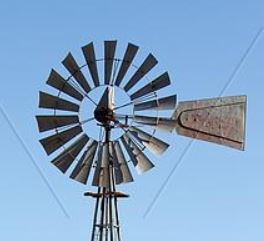
farm windmill

Of the stories Mary Alice (our Mother) loves to tell, some of her most familiar tell of moving to the farm northeast of New Salem, Illinois. Glen Hillmann moved his family from Quincy, Illinois, to New Salem in 1935, leaving his job as a life insurance salesman, when life insurance was a lower priority than putting food on the table for most people, to become a farmer, with help from his father-in-law, Ezra Doane. Ezra was preparing to move into town, leaving his farms and houses to his daughters’ husbands.

The Hillmanns, Glenn and Dollie Leigh and their four daughters, moved in January, to be ready to do the field work when spring came. Mary Alice had just completed sixth grade in a program that made it possible for students to work at their own accelerated pace. That meant that seventh grade in nearby Tennariff School had already been in session for four months. She came into that grade mid-year in a one-room school, and she faced major changes from the separately graded city schools in Quincy. She wondered whether she could make it in such a strange setting, starting months behind her classmates, with all the grades in one room, and a one-eyed man named Hugh Kerr as her teacher, the first male teacher that she had. She didn’t have to worry. She excelled in her work and fit right in. When Hugh Kerr sent her out with a pail to fetch water, after she had also used the girls’ fancy outhouse, and she returned to the classroom without the pail, then was embarrassed to remember and she slipped out to return with the full pail a few minutes later, and the teacher didn’t say a word to her about it, no punishment or anything, she decided it was going to turn out all right.

Tennariff School sat just around the corner of the section from their farmhouse, an easy quarter mile walk for her and little sister Rosalyn except on the coldest of days. Barbara was still at home, too young for school. In another year Mary Alice joined her older sister Aileen in New Salem High School. That was a long two mile walk up and down the steep Rutman and Quinney Hills. Aileen was taller and her stride longer, but Mary Alice was faster, and she liked to run up the hills, much to the consternation of her less athletic sister. Aileen would whine from behind, “Wait for me, Mary Alice! Wait for me!”

Mary Alice had little patience for her older sister, who didn’t like the farm and didn’t adjust to farm life. Having no boys to help, Mary Alice was happy to become her father’s helping hand around the farm. She did chores with the animals and hitched the horse to the plow, and learned to work in the field. It wasn’t long before a tractor replaced the horses, but she didn’t mind working with either one. Aileen, on the other hand, had no interest and missed the city life.

The old memories and the feelings that came with them persist long into the dementia of aging. Aileen died nearly twenty years ago, and Rosalyn was too young to do field work until after Mary Alice had moved on to study and work at Western Illinois College and obtain her teaching certificate there, which she used for years to teach in a one room country school. Now, when she can neither farm nor teach nor run, she often tells us of the times when she could. She pictures that sister yelling “Wait for me,” every time she has to get up out of bed, use that walker, and head down the hall.

Watching in the Night

01 Tuesday Sep 2015

Posted by chaplines2014 in Caring, Death, Faith, Growing up

≈ Leave a comment

Tags

events

dock at sunset

My mother died suddenly at age 75 after a brief period of intense illness early one morning. No one else was there except my father. When he was nearly 94 my father died when my brother and I were far away, hiking on the Appalachian Trail, and we were unaware of his several hours of declining life signs. He was living in a nursing home, and the staff called my son, who was able to be present with him. He died, as his death certificate so elegantly phrased it, of “a failure to thrive.” I never spent a night with either of them, when they were seriously ill, although I have spent many nights with other seriously ill people, many of whom were dear to me.

I was not especially close to my father-in-law, although I had plenty of cause to respect him, but Jan and I were with him the hour that he died, after his year dealing with colon cancer in treatments of diminishing effectiveness. He appeared to be comatose when we arrived, but in the last moments of his illness he became alert and agitated. I said to him, “It’s all right, Lyle. You can let go now. We’ll soon be coming after you,” and whether it was the meaning or the tone or something inside himself, he relaxed and soon stopped breathing

Now Jan and I sit with my 92 year old mother-in-law through the second of two nights, staying at her bedside. We no longer fear that she may die at any moment, even though that can happen of course. She fell three days ago, where she had walked hundreds of times before, tripping into her walker and landing hard on her face. She broke a neck vertebra and two more farther down her back. The doctors’ advice ruled out surgery, and they put her in a neck brace that she will probably wear the rest of her days. The vertebra remains in alignment, but a bump or slip or twist could change that without the brace.

She is “banged up” with cuts, bruises, and swelling around her face and broken nose, but she is mostly comfortable until she tries to move, which, naturally, she has to do now and then. We supposed that sooner or later she would fall, possibly breaking the increasingly fragile bones in her legs or hips. She always finds ways to surprise us. What broke was her neck. Somehow she survived it, breaking it just enough to keep living. She doesn’t understand it. She doesn’t like the collar and wants to remove it. How she will keep going, doing what she has to do, and learn how to live with that brace, we do not know.

She has been my mother for 47 years, doing what mothers do, and doing it well. It must be my turn to watch, feel the pain with her when she hurts, and understand more deeply what it means to suffer with someone I love.

The springs that fed the villages

30 Sunday Aug 2015

Posted by chaplines2014 in Farm, Growing up

≈ Leave a comment

Tags

Memories, Serendipity

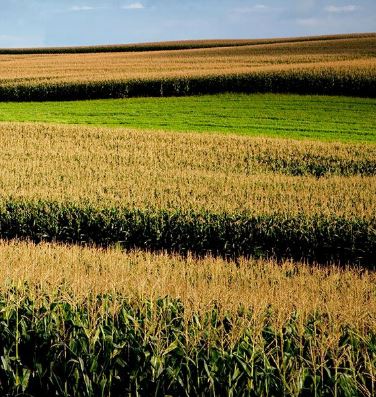
cornfields

I was one of those boys who spent a lot of my time roaming around the farm. When I wasn’t in school or doing chores, I was usually in the woods or along (or in) the streams, or examining the earth to see what I could find. Since there was evidence of the human occupation of that land for at least 3,000 years or so, there was plenty to find. Rocks of all kinds sat in the landscape, many on the surface, especially around the streams, mostly because the land had been covered by glaciers that had deposited that variety of rocks from a vast distance.

Rocks with special shapes captured my attention. From sandstone to granite, heavy large rocks that had bowls shaped into their surface often served as grinding stones for grains and nuts that were gathered or grown. Hand-sized round rocks with grooves or indentations had a useful life as anything from hammers to shaft-sharpeners. Worked flint came in the form of knives, projectile points, and hide scrapers. Broken shards of pottery showed the workmanship that had once shaped a vessel or an ornament. Rarely did I walk across the land and not find something that had been used by someone long ago.

Where clusters of tools showed up in one place the earth itself often showed the marks of human occupation with berms of soil shaped into circles and rectangles where lodgings had once stood. These remains clustered in three areas, each where a spring still kept the soil moist through summer seasons, even though farmers had for eighty years stripped the land of trees, cultivated, and shaped grass waterways into the middle of those fields, where once those springs had bubbled to the surface.

It impressed me that where my parents, two brothers, and I lived, many hundreds of people had lived for uncounted generations, leaving their marks. Where had they all gone? For only a few years heavy machinery had plowed and prepared those fields, and large barns, cribs, and a house or two had stood, providing a livelihood for a handful of people. For hundreds of years that same land had fed, sheltered, and provided for hundreds, using only what they found there, living simply “off the land.” They had to understand a lot in order to accomplish what they did.

Modern civilization depends on a complexity of specialized and diversified tasks, with a comparatively small number of people providing food for a multitude. Living off the land now means leaving the land behind, but by doing that, we know less and less about what sustains our lives, and more and more about the tiny components of our own specializations. Where is the progress in that?

← Older posts
Newer posts →

Subscribe

  • Entries (RSS)
  • Comments (RSS)

Archives

  • February 2022
  • May 2020
  • October 2018
  • December 2017
  • November 2017
  • October 2017
  • June 2017
  • April 2017
  • March 2017
  • February 2017
  • January 2017
  • November 2016
  • October 2016
  • September 2016
  • August 2016
  • July 2016
  • June 2016
  • May 2016
  • April 2016
  • March 2016
  • February 2016
  • January 2016
  • December 2015
  • November 2015
  • October 2015
  • September 2015
  • August 2015
  • July 2015
  • June 2015
  • May 2015
  • April 2015
  • March 2015
  • February 2015
  • January 2015
  • December 2014
  • November 2014
  • October 2014

Categories

  • beach
  • Books by Gary Chapman
  • canoeing
  • Caring
  • Cherokee history
  • Church
  • Citizenship
  • Death
  • Disabilities
  • Events
  • Faith
  • Farm
  • fighting fires
  • Forest
  • Garden
  • Growing up
  • Gullibility
  • guns
  • Health
  • Hiking
  • House
  • Innocence
  • Learning from mistakes
  • Life along the River
  • Miracles
  • Nature
  • Patience
  • People
  • Prayer
  • Racial Prejudice
  • rafting
  • Running
  • Seasons
  • Small town life
  • Suffering
  • Travel
  • Uncategorized
  • Vehicles
  • Volunteering
  • Words
  • Yard

Meta

  • Create account
  • Log in

Create a free website or blog at WordPress.com.

Privacy & Cookies: This site uses cookies. By continuing to use this website, you agree to their use.
To find out more, including how to control cookies, see here: Cookie Policy
  • Subscribe Subscribed
    • chaplinesblog
    • Join 71 other subscribers
    • Already have a WordPress.com account? Log in now.
    • chaplinesblog
    • Subscribe Subscribed
    • Sign up
    • Log in
    • Report this content
    • View site in Reader
    • Manage subscriptions
    • Collapse this bar
 

Loading Comments...