• About
  • Celebrating our decades…
  • Welcoming all and inclusiveness

chaplinesblog

~ everyday and commonplace parables

chaplinesblog

Category Archives: Growing up

Driving Robert Mann

29 Saturday Aug 2015

Posted by chaplines2014 in Events, Growing up, People

≈ Leave a comment

Tags

Life in the City, Serendipity

Chicago skyline 1970

Returning to Chicago in the fall of 1970, after a year-long internship in Danville, Illinois, I concentrated my attention on my studies, my fellowship (which involved organizing the church-related archives of the seminary), and the immediate neighborhood of the south side. State Representative Robert Mann shocked the democratic machine by declaring his political independence and refusing machine support. They promptly selected a black candidate from the largely black district, but one who promised to be more amenable to party direction. Mann’s record was irreproachable from a liberal reformer perspective, and I decided to spend some of my “free” time volunteering for this new Independent.

We had replaced our 1960 Ford Falcon with a brand new Plymouth Valiant during my internship. When Mann’s campaign team asked for volunteer drivers, who could also provide a car, I volunteered. By that time I knew the south side streets well. I cleared a week of evenings and signed up to drive Representative Mann.

On our first evening Mann noted that their wasn’t quite as much room in the back seat of a Valiant as there was in a Checker Marathon, a first taste of his droll sense of humor. We paid a visit to a meeting of the United Steelworkers on the far south side, and Mann let me listen to a private conversation with Edward `Sadlowski (“oil can Eddie”). Sadlowski eventually led the union to a more active advocacy role during the massive layoffs and transition to overseas manufacturing during the 1980’s and 90’s. Mann, himself an attorney, reminded me that ministers must learn how to keep confidences and I should do that here. I was impressed that they were talking about a future ten to twenty years ahead of events, and how unions should try to prepare for the transition that was coming as major corporations were making plans for replacing and avoiding union contracts.

Small group gatherings in churches, civic organizations, and homes filled the next few nights. Sometimes I had to double park on the street waiting for Mann to finish and move on to the next location. When I found a convenient close parking place, I got to observe Mann’s careful handling of the issues, including facing an opponent whose racial identity matched the majority of the district, but whose political positions did not necessarily match their interests.

On Thursday evening we were driving through a Woodlawn neighborhood, not more than a mile from my apartment when a loud bang and hit to the rear of the car alarmed us both. I just kept driving. When we reached a lighted area a few blocks away, we checked and found a bullet dent in the rear panel. That evening Mann thanked me for the week of transportation, but thought he might need a heavier vehicle in the future, maybe with some bullet-proof glass.

I didn’t drive for him again, but I did vote for him, and he did win the election. Eventually he yielded his position to another independent and African-American candidate.

Too Many Teasets, Never Enough Tea

28 Friday Aug 2015

Posted by chaplines2014 in Caring, Growing up, People

≈ Leave a comment

Tags

Memories

cropped-circledance.jpg

The first tea set came from Italy, a poignant reminder from Jan’s brother Rod that he could not come to our wedding because he was serving the U S Navy on a destroyer tender in the Mediterranean that year. He thought of his sister when he shopped on shore leave, and found a white china tea set elaborately decorated with silver vines and flowers. His taste was exquisite, and the set was too pretty to use every day, so it has been prominently displayed wherever we lived, and used for special occasions.

The second tea set came from our seminary neighbors and friends; he had grown up in Thailand and India while his father had served as a missionary. The china teapot was a rich, mottled blue, and the cups small and with no handles, with the white and black figures of pussy willow branches climbing their sides—broadly Asian in inspiration—they easily served us every day and got a lot of use while we thought of ourselves as distant from the world around us but alive in our private garden.

The third tea set was plastic pink and white and a child’s plaything as our daughter went through the terrible two’s, but somehow she settled down to play with her future set before her, among her friends or by herself. The set itself hung around our house for more than two decades until it was replaced by a small, miniature, plain china set that our three granddaughters could use when they held elaborate tea parties, as they dressed to the nines while their grandparents served them as their butler and maid.

We inherited the fourth tea set when my parents died, first my mother, then my father. It came to my house with Father, when he had to leave his own farm home and come to live with us. My mother had chosen the silver tea service as they celebrated their twenty-fifth wedding anniversary, and it served many neighborhood and church group teas from then until they passed their fifty-sixth anniversary and she died unexpectedly.

Now those tea sets sit in their various places, while we enjoy our morning tea, without caffeine, steeped in cups that come from none of the tea sets, but they each have their own history, too. Each marks a special time in our lives that is fondly remembered. When we finally put them away, delivering them to someone else to use, the memories will remain with us, tucked away somewhere inside our brains. Tea and those we love.

Instead of going to the 1968 Democratic National Convention

27 Thursday Aug 2015

Posted by chaplines2014 in Growing up, Learning from mistakes, People

≈ Leave a comment

Tags

events, Memories

cropped-chicago-skyline-1970.jpgI made a life-changing choice for the end of August, 1968. When I proposed to Jan in November, 1967, my proposal was not a romantic winner, even though we went to Bloomington’s Miller Park and sat at the edge of the lake. I had almost run into a tree driving through Miller Park, so Jan knew something was on my mind. (She said later she thought I might be breaking up with her.) I ruminated with Jan about the uncertainties of the future. I had just finished several months serving a small rural town congregation, but I had no other job prospects. My own anti-war choices that had placed me in some jeopardy with the Selective Service System and some administrators of Illinois Wesleyan University, but I still resolved to continue in my plan to go to seminary and pursue a career as a minister. At that point I had nothing to offer Jan except the impoverished life of a graduate student with the possibility of a study fellowship and stipend. If the fellowship materialized, we might have a small studio apartment near the University of Chicago, but she would have to find a job to support her own needs.

Whether I could stay out of trouble was not certain, having just had my first interview with an FBI agent, concerning my work with the Students for a Democratic Society, organizing an IWU Symposium on the Vietnam War, and inviting Staughton Lynd, a vigorous opponent of the war, to the campus to speak. At first I didn’t take the veiled threats of the agent and the Dean of Students seriously, but “the times…they were a’changin’.” Who knew what the future held? I just knew my own situation had begun to appear precarious after I had returned my draft card to my local draft office. (Nothing ever came of that action. The members of the local draft board knew me, my seminary plans, and my health disqualification already. ) Would Jan want to marry me when she really considered what she might face in the early days of our marriage, or the later days for that matter?

She said ‘yes.’ Would I want to marry her when she was able to make such a foolish decision? I said ‘yes, definitely.’ We proceeded to make plans to be married toward the end of the next summer, allowing time for Jan to finish her work at the Waterloo, Iowa, YWCA, and for me to make as much money as I could during the summer, painting barns, cribs, and other farm buildings, and working at Arby’s.

Many invitations arrived to come to Chicago to join in demonstrations against the war during the Democratic National Convention. The event promised to mark a momentous turning point in our nation’s history. Our own event promised to make a momentous turning point in our personal history, and who knew how much influence upon others might follow?

We arrived at our apartment in Chicago just a couple of days after the convention and the demonstrations concluded their tormented run.

Persistent Welcomers

19 Wednesday Aug 2015

Posted by chaplines2014 in Farm, Growing up, House, Seasons

≈ Leave a comment

Tags

A License to Preach, Memories, Serendipity

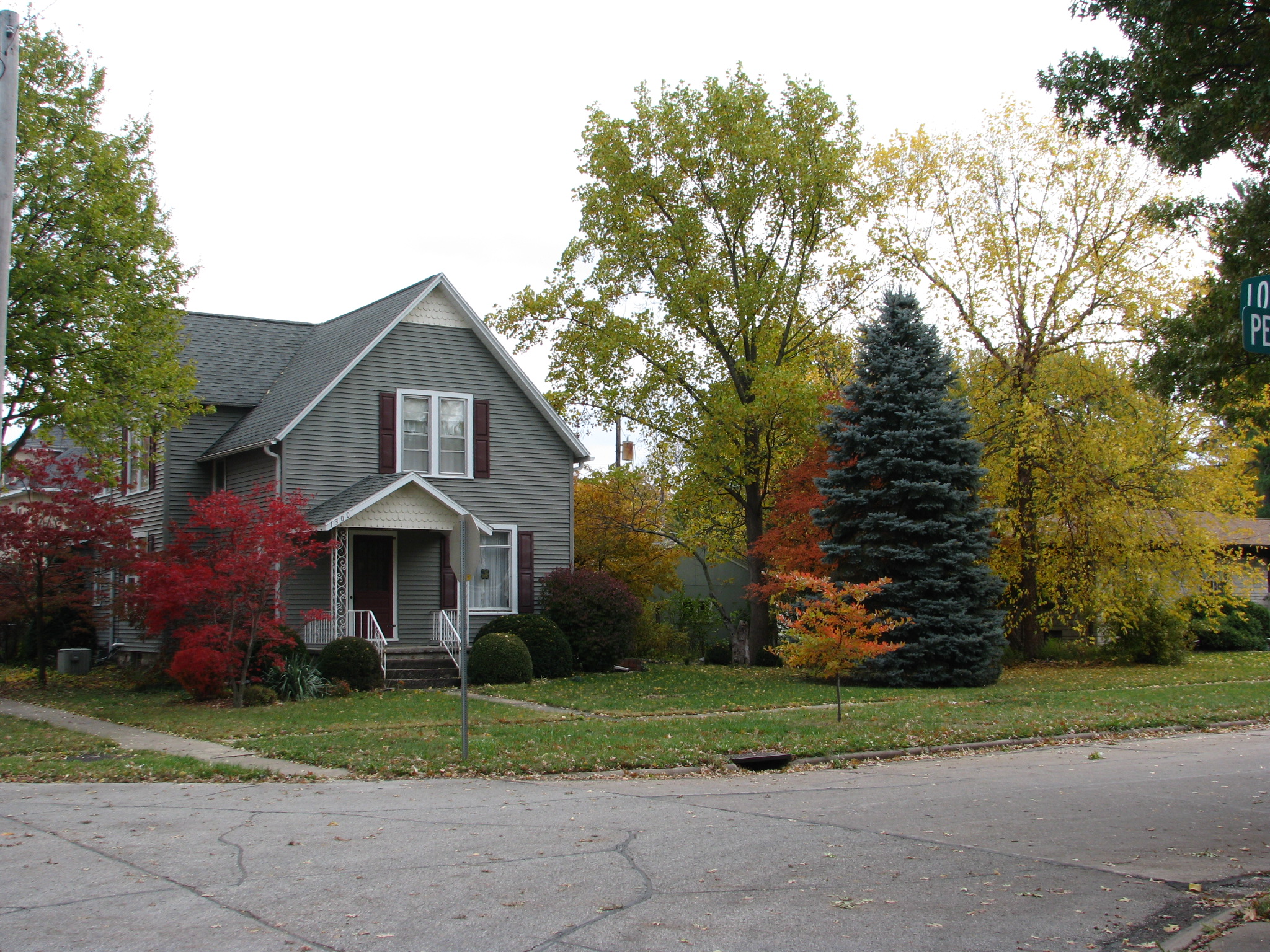
Burlington house in fall

They welcomed us in great numbers when we arrived in August, 1988. Throughout the fall they kept coming, sometimes pestering us to the point that we wondered whether we would ever be rid of their nuisance. Even in January they kept moving, popping up at odd times and places, such as on my collar during a children’s sermon at a Sunday morning service. If I had been quick-witted, I would have turned that moment into an object lesson on persistence. When winter came in its fullness of ice and snow, they still persisted, although I saw only one every day or so. Boxelder bugs.

As a child I became acquainted with them. They were more numerous and lasted longer than lightning bugs, so when it was no longer possible to collect the more illuminating lightning bugs, I turned my acquisitive attention to boxelders, seemingly harmless, and only slightly stinky, but certainly persistent and ubiquitous. The worst weather in heat and dryness brought out the best in them, but they made themselves known even in cold and icy times in the warm comfort of the house. In Burlington the bugs had occupied the soft maple trees that grew along the berm immediately north of our house. On the farm they had occupied the namesake boxelder trees that grew along the river bank not far from the house. In both cases they moved inside when they decided the conditions were better there. For whatever reason the bugs left our Burlington house the next spring and have never returned.

I want such long-lasting determination, such unexpected perseverance, for my faith. When I am caught in mundane, day-to-day tasks that seem to drag on endlessly, I need the unexpected reappearances of joy and surprise that persist in spite of all I do to suppress them or tame them or forget about them. When I am overcome by the scale of problems that seem insurmountable, I need the confident will to see a victory that gives meaning to my feeble and uncertain movements. Sometimes such faith does appear in solitary heroic figures battling all odds. Sometimes such faith comes in masses of individuals filling every corner and space with their relentless march of life conquering death. Even such lowly creatures as the boxelder bug encourage us by the nuisance of their example.

Alone in the Dark

09 Sunday Aug 2015

Posted by chaplines2014 in Events, Growing up, Gullibility, Learning from mistakes, Running

≈ Leave a comment

Tags

A License to Preach, Community Development, Life in the City, Memories, Urban Renewal

Chicago Old Town

In 1969, working for the Independent Precinct Organization [IPO]in Chicago’s north side Lincoln Park neighborhood, we canvassed door to door to build support for community-based initiatives instead of the urban renewal plans of the democratic machine and Mayor Richard J. Daley’s administration. The city plan called for bulldozing entire blocks of housing, displacing hundreds of poor and elderly families of many races and ethnic backgrounds, and building apartment buildings and condominiums that would cater to wealthy, upper class, largely white people. The area needed rehabilitation and preservation, from our perspective, not destruction and replacement. In canvassing , we met many wonderful people of various backgrounds who would be forced to move, priced out of the neighborhood.

We organized meetings, rallies, and took part in city-sponsored meetings that were supposed to give the people a voice, but largely consisted of city spokesmen telling the residents what was going to happen, whether they liked it or not. The city’s only authentic German beer garden became a center of attention, when the city planners decided it had to go the way of every other building of historical, ethnic, or cultural significance in the urban renewal area. What would the new neighborhood look like? An uninspired collection of modern boxes of uniform size, shape, and costliness, with little attention to amenities that existed in the previous community, because Lincoln Park would be considered a residential extension of the downtown. “Little boxes…full of [just more expensive] ticky-tacky,” anyone?

One night I had to park three blocks from the meeting –place at the edge of an already bull-dozed three-block strip, where the citizens were confronting city planners. Parking was scarce because we had generated a lot of interest in the meeting. The people present were angry and eloquent, expressing their grief at the prospect of losing homes and businesses and facing an uncertain future with below-replacement value appraisals and no help in relocation. The IPO presented alternative plans and proposals that had the backing of much of the resident community. When the meeting ended we felt that we had done well in getting both citizen-involvement and the important media attention.

I walked out of the building after a brief feedback session with my co-volunteers, needing to get back to my apartment on the south side and ready for seminary coursework the next day. The street was empty and dark; many of the street lights were removed with the destruction. I didn’t see anyone around, until I had walked a block, but then I heard from a distance when a gang of Spanish Disciples had spotted me. I didn’t understand all that they were saying, but I knew from a few words and phrases that they had recognized a lone target for their resentments and rage when they saw me. It didn’t matter that I thought I was serving their interests in being there. Their street sophistication did not extend to political disputes between the city and local white liberals.

They were coming at a run, and I decided that I needed to be faster, and so I was. I unlocked my car, jumped in, and sped off just as they were arriving. I didn’t wait to see whether I could persuade them that I was a good guy just trying to help out.

I returned to that neighborhood, continued to canvass, participated in other meetings and demonstrations, but I made sure that I was not alone in the dark after that.

No Waiting

05 Wednesday Aug 2015

Posted by chaplines2014 in Faith, Growing up, Learning from mistakes, Running

≈ Leave a comment

Tags

A License to Preach, Serendipity

IMG_1187

After college I swore that I would never stand in a waiting line again. Cafeteria lines, registration lines, textbookstore lines all had eaten up more time than the studies themselves, it seemed. It was a vain resolution.

Lines and waiting rooms became a prominent feature of my career as a minister. Hospital waiting rooms, court house lobbies, city council chambers, and jailhouse waiting rooms took the place of earlier lines. In retirement, road and traffic delays and outer office sitting areas have continued to devour time.

Early line training introduced me to the art of starting conversations with strangers, if they were amenable, or preparing sermons, letters, or work outlines without the benefit of notepaper. Thinking through concerns in empty spaces of time also helped with the daily exercise of running. Regardless of work being accomplished and acquaintances being made, waiting is still waiting.

“Those who wait upon the Lord will renew their strength.” It is a running mantra that I used sometimes. I would say that waiting saps strength and waiting rooms are more tiring exercise chambers than gymnasiums and running tracks. What makes “waiting on the Lord” any different? While most waiting involves anxiety, is there at least the possibility that waiting on the Lord can involve faith, trust, confidence, and some assurance that all things work for good for those who love the Lord? Perhaps waiting on the Lord involves more serving time than leisure time.

Practicing patience and endurance is good for you, my significant other says. Where do these gifts fall in the series of spiritual gifts? Between suffering and hope, with one experience making possible the next, according to Romans 5.

“No waiting” is a good advertising ploy, but I have not found a commercial establishment that yet lives up to that claim. No waiting will be heaven.

Drinking from the Common Cup

30 Thursday Jul 2015

Posted by chaplines2014 in Farm, Growing up

≈ Leave a comment

Tags

Memories

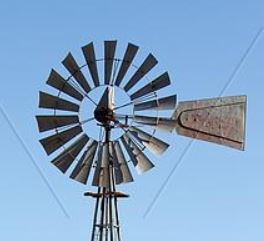
farm windmill

On a hot summer day, when farm work left us dirty, tired, and thirsty, nothing was more refreshing than a drink at the old well pump. A hand pump brought up cold water from a hundred feet deep where an underground river ran sixty degrees cold and seemingly inexhaustible. The tall windmill that stood above the well had served for many years, but it was disconnected in the twelve years of my childhood and youth there. There was still plenty of water available for a water fight or filling the tank nearby where we kept the turtles for a time, and sometimes took a dip ourselves.

One tin cup hung from a hook on the steel windmill frame, and it served as our common cup, in the years when we did not fear each other’s germs, but gladly took our turns for several full to overflowing cups. It was a fitting symbol of everything we shared in those days, including the work that put most of the food on our table from the garden, fields, and feedlots. No bottled water or soda pop or even fresh-squeezed country fair lemonade tasted as good or quenched thirsts as well as the water from that well.

Later a deeper well and a pressure tank was needed to sustain a constant supply for the growing herds of cows and pigs. That well was connected to a hydrant at the same location, and its lever was easy enough to open and didn’t require any pumping by hand. And that water, just as laden with iron as the first, and just as cold, served us well also, but there was a magic to that old hand pump that the new system lacked. The water splashed out of that old pump in flagrant gushes that responded to the force of our muscles, and always filled the cup in one big splash, washing our feet as well. The new well nearly knocked the cup out of our hands, but never filled it to the brim. The uncontrollable pressure gave us a shower as well, much higher than the feet. No matter, I suppose. The shower was often as welcome as thirst quenched. And the same battered tin cup still served.


Climbing into the Haymow

01 Wednesday Jul 2015

Posted by chaplines2014 in Farm, Growing up

≈ Leave a comment

Tags

A License to Preach

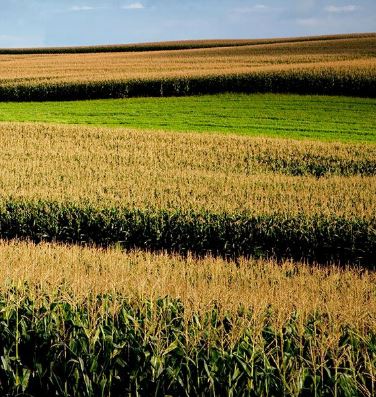
cornfieldsThis season brings back memories of baling hay and storing it in the haymow. The haymow in one of the four barns on the farm where I grew up was a mysterious and inaccessible place. The ladder that provided access had rungs placed far apart, so only children who were older and stronger  could climb. They would play amid the bales of straw—hiding, building forts, castles and towers. I could listen and barely see through the opening in the center of the floor. All that I could do was imagine the fun of a forbidden zone.

By the time I gained the size and strength to climb the ladder, the neighborhood children had grown too old to play haymow games, and my allergies to dust and mold paid me a day of misery for every minute in close confines with hay. Still, the haymow held an attraction for a curious explorer.

As soon as my legs could reach the tractor peddles I was allowed to work in baling season. I put the tractor in reverse and pulled the forked- together bales of hay from the hayrack up to the rail at the peak of the barn, through the large open door into the dark recesses of the haymow itself. When I heard the yell from inside the maymow, I stopped the tractor and waited for the hayforks to be tripped and the bales to fall to the floor. It was an exciting operation. Later I was assigned the task of pulling the trip cord. I knew I had reached maturity when I was allowed to insert those large steel tines of the hayfork into the bales to be lifted from the wagon, like some giant spider enfolding its prey. But I could never spend any time in the haymow itself, and my fascination with it only grew.

In the field I could load bales on the rack easily, especially when the breeze blew the dust away, but work in the haymow was off-limits.

The haymow represents to me all of those special places where mysterious activities continue unobserved and inaccessible to the rest of us. Surgery rooms, political strategy spaces, board rooms of major corporations, and scientific laboratories all hold such mysteries. Many important decisions that affect our lives are made beyond the reach of masses of people. Much of religion has been controlled in that way in past centuries, but openness and democracy has infiltrated many denominations in recent decades. Still the end of our years and the destiny of heaven remain shrouded in mystery as unfathomable as a haymow to a small child.

I hold onto a sense of mystery as one of the deep sources of wonder and joy. The vast universe and the discoveries of science call out for more exploration and determined pursuit, but they also leave much room for bewilderment. Many places are beyond our scope and capacity to understand.

We sing about the mysteries of struggle and work and the direction we are headed in the spiritual “We are climbing Jacob’s ladder.” Most people understand that the goal of the song is heaven. As for me my sights are lower. I would just like to be able to reach the haymow.

Picking corn by hand

30 Saturday May 2015

Posted by chaplines2014 in Farm, Growing up

≈ Leave a comment

cornfields

From the middle of the cornfield the tall rows seemed to go on forever. Walking down the rows, reaching up to pluck and shuck the corn by hand, hearing the endless rustling of the dried leaves and stalks in the chill breeze, perhaps an eight year old boy could be forgiven for thinking the task would go on forever also. The John Deere Model `A’ pulled a green wooden wagon, into which we boys pitched the ears. I sometimes overshot, earning the ridicule of my older brothers. Would this job never end?

I was enthusiastic in the beginning, not knowing what I was getting myself into. Reaching the row’s end I had the momentary hope that now we could stop. But we had many more rows to cover, and soon we were lost somewhere in the middle of the field again.

We were just opening the fields so that the combine could have the room to be pulled into the fields and along the rows, but to a little boy the half-mile rows seemed endless.

Only a few years earlier no combine was available and teams of horses pulled the wagon through the field. But that was as unimaginable as having to do the whole field by hand. Somebody else with a longer view of things might say that this was an easy job now, that we should appreciate the new machines that made the task so easy, but all I could feel was the sense of being lost in the middle of cornfields and having to walk for miles, stripping one stalk at a time, throwing at least a million ears of corn into a wagon, believing I would never again sit at a supper table.

Sometimes the feeling returns. I am a little child, trying to do tasks of faithfulness one stalk at a time in the middle of an endless sea of corn, thinking that an end and a reward is beyond belief. Someone else must see the larger picture, someone who has been around a while, who knows what the corn is for, how much each bushel is worth in the scheme of things.

Are we all little children in a huge field, finding the job is well beyond us at times? Then at last we again come to the end of the row, and the sun is getting low, and Dad says it is time to head for the house and supper.

Bootlegging…the Family Business

23 Saturday May 2015

Posted by chaplines2014 in Books by Gary Chapman, Events, Growing up, Gullibility, Learning from mistakes

≈ Leave a comment

Tags

Books by Gary Chapman, Out of My Hands

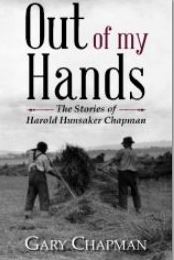
OOMH

My Uncle Albert Hunsaker had sold his share in the railroad as it was going bankrupt, and I didn’t know how he was making a living. He and Mary had gotten a divorce. She and the four children still at home continued to live where they had at Yale, but Albert rented a room in an old boarding house nearby with three other guys. Grandpa had suspected that he was making his living by bootlegging, and mentioned it to me, but we did not really know what he was doing. He had lost his car, so he approached me for a ride. He said he had a job over in Indiana. “Could you take me in your Model A?”

I wondered what kind of job he was talking about, but he had helped me get to my jobs years ago, and he was my uncle, so I decided I could drive him where he needed to go. He loaded my car with his “gear and tools,” he called them, and we took off on Route 40 headed east. Meanwhile the Cumberland County sheriff had caught on to his bootlegging operation and came after him. He kept looking back at the road behind us, so I suspected something was wrong. Suddenly he ordered me to turn off the highway onto a dirt road, and he told me to look for a hiding place for the car and ourselves in a gravel pit that was at the end of that road.

“What’s going on?” I yelled at him. “I’m not going to break any laws,” I insisted, but he informed me that I already had. His “gear” included bootlegged liquor and, whether I liked it or not, I was an accessory, and the law would treat me as guilty as he was. We hid ourselves overnight. During the night, while we hid in the dark and didn’t dare even to light a fire, he told me about various trips he had made in recent years. He had carried liquor and made enough to support himself. Sometimes it was over the Canadian border between Detroit and Windsor. More often he carried between Illinois and a club in Indiana. He worked with people connected to the Chicago crime syndicates and Al Capone. He would be in worse trouble if he did not complete this delivery, so I continued the trip with him, and made it back without any further incident. I informed him that I was never going to do that again. “Don’t even think about asking!” I told him.

← Older posts
Newer posts →

Subscribe

  • Entries (RSS)
  • Comments (RSS)

Archives

  • February 2022
  • May 2020
  • October 2018
  • December 2017
  • November 2017
  • October 2017
  • June 2017
  • April 2017
  • March 2017
  • February 2017
  • January 2017
  • November 2016
  • October 2016
  • September 2016
  • August 2016
  • July 2016
  • June 2016
  • May 2016
  • April 2016
  • March 2016
  • February 2016
  • January 2016
  • December 2015
  • November 2015
  • October 2015
  • September 2015
  • August 2015
  • July 2015
  • June 2015
  • May 2015
  • April 2015
  • March 2015
  • February 2015
  • January 2015
  • December 2014
  • November 2014
  • October 2014

Categories

  • beach
  • Books by Gary Chapman
  • canoeing
  • Caring
  • Cherokee history
  • Church
  • Citizenship
  • Death
  • Disabilities
  • Events
  • Faith
  • Farm
  • fighting fires
  • Forest
  • Garden
  • Growing up
  • Gullibility
  • guns
  • Health
  • Hiking
  • House
  • Innocence
  • Learning from mistakes
  • Life along the River
  • Miracles
  • Nature
  • Patience
  • People
  • Prayer
  • Racial Prejudice
  • rafting
  • Running
  • Seasons
  • Small town life
  • Suffering
  • Travel
  • Uncategorized
  • Vehicles
  • Volunteering
  • Words
  • Yard

Meta

  • Create account
  • Log in

Create a free website or blog at WordPress.com.

Privacy & Cookies: This site uses cookies. By continuing to use this website, you agree to their use.
To find out more, including how to control cookies, see here: Cookie Policy
  • Subscribe Subscribed
    • chaplinesblog
    • Join 71 other subscribers
    • Already have a WordPress.com account? Log in now.
    • chaplinesblog
    • Subscribe Subscribed
    • Sign up
    • Log in
    • Report this content
    • View site in Reader
    • Manage subscriptions
    • Collapse this bar
 

Loading Comments...