• About
  • Celebrating our decades…
  • Welcoming all and inclusiveness

chaplinesblog

~ everyday and commonplace parables

chaplinesblog

Category Archives: Growing up

The Guidance Counselor

16 Saturday May 2015

Posted by chaplines2014 in Growing up, People

≈ Leave a comment

Tags

A License to Preach, Names and Titles

3 OwlsDo students still have guidance counselors? Some students talk about having help from advisors in planning course schedules and completing requirements for graduation, but I seldom hear about guidance on choosing careers and making long-range plans. Jim Smith was my counselor when I entered High School. He had lengthy conversations with each student and used a variety of interest and skill inventories to identify what students might be interested in pursuing in their careers. He was also my Sunday School teacher and there were a dozen of us in his class, and we knew that he took an interest in us as persons.

Mr. Smith predicted that I would not have a problem with any subject that I chose to study in terms of academic achievement. The inventories indicated that I had high interest in such areas as teaching and social work and low interest in such areas as sales and marketing or mechanical skills or entertainment. He laid out a variety of career paths that might tap abilities and skills in a satisfying way. Among other possibilities he pointed out that clergy seem to require a high level of interest in sales and marketing and entertainment because of their involvement in leading and developing volunteer organizations. As generalists they also depended on having a variety of interests and skills in many areas, so he didn’t want to discourage me from thinking about ministry, just to be aware of some components that would be more challenging.

I suppose I always carried that piece of advice in the back of my mind. It was present in the first years of my considering ministry as a career because I knew that I would have to study and do some things that I was not fond of doing, in order to get to those that were more rewarding. Speaking before groups became less threatening, but making the sermon and the service interesting and captivating remained a challenge. I decided that I would try for a “conversational” style and leave the captivation to someone else. Still I have seen other preachers become successful because they truly made an effort to sell their product, knowing it is the greatest product anyone could ever sell, if they didn’t diminish the product by the way they sold it.

Even phrasing it that way still disturbs me. Is faith a product that requires a sales strategy? The farmer in me immediately translates faith into the field that requires planting, watchfulness, waiting, and harvesting. The teacher in me makes faith into scores of lessons to be planned, taught, demonstrated, and tested in some way. The social worker in me sees faith as a mutual service to be exercised in assisting people along the way to empowerment. There are scores of ways to describe our product, and all of our skills and interests need to be tapped, and no one can have them all and do it all. So we can all look forward many different incarnations of ministry as the years go by.

Still I am sold on the Gospel and the church and Christ-shaped humanity. If I neglected to do all that I could to promote these “products,” it is not because they do not deserve everything we can do together to promote them in all the ways that prove to suit them, if the Spirit is indeed still present to serve as a guidance counselor.
Make Way for Another Generation…X?

15 Friday May 2015

Posted by chaplines2014 in Growing up, Seasons

≈ Leave a comment

Tags

A License to Preach, events

Who is not stirred by the steady processional beat of “Pomp and Circumstance?” Even caps bearing strange painted messages, and some graduates acting casual and nonchalant do not conceal the serious sentiment of the exercise.

Like molten lava moving down the mountainside, sometimes rushing and crushing everything in its path, sometimes slowly and inexorably dominating the landscape, so every generation coming to adulthood takes its place.

3 Owls

I, for one, would trade my status as a “baby boomer” (such a lovely name!) for an “X,” even if the Generation X has technically now given way to yet another moniker. “X” represents an unknown quantity, and who can predict what will emerge from any arbitrary set of years defining the experience of a generation?

I would not have predicted that any modern generation would have been subjected to the crude tastelessness of Beavis and Butthead, the Simpsons, or Rush Limbaugh. I had not foreseen a modern world marred by catastrophic religious and ethnic conflicts in Nigeria and Syria. I had expected that attempts to dismantle national entities in other countries by either manipulation or force would not spread into the United States. Even dreamers of medical miracles shudder in the face of resistant strains of bacteria, or fatal viruses like Ebola.

Even by their pathos in the face of poverty, war, or disease former generations have made their mark, turning an “X” into transformative art, music, literature, and religion. We wait to see what marks will be made, what commitments, what achievements, what regrets.

Meanwhile the graduates process, and celebrate in the ways they have learned.  We who made such moves years ago congratulate them on completing the stages and demands of childhood, not easy in any age– even a modern one. We look to see whether God is implanted in the souls and genetic material of these who now seek their place in an adult world. If so, the world will change again, but not get worse. They will make their mark, and somehow it will take the shape of a familiar cross.

The first time I was shot

29 Wednesday Apr 2015

Posted by chaplines2014 in Farm, Growing up, guns, Learning from mistakes, Racial Prejudice

≈ Leave a comment

Tags

events

3 Owls

The first time I was shot was when I was fourteen years old. I survived, obviously, almost unharmed.

It was winter and I was walking to the west barn to feed and water the cattle that we sheltered there. I felt a painful bee sting on my upper arm. Bees don’t show up in winter. I quickly clapped my left hand over the spot, to swat the bee, finding the hole in my heavy winter coat and the bullet that had just barely penetrated my skin. I became angry immediately.

The barn sat fifty yards from the property line. On the other side was a ten acre triangle of woods bordered by our farm, the river, and the highway. An attorney and his family had purchased that land, built a house, and moved in a few months before. They were friendly neighbors and nice people. The two boys, ten and eleven year-olds, had the run of the woods, just as I had the run of the farm. I had heard them shooting their guns before, assuming they were target practicing.

When I was shot, I realized they were just shooting carelessly. Not thinking about the trajectory or range of their guns, not conscious about anything but the power of their toys. That made me angry.

After that, our parents had a talk. I never heard their guns again, and I was glad.

My father carefully controlled who was able to hunt on the land that we farmed. In hunting season we were very cautious about where we were and what we were doing, watchful for the hunters who were in the neighboring fields. Hearing about gun accidents was common. When my father brought out his guns, he used them sparingly and taught us how to use them as we became old enough and strong enough to use them..

I didn’t have much interest in guns. Raising animals to eat seemed both more efficient and kind, since shooting with poor vision and aim was always a poor substitute for acquiring meat for the family table. We considered pistols useless for anything that we needed to do on the farm, whether shooting for food or for protecting farm animals from predators or pests.

That was 1960, a different world, we think, and a different mentality, than 2015, when the typical targets for guns seem to be other people. They are often innocent children who are finding poorly stored guns, or who are watching an adult demonstrating or cleaning his gun. They are people committing misdemeanors, or minor felonies, which, through the confusion of circumstances, receive capital punishment without a semblance of due process. They are people stepping onto porches, knocking on the wrong doors, playing their car radios too loudly, “looking like threats” in the estranged eyes of suspicious people. In 1960, I thought such dangers were reserved to the racists in southern states, organized crime zones in the cities, and the accidents of hunting seasons. I learned  it could be anytime, anywhere, even when I was minding my own business, doing my chores, just like today.

Lessons on how to keep a skunk from spraying you

27 Monday Apr 2015

Posted by chaplines2014 in Books by Gary Chapman, Growing up, Gullibility, Learning from mistakes

≈ Leave a comment

Tags

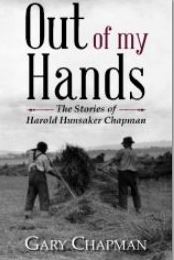
Books by Gary Chapman, Out of My Hands

OOMH

Walter Wehmeyer and Gerald Golden sat behind me at school, which meant they were a grade or two ahead of me. They were always bragging about something they did or knew how to do.  One day they were talking on the playground about how they were able to disarm skunks.  There was one sure way to keep a skunk from spraying you, they said.  You have to approach very slowly and carefully, not doing anything to scare it, talking softly and all friendly-like. Then you could use a pole to lift the skunk’s back legs off the ground, so the skunk couldn’t use its scent sack to spray you. Then you could do anything you wanted with it.

Later I took the bait and tried out their advice. There was an old broomstick in the shed. Skunks often nosed through the garbage pile in the corner of our yard. We dumped peelings and bones and other garbage there. I snuck up while a skunk was poking through the garbage and eating.  I got that stick under its back legs and lifted it up quickly. For the split second that the skunk’s feet were still in the air, the air filled with the most horrid stench you can imagine. I could stand the strong scent of a skunk from a distance, but up close it took my breath away. I thought I’d die, and mostly I wanted to.

Bonnie (my stepmother) set up a galvanized tub in the yard. My sister and brother took turns hauling buckets of hot water from the stove reservoir, and Bonnie poured on the strong lye laundry soap, but it didn’t help much. The Jenkins gave Bonnie some tomato juice they had canned, and made me wash with it, but I couldn’t tell that it made any difference. We burned my clothes, so I only had one outfit left to wear.  Several days passed before I was allowed to return to school, only to face smirks from Walt and Jerry.

A mysterious package from outer space

10 Friday Apr 2015

Posted by chaplines2014 in Farm, Growing up, Learning from mistakes

≈ Leave a comment

Tags

events

Monkeys see, hear, speak no evil, Bangra.comA small white box with odd cone shapes attached to it had landed in the field a quarter mile from our farmhouse; this was sixty years ago. It was easy for a nine-year old boy to imagine that this discovery was from “outer space,” even with the remnants of a balloon attached. But there were clear instructions to return it to the weather survey of the University of Illinois, so the budding scientist could understand its purpose.

Curiosity got the best of the boy. What could be inside it?  The boy was already keeping charts of temperature, wind directions, barometric pressure and humidity on a daily basis, as if his record would somehow add to the inscrutable science of meteorology. What kind of information did this unusual box contain? Opening the box was a challenge. As he pried it open its contents came out in pieces, none of which made sense. He had no way to understand the apparatus that was inside, or to make use of its pieces. There was no obvious barometer, thermometer, hygrometer or anemometer. Having opened the box whatever information it contained was lost. The effort that some faraway alien had put into this instrument and its scientific payload was lost.

The next time he found such a box a few years later he returned the “weather balloon” to the Post Office as instructed, feeling remorse for the earlier trespass.

We may treat the payload of history and cultural tradition in a similar way, tearing into it and making no sense of its contents, or returning it to a place of expertise where someone behind closed doors can deal with it as they want. Neither is very helpful. When we give up trying to make sense of our heritage and leave the process of learning behind, or when we turn it over to others, we cheat ourselves out of the most precious gifts that life sends our way

Collecting eggs

06 Monday Apr 2015

Posted by chaplines2014 in Farm, Growing up, Seasons

≈ Leave a comment

IMG_0002

Yes, we have pleasant memories of Grandpa and Grandma (Carl and Bessie Warfel) coloring eggs, hiding them around the yard, and watching twenty to thirty of their youngest grandchildren and neighborhood children scatter around the yard, filling their baskets with those eggs. That was Easter and it was special.

Every other day of the year collecting eggs was a chore. Between the ages of eight and sixteen, it was my morning and late afternoon chore. Later in the evening Mother (and sometimes I) would wash, weigh, size, and candle those eggs, preparing most of them for the egg man, who came regularly to pick up the surplus eggs, and provide the egg-money that purchased a good share of our needs beyond what we raised ourselves. (Of course there also was the creamery, too, that collected the cream and butter that we did not need for our own needs, and contributed to those grocery funds.)

The chicken house was a dusty place, lined with three walls of double and triple-decker metal egg-laying roosts, designed so that the egg, once laid, would roll down a slight incline into a holding tray, and the chicken could not reach it, though some chickens still managed to peck at the hand of the collector when he was trying to pick up their eggs. Old brown cotton gloves were a necessary protection. The chickens were supposed to lay their eggs in those contraptions, but there was always a dissident chicken or four, who made their own nest somewhere in the chicken house, or, in the pleasant weather, they would find some other private spot in the chicken yard. That required that the egg collector do a systematic search and rescue of the whole space that the two hundred or so chickens occupied.

Chickens are nervous creatures, and the slightest unexpected movement or sound sent all of them fluttering and crowding, cackling and squawking in one direction of another, raising new clouds of dust. This was before the era of face masks. It wasn’t always the most pleasant of tasks, but it had its rewards, especially when we came to breakfast, to the baked goods that amply filled our bellies, and to the other edible coatings, devilings, and sauces that made the table so irresistible.

I never developed a proper respect for the chicken brain, but as I reflect upon it, they were understandably possessive of their bodily output, understandably wary of the clunky, awkward robber who stole their most valuable possessions, and remarkably cooperative in their roosting and laying their eggs over ninety percent of the time in those metal contraptions.

Someday I think I’ll raise chickens again. Right here in the middle of town, perhaps, if the city changes its rules in that regard. Or out at the farm. Yes, most likely there, out on the farm.

Playing in a Junkpile

15 Sunday Mar 2015

Posted by chaplines2014 in Farm, Growing up

≈ Leave a comment

Tags

Serendipity

IMG_0002

One of my favorite pastimes as a child was playing in the junkpile. Junkpiles were common. Mine was along a river, and it had been used for many years to dispose of the cast-offs of the previous farm tenants. An ancient truck cab was there with most of its equipment intact. I “drove” it thousands of miles. Old toys—a biplane, carousel, wagon—had been pitched into the pile, and though broken and supposed to be unusable they were much more interesting than the ones I kept in my room. I was always amazed at the good things people had thrown away, and spent hours digging out treasures. There were hiding places and room for trails and my small scale “developments,” building towns, farms, factories. There were shy and friendly natives, from mice to muskrats. 

Junkpiles were not safe places to play. That just added to their fascination. Broken glass, nails, twisted and sharp metal attacked the unwary. But I was careful and never had an injury there. Injuries came from less obvious sources. What chemicals or heavy metals (lead? mercury?) lay in wait, I do not know, or what brain damage I may have sustained, I do not remember! 

When the bulldozer covered the junkpile in a project to improve the riverbank, though I was beyond the age of playing there, it was a melancholy sight. No other child would have the opportunity to discover or enjoy so many wonderful experiences. It was safer, neater, prettier, presumably better for the river itself, but it was just covered up, after all. It is still there. 

My memories of the junkpile return in many contexts. The massive landfill operations today consolidate such efforts and insulate them from the surrounding land, but they are barren places compared to my junkpile. I wonder at the many items people try to dispose of or bury, when they have a use. I suppose that children still have places to let their curiosity and imagination have free reign, but how could they be as rich as my laboratory on the farm? 

Often we are digging out old things, examining and thinking about them, imagining and dreaming about things that may or may not exist somewhere or sometime. We find treasures that others have abandoned, riches that are more valuable than what many people keep. Our best efforts resemble nothing better than children at play.

The day I wrecked the tractor and died

25 Wednesday Feb 2015

Posted by chaplines2014 in Death, Events, Farm, Growing up, Learning from mistakes

≈ Leave a comment

Tags

A License to Preach, events, Serendipity

IMG_0002

I was about 13 years old, and had driven the tractor, specifically the Farmall “H” tractor, for about five years. On that spring afternoon I was returning from the field at the south end of the farm where I had finished harrowing in preparation for planting. (We did that sort of thing in those days.) The smooth lane lay ahead of me along the fence line at the edge of the farm, and I was in fourth gear. I had never driven in High gear, and this was my opportunity. I slipped the gear shift into High and released the clutch and took off. The speed was exhilarating as the fence posts whizzed by. I must have been going twenty miles per hour! I pulled the throttle open a little more. Soon I was approaching the bank where the lane broadened and sloped gradually toward the river bridge, where I knew I would have to slow down.

I was already at the ridges when I realized that I should have slowed earlier. The ridges intersected the lane and were the last visible remnants of the lodges of an Indian village. I had often combed those ridges for abandoned grinding stones, celts, knives, and drills, and I should have remembered that they were there, forming a bumpy area even at slower speeds. Before I knew it I was bounced off the seat, holding onto the steering wheel with all my strength, trying to pull my legs back onto the platform to apply the brakes. Meanwhile the tractor headed toward the creek with the old spring at its head.

Somehow the tractor stopped just at the lip of the bank where the creek had eroded the field. I peered down into the creek bed twenty feet below, and I saw my body there in the creek bed underneath where the tractor had come to rest… in an alternative universe where miracles do not happen. I died that day, or I knew I would have died. My parents would have grieved long and hard and blamed themselves for letting me drive that tractor. There would have been no end to sadness, as we used to say.

I backed the tractor away from the bank and drove it slowly, very slowly, back to the farmyard. I do not know whether I was happier for having been reborn from the dead or more ashamed for having nearly wrecked my parents. I do not know whether they noticed my strange thoughtfulness as the next weeks passed. Perhaps I appeared no different than usual.

Certainly I have thought about that second chance at life many times since. One spring just before Easter fifteen years later I could not shake the memory as I headed toward a farmhouse where a couple had just lost their only son in a farm accident. He was thirteen years old, and he had fallen off the tractor under the disk. What could I say to them?

Oh yes, I still have the “H.” It is my favorite tractor of all time. Like me it has been baptized in murky water and raised from a muddy grave

The question of burrowing muskrats

25 Sunday Jan 2015

Posted by chaplines2014 in Farm, Growing up, Nature

≈ Leave a comment

What makes muskrats build domed lodges in the middle of ponds instead of burrowing in the banks at the edge? A friend told me of the problems they were having with muskrats that erode the banks of their pond with their constant burrowing. “Just train them to build lodges instead of burrows,” I answered. The solution is simple enough.

I think about the muskrats of my childhood. We trapped the gentle rodents and sold their pelts for fur. Unlike raccoons, opossums and badgers, no one suggested eating muskrats, and their pelts were a poor value compared to mink and fox. Eventually we just left them alone. One year they decided to reward us by building the most amazing group of townhouses in the middle of our farm pond. Before that they, like my friend’s muskrats, had lived in burrows along the river.

Maybe someone knows how to train muskrats. I don’t. They gave their lodges to us freely, not knowing the gift they were giving. If we had tried to make them build lodges they would undoubtedly have returned to burrows. If we had made an issue out of it, they would have done whatever they wanted to do anyway. Muskrats are like that.

The issue is not what is easiest. Lodges appear to be harder to build than burrows. At least muskrats have a choice. Badgers burrow, and beavers build lodges, but muskrats can do either, depending on the circumstances. A naturalist might explain why they decide to do one or the other. When “our” muskrats chose to build lodges, the riverbanks were still there, still accessible, and the circumstances did not appear any different from usual, yet they worked twice as hard gathering the materials for lodges and constructing them. Was it the “Spirit” that moved them?

If you are having trouble with burrowing muskrats, you must get some of that Spirit. Shooting them is not the solution. Some of that Great Muskrat Spirit is.

The farm in winter

24 Saturday Jan 2015

Posted by chaplines2014 in Farm, Growing up, Seasons

≈ Leave a comment

In the coldest and hardest days of winter the tasks of the farm family took a different shape. The stores of hay, feed grain, and silage were parceled out with eyes fixed in principal directions– feeding for market, maintaining body heat and weight, and making the stores last until spring. Heat was critical, to keep liquid water available for all the animals, and, to  provide extra heat for the small and the weak, we had to place heat lamps and electric water heaters and regular supplies of fresh water in accessible places. We had to make sure adequate shelter was available, and for access to shelter we had to cut pathways through ice and snow for ourselves and sometimes for the animals themselves. Often births came on the worst days, and special care had to be given. It usually fell to the youngest child to care for the weakest of the litter, the runts, by bottle and bucket feedings.

We had to bundle up warmly and wear heavy boots and gloves and hats that made anything that we did harder to manage, but the task of protecting ourselves was at least as important and difficult as protecting the animals, as we went from barn to barn and shed to shed.

Although there was no work in the fields beyond spreading manure, there was plenty of paper work to do, placing orders, updating records, filing taxes. This was the time to sort what we had set aside for planting, so that only the strongest plants would provide seeds and bulbs for the spring planting. We would make sure they were protected in their clean and dry containers.

In the barns and the sheds the work took on an urgency that was about survival in the cold and ice, for the newborn and the growing and the breeding stock. To keep the chickens laying their eggs, we had the usual daily rounds of feeding, watering and collecting, within a henhouse that seemed dustier and more confining than ever, while the brooder house would be newly filled with two hundred baby chicks clustered under a heat lamp, to provide the next crop of laying hens and a supply of chicken for the freezer and the table.

The milk cows needed milking twice a day, but the herd of milk cows had long since dwindled to one or two by the time I was old enough to help with that. Usually it was done before I got around to doing it. Fresh milk, cream, and butter were luxuries that I have long missed. Churning the butter on Saturday morning was an activity I looked forward to doing.

Many of my farm dreams surround the least critical of the chores– caring for the rabbits. Rabbits were not critical to the success of the farm but they were my job alone for several years. Their hutches stood in the open, and they needed tending at least twice a day for food and water and providing care for the new litters.  Pieces of sheet metal and bales of hay provided the makeshift wind breaks that protected the hutches. Once in a while I still dream about forgetting to tend them, returning to the hutches and finding their carcasses starved and frozen. To my knowledge I never forgot, but I certainly wanted to on particularly miserable days, and I always lost some to the cold anyway.

While winter tended to isolate people, there were times when the neighborhood came together. Card parties gathered neighbors. So did the shelling of corn from the crib when farmers tired of waiting for the price to go up, and decided to empty the crib in readiness for the next season’s crop. Extra hands were needed when we loaded the truck with steers for a trip to the Chicago stockyards, and the trip itself was an adventure into alien territory. Any combined effort became the occasion for a meal shared with neighbors.

These days when only the birds call for my tending, and only the sidewalks require my efforts to clear them, the tasks are greatly reduced, but the needs of many people around us in the world still require our willingness and readiness to do the chores that mean survival and prosperity for the seasons to come.

← Older posts
Newer posts →

Subscribe

  • Entries (RSS)
  • Comments (RSS)

Archives

  • February 2022
  • May 2020
  • October 2018
  • December 2017
  • November 2017
  • October 2017
  • June 2017
  • April 2017
  • March 2017
  • February 2017
  • January 2017
  • November 2016
  • October 2016
  • September 2016
  • August 2016
  • July 2016
  • June 2016
  • May 2016
  • April 2016
  • March 2016
  • February 2016
  • January 2016
  • December 2015
  • November 2015
  • October 2015
  • September 2015
  • August 2015
  • July 2015
  • June 2015
  • May 2015
  • April 2015
  • March 2015
  • February 2015
  • January 2015
  • December 2014
  • November 2014
  • October 2014

Categories

  • beach
  • Books by Gary Chapman
  • canoeing
  • Caring
  • Cherokee history
  • Church
  • Citizenship
  • Death
  • Disabilities
  • Events
  • Faith
  • Farm
  • fighting fires
  • Forest
  • Garden
  • Growing up
  • Gullibility
  • guns
  • Health
  • Hiking
  • House
  • Innocence
  • Learning from mistakes
  • Life along the River
  • Miracles
  • Nature
  • Patience
  • People
  • Prayer
  • Racial Prejudice
  • rafting
  • Running
  • Seasons
  • Small town life
  • Suffering
  • Travel
  • Uncategorized
  • Vehicles
  • Volunteering
  • Words
  • Yard

Meta

  • Create account
  • Log in

Create a free website or blog at WordPress.com.

Privacy & Cookies: This site uses cookies. By continuing to use this website, you agree to their use.
To find out more, including how to control cookies, see here: Cookie Policy
  • Subscribe Subscribed
    • chaplinesblog
    • Join 71 other subscribers
    • Already have a WordPress.com account? Log in now.
    • chaplinesblog
    • Subscribe Subscribed
    • Sign up
    • Log in
    • Report this content
    • View site in Reader
    • Manage subscriptions
    • Collapse this bar
 

Loading Comments...