• About
  • Celebrating our decades…
  • Welcoming all and inclusiveness

chaplinesblog

~ everyday and commonplace parables

chaplinesblog

Category Archives: House

Attractive Nuisances, January 2002

12 Sunday Nov 2017

Posted by chaplines2014 in Caring, Church, Faith, House, Learning from mistakes, People, Seasons

≈ Leave a comment

Tags

Memories, Synchronicity

cropped-bell-route.jpgThermostats are attractive nuisances. They are dangerous instruments and touching one can put you in serious jeopardy. Therefore we have tried in public institutions, like churches, to surround them with fences in the form of plastic lockable boxes, so that people will leave them alone. To no avail. We misplaced the keys long ago, and it’s easier just to take that silly lid off and reset the dial where we want it. Now that we have thermostats that can be preset for both summer and winter, the feud between the hot-blooded and the cold-blooded can go on in all seasons. (I will not admit to being cold-blooded.)
Whoever is first to set the thermostat never has the final word. In a building that is big and complicated, like Zion Church, there is no available science that can indicate a comfort zone that fits everyone. One must also consider the delay factor. Since it takes about thirty minutes to reach the indicated temperature, those who are chilly may reset the thermostat a dozen times while waiting for it to reach their goal, not knowing that they may have passed their own target temperature several times. When the temperature finally reaches the last setting, and the room fills with people and the body heat they bring into it, those who enjoy the climate a little cool have baked to a crisp.
The problem in these days is aggravated by the need to save energy and not add more carbon to the atmosphere. One side pretends to be more righteous when they want to turn the heat down. The other responds with “Insulate! Insulate! Insulate!” as they turn the heat up.
It is not an easy compromise in a building as small as my house, where two people do not agree on a satisfactory setting. One likes the stat set at 62, the other 72. Guess who? “Put on more clothing.” “Wrap up in a blanket.” And that’s for mid-summer. “It’s easier to put clothing on than to take it off.” “Who says so?” This is conversation?
Do you snowbirds in the Sunbelt have this problem? I reckon you do.
How many other opinionated preference issues are like this? Don’t even get started trying to make a list.
Who knew that the thermostat would be the most divisive issue that a couple would face in their long and enjoyable marriage? Who knew that a church, of all places, would find that a temperature setting would be the best indicator of their spiritual capacity for mutual love and understanding?
“Turn up the heat” faces off with “Let’s be cool!” Lord Jesus, will you help us figure out what energy setting keeps us from being lukewarm in our faith?
Hidden Doors

11 Saturday Nov 2017

Posted by chaplines2014 in Farm, House, Learning from mistakes, Prayer

≈ Leave a comment

Tags

life experiences, Memories, Serendipity

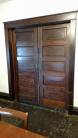
Hidden pocket doors at the Chapman farm Oct 2016  We reoccupied the farmhouse in October of 2016, after sixteen years of renting the house to two other families. We could not continue to rent the house to others when many major repairs and updates were required. We decided to live at the house a good share of the time while we work on it, enjoy the farm environment, and appreciate the memories made in the only house that my parents ever owned.
The first task was to remove the wall-to-wall carpeting from the main and the second floor. The main floor carpet was approaching thirty years of use; the second floor included carpets that were threadbare after fifty years and more. Nothing was salvageable from these carpets or their pads. Underneath were the original Southern yellow pine floors, hard, durable, and needing refinishing, which would wait until other tasks were completed.
The second task was one that had waited through years of my wondering curiosity—discovering what was hidden in the walls between the three living rooms on the main floor. One room serves as a dining room, one as a living room, and the last as a library, with a small half bath carved out of its corner. The walls between these rooms were thicker than normal in their construction. Vinyl folding doors had separated the rooms, and those doors had been added before we first occupied the house in 1963. They were obviously not original to the 1915 design. The last renters had removed those vinyl doors as they began to fall apart.
I verified my first suspicion, that the wall between the living room and library contained two heating channels for the second floor, justifying its larger size. I suspected that the other and thicker wall, between the dining and living rooms, had once contained pocket doors that matched the five-section ladder door design throughout the rest of the house. It was not likely that they were still there. Prying the plywood cover off of the door jam revealed the answer. There had been pocket doors there, and they still were there, pushed back into the pocket and covered. One rolled out easily, just as it had originally. The other rolled out a few inches and stopped, resisting to roll farther. They both were covered with dust, after their exile for sixty years or more., but underneath the dust was a beautiful finish, just waiting to be cleaned.
I surmised that the reason someone had hidden the doors was due to the failure of the one door to roll properly. There was no other evident problem with it. My son-in-law Au arrived soon after I had discovered the doors. He grabbed a flashlight, found an easy-to-reach adjustment mechanism, borrowed a screw driver and did a little adjustment, and that door worked perfectly, like the other. No mechanical problems defies Au for long.
How often do we give up on solving a problem before we’ve made a sufficient effort to find an answer? How often do we substitute something that is of poorer quality for something that just needs a little adjustment? How often do we live with something that is unsatisfying before we return to something that is beautiful and durable? How often do we hide doors instead of opening them? Oh, the lessons! The lessons keep rolling out.

Getting the Lead Out

04 Saturday Feb 2017

Posted by chaplines2014 in Caring, Events, Farm, Gullibility, Health, House, Learning from mistakes, People

≈ Leave a comment

Tags

events, life experiences, Memories, Serendipity

paxton-chapman-farmhouse

My father was inhabiting his house by himself, after Mother’s death, and it was time to simplify things, like fancy window dressings and shelves of collectibles gathering dust. A few years passed before we arrived at a stage when my one visit a month could provide just enough time to sweep and dust and finish laundry, so that he would have an easier time doing what he needed to do by himself. Part of that process was replacing the sheer curtains and drapes with mini-blinds. My brother generously supplied the mini-blinds for sixteen large double-hung windows. They looked neat and they were versatile for providing light when needed and privacy when it was needed.

After ten years there by himself, and the loss of his driver’s license, the day finally came when he could no longer live there. It was a sad day, and we had to stop at the end of the lane for him to take a long last look, before we moved on to Burlington, where he would live at my house.

The question remained—what would we do with the property? Larry Schwing had worked with my father for years, and he had gradually assumed more of the responsibility for the farm until he was the full-time tenant farmer. The income from the farm would accumulate and provide what was needed for my father’s eventual move to assisted living and then nursing care. The house could contribute in the same way. We cleared the house of furnishings, held a sale of the items that would no longer be needed, and prepared for renters. The Larry Magelitz family arrived just when the house was ready. It would provide a comfortable home for the couple and their two little boys. Their life there went well for their first several months, until routine blood tests showed warning levels for lead in the little boys. It was a small indication, but there is no safe level for lead in children, and we were all upset that we had exposed them to danger in the old house.

We arranged for lead testing throughout the house. There were many painted surfaces, plenty of places where peeling paint and other materials could have been the source, but none of them showed a positive test for lead. Finally, the relatively new mini-blinds were tested, and the surprise came. They were saturated with lead, and the dust from their painted surfaces showed the positive results we had been searching for. The new mini-blinds from China were the source. There was no inspection or restriction of lead on anything that was being imported in the country. We quickly stripped the house of every set of blinds and sent them to the landfill. After a thorough cleaning, the Magelitz family was able to live there until a new job took them away. Another young family soon took their place, and, happily, they could enjoy the house for eleven years without fear of lead contamination. My parents always enjoyed the young families that lived nearby as their neighbors. We knew that they blessed the use of their home for these families and would want them to live there in safety.

The Four-Square House

24 Monday Oct 2016

Posted by chaplines2014 in Growing up, House

≈ Leave a comment

Tags

life experiences, Memories, Serendipity

paxton-chapman-farmhouse

The four-square farmhouse sits on a rise above the broad sweep of rich land bisected by the Middlefork of the Vermilion River. In the center of Ford County, the last county to be formed in the state of Illinois, the glacial swales are not prominent here, but sufficiently high to see every other rise in the area, including the town of Paxton, the highest point between Chicago and Cairo on the Illinois Central Railroad. Along that ridge a native trail wound above the surrounding marshland, known in historic times as the Ottawa Trail, with respect to the travels of the tribe that used it before and after the battles of Pontiac and later Tippecanoe. We found a variety of projectile points and tools along that ridge, dating from different centuries, unusual because no water source on that land provided the locale for village sites, as were common two miles lower along the riverbanks.

Why is this land so important to me? Fifty-four years ago it saved my family, my hopes for the future, and my sense of a secure place in the world. My father had lost the lease on the 320 acres on which we had lived for twelve years. I was sixteen years old.

For months he had searched for another farm or another job, without any encouraging possibilities. The college funds that my father had guided me to save went into the family budget. The prospective homes that we toured, that we could afford to live in, were depressing in their poor condition. The sale of the Angus herd and the excess farm equipment raised just enough to pay off accumulated indebtedness, leaving nothing to live on or secure someplace to farm.

Then this house and the hundred acres on which it sat came up for sale, owned by the elderly Bonnen couple who had lived there for many years, until his health began to fail, and she needed to move to Gibson City to continue her studio teaching of piano students. My father put together the down payment, based on the cash value of his life insurance, knowing that the farm would ordinarily pay for itself, and he and Mother would have to find other work to provide their livelihood, although the land itself would provide most of what we needed to eat. My mother would continue for many years working as a cook at the county nursing home. My father would get work at the post office and the broom factory, before assembling rental land year by year for the next fifteen years to nearly a thousand acres eventually. This was our home, and to it we returned for family gatherings and for respite for 37 years until Mother died here, and Dad continued to live here for another ten years until he couldn’t farm or drive any more, and he “retired” at the age of 89.

The land and the house, rented to two young families during the past thirteen years, along with Social Security, provided the money needed for assisted living and nursing home care for my father until he died a few months shy of 94. After that, the rental and farm income paid for home maintenance and provided enough to buy some of the land, eight acres, from my brothers. That made a remnant farm of 34 acres. Here we will live for a while, restoring the 101-year-old house to serve the next generation that will live here. We will try to pay this old house back for the happiness it has given us and enjoy it and the serenity of its location for a while longer.


The Storm’s Unpredictable Wind

13 Tuesday Sep 2016

Posted by chaplines2014 in Faith, House, Nature, Yard

≈ 1 Comment

Tags

life experiences, Serendipity, Synchronicity

redwood trees

“You hear the sound of it but you don’t know where it comes from or where it goes…”

I was sitting in my overstuffed chair last Wednesday evening, working on one of the online philosophy courses that I teach, when a great wind blew with the sound of crashing, followed quickly by the storm warning siren and pouring rain. Putting my laptop computer aside, I jumped from the chair and headed toward the kitchen where Jan was, just to make sure she was okay. She was. The only noise to follow was the sound of heavy rain, so I went to the basement, not for its supposed protection from the wind, which quickly subsided, but to check on the water that might be invading. Sure enough, the water was bubbling out of the drain, because the city sewer could not handle the volume of the downpour. I monitored the water level for the next two hours, but the electricity did not go out and the constantly running sump pump kept pace with the invading water.

The next morning, I again checked the house for damage, which the darkness could have hidden the night before. No problems showed up.

Early in the spring I had noted the two large limbs of the tulip tree that overhung the house, knowing that sometime this season I would need to make arrangements for the tree surgeon to remove them. Friends in Zion Church had given the tree to me when my mother died suddenly twenty-six years ago. It was one of her favorite tree species, and it grew quickly into a lovely specimen. But those two limbs had to go.

I did not notice at first, when checking the house after the storm, but those limbs were indeed gone. Where did they go? Forty feet away in the small space between the crabapple tree and the garage, one large limb was planted rightside up against the fence, the large trunk of the branch into the ground. Behind it, the other large branch sat upside down with the heavy trunk on top.   

The wind had removed both eight inch-diameter branches close to the trunk, without damaging the roof or breaking windows, and placed them so neatly in the yard that they almost looked like they belonged there.

I think I owe the Great Tree Surgeon in the Sky big time.

The Garage at 708 1/2 North Sherman

22 Friday Apr 2016

Posted by chaplines2014 in Church, Faith, Gullibility, House, Learning from mistakes, People, Volunteering

≈ 1 Comment

Tags

A License to Preach, Memories, Serendipity

3 Owls

I had sought a year-long pastoral internship in the middle of my seminary education, and in part to restore a relationship with the Methodist Church that had disappeared since I had been studying at a non-Methodist seminary. My prospective supervisor had flown to Chicago to interview me, and in that process he had offered two housing options for my little family of soon-to-be three. One option was a small house two doors from the church which was now occupied by a young family who would have to be given notice to vacate. The second option was a one bedroom cottage with a small kitchen a few blocks away from the church. The cottage was already vacant. Since we were already living in a furnished efficiency apartment and would return to similar circumstances after the internship, the latter option made the most sense to me, not making someone else move for our benefit. (This was forty years before the advent of the tiny house movement, although nomadic furniture was in style.)

When the owner, Don Freeman, showed me the “cottage,” I thought I had made a big mistake. It was a two-car garage that had been converted into an apartment many years before, situated on an alley with no yard of its own. Covered with gray faux-brick asphalt roll shingles, an oil tank was the other conspicuous feature on the outside. Entering the small living room, I smelled the oil heater that occupied a corner of the room. The kitchenette sat to the left with the only closet (or pantry) next to it, and the bedroom and a small bathroom occupied the second stall of the original garage. It was about the same size as our Chicago apartment, with just enough room for a crib and baby’s dressing table next to a double bed. In such a small confined space it could be a difficult year for Jan and our baby. I asked Don to provide a full closet in the bedroom and to make arrangements as soon as possible to replace the oil heater with a fully vented gas wall furnace. Don had already paneled and recarpeted the interior, but he took my suggestions in stride. Since he was donating the space for a year, and he had a wife and five young children living in the four-square house at the front half of the lot, he had already committed about as much as anyone could expect. I had to make plans for air-conditioning—a small window unit would work—and the needed furniture.

Living in trust that God would provide had been our mode for several years. How else could we explain getting married with no money in the bank, moving to Chicago, starting graduate studies with no jobs lined up, Jan taking a job in the heart of the south-side slums, and then having our first child? This would surely be a test of that resolve and our marriage.

What I had not taken into account was the character of the family we inherited with the cottage. As full of trials and challenges as any family, the Freemans—Don and Sonja and their children, Donnie, Kathy, Carol, David, and Alice—accommodated and taught us as much or more, living in close proximity and grace, as the internship would teach me. Their laundry, workshop, and lives opened to us, and their experiences, Don as a trusted banker and active layman, Sonja as an extraordinarily loving mother and talented church secretary, the children with their enthusiasms and growing pains, became a part of our extended family experience of love and self-giving.

We probably would have not have chosen to live in that house if we had seen it before making our decision. That would have been the mistake. We were blessed.

Heat Pump Heaven

27 Wednesday Jan 2016

Posted by chaplines2014 in House, Learning from mistakes, Seasons

≈ Leave a comment

Tags

events

IMG_2080.JPG

We appreciate our heat pumps. The theory behind them is irreproachable—reverse refrigeration—taking heat from the outside and putting it inside in winter, and taking heat from the inside and putting it outside in summer. A local company installed our main floor unit fifteen years ago and the lower level unit fourteen years ago and then promptly went bankrupt. We found a good serviceman to keep the units in repair, after lightning did some damage to the upper unit’s electronic components. Although the manufacturer was a reputable company, he reported that it contained several outdated parts. He kept it going for us nonetheless. The lower unit, on the hand, has never given us a bit of trouble. It keeps plugging along, passing every inspection.  Finally, a year ago in the fall, when the upper unit fan and compressor warned that they did not want to survive another winter, we decided to find a replacement.

We examined several alternatives and finally narrowed the search to another major manufacturer. A Trane would replace a Carrier. It sounded like a very good system, but when it was installed it did indeed sound like a train. The blower, starting out as barely a whisper, built up the wind pressure of a gale in a Midwestern thunderstorm, pillowing the vinyl flooring in the bathroom and kitchen. A few days later we recalled the installer, who adjusted it to a moderate wind, saying that it had been set for Florida, instead of an Arkansas setting. Florida homes require such a tempest because of their high humidity. I accepted the explanation. The Arkansas setting provided a tolerable breeze, and the flooring stayed where it belonged.

We finally got the missing panel delivered for the air handler, which somehow had gotten lost in New Orleans, and the programmable thermostat that had been promised finally replaced the temporary manual adjustment model. By that time, our winter stay concluded, and the need for neither heat nor cool was evident in the mild spring, summer, and early fall visits that followed.

Our November stay provided the first serious test of our new system since February as the outside temperature fell to freezing, and we let the thermostat kick into action. Very little happened. The blower provided markedly less sound than it had, and the heat, drifting out of the vents, was warm enough, but lacked motivation. When I checked the crawl space where the air handler is located, I found the problem. The return air vent, stressed by the new fan pressure, had collapsed, flatter than a proverbial pancake. Not much air was going to get through that vent, which had severed its connection to the rest of the house.

We called back to the installer who was very quick to come and replace the return air vent with a solid metal vent wrapped with thick insulation. They took no responsibility for the collapse of the earlier system, which probably would not have held up in either Arkansas or Florida, so another investment was needed on my part, making this the equal to earlier estimates for a geothermal replacement, much to my chagrin, although who knows what unforeseen costs would have come with that installation?

Now, comfortably ensconced in our Ozark home with a balmy 72 degrees inside while the wind blows at 25 mph in the 25 degree temperature outside, all is right with the world.

The Doors Came Home

25 Monday Jan 2016

Posted by chaplines2014 in Church, House, People, Small town life

≈ Leave a comment

Tags

Memories, Synchronicity

Burlington house in fall

Our 1899 eclectic house was not built for the preference for open floor plans, but some former occupants decided that the next best thing was to remove as many doors as they could. The large pocket doors between the two living rooms disappeared, as did the door between the front hall and the dining room, and the swinging door between the dining room and the kitchen, and the upstairs doors between the central sitting room and the front and rear hallways. Air flowed freely between all of the rooms, especially the cold winds of winter, and with the large loosely-double-hung windows on every side of the house, winter wind did not stay outside.

Between the front hall and the middle bedroom, not only did the door disappear, but the doorway did, too, giving access to that bedroom only through the sitting room, which could no longer double as a private bedroom for guests or anyone else.

Finding the alternative of removing walls and creating a modern openness too costly—the apparent solution for every remodeling show now on House TV, which had not yet appeared in 1988—the solution seemed to be replacing doors (and doorway). Restoration stores and preservation stations with old building parts had not appeared yet either, so I went begging.

Church members came to the rescue.  Dean Moberg mentioned that he had a set of big pocket doors stored in the rafters of his garage. A former owner of his 1900-era house had removed not only the doors, but the entire wall between his dining room and living room, giving them a nice open space.  That was another option, but the structure of my house still needed those walls. They were dirty and ugly, but the right size. Thank you, Dean! They cleaned up well, and I do enjoy refinishing. The doors required a new set of rollers to work on the track that still existed, but a renovation specialist helped assemble those.

Jim Ritters had four doors and a quantity of old woodwork in the attic of his house, which also matched our house for age and woodwork. He just about had to tear out a window to get them out of his attic, but they cleaned up so well that they didn’t need refinishing. The small wall that filled the old doorway came out easily, and the woodwork helped to shape an opening that matched the rest of the house. Thank you, Jim!

Work on insulation and tightening windows came later, but our comfort and enjoyment of “This Old House” increased enormously. It’s good to be able to count on the help and generosity of church people when you need them.

Persistent Welcomers

19 Wednesday Aug 2015

Posted by chaplines2014 in Farm, Growing up, House, Seasons

≈ Leave a comment

Tags

A License to Preach, Memories, Serendipity

Burlington house in fall

They welcomed us in great numbers when we arrived in August, 1988. Throughout the fall they kept coming, sometimes pestering us to the point that we wondered whether we would ever be rid of their nuisance. Even in January they kept moving, popping up at odd times and places, such as on my collar during a children’s sermon at a Sunday morning service. If I had been quick-witted, I would have turned that moment into an object lesson on persistence. When winter came in its fullness of ice and snow, they still persisted, although I saw only one every day or so. Boxelder bugs.

As a child I became acquainted with them. They were more numerous and lasted longer than lightning bugs, so when it was no longer possible to collect the more illuminating lightning bugs, I turned my acquisitive attention to boxelders, seemingly harmless, and only slightly stinky, but certainly persistent and ubiquitous. The worst weather in heat and dryness brought out the best in them, but they made themselves known even in cold and icy times in the warm comfort of the house. In Burlington the bugs had occupied the soft maple trees that grew along the berm immediately north of our house. On the farm they had occupied the namesake boxelder trees that grew along the river bank not far from the house. In both cases they moved inside when they decided the conditions were better there. For whatever reason the bugs left our Burlington house the next spring and have never returned.

I want such long-lasting determination, such unexpected perseverance, for my faith. When I am caught in mundane, day-to-day tasks that seem to drag on endlessly, I need the unexpected reappearances of joy and surprise that persist in spite of all I do to suppress them or tame them or forget about them. When I am overcome by the scale of problems that seem insurmountable, I need the confident will to see a victory that gives meaning to my feeble and uncertain movements. Sometimes such faith does appear in solitary heroic figures battling all odds. Sometimes such faith comes in masses of individuals filling every corner and space with their relentless march of life conquering death. Even such lowly creatures as the boxelder bug encourage us by the nuisance of their example.

You have to be “on the inside”

18 Tuesday Aug 2015

Posted by chaplines2014 in Caring, Church, House, Learning from mistakes

≈ Leave a comment

Tags

A License to Preach, Serendipity

Burlington house in fall

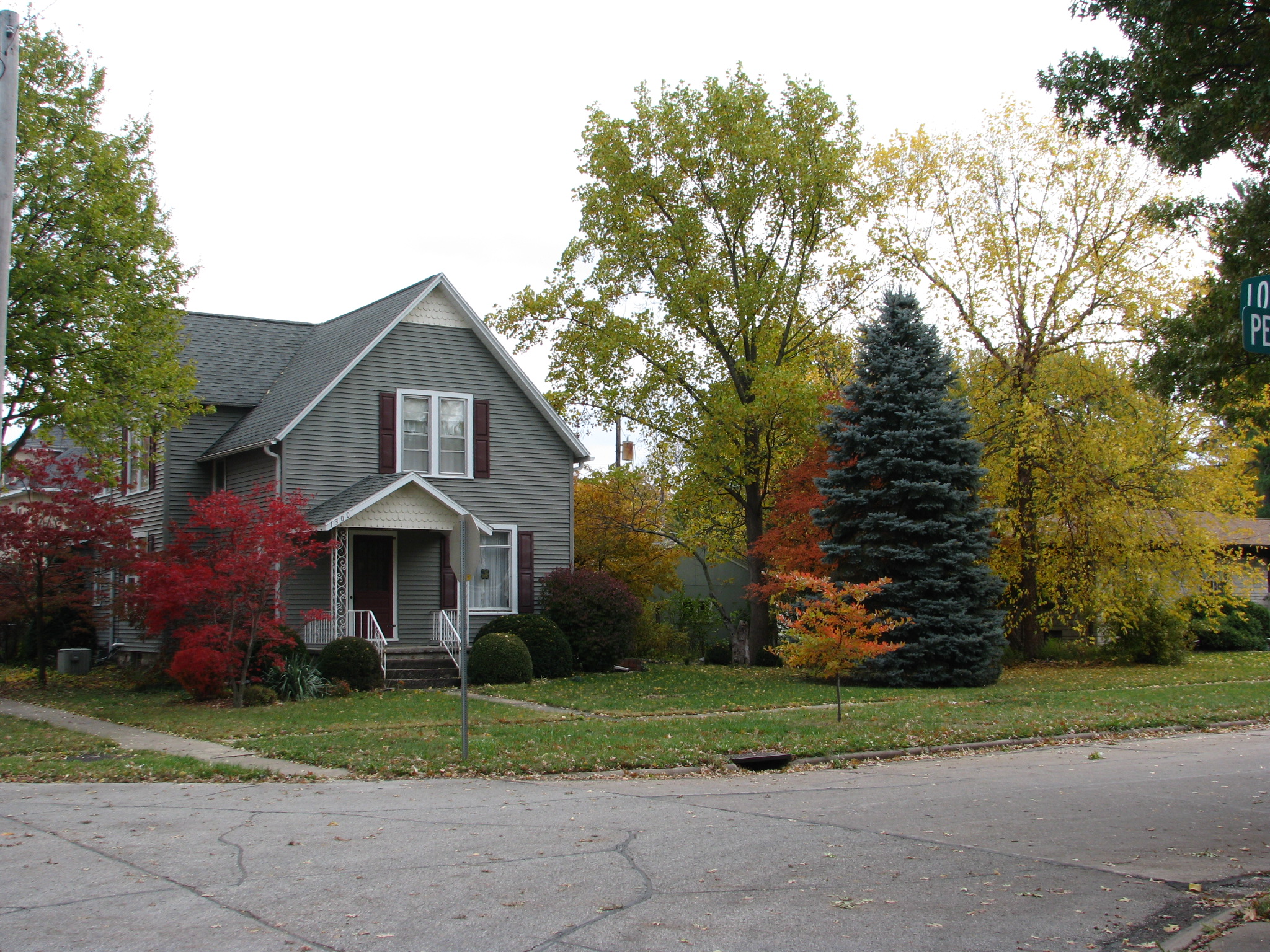
We moved into our old house in Burlington in August of 1988, twenty-seven years ago. Friends helped us to move from Minonk, Illinois, and we sat together on folding picnic chairs on the back porch and had lunch. They noticed that there was a doorbell on the back porch, just outside the kitchen. It worked well, making a “dong” sound, and when the front doorbell sounded it made a “ding-dong” sound.

The doorbell location presented a problem. You had to go through the rear door of the house to get to the doorbell. By the time you made it to the kitchen door, you were already inside the house, and since the kitchen was usually the center of activity in the house, most of the time you could just say hello to anyone who was working or sitting around the kitchen table. You wouldn’t need to use the doorbell.

Like many old farmhouses, most people who know us come to the back door anyway, but the fact is that, unlike when we lived in the country, we usually lock the back door, so getting to the doorbell presented a challenge. You would have to knock on the door in order to get us to let you in so that you could press the doorbell.

Many years ago the back porch was really an open porch. There was no door because there were no walls. The kitchen door was the back door. Sometime in the 1960’s, the Nelsons hired a young Jim Wilson to enclose the back porch, build walls, and put in a row of casement windows to make a three season unheated room. (We liked it so much that we added insulation and a heating vent and made it into an all-season room.) But no one bothered to move the doorbell.

Maybe the previous residents were so friendly that people could just open the door and walk in. Ideally we would like to live that way, but we tend to live a bit more privately, even though the large windows on all sides of the house make it a see-through first floor when the curtains are pulled to the side.

We don’t always make it easy for people to get inside. With the door locked, you had to raise a ruckus to get our attention. It would be a lot more welcoming to place a doorbell in a convenient location, so that is what I did, among one of the top items on my “to do” list.

We don’t always make it easy for people to get inside other things either, but hospitality means making the changes that make it easier to get in.

← Older posts

Subscribe

  • Entries (RSS)
  • Comments (RSS)

Archives

  • February 2022
  • May 2020
  • October 2018
  • December 2017
  • November 2017
  • October 2017
  • June 2017
  • April 2017
  • March 2017
  • February 2017
  • January 2017
  • November 2016
  • October 2016
  • September 2016
  • August 2016
  • July 2016
  • June 2016
  • May 2016
  • April 2016
  • March 2016
  • February 2016
  • January 2016
  • December 2015
  • November 2015
  • October 2015
  • September 2015
  • August 2015
  • July 2015
  • June 2015
  • May 2015
  • April 2015
  • March 2015
  • February 2015
  • January 2015
  • December 2014
  • November 2014
  • October 2014

Categories

  • beach
  • Books by Gary Chapman
  • canoeing
  • Caring
  • Cherokee history
  • Church
  • Citizenship
  • Death
  • Disabilities
  • Events
  • Faith
  • Farm
  • fighting fires
  • Forest
  • Garden
  • Growing up
  • Gullibility
  • guns
  • Health
  • Hiking
  • House
  • Innocence
  • Learning from mistakes
  • Life along the River
  • Miracles
  • Nature
  • Patience
  • People
  • Prayer
  • Racial Prejudice
  • rafting
  • Running
  • Seasons
  • Small town life
  • Suffering
  • Travel
  • Uncategorized
  • Vehicles
  • Volunteering
  • Words
  • Yard

Meta

  • Create account
  • Log in

Blog at WordPress.com.

Privacy & Cookies: This site uses cookies. By continuing to use this website, you agree to their use.
To find out more, including how to control cookies, see here: Cookie Policy
  • Subscribe Subscribed
    • chaplinesblog
    • Join 71 other subscribers
    • Already have a WordPress.com account? Log in now.
    • chaplinesblog
    • Subscribe Subscribed
    • Sign up
    • Log in
    • Report this content
    • View site in Reader
    • Manage subscriptions
    • Collapse this bar
 

Loading Comments...