• About
  • Celebrating our decades…
  • Welcoming all and inclusiveness

chaplinesblog

~ everyday and commonplace parables

chaplinesblog

Category Archives: House

Loads in Need of Redistribution

17 Monday Aug 2015

Posted by chaplines2014 in Caring, House, Learning from mistakes

≈ Leave a comment

Tags

A License to Preach, Serendipity

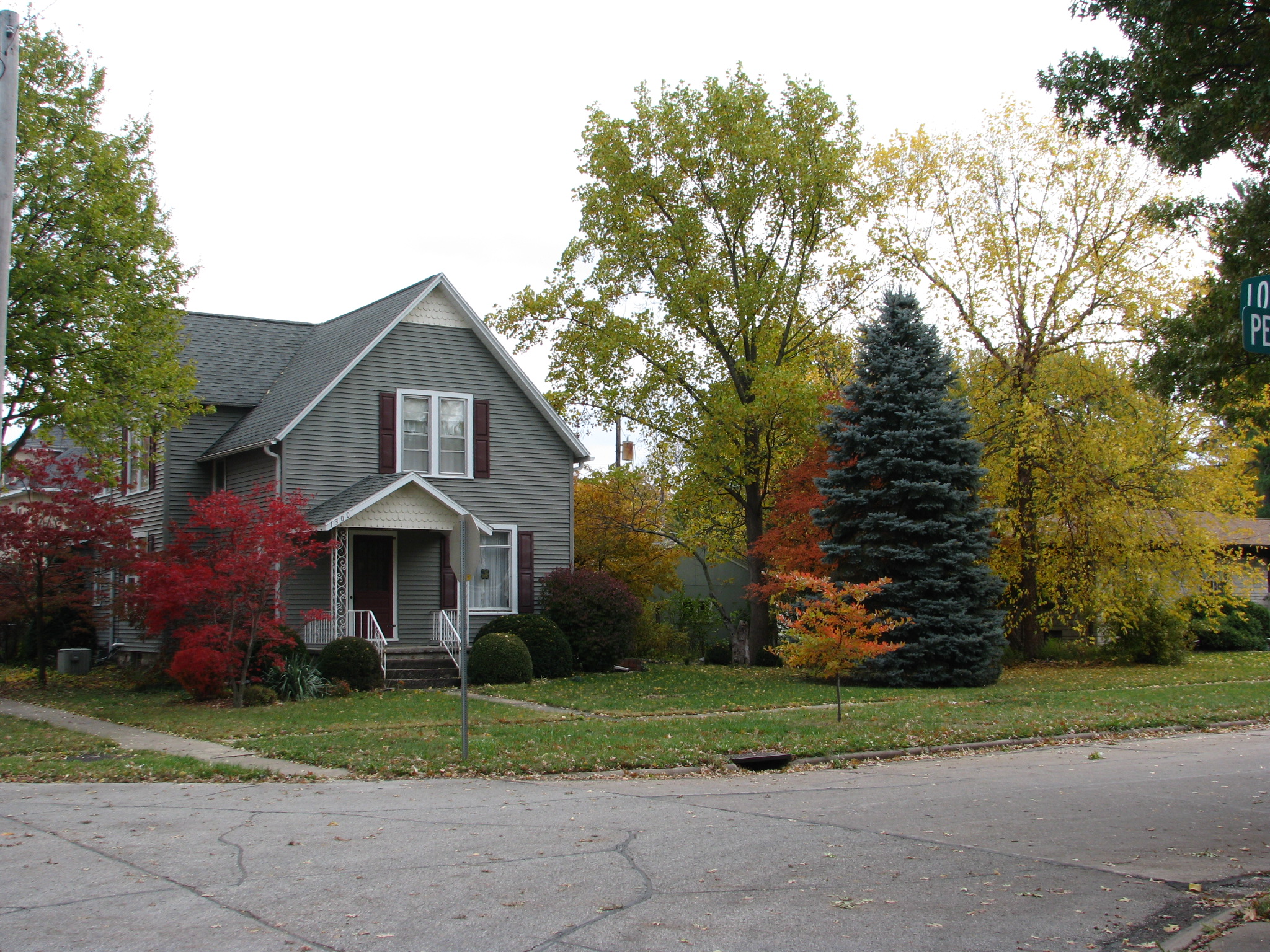
Burlington house in fall

My house in Burlington is now 115 years old, but I installed a new 200 amp circuit box several years ago, and the panel of circuit breakers was impressive—23 circuits with room for 28. Only one circuit kept blowing, and when it blew just about everything went with it. The television, the dishwasher, the electric heater, lights and outlets all over the place—all went out. Since something was amiss, I put on my electrician’s sleuthing hat.

The air conditioner, refrigerator, freezer, furnace, clothes dryer, electric range, hot tub, and the clothes washing machine each had its own own circuit. They were dedicated circuits serving major appliances and ones that had enough of a load to justify their single purpose and that was appropriate. They kept doing their own jobs even when the other circuit blew. That totaled eight dedicated workhouse circuits—four of which were double or 220 circuits, so those and the one that blew accounted for thirteen spaces in the box. What about the other ten?

One took care of the outlets and lights in three rooms upstairs. We didn’t use them a lot, but there were times when the whole family came to visit, and then they got put to use. They were there, ready to serve, even when the rest of the house shut down. Then there was one circuit serving one outlet in the half-bath downstairs, and one serving an outlet in the kitchen corner, and another serving another outlet behind the antique Hoosier in the kitchen, and another serving one outlet in a corner of the basement. They seldom served any purpose, so it was plain that they were far from being overloaded. They were seriously underloaded. There was one serving a small fluorescent light fixture above the kitchen sink, which explained why it continued to shine when everything else went dark, but in spite of its perpetual and faithful shining, it was definitely an underused circuit. There were two circuits available for the garage, which took a few years to put into service. Then there was one that went upstairs to the master bedroom where a window air conditioner used to sit. Every one of these circuits was added when someone wanted to add one more light or outlet or appliance to the house. The tenth one served the lights, ventilating fan, and outlets in a new addition that was added several years ago.

Yes, something was amiss when over half of the available circuits were completely idle most of the time, and when one—obviously the original house circuit—was trying to carry too much of the load. I had to spread the load around so that the underused circuits could carry their share, before the breakdown of the one circuit led to more disastrous results.

It made me wonder how much of the power distribution in the organizations and churches in which I have taken part resembled my old house. Perhaps some load redistribution has been in order in other places too?

Check the Supporting Structure

07 Friday Aug 2015

Posted by chaplines2014 in House, Learning from mistakes, Prayer

≈ Leave a comment

Tags

Serendipity

Burlington house in fall

Our Burlington house is a late Victorian eclectic built in 1899, originally a farmhouse on the railroad magnate Charles Perkins’ estate. For most of its life three families by the name of Nelson had owned it, although two of them were not related to the third. The family that sold it to us in 1988 had begun to restore it after several attempts at remodeling. Jan said, when she first entered the front hall, seeing the old varnished woodwork, that it wrapped its arms around her and said, “Welcome home.” That made me happy, since the other seven houses in our price range that I had previewed all had serious problems that would need a lot of attention right away. This one was almost “move-in ready.”

Walls were newly papered with tasteful period patterns. Ceilings were newly coated to cover the cracks and holes. New curtains were hung just about everywhere. Floors were sanded smooth and refinished. Only a few issues remained that would need resolution sooner or later.

The six basement windows provided the first challenge that I tackled. The casings had deteriorated past the point of repair, reglazing, or repainting. I tore them all out, stabilized the surrounding limestone rocks with mortar, and installed new windows that resolved some of the leaks and drafts in the cellar.

All the while I looked at that solid wide-board wooden wall that ran down the center of the cellar, lengthwise of the house, separating the cellar essentially into two large narrow rooms. Above that wall in the center of the house, the floors were noticeably uneven, and a wall crack had broken through the new wallpaper on the second floor. Something was going on behind that wall, I decided, exercising my powers of deduction.

The wall seemed so solid until I started to take it down. A little pushing on the heavy boards and they gave way at the bottom, so I proceeded to remove every board. At the top the boards attached to the main support beam of the house. At the bottom, everything seemed increasingly loose and mobile. The upright posts supporting the beam had obviously rotted at the bottom, so that the entire wall, about a ton of wood, was hanging from the main beam. When I finally reached the center of the wall, I found that the beam itself, was not one large hewn timber, but two butted end to end, with nothing supporting the center. The center was hanging from the rafters of the house. No wonder it had settled! The whole support system was hanging from the house, rather than holding up the house. It made no sense, but the house seemed to be lifting its support.

I quickly put several jacks in place under the two main beams, and dug footings under the concrete floor, that the owners had obviously poured years after the original rock footings had been put in place. Then new pressure-treated six by sixes were wedged into position, firmly attached at top and bottom. This house was not going to collapse or going flying off into the great beyond if I could help it.

The Mundane Icons on My Desk

17 Friday Jul 2015

Posted by chaplines2014 in Faith, House, Prayer

≈ Leave a comment

Tags

A License to Preach

Pentecostal bannerSometimes, in order to meditate, one needs a focal point, something to concentrate the attention that would otherwise wander. Such objects should not get in the way of the object or Subject one really needs to think upon. They should be a kind of window, like the icons of the Orthodox.

The Pieta serves that purpose on my desk. It is a miniature copy of the Michelangelo sculpture that a thoughtful person brought to us from Rome many years ago. The Mother of Jesus cradles in her lap the still and broken body of her son. Her lap is huge. Her body with its flowing robes dwarfs the lifeless body of her son. The sculpture focuses the pathos of the progress of our human journeys. Both the human and divine possibilities and limits are present in that grief and love poured out.

Due to the continual clutter of my desk, as I work at home as I used to work at a church office, with several ongoing projects at the same time, one focal point does not hold my attention for as long as I would like. As long as my eyes are open, they will wander as much as my mind, as long as it is open too. Two other objects flank the Pieta—a bottle of all-purpose glue and a cartridge of correction tape. In the clutter of my life they provide appropriate accompaniments to the Pieta. They are as much windows into human and divine purposes as the Pieta, even if they are more mundane. The glue of divine love, passionately involved in human suffering, and the correction tape, covering absolutely the errors of human accident or willfulness, along with the Pieta, provide a useful Triptych. They make an altar that concentrates insight.

The Wait and See Method of Balancing the Checkbook

16 Thursday Apr 2015

Posted by chaplines2014 in House

≈ Leave a comment

Monkeys see, hear, speak no evil, Bangra.comEvery month we have some things that have to be done, which include reconciling the checkbook with the bank statement. The process has been helped somewhat by Quicken. Quicken automatically fills in the regular bills and makes the unique purchases easier to record. Also Quicken includes a calculator that adds and subtracts more quickly and accurately than I do.  So reconciliation with the bank statement should be a simple matter.

Even with these helpful tools it happens that the bank statement and my computer and my checkbook do not always agree. Three out of four times they do agree, which is better than it used to be, when I was always hunting for that penny or that ten cents or that dollar or that ten dollars or that multiple of those single digit errors that represented my mistakes in calculation along the way. Now the errors that creep into the statement are inscrutable odd numbers that come and go seemingly of their own accord.

Sometimes I can look back and find an odd check that Jan or I wrote to someone who did not cash it in a timely way, or a check that one of us failed to record. There may have been electronic fund transfers that came at an unexpected time and in an unexpected amount. The computer made its financial entry according to the prearranged pattern that had been disrupted through that circumstance beyond its or my control. Even when these matters are taken into account, there shows up a puzzling figure that I cannot explain, but which often disappears on the next bank statement.

Why should I worry if everything balances out eventually? Why should I worry if the amount is insignificant and I am able to carry a balance sufficient to provide for our needs beyond it? So I wait for the next month to see, usually, that the amounts have corrected themselves mysteriously with no intervention on my part.  I have grown so used to that over the years that I routinely just wait it out.

Finding the appropriate balance in many other things that seem wrong, full of errors, and suspicious may fall under the same principle. Let’s wait and see if “things that go around come around,” if “this too will pass,” if “the answer will appear some day.” Surely we can’t wait it out in all things. Some demand our immediate and sincere efforts. As Reinhold Niebuhr advised us, there are some things that we can change, with sufficient courage, and some things that we cannot change and must wait them out with patience, and God can be the source of the wisdom to tell the difference between them.

My Recipe for Curried Something

14 Tuesday Apr 2015

Posted by chaplines2014 in House

≈ Leave a comment

Monkeys see, hear, speak no evil, Bangra.com

My inspiration for cooking are the recipes that came from Great-great-grandma Gee, Great-grandma Coen, and Grandma Warfel, which say a pinch of this, a handful of that, and season to taste for a pound or so. As far as I am concerned what is fresh and available or in season dictates a lot of the ingredients, and what is on allowed on the low-fat, low carb list dictates the rest.

G-g-g-ma Gee bequeathed to us a recipe for “Pickled Beets” or “Pickled Anything” which depends on large quantities of any kind of vinegar (white, apple cider, or wine) and large quantities of anything sweet (sugar, molasses, maple syrup, sorgum). With those two basics for a start you can add anything from the herb garden that is available (garlic, coriander, tarragon, thyme, sage, bay, dill, onion, parsley, rosemary, savory, chives, basil, peppers, cardamom, oregano). I’ve used her recipe several times, and of course it’s turned out differently every time, but it’s always good, in my humble opinion. Thank you, G-g-g-ma Gee!

I first ate Curried Beef prepared by my friend Tim, who grew up in Thailand, when we were seminary neighbors. It was so spicy hot that the only way to survive was to keep eating it, and wiping away the tears. Promptly after the meal my colon emptied, but going in it tasted wonderful. It doesn’t have to be that hot. You are in control. You make the decision. The next time I asked to help Tim prepare the meal, and I found out how he did it, and I began to develop a tolerance that removed the untoward side effects.

Two things are essential. If one starts with essential ingredients, you can go anywhere from there. This applies to many things in life. For this recipe it is onion and ginger, at least one whole fresh onion and about three inches of fresh ginger root, both chopped fine and sauteed in oil (olive oil, canola oil, or any oil). Of course I have substituted onion flakes and onion powder, and ground ginger from the can, but I don’t like to. I don’t know what the upper limit on quantity for these two ingredients is. I’ve never found it yet. But one onion and about four ounces of ginger will take care of a pound of something.

At this point you can add a curry powder of choice, or the ingredients of any fresh curry that you choose to make from any of the ingredients that G-g-g-ma Gee suggested for her pickle. In fact if you want to wait until later and make this curry sweet and sour, you can just add her prepared pickle to the mix. Or you can just add any peppers you like, finely chopped, from green, white or black ground pepper to chopped jalapeno, habanero, or Thai peppers. There you may need to be a little careful.

Add a pound of ½ inch cubed beef or chicken or pork or soy substitute stuff, or ground meat, and brown at medium high.  If you’re not going to cook this for a few hours, then you can add hard vegetables like potatoes or carrots now or soon. And to hurry the process you may want to tenderize the meat. Or you can just fix the curry sauce and leave out meat, adding fish or vegetables later, after the herbs and spices have cooked through the sauce.

Add water to cover and simmer for at least an hour, if not in a hurry, it may be a couple of hours. But you can also fix a hurried version in about fifteen minutes. Or if you prefer a creamier flavor and texture, substitute coconut milk, half and half, cream, skim milk, or evaporated milk instead of water. Most of these are not allowed on my diet.

If you have found a curry paste from India, Thailand, or Vietnam that you would like to use, you can add at least a tablespoon of it, or follow directions on the package if you can find someone to translate them, after the mixture has simmered for a while. Or just live dangerously. It will usually take the place of most of the other seasonings added after the onion and ginger. And it will thicken the curry without needing to add much other thickener.

After the long simmer, add a thickener to the mix, corn starch or flour as needed. Then add any precooked meat, fish  or vegetables that you do not want to turn to mush. If you want some of these to remain crisp then you will be ready to serve it in a minute.

Serve on a bed of rice, white or brown or wild or seasoned or fried, or on noodles or on toast or on steamed vegetables. You can add or subtract any ingredient, as far as I am concerned, except the original two. You can even add some salt if your blood pressure allows it, but I don’t think it is necessary. Usually this dish will serve at least four people, but since it is better on the second and third days, I usually double or triple the recipe, and enjoy the leftovers, if there are any. There usually aren’t. Jan says she will stay married to me if I continue to prepare this occasionally.

Bread from Heaven

14 Tuesday Apr 2015

Posted by chaplines2014 in House, People

≈ Leave a comment

IMG_0002My mother collected recipes and recipe books. I have not tried to count them all. She did not discriminate. The oldest recipes from the 19th Century and the early part of the 20th give only a hint at quantities, temperatures and times, but there are many of them, and she had fun trying to use them. There are Jewish, German, and Greek recipes, Swedish and Southern, Native American and Afro-American, East Indian and Thai, Chinese and Polynesian.

There are collections of recipes for special needs– diabetic, weight loss, heart disease, busy people with no time to cook, people cooking alone for themselves, cooking for large groups, cooking for huge groups, cooking for dainty delicate affairs. There are collections of recipes for special people– what old Nels Petersen liked, what neighbor Sara Mae liked, what sisters Bernice and Dorothy and Fiana liked, what sons David or Ernie liked (Gary liked everything). There are privileged recipes, bound with promises to guard them as a secret.

There are collections of recipes from every church and organization that ever sold a recipe book within earshot. There are collections for hunters with their wild game and scavengers with their wild plants, rich tastes from the Ritz, the Waldorf and the White House and tastes from the poor making do with what was available, from Shoo-fly pie to Hardscrabble pudding. What do you do with animal brains, livers, kidneys, feet, gizzards or blood? Here there are lots of different and conflicting answers!

Dozens of dedicated cooks could start now and cook all day for the rest of their lives and not even prepare a fraction of the  foods that are represented in that collection. What can I do with them all?

They are a monument to a passion, a devotion, a desire to serve and a record of accomplishment. Recipes record history, but they plead for the future. No other person can contain so many, even if an exceptional person did gather and succeed with many.

Scatter them! Send them every direction! Let the variety of people who receive them mirror the variety who made them. So much abundance and so much pleasure has to be shared. And one person still stands behind them all.

Why is it that the food I miss the most and find irreplaceable is her simple yeast bread?

oodles of noodles

11 Thursday Dec 2014

Posted by chaplines2014 in House, Seasons

≈ Leave a comment

Tags

A License to Preach

Oodles of noodles covered the beds, the tables, and every available flat space in the house. This is how our house looked as my mother prepared for the annual church holiday bazaar. After a few days and the noodles were dry she would package them in appropriate quantities, dozens of large bags for the chicken and noodle supper at the bazaar, and scores of small packages for direct sale at the bazaar tables. Hundreds of thousands of noodles prepared my mind to receive “string theory” as the ultimate building block in the construction of the universe; only to me it will always be “noodle theory.”

Those noodles were delicious, and the bazaar always was an outrageous success, leaving the women’s organizations that sponsored it with the problem of what to do with all their money. During the noodle days in later years I had to be careful about inviting ourselves, with our children, to come home for a visit, if it was noodle time. All of those beds, that she made sure were available the rest of the year for our visits, would be full in those days.

A house filled with noodles is one of my images of abundance. I lived with them when I was growing up. I saw them in return visits. I still have pictures of them. The world is chock full of noodles.

Thanksgiving and Christmas together illuminate the exceptional abundance available to us in this world. The tables overflow with enough for everyone, including those who are poor, if we make some effort to allow access to the tables for them and to them.

In all the world there is excess—in its immensity and in the extraordinary patterns in even the smallest things we find. When we make the effort to duplicate them, we see that inherent intricacies far outstrip our creative abilities. Instead we must simplify and summarize, missing most of what exists. There is an elegance in things that speaks to us of profound generosity and attention to details. There is excess that allows us second chances, and third and fourth, and ninth if we are cats, and more if we are people. Whether we examine the microcosm or the macrocosm the universe is excessively generous.

So our making of noodles can go on and on, without approximating the slightest part of divine benevolence. In God’s magnanimity our little repetitions and duplications are honored, even when God makes everything new and unique. We will gladly taste them again, and fill ourselves up with the same thing, even though there is something slightly different every time, as the excellent cook tries to improve upon the best recipe, and as the tiny noodles in all creation align themselves in new and not exactly predictable patterns.

the old ugly rocking chair

24 Monday Nov 2014

Posted by chaplines2014 in Caring, House, People

≈ Leave a comment

Tags

Carl and Bessie- True Friends

Many years ago my grandfather, Carl Warfel, entrusted me with an item of great value to him—an old rocking chair. He could not say that he enjoyed sitting in it. I had the impression that no one had sat in it in for many years. It was in several pieces, having come unglued. It was missing its upholstered seat. He could not say that it was good looking either. Black and red casein stain covered its parts in random patches, a stain that came from soot and iron ore mixed with sour milk. The colors had worn to dull hues, bare where hands and other body parts had rubbed them off. Its claim to value lay in the family story that this rocker had sat by the fireplace in a cabin near Charleston, Illinois, in the 1840’s and 50’s. The owner, a cabinetmaker and carpenter, may have fashioned this one-of-a-kind design, and the rare times his lawyer son visited, while riding his court circuit through nearby Charleston, his son would sit in that chair and call it his favorite.

So the rocker came to me, as one entrusted with a pearl of great price. Of his many grandchildren I was the one who had shown some interest in antique furniture and refinishing, therefore the natural choice for its stewardship or rockership. I didn’t have the slightest idea what to do with it. My first inclination was to get rid of that awful black and red color, because the worn places revealed an unidentifiable wood of some quality, and the hand-lathed spools on back and legs and arms had charm. Fortunately no paint stripper or chemical that I had knew about could touch the stain. I say fortunately because those ugly colors date and locate the piece.

Since I did not know what to do with it, I took the remaining pieces apart and kept it in a large box where it sat for forty years. The chair challenged me to glue it back together, tung oil its wood back to a satin luster, and take it to an upholsterer for covering with a period fabric and pattern. No one alive could vouch for the story that came with the chair, but the thing is obviously old enough. Thomas Lincoln’s next door neighbors were my grandmother’s great aunt and uncle, and they may have purchased Lincoln’s household furniture when he died, but I have not been able to verify that family story.

Finally, in the year that I retired, I finished the rocking chair. Do you have any such prizes in your possession? Probably you are a better caretaker than I have been. Do you have a story worth telling, and can you vouch for it better than I? No object can mean that much, but sometimes with certain objects we can bear a testimony to values worth treasuring.

Our treasure should never be consigned to a box, stored out of sight and forgotten. Alas, that is where many people keep their stories and their valuables. The value is not available until you bring it out and put it to use, reassemble and try it out in daily life, and put the story into words and actions that echo the original experience, faint or dim or ugly though they may sometimes be in our rockership.

Sweating copper pipes

16 Thursday Oct 2014

Posted by chaplines2014 in House, Learning from mistakes

≈ Leave a comment

Tags

Serendipity

Twelve out of fourteen sweated copper joints held perfectly. Two leaked with a tell-tale seep from one, and a fine spray mist from the other. In some matters twelve out of fourteen is a good score. In plumbing it doesn’t count for much.

This was my first serious attempt to solder copper pipes and brass fittings in order to install a new shower in our home. A skeptic had asked me whether I was a Dagwood Bumstead type of plumber. As you may recall Dagwood always managed to make a worse leak out of a minor one, and finally Blondie would have to call the plumber to repair the damage. I have had reasonable success with drains, and compression fittings and threaded pipes, but this application called for soldered copper pipes, which challenged me to try to do something I had not done before.

The home repair manuals and video guides make it look easy, and for the most part it is, if one can keep a flaming torch aimed in the right direction without staring a fire in the insulation and wood framing, and develop a sense of when the pipes are hot enough to melt the solder, and balance the torch in one hand while keeping a steady hand to skim the melting solder all around the joint to be fitted. In other words it takes some art and experience. So Jan awarded me some points for getting twelve out of fourteen, but the shower still was not functional.

In one case the water was easily drained and I could proceed with a second attempt to seal the joint. In the second the repair was more difficult, involving removal of a section, including a well-soldered joint, and starting over with some new tubing and fittings.

I suppose that I am about 12/14 of the way through my life’s expected days. There is still a lot to do, and some challenges seem intractable. Like my work with copper fittings this is no time to congratulate myself on finishing twelve out of fourteen, when the entire project is not yet complete. But when can life be considered complete? There are always more people to serve, including a new generation that is just beginning, and more problems that arise as people try to surmount the obstacles that come at each stage of life. Still there must be a time when one admits that one has done enough, at least in this situation, in this way of doing things, with what talents or time one has to do it. So I suppose I  am 12/14 of the way through, and the last two tests appear as hard or more so than the first twelve.

Some of what is left to do will mean simply continuing to do what I know how. But I will also have to take apart and redo in a different way some of the things done earlier in order to finish well. I have to keep learning right up to the last, for life changes as people and their expectations change, and there are more and different demands now than there were when I started. Still the fact that I have had twelve successful experiences gives me confidence in God’s grace that there will be at least two more.

Newer posts →

Subscribe

  • Entries (RSS)
  • Comments (RSS)

Archives

  • February 2022
  • May 2020
  • October 2018
  • December 2017
  • November 2017
  • October 2017
  • June 2017
  • April 2017
  • March 2017
  • February 2017
  • January 2017
  • November 2016
  • October 2016
  • September 2016
  • August 2016
  • July 2016
  • June 2016
  • May 2016
  • April 2016
  • March 2016
  • February 2016
  • January 2016
  • December 2015
  • November 2015
  • October 2015
  • September 2015
  • August 2015
  • July 2015
  • June 2015
  • May 2015
  • April 2015
  • March 2015
  • February 2015
  • January 2015
  • December 2014
  • November 2014
  • October 2014

Categories

  • beach
  • Books by Gary Chapman
  • canoeing
  • Caring
  • Cherokee history
  • Church
  • Citizenship
  • Death
  • Disabilities
  • Events
  • Faith
  • Farm
  • fighting fires
  • Forest
  • Garden
  • Growing up
  • Gullibility
  • guns
  • Health
  • Hiking
  • House
  • Innocence
  • Learning from mistakes
  • Life along the River
  • Miracles
  • Nature
  • Patience
  • People
  • Prayer
  • Racial Prejudice
  • rafting
  • Running
  • Seasons
  • Small town life
  • Suffering
  • Travel
  • Uncategorized
  • Vehicles
  • Volunteering
  • Words
  • Yard

Meta

  • Create account
  • Log in

Blog at WordPress.com.

Privacy & Cookies: This site uses cookies. By continuing to use this website, you agree to their use.
To find out more, including how to control cookies, see here: Cookie Policy
  • Subscribe Subscribed
    • chaplinesblog
    • Join 71 other subscribers
    • Already have a WordPress.com account? Log in now.
    • chaplinesblog
    • Subscribe Subscribed
    • Sign up
    • Log in
    • Report this content
    • View site in Reader
    • Manage subscriptions
    • Collapse this bar
 

Loading Comments...