• About
  • Celebrating our decades…
  • Welcoming all and inclusiveness

chaplinesblog

~ everyday and commonplace parables

chaplinesblog

Category Archives: Learning from mistakes

Check the Supporting Structure

07 Friday Aug 2015

Posted by chaplines2014 in House, Learning from mistakes, Prayer

≈ Leave a comment

Tags

Serendipity

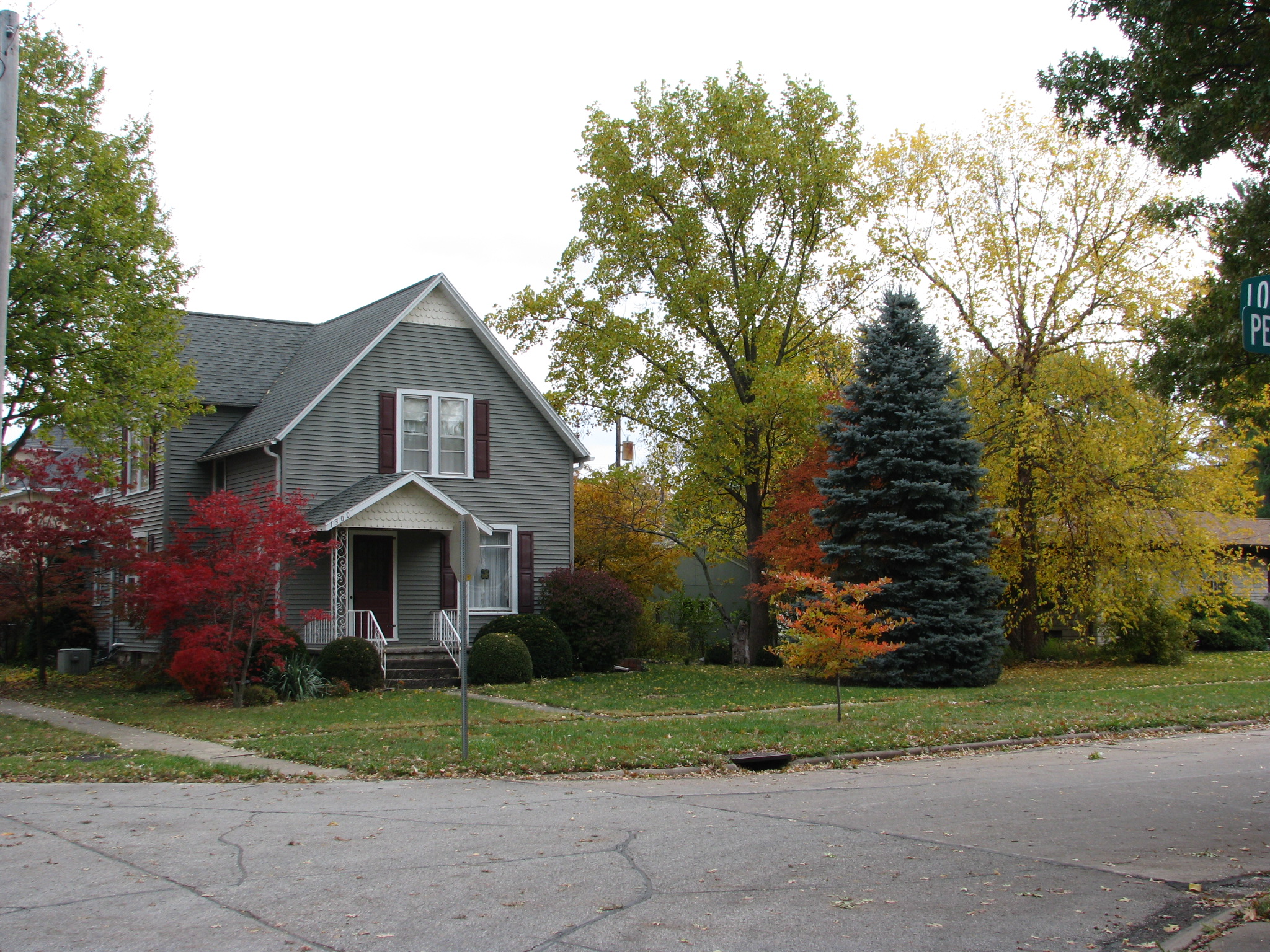
Burlington house in fall

Our Burlington house is a late Victorian eclectic built in 1899, originally a farmhouse on the railroad magnate Charles Perkins’ estate. For most of its life three families by the name of Nelson had owned it, although two of them were not related to the third. The family that sold it to us in 1988 had begun to restore it after several attempts at remodeling. Jan said, when she first entered the front hall, seeing the old varnished woodwork, that it wrapped its arms around her and said, “Welcome home.” That made me happy, since the other seven houses in our price range that I had previewed all had serious problems that would need a lot of attention right away. This one was almost “move-in ready.”

Walls were newly papered with tasteful period patterns. Ceilings were newly coated to cover the cracks and holes. New curtains were hung just about everywhere. Floors were sanded smooth and refinished. Only a few issues remained that would need resolution sooner or later.

The six basement windows provided the first challenge that I tackled. The casings had deteriorated past the point of repair, reglazing, or repainting. I tore them all out, stabilized the surrounding limestone rocks with mortar, and installed new windows that resolved some of the leaks and drafts in the cellar.

All the while I looked at that solid wide-board wooden wall that ran down the center of the cellar, lengthwise of the house, separating the cellar essentially into two large narrow rooms. Above that wall in the center of the house, the floors were noticeably uneven, and a wall crack had broken through the new wallpaper on the second floor. Something was going on behind that wall, I decided, exercising my powers of deduction.

The wall seemed so solid until I started to take it down. A little pushing on the heavy boards and they gave way at the bottom, so I proceeded to remove every board. At the top the boards attached to the main support beam of the house. At the bottom, everything seemed increasingly loose and mobile. The upright posts supporting the beam had obviously rotted at the bottom, so that the entire wall, about a ton of wood, was hanging from the main beam. When I finally reached the center of the wall, I found that the beam itself, was not one large hewn timber, but two butted end to end, with nothing supporting the center. The center was hanging from the rafters of the house. No wonder it had settled! The whole support system was hanging from the house, rather than holding up the house. It made no sense, but the house seemed to be lifting its support.

I quickly put several jacks in place under the two main beams, and dug footings under the concrete floor, that the owners had obviously poured years after the original rock footings had been put in place. Then new pressure-treated six by sixes were wedged into position, firmly attached at top and bottom. This house was not going to collapse or going flying off into the great beyond if I could help it.

Not So Finger-lickin’ Good

05 Wednesday Aug 2015

Posted by chaplines2014 in Learning from mistakes, People, Travel

≈ Leave a comment

Tags

Memories

Monkeys see, hear, speak no evil, Bangra.com

We were traveling in Europe as a family—Jan, Alicia, Nathan, and I. London, Amsterdam, Paris, Geneva, Frankfurt, and assorted smaller towns in Germany where we rented a small VW Polo so I could enjoy driving on the Autobahn. This was Europe on $25 a day when the dollar was worth more anyway, and beds and breakfasts, hostels, and pensions provided inexpensive overnight accommodations for families.

I was studying the relationship between church and state for two months, so not every stop proved interesting to my minor children, although they seemed to appreciate churches in general, most of which provided stately, beautiful, and immense echo chambers.

One area where I knew we would have to compromise occasionally involved food, considering the fact that my children tended to be picky eaters, one in particular, though she is not so picky anymore in her adulthood, I must hasten to add. England to me meant steak and kidney pie, shepherd’s pie, and stock pots. Only to me. To the rest of the family it meant the accommodation of one stop at McDonald’s.

Amsterdam meant raw ground meat. Only to me and my flirtation with Mad Cow disease. There we began the tour of different national variations of pizza, especially of the Four Season variety, with four different items in the four quarters of the pizza. That worked well in Paris and Geneva, but in Bacharach, Germany, the Four Seasons pizza that included tuna, peas, sardines, and squid did not go over so well with the rest of the family. Fortunately they were placated with Brats mit Brotchen at the next stop.

It was the Geneva visit to Colonel Sanders’ Kentucky Fried Chicken that caused the most intense reaction from the local clientele. We had not observed that the advertising slogan “Finger Lickin’ Good” was noticeably absent in French, German, or any other language. Believing that we knew how to eat fried chicken, since it was after all a conspicuously American restaurant with an all-too-familiar menu, the four of us proceeded to eat the chicken with our fingers. Every one of the other customers began to stare at us , and there were unnervingly many customers. As our nearest neighbor at the next table informed us, “It is extremely impolite and unsanitary to eat with your fingers.” We must have thought that we had entered Geneva out of a time warp from the Fifteenth Century when they were not so fastidious, from their point of view. We rapidly adapted to knife and fork consumption of the rest of our meal.

No Waiting

05 Wednesday Aug 2015

Posted by chaplines2014 in Faith, Growing up, Learning from mistakes, Running

≈ Leave a comment

Tags

A License to Preach, Serendipity

IMG_1187

After college I swore that I would never stand in a waiting line again. Cafeteria lines, registration lines, textbookstore lines all had eaten up more time than the studies themselves, it seemed. It was a vain resolution.

Lines and waiting rooms became a prominent feature of my career as a minister. Hospital waiting rooms, court house lobbies, city council chambers, and jailhouse waiting rooms took the place of earlier lines. In retirement, road and traffic delays and outer office sitting areas have continued to devour time.

Early line training introduced me to the art of starting conversations with strangers, if they were amenable, or preparing sermons, letters, or work outlines without the benefit of notepaper. Thinking through concerns in empty spaces of time also helped with the daily exercise of running. Regardless of work being accomplished and acquaintances being made, waiting is still waiting.

“Those who wait upon the Lord will renew their strength.” It is a running mantra that I used sometimes. I would say that waiting saps strength and waiting rooms are more tiring exercise chambers than gymnasiums and running tracks. What makes “waiting on the Lord” any different? While most waiting involves anxiety, is there at least the possibility that waiting on the Lord can involve faith, trust, confidence, and some assurance that all things work for good for those who love the Lord? Perhaps waiting on the Lord involves more serving time than leisure time.

Practicing patience and endurance is good for you, my significant other says. Where do these gifts fall in the series of spiritual gifts? Between suffering and hope, with one experience making possible the next, according to Romans 5.

“No waiting” is a good advertising ploy, but I have not found a commercial establishment that yet lives up to that claim. No waiting will be heaven.

The Wild Life at Wind Cave and Custer Parks

04 Tuesday Aug 2015

Posted by chaplines2014 in Learning from mistakes, Nature, People, Travel

≈ Leave a comment

Tags

Memories, Serendipity

IMG_7131

Driving through nearby Wind Cave National Park into Custer State Park for a circuit of its forty mile Wildlife Loop has become a frequent part of our sojourns at the Mammoth Site in Hot Springs at the southern reaches of the Black Hills. Both parks have extensive herds of American bison as well as populations of elk, pronghorn, white-tail and mule deer, prairie dogs, marmots, mountain goats, and bighorn sheep. Custer has its burros that became “wild” after their usefulness as beasts of burden officially ended, but the visitors offering food don’t have any trouble getting them to eat out of their hands. We bring carrots, although we often see less healthy snacks offered. The burros are not fussy.

This season we also saw a prairie rattlesnake at the edge of a road, but still no cougars, which are numbered among the inhabitants of the parks.

Two years ago Wind Cave obtained a large additional acreage of old homestead tracts, long since merged into ranch pasturelands, but still containing some of the pioneer buildings, and at least one bison jump, used by Native Americans to herd bison to their doom over the edge of a cliff in centuries past, when several captured animals provided food, tools, clothing, fuel, medicine, and shelter for many native peoples. A ranger took a few of us on a preview tour of that locale, and we look forward to the day when it will be open for others to appreciate.

The bison herds here are among the first to be restored after the animals were nearly extinct. People purposefully destroyed these majestic and well-adapted animals by the millions to make way for cattle or just for their own amusement. It makes us wonder about human intelligence and character. We could watch their behaviors for hours. Part of the herd is usually on the move even when most of the bison are resting as they graze over large territories, never depleting their resources.

One magnificent old bull walks across the road and stops both lanes of traffic, then he walks down the middle of the road as cars slowly pass, then he stops one lane of traffic for a full minute, then he moves into the other lane to stop it for another minute. A loud motorcycle tries to pass, sounding like another bull, and he challenges it with the hoof-scraping gesture and his characteristic bellow, then he snorts and turns his back and moves on. He knows what he is doing.

One bison cow nurses her calf until she decides it has had enough. She turns in circles while the calf tries to reach for more. The calf persists until the cow finally lies down and the calf has to go to another cow if he wants more. It tries, but that cow knows what it is doing, and she imitates the first cow’s behavior. Finally the calf has to be satisfied with what it already has.

We looked for the bison herd on our first visit in 1976, but didn’t see any. Now we usually check with the rangers for their last observed location, and head for it, but usually we find them whether we have good information of not. We have learned to be patient in the quest and we are rewarded.

Shoestrings

01 Saturday Aug 2015

Posted by chaplines2014 in Caring, Learning from mistakes, People, Words

≈ Leave a comment

Tags

A License to Preach

3 Owls

Shoestrings are those things that some people live on, some people trip over, and some people tie more or less successfully. My wife has observed that unsuccessful tying seems to be my habit. Using some of the more advanced techniques does not always seem to help. Eventually they come undone and trail awkwardly, close to and akin to an Achilles heel.

The fancier types of shoestrings are the worst. Finished leather, polished and decorated shoestrings slide out of knots like sleight of hand. Plain old cheap ones hold the longest. Bending down and retying regularly would seem the obvious solution, but there are so many other things to do. Why allow such a distraction to interrupt the more important things, that is until the shoes themselves threaten to slip off.

Shoestrings have a life of their own, which makes “living on them” slippery indeed. Pity those who must. Pity the poor. Pity the state and national governments who must, and who find the easiest place to tighten their belts (mixing metaphors) is to cut programs that assist those who already live on shoestrings. That is slippery! Those who make such decisions are far enough away that they do not have to worry about tripping over those shoestrings, more’s the pity.

Living on shoestrings among people who also live on shoestrings, in a society of people who willingly live on shoestrings so that everyone can have shoes, is much to be preferred to the alternative—loafers, whether they are expensive fancy loafers or not.

Best Laid Plans

19 Sunday Jul 2015

Posted by chaplines2014 in Church, Learning from mistakes, People

≈ Leave a comment

Tags

A License to Preach, Serendipity

Monkeys see, hear, speak no evil, Bangra.com

Few things end as we expect. This is the lesson of the huge cost overruns that have become a way of life in our Department of Defense. Sophisticated and ambitious plans are drafted, limited numbers of production experts make bids on the plans, bids are awarded to one of the few competitors, greater than expected difficulties in production are encountered, additional intricate specifications are added to the original design, and cost overruns escalate. No end is in sight for such costly miscalculations, and the tendencies remain in human character as well.

Too many factors must be considered in most of our decision-making. We want to stop thinking about it and just make a decision. Consider the choice of a mate. A million qualifications could be appropriate. The chances for error are large. Success in marriage becomes a daunting prospect, and people are generally waiting longer to decide.

I worked for a church that spent sixty years trying to eliminate pigeons from nesting on top of the belfry. The flat belfry roof provided an excellent roosting place. Pigeon guano piled up and had to be removed every six months. Church attenders had to duck the droppings of pigeons as they flew in for a landing. Rainwater leaching through the manure digested the roof shingles and corroded the drain pipes. They tried many solutions. Many solutions! Finally they built a steeply sloped pyramid roof on top of the belfry. Pyramid power. No more pigeons.

The same church had an embossed metal ceiling in its sanctuary which had been painted a dozen times in eighty years, until paint would no longer adhere to the metal, but kept peeling off and falling on the congregation in large patches. Talk about the roof falling in when someone comes to church! Ideas were abundant. Cover it with acoustical tile? That would ruin the acoustics of the room and look drab in due time. Sandblast the paint off the metal? That would condemn the building to sandy surfaces and paint fragments for generations. Finally they checked to see what was underneath the metal. A beautiful carved wooden ceiling, dirty but paintable,  hid under the metal. Removing the metal left a result that was both cheaper and more attractive than any of the alternatives considered. We cannot always be so fortunate.

When making plans or watching other people’s plans unfold, what do we need to do? Take as many facts into consideration as we can.  Test as many assumptions as we can. Be prepared to change course when either facts or assumptions prove inadequate. One way or another they will be.

Steering from the Front of a Canoe

11 Saturday Jul 2015

Posted by chaplines2014 in Church, Gullibility, Learning from mistakes, Life along the River, People, Vehicles

≈ 2 Comments

Tags

A License to Preach

Monkeys see, hear, speak no evil, Bangra.com

David was a cheerful, gregarious, easy-going young man who came to the congregation as a pastoral intern one summer after his four years of undergraduate work and one year of seminary. Three other ministerial students had interned in the congregations I served, and because of his temperament David was the easiest to tease.

Showing a willingness to tackle any task, it was no surprise that he wanted to go with the youth group on a camping and canoeing adventure, even though he did not have canoeing experience. He was a swimmer, his family had a cabin on a lake some distance away, and he was familiar with rowboats and motorboats.

Everyone partnered with someone who had experience, and most of the young people on that trip had been canoeing on a river before, so little training was necessary for that trip. I chose David as my partner. I had no intention of losing him, but had every expectation of getting him wet on a sultry summer day. Since he was young and strong, and I was old and tried, I explained to him, I would put him in the bow of the canoe to provide both forward motion and guidance. You guide a canoe from the front, I said, testing to see if he caught my misdirection, but catching no indication of it. We must, of course, keep up with the rest of the group to make sure that everyone was proceeding safely down the river, through its rapids and many boulders. Meanwhile I rested in the stern, barely putting my paddle in the water. Soon we were zigzagging our way from one bank to the other, and we were lagging behind. David was beginning to show his frustration and asked what he was doing wrong.

“Not a thing,” I said. “You just need help.” I admitted that I had given him the wrong instruction. You can indeed propel a canoe forward from the bow, but it is difficult to guide from there. The stern provides the guidance. This is one example where leadership comes, not from the one in front, but from the one in back. When I did my part, we soon caught up with the rest, and managed to get as wet as we wanted to be.

That was a theme we pondered on other occasions during that summer, as we worked with would-be and effective leaders, and tried to practice leadership ourselves, not always from in front of other people. David just celebrated thirty years of effective leadership in several congregations. He has somehow maintained his sense of humor and eagerness for his work, which is still exercised from the front sometimes, and sometimes from the rear.

Firehouse Camaraderie

10 Friday Jul 2015

Posted by chaplines2014 in Church, fighting fires, Learning from mistakes, Small town life

≈ Leave a comment

Tags

A License to Preach, The Volunteer Fire and Rescue Squad

Yellowstone PoolEvery week, Wednesday evening was devoted to training and work at the firehouse. As a minister, I found it difficult to give up Wednesday nights, which I had reserved for many years as “church night,” but my congregation no longer had any regular events planned for Wednesday nights, and several members of my congregation were involved in the volunteer fire and rescue services, so it made sense for me to join in their Wednesday evening activities. Besides, I desperately needed training, and I needed to do my share of the work.

As far as any definition of fellowship, mutual support, and service to others could be concerned, the crew at the firehouse measured up. They regularly responded to calls for aid, protected each other in threatening circumstances, and, for the most part, enjoyed their work and each other while doing it. Many times we could sense the exhaustion of one or more of the crew, and the difficulty of continuing to work into the evening after a full day’s work elsewhere, or an already hectic week of emergency calls. Still, our situation called for as much training as we could fit in, whether it was actual practice with our equipment, videos and accounts of events elsewhere, review of successes and failures in recent calls, or formal hours for certification.

Every fire engine and emergency vehicle had its idiosyncrasies, every new piece of equipment had its peculiar instructions for use and maintenance, and every individual had strengths and weaknesses that needed to be learned. Sometimes maintenance tasks consumed so much time that we had little time for instruction. We always had “on the job training,” but the citizens of our community took little comfort from earning that some of us were unprepared for the unique tasks we were facing in any particular call. Who had not used the “jaws of life?” Who had not performed CPR? Who had not operated the new engine #4? Who had not fought a chemical fire? Who could not drive the old manual transmission water tanker that required double shifting? That person would probably be called upon to do that very thing sometime during the next few weeks. We regularly received lessons in humility provided by difficult circumstances.

The few officers of that volunteer team proved their rank by the experience and leadership they provided. The rest of us knew each other by the work that we did and our performances under pressure. Our vocabularies, educational attainments, bank accounts, wardrobes, and possessions did not matter at all when the time for duty arrived. Only the capacity to respond counted for value.

Once in a while someone planned an event that was supposed to be a party or a recognition of our service. No one could imagine a more awkward or useless event. We partied when we gathered to work.

In some ways the volunteer fire and rescue service provided a model of what a church could be.

Quirky Fuel Gauges

09 Thursday Jul 2015

Posted by chaplines2014 in Learning from mistakes, Vehicles

≈ 1 Comment

Tags

A License to Preach, Serendipity

cropped-img_38291.jpg

The fuel gauges on my vehicles behave oddly. I did hear recently, however, that my observations about fuel gauges compare well with many other peoples.’ With the tanks starting at full, they remain full for a long time, and then move gradually down the gauge until the half-way point. Then they drop precipitously. The last half tank goes twice as fast as the first half, and the gauges speed up as they approach empty. When the needles reach the empty mark, two or three gallons remain in the tank, but I do not feel secure in depending on them. My riders, feeling even less secure, insist that I refill instead of driving on empty. One of my riders (who can remain unnamed), aware of the odd behavior of the gauges, always insists that our gas tank should be filled just before we drive into a city, because that person believes that at some point in our trip I will always get lost in the worst slums of that city. To be fair, she also gets nervous when we are driving across the vast expanses of the Great Plains.

The ornery behavior of my gauges parallels my soul. If a spiritual supply gauge could be affixed to my body, it would probably behave in a similar way. Filled up with an awareness of abundance and grace, well-rested in mind and body, I would register full for a long time, probably long past the time that my resources begin to diminish. Gradually I would indicate the ebbing of my awareness of grace until I reach the point at which I notice that I am only half-full. Then in a frenzy of activity I would use up my reserves and register empty before I actually am. The challenge comes to refill before I run out of gas completely.

Maybe I need such a gauge, but with or without it, the use of my time, talents, and energies depends on my awareness that the gifts I contain are limited, while the source of the supply is unlimited. Filling up is a regular undertaking, and I must allow time for the rest, worship, meditation, and recreation that fill me and others around me. Running in empty may be possible for longer than anyone has a right to expect, but it really is not worth the risk of getting stranded where we do not want to be.

When Notes are Unsigned and the Preacher Still Has a Pulpit

08 Wednesday Jul 2015

Posted by chaplines2014 in Caring, Church, Learning from mistakes, Small town life

≈ Leave a comment

Tags

A License to Preach, events, Serendipity

Self-potrait 1988

I had spent a few days in the hospital with some significant heart symptoms. When I returned to the pulpit after my release, I thanked the people for the many get-well cards, encouraging words, and generous offers of help that came to my wife and me, but I told them that there was also one card that had come with the others. Unsigned, it had asked, “What are we supposed to do, if our pastor is ill? We can’t get the help that we need when we have a sick pastor.”

In my notes for that Sunday in winter, 1984, I said that I must try to answer this question, as much for myself as for whoever wrote it. First, my physicians assured me that I could expect to get control of this issue if I took certain steps and continued doing so the rest of my life. I could return to work and have the heart to do it. Second, ministers are human and will get sick, some more often than others. The church will survive, and sometimes it will prosper, as people share more of the load and cooperate with one another in getting things done that the minister cannot do. Third, we are in this church together in all circumstances, good and bad, much like a marriage, and God’s power is most visible when we are at our weakest.  I had certainly felt that power, during the previous two weeks, when so many had taken time to provide what was needed, and I had gained in understanding of what I faced and what I needed to do about it.

I never learned who had expressed those fears in the “get well card,” and I don’t know whether the writer was embarrassed or not about my reference to those words from the pulpit, but the sentiment probably did everyone a favor.

← Older posts
Newer posts →

Subscribe

  • Entries (RSS)
  • Comments (RSS)

Archives

  • February 2022
  • May 2020
  • October 2018
  • December 2017
  • November 2017
  • October 2017
  • June 2017
  • April 2017
  • March 2017
  • February 2017
  • January 2017
  • November 2016
  • October 2016
  • September 2016
  • August 2016
  • July 2016
  • June 2016
  • May 2016
  • April 2016
  • March 2016
  • February 2016
  • January 2016
  • December 2015
  • November 2015
  • October 2015
  • September 2015
  • August 2015
  • July 2015
  • June 2015
  • May 2015
  • April 2015
  • March 2015
  • February 2015
  • January 2015
  • December 2014
  • November 2014
  • October 2014

Categories

  • beach
  • Books by Gary Chapman
  • canoeing
  • Caring
  • Cherokee history
  • Church
  • Citizenship
  • Death
  • Disabilities
  • Events
  • Faith
  • Farm
  • fighting fires
  • Forest
  • Garden
  • Growing up
  • Gullibility
  • guns
  • Health
  • Hiking
  • House
  • Innocence
  • Learning from mistakes
  • Life along the River
  • Miracles
  • Nature
  • Patience
  • People
  • Prayer
  • Racial Prejudice
  • rafting
  • Running
  • Seasons
  • Small town life
  • Suffering
  • Travel
  • Uncategorized
  • Vehicles
  • Volunteering
  • Words
  • Yard

Meta

  • Create account
  • Log in

Create a free website or blog at WordPress.com.

Privacy & Cookies: This site uses cookies. By continuing to use this website, you agree to their use.
To find out more, including how to control cookies, see here: Cookie Policy
  • Subscribe Subscribed
    • chaplinesblog
    • Join 71 other subscribers
    • Already have a WordPress.com account? Log in now.
    • chaplinesblog
    • Subscribe Subscribed
    • Sign up
    • Log in
    • Report this content
    • View site in Reader
    • Manage subscriptions
    • Collapse this bar
 

Loading Comments...