• About
  • Celebrating our decades…
  • Welcoming all and inclusiveness

chaplinesblog

~ everyday and commonplace parables

chaplinesblog

Category Archives: Learning from mistakes

Rethinking the Melting Pot

07 Tuesday Jul 2015

Posted by chaplines2014 in Events, Learning from mistakes, Racial Prejudice, Travel

≈ Leave a comment

Tags

Serendipity

3 Owls

“33 Flavors,” Baskin-Robbins used to advertise, and I probably liked them all. Years ago, ice cream came in vanilla, chocolate and strawberry. Now it comes not only in multitudinous flavors, but in low and no (as well as high?) fat varieties, frozen yogurt, ice milk, and other variations. When people are put together for any long, intense period of time, you begin to note how many variations there are in us.

When many varieties of ice cream first became available, Jan and I splurged one time by each ordering a concoction. The location was Mackinaw City as we viewed the great bridge over the Straits of Mackinac. We were celebrating our safe landing after being caught in the middle of that five miles long bridge in a windstorm and watching a camper blow off a truck onto the roadway ahead of us. The fear of having our 1960 Falcon take flight off that bridge might be supposed to remove appetites, but we were on our honeymoon, so we were believers in letting our appetites expand.

In our celebration we each ordered about seven scoops of different flavors of ice cream. (They were small scoops.) They came with names like Bat Girl (licorice), Fudge Brownie, Candy Stripers (peppermint), and Black Walnut. I just remember the appearance of the bowl as they began to melt together–black, green, red, and yellow mixing. I ate mine and Jan handed hers to me to finish, after it had begun to turn into one blended shade of brownish-grayish.

Then and there I had a revelation. The melting pot was an inadequate image for people getting along together. One has to recognize and accept the differences—the different flavors—in order to enjoy being together. (Revelations after all are hard to come by.) Trying to force everyone into one “mold” is likely to produce something that looks a bit moldy. We try to remember that when we live and work intensely together. The flavors are all there to be enjoyed. Attempts to put everything together all at once may put a strain even on great lovers (of ice cream). Everything works out in due time, with patience and flexibility and fixed purpose.

Fire Call #6, a Train Derailment

24 Wednesday Jun 2015

Posted by chaplines2014 in Events, fighting fires, Learning from mistakes, Small town life

≈ Leave a comment

Tags

The Volunteer Fire and Rescue Squad

Yellowstone Pool

Tilton was a village of heavy industry at the edge of a larger populated area, and train tracks crisscrossed the village, as well as a switchyard planted in the middle of it, so a train derailment was not an unexpected event. Minor derailments were common, and this call, that came late one evening,  described a minor derailment. The problem arose when one of the tanker cars bumped into another, and a leak developed. In those days there was no identifying information on the tanker car itself, describing the nature of the liquid contained in it, and the railroad personnel, who presumably called the volunteer fire department in the first place, were nowhere to be found.

The smell coming from the car was not extremely pungent, but sufficiently strong to make us wonder whether we and the neighborhood were in danger from the fumes. We kept our distance, knowing that the water that we had available, with our hoses ready to be charged, might not be usable for certain chemicals that were transported through the village, although diluting the chemical would be useful in most cases. The leaking chemical did seem to sizzle and foam when it touched the ground, but that in itself might not indicate severe danger. Without any information about the nature of the chemical, we were not in a position to know what the correct course of action might be. Evacuating the neighborhood, even the whole town, was not out of the question, but we didn’t want to be alarmists if it was simply a mild acid.

For thirty minutes we waited, trying to find and contact someone with accurate information so that a proper course of action could be followed. Finally a railroad representative arrived. It seemed that no one on the train itself had the correct information about the leaking chemical, and they decided to keep their distance until they could learn about it. They finally had discovered at there was no danger and that we could hose it down. It was instructive for us to learn that the local firefighters and the community itself were considered expendable if the information had turned out to be different, and a dangerous chemical had been involved.

We poured on some water, packed up our equipment and returned to the station, not much older but wiser.

A Dispute About a Fence

23 Tuesday Jun 2015

Posted by chaplines2014 in Farm, Learning from mistakes, Small town life

≈ Leave a comment

Tags

events

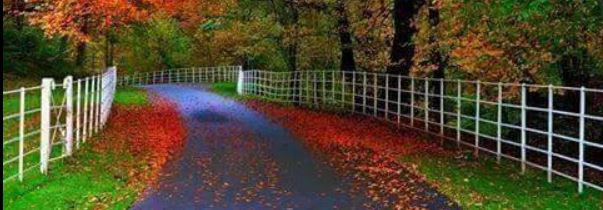
road and fences in autumnHope, Illinois, sits in the middle of the prairie east northeast of Champaign. The little settlement boasts a handful of houses and a church, and the Van Doren brothers, one of whom, Mark, made this story into a poem, but I tell it in prose as a fact.

Two farming neighbors nearly came to blows over what kind of fence should separate their properties. By law each was responsible for the right half of the fence line as they faced each other’s land. They finally stopped talking to each other after every discussion of the fence became a debate, an argument, and a trading of insults. They both agreed that a fence must be built, but they resolved their dispute in an unusual way. They each built the whole fence exactly the way each of them wanted to build it; only they built that fence a couple of feet inside their own property lines, so a no-man’s land ran the whole length of their property’s border. Neither man dared to mow or maintain the land between them, on the other side of his fence, so it grew up in weeds, shrubs, and finally trees. The strip of unkempt land harbored animals and birds that otherwise would have no shelter, but that was the only benefit of the parallel fence monument to stubbornness and a refusal to compromise.

For all of its isolation and small population Hope produced some fine, gentle, and considerate people, some of whom I have had the pleasure to know. It’s sad that it must be remembered mostly for two of its most recalcitrant members, but Hope is not alone in that, is it?

Another Stupid Thing crossed off the list

19 Friday Jun 2015

Posted by chaplines2014 in Cherokee history, Learning from mistakes

≈ Leave a comment

Tags

Books by Gary Chapman, Our Land! Our People!, The Trail of Tears

Cherokee StarThe detachment of 660 Cherokee citizens led by John Adair Bell, Jan’s 2x great uncle, crossed the Tennessee River by ferry three times in the Chattanooga region and another time in central Tennessee at Savannah. When I was first tracing the route that they followed, collecting geographic information for the book that I was writing, it was January of 2008, and the wintry weather put me and my Jeep on icy roads in east Tennessee. I had the roads to myself most of the time, and the slow journey gave me plenty of time to examine the terrain. Much of the route followed U.S. Route 64, although bridges replaced the ferry crossings. Kelly’s Ferry crossed the river about half-way between Chattanooga and Jasper, and the crossing that I intended to use on U.S. Routes 41 and 64 was Marion Memorial Bridge over the east end of Nickajack Lake, a narrow two lane metal truss bridge built in 1929 (and closed in 2012).

The bridge rose in a high arch over the river and extended 1870 feet. As I approached it, I considered the fifty mile detour that I would have to take to get to the other side, in order to resume following the Bell route, if I did not cross the bridge that day. I sat at the café near the end of the bridge and thought about it for a while. No one crossed the bridge while I watched. Probably no one had crossed it that day. I talked to the waitress about alternate routes. She assured me that she would not cross the bridge, but she lived walking distance away from the restaurant, and wouldn’t dream of going out on the roads that day anyway.

I should have taken the detour. I realized that when I was spinning my four-wheel-drive wheels up to the highest point in the arch, and then understood that, no matter whether I slid backwards or down the coming 900 feet incline, maintaining control would require the intervention of angels. I crept down the center of the bridge lanes at slower than a walking pace, praying the whole way, and with that needed intervention I reached the other side.

Driving the route in 2008 was certainly easier than driving a team of oxen and a heavily-laden wagon in a caravan seven hundred miles in the winter of 1838-39, but there were a few elements of the trip that recollected the challenges of the original one.

Just One of the Stupid Things I have done

18 Thursday Jun 2015

Posted by chaplines2014 in Cherokee history, Learning from mistakes

≈ Leave a comment

Tags

Books by Gary Chapman, Our Land! Our People!, Serendipity, The Trail of Tears

Cherokee Nation laurel and star

Charleston, Tennessee, was the site of the federal agency relating to the Cherokee Nation and Fort Cass, as the government prepared for the Cherokee Removal to the west. Since I was writing about that event, I went to investigate the geography and environment, and to discover what was left of the 1830’s era facilities. The town is small, so it is easily navigated in a few circles of about sixteen square blocks. My sources had identified a harbor that fronted Hiwassee River on the north edge; the agency building sat at the southwest corner of the harbor. I found the shallow lagoon that remains of the harbor, and a stone foundation that remains of the old agency. Across the lagoon stands the Henegar House, a fine old Victorian house with a marker in front that states that the house was originally constructed from the wood of the military barracks that had stood there.

One of the confinement stockades that housed the people of the Treaty Party supposedly stood on the hill to the east.  The hill was clearly visible above the town, but, of course, the stockade area was covered by trees and brush. Like the other stockades of the twelve or so that composed “Fort Cass,” it was probably burned as soon as it was evacuated, about five horrible months after it was supposed to be evacuated, because of delays in beginning the move west.  The dilapidated housing near the foot of the hill was the semblance of a tribute to the days when hundreds of people were confined without sanitary facilities, decent food or lodging in each of those stockades.

Down the street still stands the house that Lewis Ross built in 1820; he served as treasurer of the Cherokee Nation and brother of Chief John Ross. Like his brother, Lewis Ross prospered during that era while most of the people suffered. The original house hides within the current structure that was expanded and rebuilt many times since Ross lived there.

I decided to drive west on Cass Road, since a stockade at Mouse Creek and the Candy Creek Mission (of the American Board of Commissioners for Foreign Missions) supposedly had stood west of the Charleston settlement. I turned around at Mouse Creek, about seven miles west, which was easy to identify from the map, and stopped at the other creek I had crossed, where a large industrial complex obscured the river on the north, and a picturesque valley with a new log cabin home extended to the south. I parked at the side of the road to take some pictures.

After taking the photos, I returned to the Jeep. I had left it running, since taking pictures would be quick and easy, but I must have touched the lock button when I exited. I had locked myself out of my car while it was still running. The windows were all closed since the day was chilly. The extra key in the magnet box under the bumper must have fallen off, so the only choice left was to call AAA to come and unlock my car. My cell phone was in the seat of the car. The car wasn’t going anywhere.

I walked up the lane to the new log cabin, hoping to find someone home.  When I knocked on the door, no one answered, so I sat down on a chair nearby to decide what to do next. After a minute or so a man did come to the door, saying that he was on the phone and could not come when I knocked. What did I want?

I explained my stupid mistake and why I was in the vicinity. He seemed interested and said that he didn’t know where any of the old stockades had stood, but this was Candy Creek flowing by his house, and he had heard that there had been a school upriver that served the Cherokees. His friend owned the land where Rattlesnake Springs flowed, and, after I had made my call to reach AAA, he’d call his friend and get permission for me to visit the springs, that were south of Charleston on old Dry Valley Road. Until the AAA man arrived, we had a good visit about the area, he called his friend and made arrangements for my visit, and he gave me directions. The delay took about half an hour, and what I gained more than made up for what I lost.

Rattlesnake Springs had been a Cherokee meeting area for many generations. Its abundant water provided much of the drinking water for the stockades in that valley during the confinement. The last meeting of the people occurred there before their trek west. Although it is designated as a national landmark, and has been for several years, there has been no money to develop it, and it is still owned by the family that purchased the land after the Cherokees were forced out. I had a good visit with the owner, and we looked at the spring, and what remained of the homestead that had stood nearby .

If all of my stupid and embarrassing mistakes would have led to such discoveries, I would try to make more.

Our Dear Departed Sam

16 Tuesday Jun 2015

Posted by chaplines2014 in fighting fires, Learning from mistakes, Small town life

≈ Leave a comment

Tags

The Volunteer Fire and Rescue Squad

Yellowstone Pool

I had just driven home for lunch, when Jan looked out the kitchen window and commented, “Smoke is coming out of Sam’s hood.” Sam was our 1960 Ford Falcon, and the year was 1976. I had just parked Sam in the driveway behind our house.

I grabbed the multi-purpose fire extinguisher and headed for Sam. The likely embarrassment of calling the fire department for a fire in my own backyard, when I was a volunteer firefighter, kept me from making the wise decision, which would have been to call the fire department. Sure enough, smoke was pouring out when I popped the hood, and I took the risk to do it all myself, and I did succeed in putting out the fire before it did a lot of damage or spread to the nearby dry field of grass.

I was lucky. No burns on me, no explosions, no fire spreading across the field and threatening our neighbors’ houses or the farmer’s livelihood behind us. It could have been much worse, and it probably should have been, to teach me a lesson. Sam was a leaky old car that left its mark on many a clean parking pad. She had covered a lot of miles, survived a windstorm that blew a camper off a truck in front of us on the Mackinaw Straits bridge, endured mistreatment at the hands of a street gang on Chicago’s south side, and, in spite of her plain habit—no radio, no air conditioning, no accessories—she was a member of the family. I sold her to a guy who had the time and know-how to put her back on the road.

After that, I always carried a fire extinguisher in my car.

We Thought You Were Just Kidding

14 Sunday Jun 2015

Posted by chaplines2014 in Forest, Learning from mistakes, Nature, People, Travel

≈ Leave a comment

Tags

A License to Preach, events, Serendipity

3 Owls

For forty-some years I took church youth groups on trips, accompanied by several adults, of course, on short trips, long trips, and in-between trips, for service, for learning, for recreation, for fellowship. The trip that took us to the Great Smoky Mountains National Park included some of all of these purposes. We devoted four days to work on houses that needed help—painting, repairing, building a wheelchair ramp. Then we had one full day and two nights in the Smokies.

We stayed in the national park campground. I gave the usual warnings, that included not keeping food of any kind in your tent. We would even keep the food we prepared together locked in the cars, out of reach of the bears, we hoped, though we had heard stories of bears breaking into cars. I repeated those instructions several times ahead of the trip, put them in writing, repeated them before we entered the park, and in the campground before we set up tents.

Shortly after we had our tents and equipment set up, sure enough, a bear came ambling through the campground. Everyone scurried out of the way, into the cars or behind them, giving the bear plenty of room. That bear seemed intent on a mission, heading straight toward one tent, which he circled for several minutes, stopped at the front tent flap, and poked his nose through the flap into the tent. He seemed to be pondering whether he should enter it or not, whether he dared to get into trouble with the park ranger or not, whether it would be worth it or not. Finally, he withdrew from the tent and continued on his way toward the deeper woods on the other side of the campground.

I gathered the group together at that point and asked the girls, whose tent it was, what food  they had hidden inside their tent. They shyly admitted that they had candy bars stored in their knapsacks.

“Didn’t I tell you that there were bears here, they had a keen sense of smell, and they enjoyed candy best of all?”

“We thought you were just kidding,” one of them answered.

To Pass or Not to Pass… the Peace

12 Friday Jun 2015

Posted by chaplines2014 in Church, Events, Learning from mistakes, People, Small town life

≈ Leave a comment

Tags

A License to Preach

Monkeys see, hear, speak no evil, Bangra.com

In the mid-1980’s “Passing the Peace” had been re-incorporated into Roman Catholic worship, but few Protestant congregations were engaged in the practice. I had taken a confirmation class to a Catholic service, noting commonalities with our liturgy, and they had appreciated the Passing of the Peace, asking why we did not do it, too, if it was an ancient tradition of the church. I took the idea to our worship committee, and the consensus was to begin to include Passing the Peace at different points in the service, with brief explanations of its purpose and history. This was done for the next three months before the congregation held its annual meeting.

Preparing for the congregational meeting in this place was always a challenge. The elected leaders knew that some members always made a controversy out of something, but could usually not predict what would be the issue at any given time. That year it turned out to be Passing the Peace. Some members demanded that any changes in the order or content of the worship service should always be presented to the whole congregation first, seemingly not aware of how cumbersome a requirement that would be.  Several comments veered from the issue of Passing the Peace into other elements that should or should not be included in a worship service. Clearly no consensus was present, and it was, as usual, hard to stick to one topic of discussion.

Pro and con statements about Passing the Peace showed the usual divisions in the congregation. Those who advocated for the practice made statements about its celebration of forgiveness, acceptance, and mutual care, but some admitted that it seemed disruptive in the middle of the service, and less disruptive at the beginning or end of the service.

The climax of the discussion came when one of those who objected to Passing the Peace said that it would be a cold day in Hell before he would pass the peace with some of the people in this congregation. He chose to sit where he did to avoid sitting near certain other people, but he didn’t want to shake hands or greet anybody else that just happened to sit nearby. The fact that the six hundred members of this congregation were mostly related to each other could not hide the divisions in the extended family. They would not be healed by a ritual of Passing the Peace or by pulpit teaching about forgiveness.

The vote to exclude Passing the Peace failed, as did the vote for the congregation to pre-approve changes in the service. No one voiced objections to the president’s idea that the next months should include some exploration of the different parts of the ritual and their meanings, including Passing the Peace, so that became the temporary resolution. A fuller resolution would require passing through many more controversies and much more time before a real peace could be shared.

Fire Call #5: Somewhere in Pennsylvania

31 Sunday May 2015

Posted by chaplines2014 in fighting fires, Learning from mistakes, Small town life

≈ Leave a comment

Tags

Serendipity, The Volunteer Fire and Rescue Squad

Yellowstone Pool

The siren sounded, and I was out of bed in a flash, pulling my pants on over my pajamas, reaching for my shirt, and heading for the door. A volunteer fireman learns to respond quickly to that sound and to take shortcuts to get to the firehouse and into the suit and boots that will be necessary to fight a fire or, in the years that I served, to hop into the rescue truck to provide emergency medical assistance.

Only this time, my wife interrupted my preparations with the loud question, “Where are you going?” Then I realized my mistake. We were in a motel in the middle of Pennsylvania, sharing the room with a couple of close friends, and headed toward a friend’s ordination in Massachusetts. We were five hundred miles from our hometown, five hundred miles from the town where I had joined the fire and rescue squad.

I would not make it in time to help. No, the siren call belonged to someone else, not to me. In the confusion of automatic responses, the full realization actually took a few moments.

When I finally withdrew from that volunteer responsibility, it also took a while to unlearn that response that had become a part of my body.  As important as it is to have people ready to respond immediately to provide help, the duty and its adrenalin rush take a toll on the responder and those who are close. People need to learn to be ready; people also need to learn not to be ready.

Because of a car with an eagle on the hood…

28 Thursday May 2015

Posted by chaplines2014 in Caring, Death, Events, Learning from mistakes, Racial Prejudice, Small town life

≈ Leave a comment

Tags

A License to Preach, events, Synchronicity

3 Owls

The young man was two years out of high school, making a high wage as he worked in construction on the Clinton nuclear power plant, and proud of his shiny new black Trans-Am with the large eagle design on the hood. He was a brash and mouthy country boy, which was understandable. He was young, energetic, with pockets full of cash, and he came from a small town not noted for open attitudes.

Two young men, about the same age, drove down from Chicago, looking for work, but not finding. They filled out applications, but knew they were filed away at best, often just tossed into the waste can. They had more wishes than experience, and their references were not spectacular. Their car was an old beater, barely held together by Bondo and wire. They were as brash and mouthy as the first young man.

They were on a collision course, randomly, to all appearances, not by clear intent, and they had more in common than they knew, except that one had a good paying job and the other two did not. No one witnessed the event itself. We could only imagine what was said, by whom. It was in Champaign, Illinois, outside a bar. None of the three was operating with his best behavior. Prejudices and resentments fueled their encounter.

A telephone call came to me soon afterward. Would I officiate at the funeral of a young man, killed in an angry altercation, his “pride and joy” car stolen? They didn’t know who had done it, but they had ideas. A neighbor had recommended that they call me. I didn’t know any of them, but I said “yes.” They needed someone.

There was a mob at the funeral, filling the mortuary chapel and its overflow spaces. The directors had “never seen such a crowd,” they said. The young man was well-known, if not always well-loved. Grief held center stage, but it was surrounded by a cast of anger, hatred, and fear.

After conversations with his family, I had plenty to say that appreciated his life and work. I noted the absurdity of dying because of one’s proudest possession, and I named the encounter as a tragic and devastating loss for everyone concerned. I represented a “Savior who died for all,” who loved each person, understanding the mixture of guilt and good that is in each one, and who can be trusted to take what we are and to shape it for  a better world to come. It was too early to expect anyone to understand a call for forgiveness. What did they need to forgive in the young man who was murdered? How could anyone ever forgive the murderers? Mostly the crowd was silent afterward. A few made the special effort to say that they heard what I was saying. Much later, a man said that it was the one sermon that he remembered and pondered.

← Older posts
Newer posts →

Subscribe

  • Entries (RSS)
  • Comments (RSS)

Archives

  • February 2022
  • May 2020
  • October 2018
  • December 2017
  • November 2017
  • October 2017
  • June 2017
  • April 2017
  • March 2017
  • February 2017
  • January 2017
  • November 2016
  • October 2016
  • September 2016
  • August 2016
  • July 2016
  • June 2016
  • May 2016
  • April 2016
  • March 2016
  • February 2016
  • January 2016
  • December 2015
  • November 2015
  • October 2015
  • September 2015
  • August 2015
  • July 2015
  • June 2015
  • May 2015
  • April 2015
  • March 2015
  • February 2015
  • January 2015
  • December 2014
  • November 2014
  • October 2014

Categories

  • beach
  • Books by Gary Chapman
  • canoeing
  • Caring
  • Cherokee history
  • Church
  • Citizenship
  • Death
  • Disabilities
  • Events
  • Faith
  • Farm
  • fighting fires
  • Forest
  • Garden
  • Growing up
  • Gullibility
  • guns
  • Health
  • Hiking
  • House
  • Innocence
  • Learning from mistakes
  • Life along the River
  • Miracles
  • Nature
  • Patience
  • People
  • Prayer
  • Racial Prejudice
  • rafting
  • Running
  • Seasons
  • Small town life
  • Suffering
  • Travel
  • Uncategorized
  • Vehicles
  • Volunteering
  • Words
  • Yard

Meta

  • Create account
  • Log in

Blog at WordPress.com.

Privacy & Cookies: This site uses cookies. By continuing to use this website, you agree to their use.
To find out more, including how to control cookies, see here: Cookie Policy
  • Subscribe Subscribed
    • chaplinesblog
    • Join 71 other subscribers
    • Already have a WordPress.com account? Log in now.
    • chaplinesblog
    • Subscribe Subscribed
    • Sign up
    • Log in
    • Report this content
    • View site in Reader
    • Manage subscriptions
    • Collapse this bar
 

Loading Comments...