• About
  • Celebrating our decades…
  • Welcoming all and inclusiveness

chaplinesblog

~ everyday and commonplace parables

chaplinesblog

Category Archives: Learning from mistakes

Bootlegging…the Family Business

23 Saturday May 2015

Posted by chaplines2014 in Books by Gary Chapman, Events, Growing up, Gullibility, Learning from mistakes

≈ Leave a comment

Tags

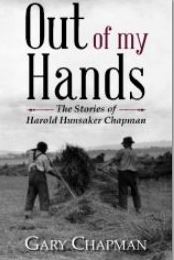
Books by Gary Chapman, Out of My Hands

OOMH

My Uncle Albert Hunsaker had sold his share in the railroad as it was going bankrupt, and I didn’t know how he was making a living. He and Mary had gotten a divorce. She and the four children still at home continued to live where they had at Yale, but Albert rented a room in an old boarding house nearby with three other guys. Grandpa had suspected that he was making his living by bootlegging, and mentioned it to me, but we did not really know what he was doing. He had lost his car, so he approached me for a ride. He said he had a job over in Indiana. “Could you take me in your Model A?”

I wondered what kind of job he was talking about, but he had helped me get to my jobs years ago, and he was my uncle, so I decided I could drive him where he needed to go. He loaded my car with his “gear and tools,” he called them, and we took off on Route 40 headed east. Meanwhile the Cumberland County sheriff had caught on to his bootlegging operation and came after him. He kept looking back at the road behind us, so I suspected something was wrong. Suddenly he ordered me to turn off the highway onto a dirt road, and he told me to look for a hiding place for the car and ourselves in a gravel pit that was at the end of that road.

“What’s going on?” I yelled at him. “I’m not going to break any laws,” I insisted, but he informed me that I already had. His “gear” included bootlegged liquor and, whether I liked it or not, I was an accessory, and the law would treat me as guilty as he was. We hid ourselves overnight. During the night, while we hid in the dark and didn’t dare even to light a fire, he told me about various trips he had made in recent years. He had carried liquor and made enough to support himself. Sometimes it was over the Canadian border between Detroit and Windsor. More often he carried between Illinois and a club in Indiana. He worked with people connected to the Chicago crime syndicates and Al Capone. He would be in worse trouble if he did not complete this delivery, so I continued the trip with him, and made it back without any further incident. I informed him that I was never going to do that again. “Don’t even think about asking!” I told him.

Missed Signals and What They Meant

21 Thursday May 2015

Posted by chaplines2014 in Caring, Events, Gullibility, Learning from mistakes, Small town life

≈ Leave a comment

Tags

A License to Preach, events

red footbrigde over lily pads

Many years ago a couple came seeking a wedding at the church I was serving. I had worked with the young man as his occupation crossed paths with mine. The young woman did not know me, except by reputation. They had grown up in nearby villages to the one where I lived and served.

When a couple had no experience in the church which they wanted to host their wedding, I usually asked, “Why do you want to hold your wedding here?” In this case I knew the church where she and her family had participated. It was a recent merger of two friendly congregations, who had built a beautiful new building with convenient facilities, all on accessible ground level, instead of “my” traditional Gothic  two-story building with its many steps. So I asked my question.

The bride-to-be paused momentarily, as if uncomfortable, dropping her eyes. The groom came to the rescue, saying that they planned to move to this community and expected to take part in this church, where they would make their home. She seemed to recover her composure quickly, and the rest of our conversations moved smoothly over many appropriate thoughts about marriage and the wedding service itself.

Still I puzzled about that moment and what it meant.

I knew her minister; in fact, he and I gathered with other ministers of our affiliated denominations monthly in conversation. He was popular due to the successful growth of his congregation during and after their reorganization and building program and also due to his outgoing and attractive personality. When we next met, I let him know that the couple had come to me to prepare for their wedding, and that they had shared their plans to move. He did not respond visibly. To my mind, he seemed unusually uninterested in what they were doing or planned to do.

A year later, several of the young women of his church, several of them being juveniles, accused him of sexual misconduct. He was arrested and held in jail for a few days, much to the embarrassment of his wife and children. He submitted his resignation, surrendered his credentials as a minister, and eventually moved to a distant community and took up another occupation, selling insurance. The case against him fell apart as the women, one by one, decided not to go through the visible public process of a trial.

Labor-saving devices

19 Tuesday May 2015

Posted by chaplines2014 in Caring, Learning from mistakes, People

≈ Leave a comment

Tags

A License to Preach, Serendipity

Monkeys see, hear, speak no evil, Bangra.com

When I came to Zion twenty-seven years ago I observed our secretary folding newsletters and bulletins. I thought that this was an inefficient process and could be improved by the use of a machine. We purchased a paper-folding machine similar to one I had used previously. Our secretary used this fine piece of machinery. In my enthusiasm I had forgotten how often it had to be adjusted, how the trial and error process wasted so much paper, how humidity and quality of paper affected how well it slipped through the machine and how often it jammed. It worked as well or better than my earlier experience, but it took longer than our efficient secretary to get the job done. She covered the machine with its dust cover and it occupied a place of honor in the corner of her office. Later it was sold.

Machines may do many things well for us, but they are not the answer to every need and every situation. They are not always efficient nor the final answer. They can be exasperating. They do not always meet the needs of each of us as personally as our own handy efforts. Not paper-folding machines, not computers, not I-pads, not televisions nor DVD players, not voting machines.

A flesh and blood human being, an incarnation, talented and dedicated, serves our purposes better than any mechanical and unfeeling substitute. No automaton and no robot could make a personal and loving demonstration of God’s love the way that a human being did or does.

Something prepared by hand, baked, composed, collected, artfully or even innocently manu-factured often expresses our affection and respect better than something bought from a store or a “manufacturer.”

We may well enjoy many labor-saving devices, many entertaining examples of human ingenuity and art, many elaborate contrivances that can prolong life and sometimes assist healing. They help us… sometimes, but they do not save us. Saving some time, maybe, but not saving us.

Let no machine get in the way of counting each person and each person’s life special, valuable and cared for. Let your hands become the hands of a Master.

My Start at Chicago Theological Seminary

12 Tuesday May 2015

Posted by chaplines2014 in Events, Learning from mistakes, People

≈ Leave a comment

Tags

A License to Preach, events, Serendipity

Monkeys see, hear, speak no evil, Bangra.com

I was moving to Chicago’s Hyde Park near the University of Chicago campus, driving a small rental truck with our apartment’s furnishings. The direct route from the Stevenson Expressway to Woodlawn Avenue was Garfield Boulevard, and I had been driving on that boulevard for about three blocks when I saw the flashing lights of a police car behind me. I pulled over to the curb right away.

“Where are you going?” the officer asked.

“Woodlawn Avenue south of 57th on the UC campus,” I answered, with trepidation. What I did not need at this time was a traffic ticket that I had no money to pay.  “Did I do something wrong, officer?”

“It’s illegal to drive a truck on a Chicago boulevard,” he answered. “May I see your license?” As I pulled my license out of my pocket, he asked me, “Are you a student or a teacher?”

“I’m a student in seminary and a pastor,” I answered, as I showed him my driver’s license.”

“Excuse me, Father,” he answered as he crossed himself. “If you’ll just follow me, I’ll show you how to get there.” He handed my license back to me, walked back to his car, turned off the lights, and pulled in front of me, waiting for me to drive the truck into the traffic lane and follow. At the next corner we took a right turn, and then a left, following a street that ran parallel to Garfield until we reached the Midway. He waved me forward, and I pulled up beside him. He yelled, “God bless you in your studies, and remember not to drive your truck on a boulevard.”

“Thank you,” I yelled back, but I did not add, “God bless you, too, my son,” although I wanted to.

The Hunger Simulation at a church conference

09 Saturday May 2015

Posted by chaplines2014 in Events, Learning from mistakes, People

≈ Leave a comment

Tags

A License to Preach, Serendipity

Monkeys see, hear, speak no evil, Bangra.com

In 1974 a concern for food deficits and hunger swept through the church and the nation. Famine in the Sahel and the rediscovery of large pockets of hungry people in the United States moved many people to take part in study groups, organizing, advocacy, and simulations. Simulations? In order to identify with hungry people, those of us who were not usually hungry had to remind ourselves what hunger felt like.

I attended my first Illinois Conference of the United Church of Christ Annual Meeting at Dekalb, Illinois, in June of 1974. I had attended many conferences, many annual conferences of the United Methodist Church, but this was my first UCC Annual Conference. I did not know what to expect. My ignorance went so far as to include what my registration fee covered. It seemed like a lot of money to me at the time. I assumed it covered the costs of the meeting itself, housing, and meals. It was the latter item that revealed that I had assumed too much. The cost of meals was not included.

I did not have much money in those days, living paycheck to paycheck and paying off education loans. I had a family of a wife and two small children who needed cash more than I did, so I had about five dollars in my pocket and a gas credit card for the travel. What else would I need?

The conference meeting lasted about four days, and my loaf of bread and jar of peanut butter had stretched about as far as I could make it stretch. I had access to plenty of water. I also had a conference dinner to look forward to, with a ticket that was prepaid in my registration fee. I felt very happy that the fee had at least covered that one meal. The dinner itself was elaborately set up in a grand ballroom with white tablecloths, napkins, glassware, and tableware, no plastic or paper in sight.

The servers had specific instructions that began with the serving of about ten people out of a hundred with hors d’oeurves. Then came the salads which were served randomly to about fifty out of a hundred, including of course those who had already been served. Meanwhile the grumbling had begun from those who had not yet been served. The servers just continued their quiet compliance with their directives. As a newcomer I did not yet have a voice, but I was in tune with the times and catching on to what was happening.  When the main course arrived, about seventy people out of a hundred had full plates with meat, potatoes, vegetables, and bread rolls. The rest got small plates of rice. In front of me sat a small plate of rice.

The dessert that followed the main course came to about thirty out of a hundred. The grumbling increased in volume and anger, and the faces of those who had received and eaten the extra food looked appropriately humble. Everyone scarfed down what was set in front of them. No one within my view was sharing anything that they received, although I learned afterward that some tables had several sharers when the dessert arrived. By the next business session, facing an angry audience, the planners of the simulation extended their apologies and promised not to surprise the attendees with such an ill-conceived plan again.

The rice that I ate was probably the best rice I have ever eaten, and the portion, though small, satisfied my hunger. I could return home with a clear conscience to a place where I had enough to eat.

Another Uninvited Intruder

01 Friday May 2015

Posted by chaplines2014 in Forest, Learning from mistakes, Nature

≈ Leave a comment

Tags

A License to Preach, events

Monkeys see, hear, speak no evil, Bangra.comAt Camp Quest in 1963, I was a church camp counselor in charge of an open-sided “hogan” full of junior-age boys. I was 16. Recruiting older folks to serve as primitive camping counselors was difficult; I was recruited in the last days before the camp began. I had a lot of camping experience for a 16 year old, but I was still a green recruit. Getting ready for the night’s sleep, I had not reminded the boys to put their candy or foodstuffs into a suspended container in a tree, away from the hogan.

Campfire over and extinguished, last group walk through the dark woods to the latrine accomplished,  boys and girls separated to their own hogans, boys bedded down, lights out, quiet hour imposed first, second, and third times, we entered into what may have been my favorite part of the day—sleep time. Not to say that spending sixteen active hours with 9, 10, and 11 year-olds wasn’t fun, after a fashion. One of the older counselors, a minister in his fifties with a dozen children at home, said that the slow pace of this camp in its rustic natural setting made this week one of his favorite in the year. He had volunteered for it several years in a row. I wouldn’t have described the camp quite that way, but it was O.K.

That night I woke sometime after midnight, as I often did, and lay on my cot quietly, enjoying the soft snores of my nestlings along with the crickets, tree frogs, cicadas, and a distant whippoorwill, when I also heard some rustling under one of the boy’s cots. The moonlight shone into a corner of the hogan, so it was not difficult to see when I peeked out of my sleeping bag over the edge of my bed. The black fur was nearly invisible, of course, but the white stripe was quite obvious. The skunk evidently enjoyed the treat as it rustled its wrapper, and then moved on to another knapsack to find something equally enticing.

If my prayers with the children up to that moment had been rote, forced, uninvolved, and lame, they gained a new fervency. May none of these boys wake up. May the skunk eat its fill and leave as uneventfully as it came. May the children’s dreams all remain blissful and undisturbed. I don’t know how long I remained in that state of sanctified solicitation, but it seemed like hours. Finally, the skunk moseyed away. I added my thanks and relaxed. When the boys woke up the next morning and discovered that an invader had devoured their candy stashes, I had to tell them what had happened.

I didn’t have any trouble persuading the boys or the girls to put their secreted snacks into the tree storage container the next night. Of course that also meant they had to share what they had hidden away.

The first time I was shot

29 Wednesday Apr 2015

Posted by chaplines2014 in Farm, Growing up, guns, Learning from mistakes, Racial Prejudice

≈ Leave a comment

Tags

events

3 Owls

The first time I was shot was when I was fourteen years old. I survived, obviously, almost unharmed.

It was winter and I was walking to the west barn to feed and water the cattle that we sheltered there. I felt a painful bee sting on my upper arm. Bees don’t show up in winter. I quickly clapped my left hand over the spot, to swat the bee, finding the hole in my heavy winter coat and the bullet that had just barely penetrated my skin. I became angry immediately.

The barn sat fifty yards from the property line. On the other side was a ten acre triangle of woods bordered by our farm, the river, and the highway. An attorney and his family had purchased that land, built a house, and moved in a few months before. They were friendly neighbors and nice people. The two boys, ten and eleven year-olds, had the run of the woods, just as I had the run of the farm. I had heard them shooting their guns before, assuming they were target practicing.

When I was shot, I realized they were just shooting carelessly. Not thinking about the trajectory or range of their guns, not conscious about anything but the power of their toys. That made me angry.

After that, our parents had a talk. I never heard their guns again, and I was glad.

My father carefully controlled who was able to hunt on the land that we farmed. In hunting season we were very cautious about where we were and what we were doing, watchful for the hunters who were in the neighboring fields. Hearing about gun accidents was common. When my father brought out his guns, he used them sparingly and taught us how to use them as we became old enough and strong enough to use them..

I didn’t have much interest in guns. Raising animals to eat seemed both more efficient and kind, since shooting with poor vision and aim was always a poor substitute for acquiring meat for the family table. We considered pistols useless for anything that we needed to do on the farm, whether shooting for food or for protecting farm animals from predators or pests.

That was 1960, a different world, we think, and a different mentality, than 2015, when the typical targets for guns seem to be other people. They are often innocent children who are finding poorly stored guns, or who are watching an adult demonstrating or cleaning his gun. They are people committing misdemeanors, or minor felonies, which, through the confusion of circumstances, receive capital punishment without a semblance of due process. They are people stepping onto porches, knocking on the wrong doors, playing their car radios too loudly, “looking like threats” in the estranged eyes of suspicious people. In 1960, I thought such dangers were reserved to the racists in southern states, organized crime zones in the cities, and the accidents of hunting seasons. I learned  it could be anytime, anywhere, even when I was minding my own business, doing my chores, just like today.

Lessons on how to keep a skunk from spraying you

27 Monday Apr 2015

Posted by chaplines2014 in Books by Gary Chapman, Growing up, Gullibility, Learning from mistakes

≈ Leave a comment

Tags

Books by Gary Chapman, Out of My Hands

OOMH

Walter Wehmeyer and Gerald Golden sat behind me at school, which meant they were a grade or two ahead of me. They were always bragging about something they did or knew how to do.  One day they were talking on the playground about how they were able to disarm skunks.  There was one sure way to keep a skunk from spraying you, they said.  You have to approach very slowly and carefully, not doing anything to scare it, talking softly and all friendly-like. Then you could use a pole to lift the skunk’s back legs off the ground, so the skunk couldn’t use its scent sack to spray you. Then you could do anything you wanted with it.

Later I took the bait and tried out their advice. There was an old broomstick in the shed. Skunks often nosed through the garbage pile in the corner of our yard. We dumped peelings and bones and other garbage there. I snuck up while a skunk was poking through the garbage and eating.  I got that stick under its back legs and lifted it up quickly. For the split second that the skunk’s feet were still in the air, the air filled with the most horrid stench you can imagine. I could stand the strong scent of a skunk from a distance, but up close it took my breath away. I thought I’d die, and mostly I wanted to.

Bonnie (my stepmother) set up a galvanized tub in the yard. My sister and brother took turns hauling buckets of hot water from the stove reservoir, and Bonnie poured on the strong lye laundry soap, but it didn’t help much. The Jenkins gave Bonnie some tomato juice they had canned, and made me wash with it, but I couldn’t tell that it made any difference. We burned my clothes, so I only had one outfit left to wear.  Several days passed before I was allowed to return to school, only to face smirks from Walt and Jerry.

A mysterious package from outer space

10 Friday Apr 2015

Posted by chaplines2014 in Farm, Growing up, Learning from mistakes

≈ Leave a comment

Tags

events

Monkeys see, hear, speak no evil, Bangra.comA small white box with odd cone shapes attached to it had landed in the field a quarter mile from our farmhouse; this was sixty years ago. It was easy for a nine-year old boy to imagine that this discovery was from “outer space,” even with the remnants of a balloon attached. But there were clear instructions to return it to the weather survey of the University of Illinois, so the budding scientist could understand its purpose.

Curiosity got the best of the boy. What could be inside it?  The boy was already keeping charts of temperature, wind directions, barometric pressure and humidity on a daily basis, as if his record would somehow add to the inscrutable science of meteorology. What kind of information did this unusual box contain? Opening the box was a challenge. As he pried it open its contents came out in pieces, none of which made sense. He had no way to understand the apparatus that was inside, or to make use of its pieces. There was no obvious barometer, thermometer, hygrometer or anemometer. Having opened the box whatever information it contained was lost. The effort that some faraway alien had put into this instrument and its scientific payload was lost.

The next time he found such a box a few years later he returned the “weather balloon” to the Post Office as instructed, feeling remorse for the earlier trespass.

We may treat the payload of history and cultural tradition in a similar way, tearing into it and making no sense of its contents, or returning it to a place of expertise where someone behind closed doors can deal with it as they want. Neither is very helpful. When we give up trying to make sense of our heritage and leave the process of learning behind, or when we turn it over to others, we cheat ourselves out of the most precious gifts that life sends our way

The day I wrecked the tractor and died

25 Wednesday Feb 2015

Posted by chaplines2014 in Death, Events, Farm, Growing up, Learning from mistakes

≈ Leave a comment

Tags

A License to Preach, events, Serendipity

IMG_0002

I was about 13 years old, and had driven the tractor, specifically the Farmall “H” tractor, for about five years. On that spring afternoon I was returning from the field at the south end of the farm where I had finished harrowing in preparation for planting. (We did that sort of thing in those days.) The smooth lane lay ahead of me along the fence line at the edge of the farm, and I was in fourth gear. I had never driven in High gear, and this was my opportunity. I slipped the gear shift into High and released the clutch and took off. The speed was exhilarating as the fence posts whizzed by. I must have been going twenty miles per hour! I pulled the throttle open a little more. Soon I was approaching the bank where the lane broadened and sloped gradually toward the river bridge, where I knew I would have to slow down.

I was already at the ridges when I realized that I should have slowed earlier. The ridges intersected the lane and were the last visible remnants of the lodges of an Indian village. I had often combed those ridges for abandoned grinding stones, celts, knives, and drills, and I should have remembered that they were there, forming a bumpy area even at slower speeds. Before I knew it I was bounced off the seat, holding onto the steering wheel with all my strength, trying to pull my legs back onto the platform to apply the brakes. Meanwhile the tractor headed toward the creek with the old spring at its head.

Somehow the tractor stopped just at the lip of the bank where the creek had eroded the field. I peered down into the creek bed twenty feet below, and I saw my body there in the creek bed underneath where the tractor had come to rest… in an alternative universe where miracles do not happen. I died that day, or I knew I would have died. My parents would have grieved long and hard and blamed themselves for letting me drive that tractor. There would have been no end to sadness, as we used to say.

I backed the tractor away from the bank and drove it slowly, very slowly, back to the farmyard. I do not know whether I was happier for having been reborn from the dead or more ashamed for having nearly wrecked my parents. I do not know whether they noticed my strange thoughtfulness as the next weeks passed. Perhaps I appeared no different than usual.

Certainly I have thought about that second chance at life many times since. One spring just before Easter fifteen years later I could not shake the memory as I headed toward a farmhouse where a couple had just lost their only son in a farm accident. He was thirteen years old, and he had fallen off the tractor under the disk. What could I say to them?

Oh yes, I still have the “H.” It is my favorite tractor of all time. Like me it has been baptized in murky water and raised from a muddy grave

← Older posts
Newer posts →

Subscribe

  • Entries (RSS)
  • Comments (RSS)

Archives

  • February 2022
  • May 2020
  • October 2018
  • December 2017
  • November 2017
  • October 2017
  • June 2017
  • April 2017
  • March 2017
  • February 2017
  • January 2017
  • November 2016
  • October 2016
  • September 2016
  • August 2016
  • July 2016
  • June 2016
  • May 2016
  • April 2016
  • March 2016
  • February 2016
  • January 2016
  • December 2015
  • November 2015
  • October 2015
  • September 2015
  • August 2015
  • July 2015
  • June 2015
  • May 2015
  • April 2015
  • March 2015
  • February 2015
  • January 2015
  • December 2014
  • November 2014
  • October 2014

Categories

  • beach
  • Books by Gary Chapman
  • canoeing
  • Caring
  • Cherokee history
  • Church
  • Citizenship
  • Death
  • Disabilities
  • Events
  • Faith
  • Farm
  • fighting fires
  • Forest
  • Garden
  • Growing up
  • Gullibility
  • guns
  • Health
  • Hiking
  • House
  • Innocence
  • Learning from mistakes
  • Life along the River
  • Miracles
  • Nature
  • Patience
  • People
  • Prayer
  • Racial Prejudice
  • rafting
  • Running
  • Seasons
  • Small town life
  • Suffering
  • Travel
  • Uncategorized
  • Vehicles
  • Volunteering
  • Words
  • Yard

Meta

  • Create account
  • Log in

Blog at WordPress.com.

Privacy & Cookies: This site uses cookies. By continuing to use this website, you agree to their use.
To find out more, including how to control cookies, see here: Cookie Policy
  • Subscribe Subscribed
    • chaplinesblog
    • Join 71 other subscribers
    • Already have a WordPress.com account? Log in now.
    • chaplinesblog
    • Subscribe Subscribed
    • Sign up
    • Log in
    • Report this content
    • View site in Reader
    • Manage subscriptions
    • Collapse this bar
 

Loading Comments...