• About
  • Celebrating our decades…
  • Welcoming all and inclusiveness

chaplinesblog

~ everyday and commonplace parables

chaplinesblog

Category Archives: Nature

The Storm’s Unpredictable Wind

13 Tuesday Sep 2016

Posted by chaplines2014 in Faith, House, Nature, Yard

≈ 1 Comment

Tags

life experiences, Serendipity, Synchronicity

redwood trees

“You hear the sound of it but you don’t know where it comes from or where it goes…”

I was sitting in my overstuffed chair last Wednesday evening, working on one of the online philosophy courses that I teach, when a great wind blew with the sound of crashing, followed quickly by the storm warning siren and pouring rain. Putting my laptop computer aside, I jumped from the chair and headed toward the kitchen where Jan was, just to make sure she was okay. She was. The only noise to follow was the sound of heavy rain, so I went to the basement, not for its supposed protection from the wind, which quickly subsided, but to check on the water that might be invading. Sure enough, the water was bubbling out of the drain, because the city sewer could not handle the volume of the downpour. I monitored the water level for the next two hours, but the electricity did not go out and the constantly running sump pump kept pace with the invading water.

The next morning, I again checked the house for damage, which the darkness could have hidden the night before. No problems showed up.

Early in the spring I had noted the two large limbs of the tulip tree that overhung the house, knowing that sometime this season I would need to make arrangements for the tree surgeon to remove them. Friends in Zion Church had given the tree to me when my mother died suddenly twenty-six years ago. It was one of her favorite tree species, and it grew quickly into a lovely specimen. But those two limbs had to go.

I did not notice at first, when checking the house after the storm, but those limbs were indeed gone. Where did they go? Forty feet away in the small space between the crabapple tree and the garage, one large limb was planted rightside up against the fence, the large trunk of the branch into the ground. Behind it, the other large branch sat upside down with the heavy trunk on top.   

The wind had removed both eight inch-diameter branches close to the trunk, without damaging the roof or breaking windows, and placed them so neatly in the yard that they almost looked like they belonged there.

I think I owe the Great Tree Surgeon in the Sky big time.

To Hide from Storms at Shannondale

05 Friday Feb 2016

Posted by chaplines2014 in Events, Life along the River, Nature, People

≈ Leave a comment

Tags

events, Memories, Serendipity, Synchronicity

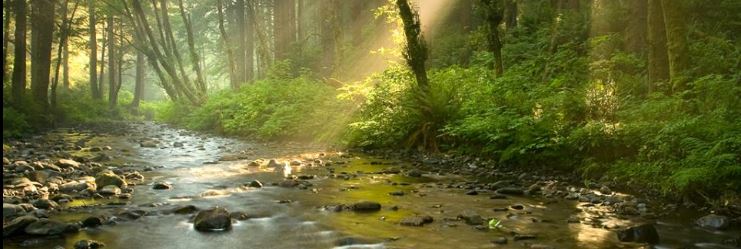
cropped-rock-creek-wilderness-oregon.jpg

We were camping at Shannondale, and I made arrangements for our group to take an evening tour of Round Spring Cave, courtesy of the National Park Service staff. The only problem was that the number of tour participants was limited, and we had one more person with us than the available slots for the tour. Art Klein had stayed at camp, and another youth or two, who were not fond of caves, had stayed with him. Dean Moberg volunteered to stay above ground and let the rest of us go on this spelunking adventure. He had gone before, and, although there is always more to see in such a dynamic and complex cave, he was willing for the rest of us to enjoy it this time. There would be another trip and another opportunity to tour the cave.

As the time for the tour approached we gathered near the cave entrance, and Ranger Ruth entertained us with some colorful stories from the area lore about sinkholes, caves, and Ozark culture, and we were glad to be in the cave overhang area when the rain began. Still, Dean dutifully stayed outside when the rest of us followed our guide into the cave. Some of our group were a bit jealous of Dean’s choice during our squeeze through the narrow channel of the first hundred yards, as uncountable numbers of bats flew past our ears on their way outside for the evening’s mosquito harvest.

Dean, meanwhile, returned to the parking lot and our cars and observed the onset of a powerful windstorm, maybe even a tornado, wondering whether the wind would do more than scatter tree limbs and branches and rock the car that was his only available shelter.

An hour or so later our group emerged to a different environment, with evidence of the storm all around us. Dean greeted us and assured us that everything was all right, although he had wondered for a while whether he would be blown away. We returned to our campsite and found the tents in various degrees of collapse and disarray, which Art and his crew had tried unsuccessfully to remedy. We decided to take advantage of Shannondale’s more dependable shelter for another night, grateful that most of us had been able to spend the time of the storm oblivious to the world outside and enjoying the amazing and utterly quiet world below.

We were grateful, too, to those who had braved the elements on our behalf. We could always count on Dean and Art.

The Excitement and Fascination of Large Population Die-offs

12 Monday Oct 2015

Posted by chaplines2014 in Death, Events, Learning from mistakes, Nature

≈ Leave a comment

Tags

A License to Preach, Serendipity, Synchronicity

Monkeys see, hear, speak no evil, Bangra.com

As Granddaughter Willow has spent several summers in recent years working at The Mammoth Site in Hot Springs, South Dakota, we have joined for many weeks in exploring the fascinating deposit of bones left by scores of mammoths and hundreds of other animals of many species about twenty-six thousand years ago in a warm water sinkhole. Few other specimens of the giant short-face bear have been discovered, and the skeleton found here is impressive. New finds occur regularly, and the excitement that accompanies the discoveries grows with the potential new information about life in another era. The mammoths are almost entirely young adult males who have wandered away from the herd and sought the late winter, early spring abundance of plant food at the edge of the sinkhole, only to slide in the mud into the water and be unable to get a footing to climb out.

Another fascinating location, directed by a former member of The Mammoth Site staff and friend of Willow, is near Waco, Texas, which the President recently designated as Waco Mammoth National Monument. There a natural disaster, presumably a flash flood, destroyed a large herd of mammoths and several other animals, including a camel and a saber-tooth cat, all at one time, 65,000 years ago. As excavators remove tons of earth from that site, even more information comes to light about animals, plants, and climate during that era.

The Gray Fossil Site in East Tennessee, whose vertebrate curator also serves as the new director of The Mammoth Site, provides a deposit of animal and plant fossils in a marshy area, as-yet-undated millions of years ago. So much information lies buried there, along with unusual species, like an extinct red panda, giant tortoise, tapir, peccary, alligator, and rhinoceros, that excavation is expected to continue for over a hundred years.

As a graduate student Willow now works in the collections of the University of Nebraska, including thousands of specimens from the Ashfall Site in northeastern Nebraska, where a plume of volcanic ash from a mega-volcano in Idaho killed animals, birds, and plants at a watering hole twelve million years ago, and left populations of rhinoceros, horses, camels, and many other species in the region extinct, and the land became barren for hundreds of years. Other discoveries in Nebraska and Wyoming continue to add specimens to a collection that will help to identify a long pre-history of information on interactions of climate and conditions with plant and animal life.

These locations join with others popularly known, like the La Brea Tar Pits in Los Angeles or Dinosaur National Monument in Utah, in providing extraordinary locations for exciting discoveries that can change our perceptions of the world and its development through aeons.

The dark side of all of this excitement is the fact that each site is the remnant of the suffering and death of thousands of creatures. Without such tragic events we would know much less about the world around us. In the future, perhaps, we will care enough for our own human species to study and discover why tens of thousands of human beings kill each other with guns every year, with no personal or social benefits as a result. That should be of interest and fascinating, too, though it appears to be harder for us to get excited about understanding that tragic and unending story in our own era.

Meeting the Seventh Sister

16 Wednesday Sep 2015

Posted by chaplines2014 in Growing up, Nature, People

≈ Leave a comment

Tags

A License to Preach, Memories

Milky Way over natural rock arch

I was a little boy when I met my Great Aunt Junia. She had travelled to Illinois from far away Texas to visit her relatives. Past eighty years, her angular features and voice of ancient authority made a lasting impression. She spoke to me about her love of creation, especially the beauty and mystery of the heavens, so that, whenever I read Psalm 8, I think of her.

She knew the constellations and their legends, and on that early winter evening, she spun stories about the Big and Little Bear, the Dragon, Orion the Hunter, the Great Dog, Sagittarius the Archer, and the Seven Sisters. I wondered if she was one of the seven sisters incarnate, and when I learned of her death a few years later, I imagined that she simply ascended to reclaim her position among that cluster of stars.

On countless evenings since then, in every season, I have looked at the stars and studied their patterns and thought of her and her wisdom and her stories. How can one chance meeting make such an impact? Matching an impressionable child with an octagenarian makes part of the answer. The rest of the answer lies in the mystery of meeting and the amazing possibilities of the moment.

Sometimes we become discouraged that our weekly hours in work, study, and worship seem to mean so little and make so little impact. Months of confirmation classes can leave some young adults seemingly unaffected. Then again, even one brief moment can bring to life an insight and a relationship that will make all the difference between faith and despair. Treasure the moment and its possibilities.

Where the chickens cross the road

12 Saturday Sep 2015

Posted by chaplines2014 in Farm, Nature, Travel

≈ Leave a comment

Tags

events, Serendipity

Monkeys see, hear, speak no evil, Bangra.com

Staying close to the Wildlife Loop at Custer State Park in the Black Hills of South Dakota, we frequently went to see particular animals—the elk that roam the southeastern part of the park, the prairie dogs research area in the south, the wild turkeys and horses in the Bluebell area, the pronghorn, deer and bison wherever they happened to roam, the mountain goats and bighorn sheep in the steep mountains, and, of course, the burros in the southeast. We didn’t always want to travel the whole loop, so we found the shortcuts that took us in and out of the park. Our most frequent visit was to the southeast section, and Lame Johnny Road provided the seven mile shortcut.

Lame Johnny was a former sheriff who wound up hanging from a nearby tree. His road provided more than a shortcut and a sad story. Along its winding way a half mile from the park, it intersects a barnyard with a house and a couple of outbuildings on one side, and a barn and chicken house on the other. On our luckier evenings we got to see a sight that is among the rarest. Not only did we see a chicken cross the road, but we saw a flock of chickens cross the road, in single file, followed by the farmer. We did not think to ask him why the chickens were crossing the road, because we were so amazed to see him herding his chickens. On some occasions the farmer did not appear, but his chickens still crossed the road in single file.

On one occasion a guinea hen and cock provided an additional entertainment, chasing each other in loops around and under the car we were driving. We came to a quick stop, of course, but the guineas continued their chase for several minutes. It was a hold-up. We could have used Lame Johnny’s help in his sheriffing days.

Lake Michigan dunes reverie

21 Friday Aug 2015

Posted by chaplines2014 in beach, Nature

≈ Leave a comment

Tags

Memories, Serendipity

lakeshore

The forecast called for rain for most of the six days we stayed in the Michiana dunes along the southeast shore of Lake Michigan, but rain only fell during the first night, and the next morning dawned fresh and breezy. When we arrived on the shore that first morning the waves that greeted us the previous afternoon continued to crash against the shore loudly and strongly, enough for some body surfing for those not minding the chill. Every day afterward the wind slowed, the waves calmed, the water warmed, the sky cleared, until the last two days provided a lake so still that the lapping against the shore made barely a whisper. The temperatures every day were warm enough for a first week in August not to need a shirt or wrap, and cool enough in the reflected sunrays against the white sand never to feel oppressively hot. Out of twenty-five years of spending a week or two on the dune area beaches, I do not remember such a stretch of opportunities for beachcombing, resting, reading, swimming, sunbathing, or anything else we were prepared to do in or near the water.

Not a trace of alewives showed up on the beach, which in the early years of our visits met us in smelly die-off by the thousands. They hadn’t invaded the Great Lakes until the St. Lawrence Seaway made their incursion from the Atlantic possible in the 1950’s, when I paid my first visit, but the lake trout had also disappeared through over-fishing, so the alewives didn’t have any predators until Coho and Chinook salmon were brought into Lake Michigan. As those game fish became established, the alewife die-off slowly subsided, and the beaches depended on the cleanliness of their human occupants. Apart from an occasional piece of trash arriving with the waves, the Michiana shores were clean, and the users kept them so. An active storm season had left evidence along the tide zone, where a strip of heavier rocks interrupted the smooth sand of the beach. That rocky border, from two to ten feet wide, made the approach to the water a little painful for those of us with tender feet. We either walked gingerly through that zone, or we wore our sandals and beach slippers into the water. Either way the journey was worth it, as the lake water became unusually clear and warm during those days.

Even in such mild weather, every day proved different for those of us living on the beach. From noisy to nearly silent, from heavy waves to barely a ripple, from cloudy to clear skies, from cold water to warm, each day brought its variations. Never was it easy to leave the beach on the last day of our scheduled time. This year brought no difference at all in that respect.

The Wild Life at Wind Cave and Custer Parks

04 Tuesday Aug 2015

Posted by chaplines2014 in Learning from mistakes, Nature, People, Travel

≈ Leave a comment

Tags

Memories, Serendipity

IMG_7131

Driving through nearby Wind Cave National Park into Custer State Park for a circuit of its forty mile Wildlife Loop has become a frequent part of our sojourns at the Mammoth Site in Hot Springs at the southern reaches of the Black Hills. Both parks have extensive herds of American bison as well as populations of elk, pronghorn, white-tail and mule deer, prairie dogs, marmots, mountain goats, and bighorn sheep. Custer has its burros that became “wild” after their usefulness as beasts of burden officially ended, but the visitors offering food don’t have any trouble getting them to eat out of their hands. We bring carrots, although we often see less healthy snacks offered. The burros are not fussy.

This season we also saw a prairie rattlesnake at the edge of a road, but still no cougars, which are numbered among the inhabitants of the parks.

Two years ago Wind Cave obtained a large additional acreage of old homestead tracts, long since merged into ranch pasturelands, but still containing some of the pioneer buildings, and at least one bison jump, used by Native Americans to herd bison to their doom over the edge of a cliff in centuries past, when several captured animals provided food, tools, clothing, fuel, medicine, and shelter for many native peoples. A ranger took a few of us on a preview tour of that locale, and we look forward to the day when it will be open for others to appreciate.

The bison herds here are among the first to be restored after the animals were nearly extinct. People purposefully destroyed these majestic and well-adapted animals by the millions to make way for cattle or just for their own amusement. It makes us wonder about human intelligence and character. We could watch their behaviors for hours. Part of the herd is usually on the move even when most of the bison are resting as they graze over large territories, never depleting their resources.

One magnificent old bull walks across the road and stops both lanes of traffic, then he walks down the middle of the road as cars slowly pass, then he stops one lane of traffic for a full minute, then he moves into the other lane to stop it for another minute. A loud motorcycle tries to pass, sounding like another bull, and he challenges it with the hoof-scraping gesture and his characteristic bellow, then he snorts and turns his back and moves on. He knows what he is doing.

One bison cow nurses her calf until she decides it has had enough. She turns in circles while the calf tries to reach for more. The calf persists until the cow finally lies down and the calf has to go to another cow if he wants more. It tries, but that cow knows what it is doing, and she imitates the first cow’s behavior. Finally the calf has to be satisfied with what it already has.

We looked for the bison herd on our first visit in 1976, but didn’t see any. Now we usually check with the rangers for their last observed location, and head for it, but usually we find them whether we have good information of not. We have learned to be patient in the quest and we are rewarded.

Dealing with Bird Brains

16 Thursday Jul 2015

Posted by chaplines2014 in Nature, People

≈ Leave a comment

Tags

A License to Preach, Serendipity

3 Owls

After all that I do for them, there is little evidence that they appreciate me. I feed them. I provide shelter for them in summer and winter. I invite them to my home, not into my house, but into my garden. Then I get into my car and their thanks is splattered all over my windshield.

Birds just fail to appreciate what I do for them. I refrain from spraying my lawn so that plenty of insects, worms, and untainted seeds and nectars provide meals without poisons to invade their little systems. I grow the plants that produce the flowers, berries, and shelter that they are supposed to enjoy. I leave a brush pile or two for their protection in winter. And this is the thanks that I get? That bird had to be aiming for my window to do such an expansive job.

Birds are supposedly descended from dinosaurs. That oversimplified claim is probably about as true as saying human beings are descended from apes. Maybe they are getting their revenge on us mammals for replacing so many of their large ancient relatives with our own kind. Maybe they remember more recent extinctions, like the dodo and the passenger pigeon. Apart from a few species regarded as nuisances, most people appreciate birds. We admire their plumage, enjoy their songs, and marvel at their acrobatic flying. Along with Jesus we learn from them not to worry about tomorrow.

Birds do resemble people enough that we frequently compare ourselves to them. Stool pigeons. Night owls. rockin’ robins. Lawyers like vultures. Singers like larks. Renewing our strength like the eagles.  Maybe they resent such pretentious comparisons.

The mess on my windshield reminds me of many messes each of us faces every day, left by birds of a different feather. Not all of them appreciate what we do. That is a fact of nature and of life, but our motivation to enjoy others and continue trying to help or please is not diminished by this fact. We keep putting the food out, developing the habitat, and cleaning up messes so that all of these species can learn to live together and encourage each other.

Appreciating others comes from an inner commitment to the community and commonality that we share. Neither born nor bred into us, generous attitudes come from the giving of others and their teaching by example and word. As we have been fed, so we feed. We learn from making messes what it takes to clean them up. Thanks, birds. You’re not so dumb.

We Thought You Were Just Kidding

14 Sunday Jun 2015

Posted by chaplines2014 in Forest, Learning from mistakes, Nature, People, Travel

≈ Leave a comment

Tags

A License to Preach, events, Serendipity

3 Owls

For forty-some years I took church youth groups on trips, accompanied by several adults, of course, on short trips, long trips, and in-between trips, for service, for learning, for recreation, for fellowship. The trip that took us to the Great Smoky Mountains National Park included some of all of these purposes. We devoted four days to work on houses that needed help—painting, repairing, building a wheelchair ramp. Then we had one full day and two nights in the Smokies.

We stayed in the national park campground. I gave the usual warnings, that included not keeping food of any kind in your tent. We would even keep the food we prepared together locked in the cars, out of reach of the bears, we hoped, though we had heard stories of bears breaking into cars. I repeated those instructions several times ahead of the trip, put them in writing, repeated them before we entered the park, and in the campground before we set up tents.

Shortly after we had our tents and equipment set up, sure enough, a bear came ambling through the campground. Everyone scurried out of the way, into the cars or behind them, giving the bear plenty of room. That bear seemed intent on a mission, heading straight toward one tent, which he circled for several minutes, stopped at the front tent flap, and poked his nose through the flap into the tent. He seemed to be pondering whether he should enter it or not, whether he dared to get into trouble with the park ranger or not, whether it would be worth it or not. Finally, he withdrew from the tent and continued on his way toward the deeper woods on the other side of the campground.

I gathered the group together at that point and asked the girls, whose tent it was, what food  they had hidden inside their tent. They shyly admitted that they had candy bars stored in their knapsacks.

“Didn’t I tell you that there were bears here, they had a keen sense of smell, and they enjoyed candy best of all?”

“We thought you were just kidding,” one of them answered.

The Appalachian Trail–Seeing the small things

27 Wednesday May 2015

Posted by chaplines2014 in Forest, Hiking, Nature

≈ Leave a comment

Tags

Appalachian Trail, Serendipity

Rock Creek Wilderness, Oregon

Hiking a mountain trail brings to mind distant stunning and beautiful vistas, but smaller sights near at hand can also impress. A tree-shaded slope covered with ferns as far as the eye could see was my first unforgettable vista. On another slope bright red strawberries were growing everywhere; being wild they didn’t have much flavor, and the fact that they were overgrown by a beautiful three-leafed, red-stemmed vine also made me wary to enter the patch.

Look closer and you see the varieties of color in wildflowers, each adjusted to different altitudes in the landscape, and in a seasonal succession. Trillium in red, purple, pink, yellow, and white, in various sizes, some as large as a foot and a half across, are always easily identifiable. The daisy family is well-represented almost everywhere. Others need that reference book that is too heavy to carry on a long-distance hike. What was that 1 ½ inch, four-petaled, red blossom with a yellow center, that stood on a four feet tall stalk, with leaflet whorls every eight inches? I don’t know, but there were a lot of them half-way up Burnett’s Mountain.

The lichens that make their homes on boulders are as impressive on a miniature scale as any multi-acre landscaped garden. Every color is represented in the microcosm, and the boulders appear to be covered with these multi-colorful furs, velvet black underneath where something has peeled a section loose.

From a distance we saw what looked like a kindergarten of plastic children’s toys. The objects were perfect primary colors of red, orange, yellow, green, blue, and purple, in rounded and flattened shapes. As we came closer we saw that they were varieties of mushrooms clustered in this one damp, warm area. We just stood and looked at them in amazement.

The birds deserve attention in the arena of smallness, though the vultures, hawks, owls, and falcons are often sizable. The birdcalls of early morning resonate throughout the woods like an orchestra. Most of the sounds then and throughout the day remain nameless to my untutored ears. Bluebirds, tanagers, pileated and downy woodpeckers, grosbeaks, and warblers were easy enough to recognize, when we took the time to look at them.

A copperhead was the only snake we saw on several trips, though he had been sunning himself on a forest service lane, run over by a truck, and appeared to be dead. We didn’t check too closely. My notes make mention of only one insect—a two inch long, one inch wide, black beetle, that rooted and dug into the ground at every foot of its course, as if surveying the ground; it was headed away from our tent, and I was grateful.

← Older posts
Newer posts →

Subscribe

  • Entries (RSS)
  • Comments (RSS)

Archives

  • February 2022
  • May 2020
  • October 2018
  • December 2017
  • November 2017
  • October 2017
  • June 2017
  • April 2017
  • March 2017
  • February 2017
  • January 2017
  • November 2016
  • October 2016
  • September 2016
  • August 2016
  • July 2016
  • June 2016
  • May 2016
  • April 2016
  • March 2016
  • February 2016
  • January 2016
  • December 2015
  • November 2015
  • October 2015
  • September 2015
  • August 2015
  • July 2015
  • June 2015
  • May 2015
  • April 2015
  • March 2015
  • February 2015
  • January 2015
  • December 2014
  • November 2014
  • October 2014

Categories

  • beach
  • Books by Gary Chapman
  • canoeing
  • Caring
  • Cherokee history
  • Church
  • Citizenship
  • Death
  • Disabilities
  • Events
  • Faith
  • Farm
  • fighting fires
  • Forest
  • Garden
  • Growing up
  • Gullibility
  • guns
  • Health
  • Hiking
  • House
  • Innocence
  • Learning from mistakes
  • Life along the River
  • Miracles
  • Nature
  • Patience
  • People
  • Prayer
  • Racial Prejudice
  • rafting
  • Running
  • Seasons
  • Small town life
  • Suffering
  • Travel
  • Uncategorized
  • Vehicles
  • Volunteering
  • Words
  • Yard

Meta

  • Create account
  • Log in

Blog at WordPress.com.

Privacy & Cookies: This site uses cookies. By continuing to use this website, you agree to their use.
To find out more, including how to control cookies, see here: Cookie Policy
  • Subscribe Subscribed
    • chaplinesblog
    • Join 71 other subscribers
    • Already have a WordPress.com account? Log in now.
    • chaplinesblog
    • Subscribe Subscribed
    • Sign up
    • Log in
    • Report this content
    • View site in Reader
    • Manage subscriptions
    • Collapse this bar
 

Loading Comments...