• About
  • Celebrating our decades…
  • Welcoming all and inclusiveness

chaplinesblog

~ everyday and commonplace parables

chaplinesblog

Category Archives: Small town life

A Dispute About a Fence

23 Tuesday Jun 2015

Posted by chaplines2014 in Farm, Learning from mistakes, Small town life

≈ Leave a comment

Tags

events

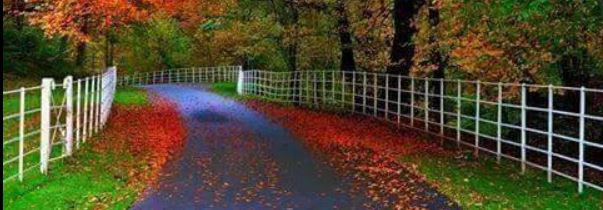
road and fences in autumnHope, Illinois, sits in the middle of the prairie east northeast of Champaign. The little settlement boasts a handful of houses and a church, and the Van Doren brothers, one of whom, Mark, made this story into a poem, but I tell it in prose as a fact.

Two farming neighbors nearly came to blows over what kind of fence should separate their properties. By law each was responsible for the right half of the fence line as they faced each other’s land. They finally stopped talking to each other after every discussion of the fence became a debate, an argument, and a trading of insults. They both agreed that a fence must be built, but they resolved their dispute in an unusual way. They each built the whole fence exactly the way each of them wanted to build it; only they built that fence a couple of feet inside their own property lines, so a no-man’s land ran the whole length of their property’s border. Neither man dared to mow or maintain the land between them, on the other side of his fence, so it grew up in weeds, shrubs, and finally trees. The strip of unkempt land harbored animals and birds that otherwise would have no shelter, but that was the only benefit of the parallel fence monument to stubbornness and a refusal to compromise.

For all of its isolation and small population Hope produced some fine, gentle, and considerate people, some of whom I have had the pleasure to know. It’s sad that it must be remembered mostly for two of its most recalcitrant members, but Hope is not alone in that, is it?

Our Dear Departed Sam

16 Tuesday Jun 2015

Posted by chaplines2014 in fighting fires, Learning from mistakes, Small town life

≈ Leave a comment

Tags

The Volunteer Fire and Rescue Squad

Yellowstone Pool

I had just driven home for lunch, when Jan looked out the kitchen window and commented, “Smoke is coming out of Sam’s hood.” Sam was our 1960 Ford Falcon, and the year was 1976. I had just parked Sam in the driveway behind our house.

I grabbed the multi-purpose fire extinguisher and headed for Sam. The likely embarrassment of calling the fire department for a fire in my own backyard, when I was a volunteer firefighter, kept me from making the wise decision, which would have been to call the fire department. Sure enough, smoke was pouring out when I popped the hood, and I took the risk to do it all myself, and I did succeed in putting out the fire before it did a lot of damage or spread to the nearby dry field of grass.

I was lucky. No burns on me, no explosions, no fire spreading across the field and threatening our neighbors’ houses or the farmer’s livelihood behind us. It could have been much worse, and it probably should have been, to teach me a lesson. Sam was a leaky old car that left its mark on many a clean parking pad. She had covered a lot of miles, survived a windstorm that blew a camper off a truck in front of us on the Mackinaw Straits bridge, endured mistreatment at the hands of a street gang on Chicago’s south side, and, in spite of her plain habit—no radio, no air conditioning, no accessories—she was a member of the family. I sold her to a guy who had the time and know-how to put her back on the road.

After that, I always carried a fire extinguisher in my car.

Everywhere people make fun of someone

13 Saturday Jun 2015

Posted by chaplines2014 in Gullibility, People, Small town life, Travel

≈ Leave a comment

Tags

events, Serendipity

Monkeys see, hear, speak no evil, Bangra.com

In the summer of 1987 my family and I were traveling in Germany, and we made an obligatory visit to Worms and Heidelberg. I exercised my pitiful German and most of the people I talked to wanted to exercise their English abilities, which were usually better than my German. Likewise people wanted to know where we came from in America, and I would explain that we came from farming country in Central Illinois, that had been settled mostly by Germans and Italians.

Pressed further about where in Germany the settlers had come from, twice I answered that they were mostly from Ostfriesland, in northwest Germany, which elicited a response of laughter both times. The second time this happened I asked why they were amused, and they responded that they knew that in America people made jokes about the foolishness of people in American southern states, or about Polish people.  There in southern Germany they made fun of people from Ostfriesland as the fools. After that I changed the answer to say that our own people had come from the Frankfurt region or from die Schweiz, and the response was polite interest.

The discussion about Italian settlers followed a similar course. There were mostly farmers and restauranteurs in our area, known for their pastas and pizzas, like Mona’s and Capponi’s at Toluca Illinois. But Illinois meant “Chicago” to three people that I talked to, and one of them pantomimed a machine gun, when I answered ‘yes,’ that I knew some of the Capponi family, and they prepared fabulous food. It hadn’t crossed my mind until his pantomime that he was thinking all the while about Al Capone.

At Worms we visited the reconstructed Cathedral, retraced Luther’s steps, and enjoyed some Liebfraumilch, but I’ll never forget the look on the face of one of the local citizens when I answered that I was most interested in worshipping in the restored synagogue where Rashi had studied. “Why on earth would you want to do that?” the man responded.

You learn a lot when traveling, and sometimes you can’t help but become the butt of jokes yourself.

To Pass or Not to Pass… the Peace

12 Friday Jun 2015

Posted by chaplines2014 in Church, Events, Learning from mistakes, People, Small town life

≈ Leave a comment

Tags

A License to Preach

Monkeys see, hear, speak no evil, Bangra.com

In the mid-1980’s “Passing the Peace” had been re-incorporated into Roman Catholic worship, but few Protestant congregations were engaged in the practice. I had taken a confirmation class to a Catholic service, noting commonalities with our liturgy, and they had appreciated the Passing of the Peace, asking why we did not do it, too, if it was an ancient tradition of the church. I took the idea to our worship committee, and the consensus was to begin to include Passing the Peace at different points in the service, with brief explanations of its purpose and history. This was done for the next three months before the congregation held its annual meeting.

Preparing for the congregational meeting in this place was always a challenge. The elected leaders knew that some members always made a controversy out of something, but could usually not predict what would be the issue at any given time. That year it turned out to be Passing the Peace. Some members demanded that any changes in the order or content of the worship service should always be presented to the whole congregation first, seemingly not aware of how cumbersome a requirement that would be.  Several comments veered from the issue of Passing the Peace into other elements that should or should not be included in a worship service. Clearly no consensus was present, and it was, as usual, hard to stick to one topic of discussion.

Pro and con statements about Passing the Peace showed the usual divisions in the congregation. Those who advocated for the practice made statements about its celebration of forgiveness, acceptance, and mutual care, but some admitted that it seemed disruptive in the middle of the service, and less disruptive at the beginning or end of the service.

The climax of the discussion came when one of those who objected to Passing the Peace said that it would be a cold day in Hell before he would pass the peace with some of the people in this congregation. He chose to sit where he did to avoid sitting near certain other people, but he didn’t want to shake hands or greet anybody else that just happened to sit nearby. The fact that the six hundred members of this congregation were mostly related to each other could not hide the divisions in the extended family. They would not be healed by a ritual of Passing the Peace or by pulpit teaching about forgiveness.

The vote to exclude Passing the Peace failed, as did the vote for the congregation to pre-approve changes in the service. No one voiced objections to the president’s idea that the next months should include some exploration of the different parts of the ritual and their meanings, including Passing the Peace, so that became the temporary resolution. A fuller resolution would require passing through many more controversies and much more time before a real peace could be shared.

Fire Call #5: Somewhere in Pennsylvania

31 Sunday May 2015

Posted by chaplines2014 in fighting fires, Learning from mistakes, Small town life

≈ Leave a comment

Tags

Serendipity, The Volunteer Fire and Rescue Squad

Yellowstone Pool

The siren sounded, and I was out of bed in a flash, pulling my pants on over my pajamas, reaching for my shirt, and heading for the door. A volunteer fireman learns to respond quickly to that sound and to take shortcuts to get to the firehouse and into the suit and boots that will be necessary to fight a fire or, in the years that I served, to hop into the rescue truck to provide emergency medical assistance.

Only this time, my wife interrupted my preparations with the loud question, “Where are you going?” Then I realized my mistake. We were in a motel in the middle of Pennsylvania, sharing the room with a couple of close friends, and headed toward a friend’s ordination in Massachusetts. We were five hundred miles from our hometown, five hundred miles from the town where I had joined the fire and rescue squad.

I would not make it in time to help. No, the siren call belonged to someone else, not to me. In the confusion of automatic responses, the full realization actually took a few moments.

When I finally withdrew from that volunteer responsibility, it also took a while to unlearn that response that had become a part of my body.  As important as it is to have people ready to respond immediately to provide help, the duty and its adrenalin rush take a toll on the responder and those who are close. People need to learn to be ready; people also need to learn not to be ready.

Because of a car with an eagle on the hood…

28 Thursday May 2015

Posted by chaplines2014 in Caring, Death, Events, Learning from mistakes, Racial Prejudice, Small town life

≈ Leave a comment

Tags

A License to Preach, events, Synchronicity

3 Owls

The young man was two years out of high school, making a high wage as he worked in construction on the Clinton nuclear power plant, and proud of his shiny new black Trans-Am with the large eagle design on the hood. He was a brash and mouthy country boy, which was understandable. He was young, energetic, with pockets full of cash, and he came from a small town not noted for open attitudes.

Two young men, about the same age, drove down from Chicago, looking for work, but not finding. They filled out applications, but knew they were filed away at best, often just tossed into the waste can. They had more wishes than experience, and their references were not spectacular. Their car was an old beater, barely held together by Bondo and wire. They were as brash and mouthy as the first young man.

They were on a collision course, randomly, to all appearances, not by clear intent, and they had more in common than they knew, except that one had a good paying job and the other two did not. No one witnessed the event itself. We could only imagine what was said, by whom. It was in Champaign, Illinois, outside a bar. None of the three was operating with his best behavior. Prejudices and resentments fueled their encounter.

A telephone call came to me soon afterward. Would I officiate at the funeral of a young man, killed in an angry altercation, his “pride and joy” car stolen? They didn’t know who had done it, but they had ideas. A neighbor had recommended that they call me. I didn’t know any of them, but I said “yes.” They needed someone.

There was a mob at the funeral, filling the mortuary chapel and its overflow spaces. The directors had “never seen such a crowd,” they said. The young man was well-known, if not always well-loved. Grief held center stage, but it was surrounded by a cast of anger, hatred, and fear.

After conversations with his family, I had plenty to say that appreciated his life and work. I noted the absurdity of dying because of one’s proudest possession, and I named the encounter as a tragic and devastating loss for everyone concerned. I represented a “Savior who died for all,” who loved each person, understanding the mixture of guilt and good that is in each one, and who can be trusted to take what we are and to shape it for  a better world to come. It was too early to expect anyone to understand a call for forgiveness. What did they need to forgive in the young man who was murdered? How could anyone ever forgive the murderers? Mostly the crowd was silent afterward. A few made the special effort to say that they heard what I was saying. Much later, a man said that it was the one sermon that he remembered and pondered.

Missed Signals and What They Meant

21 Thursday May 2015

Posted by chaplines2014 in Caring, Events, Gullibility, Learning from mistakes, Small town life

≈ Leave a comment

Tags

A License to Preach, events

red footbrigde over lily pads

Many years ago a couple came seeking a wedding at the church I was serving. I had worked with the young man as his occupation crossed paths with mine. The young woman did not know me, except by reputation. They had grown up in nearby villages to the one where I lived and served.

When a couple had no experience in the church which they wanted to host their wedding, I usually asked, “Why do you want to hold your wedding here?” In this case I knew the church where she and her family had participated. It was a recent merger of two friendly congregations, who had built a beautiful new building with convenient facilities, all on accessible ground level, instead of “my” traditional Gothic  two-story building with its many steps. So I asked my question.

The bride-to-be paused momentarily, as if uncomfortable, dropping her eyes. The groom came to the rescue, saying that they planned to move to this community and expected to take part in this church, where they would make their home. She seemed to recover her composure quickly, and the rest of our conversations moved smoothly over many appropriate thoughts about marriage and the wedding service itself.

Still I puzzled about that moment and what it meant.

I knew her minister; in fact, he and I gathered with other ministers of our affiliated denominations monthly in conversation. He was popular due to the successful growth of his congregation during and after their reorganization and building program and also due to his outgoing and attractive personality. When we next met, I let him know that the couple had come to me to prepare for their wedding, and that they had shared their plans to move. He did not respond visibly. To my mind, he seemed unusually uninterested in what they were doing or planned to do.

A year later, several of the young women of his church, several of them being juveniles, accused him of sexual misconduct. He was arrested and held in jail for a few days, much to the embarrassment of his wife and children. He submitted his resignation, surrendered his credentials as a minister, and eventually moved to a distant community and took up another occupation, selling insurance. The case against him fell apart as the women, one by one, decided not to go through the visible public process of a trial.

Fire Call #4 at the Guns and Ammo Store

11 Monday May 2015

Posted by chaplines2014 in Events, fighting fires, guns, Small town life

≈ Leave a comment

Tags

The Volunteer Fire and Rescue Squad

Yellowstone Pool

The siren blasted on a fall evening after dark, calling us volunteers, not to an retail merchant’s store, but to a single story ranch-type house set on a one acre wooded lot, with several other homes nearby. The house was smoking heavily when we arrived. The owner had been smoking heavily also, but he awoke in time to escape and stood nearby. We responded with a full crew and three trucks and had the hoses out and charged when the explosions started inside the house. We began to hear whizzes and pops against the side of the new firetruck where I was adjusting the controls, and I felt something hit my helmet hard.

“What’s inside that’s doing that?” Don, our chief, asked the owner, and he answered, “A hundred or so guns, positioned around the house, and lots of ammo. They’re worth a lot of money. I’d like to see you get busy and save what you can.”

Don called out in his loudest voice, “Pull back. Pass the word. Pull back now.” As the explosions continued and the occasional sound of stray bullets, also, the crew repositioned the hoses and the trucks about thirty yards farther back, aiming the new high pressure hoses from a distance, breaking the few windows that remained, blasting holes in the burning sides of the house, but mostly watching that the wind did not carry flames or debris toward the neighbors north and east of the house.

The owner was angry, and protested the decision to pull the crew back and away from the house. It was obvious that the house was going to be a total loss, after the delays and the new orders from the chief. “As I see it, I’ve got three duties that come before saving your house. Saving my firemen. Saving your neighbors’ property.  And protecting our equipment.”

“What about my stuff?” the owner asked.  Don answered that the owner had already taken care of that, when he set fire to his own armory and shooting gallery. The owner did not respond well. The year was 1974, before the country as a whole had gone gun-mad, but this man already had the conviction that he had to be ready for anything. That’s why he had loaded guns and ammunition in every room of his house. Unfortunately, he was not quite ready for anything.

Fire Call #3 at the Foundry

10 Sunday May 2015

Posted by chaplines2014 in Events, fighting fires, Small town life

≈ Leave a comment

Tags

The Volunteer Fire and Rescue Squad

Yellowstone PoolThe fire siren split the quiet spring afternoon with its insane blare, and I was the first to respond to the station. Earlier I would have tried to drag my feet, but it would have been obvious since my office and home were just two blocks from the station. I put on my firefighter suit and boots, and had opened the main door and started the engine when a couple of other volunteers arrived. The bad news that I had to relay was that the call came from the General Motors Foundry, a five block long complex of oversized buildings filled with molten iron and steel. The good news was that they were asking for precautionary backup. They didn’t think that we needed to call for mutual aid from other departments. Their own crew was fighting the fire already and they thought they would have it under control when we arrived.

We hurriedly drove, siren screaming, to the east end of the complex and the open hangar door that looked like it could admit two or three fire trucks simultaneously. A little Hyster lift-truck preceded us down the aisle past employees standing nonchalantly, waving, obviously out-of-work for the time being while the problem was being resolved elsewhere. As the building swallowed our fire truck and we tried to look ready for whatever task awaited us, we at least felt some relief that the workers seemed unconcerned, not panicky and not ready to flee.

Turning a corner near the far end of the building we saw an area of smoke and steam ahead, water hoses charged and spraying under the command of three other volunteers that belonged to our squad, but also worked for the foundry. They did in fact have the fire under control, and I said my silent prayers of thanksgiving as we learned what had happened.  It was a vehicle fire, and grease fire, that had ignited some storage boxes nearby. Fortunately they had an in-house plan for immediate response. This was the first time that anyone remembered that they had called in an outside fire department, and they were grateful to learn that we could respond so quickly.

Whether they knew it or not, they were not more grateful than I was that they didn’t need the help of three volunteers who were ill-prepared to do much more than they had already done. We were deep inside the belly of a building that looked like nothing less than a Towering Inferno even when it was not on fire.  We took even more seriously the immensity of tasks that we might face and the training that we needed.

Fireworks do not make a pretty fire

29 Wednesday Apr 2015

Posted by chaplines2014 in Events, fighting fires, Small town life

≈ Leave a comment

Tags

The Volunteer Fire and Rescue Squad

Yellowstone Pool

Our town, though small, about 3000 residents, lay adjacent to a town of 43,000, with other small towns nearby. The town boundaries encompassed railroad yards, an Interstate highway, a major automotive foundry, and a variety of industries, businesses, and housing stock.

When the fire alarm came, in the evening after sunset, from the fireworks factory, we expected the night might prove interesting. Knowing how many chemicals and how much explosive material could be involved, the chief did not wait to call for mutual aid from the surrounding volunteer departments. He appealed for help immediately. Memories of the Crescent City propane explosions were still fresh among the crew. Many buildings and several firetrucks had been lost in that conflagration.

Sprawling over thirty acres, the fireworks factory consisted of many small metal buildings widely separated and scattered around a level field. The distance between buildings was a benefit. When we arrived one building had already exploded, leaving small fires in evidence in several places. That looked dangerous. Surely time was short and the prediction of what might happen next, impossible.

Our vehicles provided the light beyond the fires, and we began the fight with the water from the tanker trucks, while we hooked up our hoses to the distant hydrants and ran great lengths of hoses onto the property. We had to position ourselves between the fires and the potential sources of further explosions. A trailer park and more housing sat on lots just beyond the fences. We hurried to put out a score of small fires, and grass fires, and we succeeded. We spent the next two hours combing the grounds for smoking coals and hotspots. With little fanfare, the mutual aid companies and eventually our squad rolled our hoses, packed up, and went our separate ways.

There were no multi-colored displays, no “ooh’s” and “aah’s,” no entertainments of any kind. We were glad.

← Older posts
Newer posts →

Subscribe

  • Entries (RSS)
  • Comments (RSS)

Archives

  • February 2022
  • May 2020
  • October 2018
  • December 2017
  • November 2017
  • October 2017
  • June 2017
  • April 2017
  • March 2017
  • February 2017
  • January 2017
  • November 2016
  • October 2016
  • September 2016
  • August 2016
  • July 2016
  • June 2016
  • May 2016
  • April 2016
  • March 2016
  • February 2016
  • January 2016
  • December 2015
  • November 2015
  • October 2015
  • September 2015
  • August 2015
  • July 2015
  • June 2015
  • May 2015
  • April 2015
  • March 2015
  • February 2015
  • January 2015
  • December 2014
  • November 2014
  • October 2014

Categories

  • beach
  • Books by Gary Chapman
  • canoeing
  • Caring
  • Cherokee history
  • Church
  • Citizenship
  • Death
  • Disabilities
  • Events
  • Faith
  • Farm
  • fighting fires
  • Forest
  • Garden
  • Growing up
  • Gullibility
  • guns
  • Health
  • Hiking
  • House
  • Innocence
  • Learning from mistakes
  • Life along the River
  • Miracles
  • Nature
  • Patience
  • People
  • Prayer
  • Racial Prejudice
  • rafting
  • Running
  • Seasons
  • Small town life
  • Suffering
  • Travel
  • Uncategorized
  • Vehicles
  • Volunteering
  • Words
  • Yard

Meta

  • Create account
  • Log in

Create a free website or blog at WordPress.com.

Privacy & Cookies: This site uses cookies. By continuing to use this website, you agree to their use.
To find out more, including how to control cookies, see here: Cookie Policy
  • Subscribe Subscribed
    • chaplinesblog
    • Join 71 other subscribers
    • Already have a WordPress.com account? Log in now.
    • chaplinesblog
    • Subscribe Subscribed
    • Sign up
    • Log in
    • Report this content
    • View site in Reader
    • Manage subscriptions
    • Collapse this bar
 

Loading Comments...