• About
  • Celebrating our decades…
  • Welcoming all and inclusiveness

chaplinesblog

~ everyday and commonplace parables

chaplinesblog

Category Archives: Travel

The Discard pile at Delmo

03 Tuesday Mar 2015

Posted by chaplines2014 in Events, People, Travel

≈ Leave a comment

Delmo 1

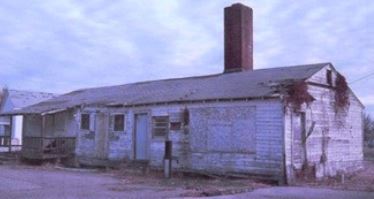
During a winter school break, back in 1977, I took a group of high schoolers from Tilton, Illinois, to Delmo Community Center, at Homestown, in the Missouri Bootheel. We loaded many boxes of good used clothing and groceries into a borrowed truck, and ten students into two cars, and headed south southwest. The weather was cool and gray overcast, but as cooperative as we could expect for midwinter. The church had contributed to Delmo for many years, but no one had visited at any time that anyone remembered.  When we arrived the first thing that we did, with the guidance of a gracious older staff member, was to tour the facilities and to drive around the area. The community center consisted of a barracks-type utility building, about sixty by thirty feet,  left over from the end of the Great Depression, a church and a bunkhouse  in varied conditions of maintenance and decay. Nearby, Pemiscot and New Madrid Counties showed several crowded housing developments of similar age and condition, filled with nearly identical four room cottages, mostly segregated by race, set in the middle of cotton and tobacco fields, a taste of the deep south in this appendage of Missouri. It was culture shock for our blue collar but relatively comfortable contingent.

Returning to the center, we entered the utility building that housed the thrift store, packed full of goods, and suffering from a leaky roof that left the unmistakable odor of mold and mildew in the place where we would be working. Instead of unloading our donations into the space, we knew that we had a major clean-up to accomplish first.

We spent a day sorting and organizing the clothing and household goods that were there. Every piece of clothing that was damaged was piled outside on the ground in the drizzling rain. The store was supposed to be open again at noon the next day, and we had a lot to do to get it ready. We organized into work crews, and after the existing goods were finally in order, we unloaded the boxes we had brought and placed them neatly onto the racks, tables, and shelves. At the end of the day, we knew that we could have it ready for the reopening the next day. The areas under the leaky roof were cleared of goods, with buckets in place, and the pile of discards outside reached above our heads. We planned to load the discards onto the truck the next day and take them to a landfill.

Our group relaxed for the night in the bunkhouse across the parking lot, enjoyed the warmth and the kitchen for our meals, played some games, sang some songs and slept till 7:30 in the morning, when we rose to a light snowfall and some noise outside. We could see that people were coming and going from the area, but we didn’t know why. When we finished breakfast we returned to the store and saw that the discard pile was almost entirely gone. Only a few of the worst items remained. Neighborhood residents had come to claim the things that we thought were too bad to sell for pennies or to give away inside. As one of the women still there explained, she could turn the things she was holding into usable items. She would wash and mend, take apart and remake, until she had children’s clothing, quilts, aprons, and all kinds of things that could be used. Her plans were multiplied many times by the others who had carried armfuls of the pile away.

We returned to our work, chastened by the new knowledge that our judgments were impaired. After the store reopened people came back, and checked out with normal armfuls of used goods, still celebrating the windfall taken from the discard pile outside and warmly welcoming us into their community.

https://preservemo.wordpress.com/most-endangered/2011-2/ and http://www.nps.gov/nr/feature/afam/2010/delmo_community_center.pdf
Hue tries to take her family to Thailand…only two make it.

19 Thursday Feb 2015

Posted by chaplines2014 in Books by Gary Chapman, People, Travel

≈ Leave a comment

Tags

Books by Gary Chapman, The River Flows Both Ways, Vietnam and Cambodia

TRFBWcover       

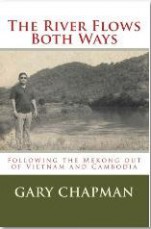
Hue brought the family together in Phnom Penh in November. She made arrangements with Aunt Phai who promised safe travel to Thailand through Khmer Rouge-controlled territory.    They knew it would be difficult to avoid Vietnam’s occupation troops, find their way through territory controlled by a resistance group, and follow the route of Cambodian refugees into Thailand.

On the night before leaving in November, in the middle of the night, they walked to the house of another family, stayed until early morning, then they walked to yet another family that owned the two trucks they would board. Aunt Phai herself was with them all, serving as a guide. She knew the way to travel, on Route 5 toward the Thai border, expecting to disembark near Battambang, and walking through the jungle until they crossed the Thai border. Then they would find a refugee camp where the rest of their arrangements could be made through the officials at the camp. The weather was sunny and warm. The rainy season was behind them. They would not travel together in one truck in case something would happen to one of the trucks. At least the other might be able to continue the journey. It was about 6 A.M. when Long and Phuong climbed into the first vehicle, a canvass-covered cargo truck with large sacks and crates of contraband stacked on the truck bed on which dozens of passengers sat and piled their small bundles. Long and Phuong were not carrying anything.

Hue and Thin, and the children—Au, Mui, and Kim Chi—with a few bundles of clothing and tradable goods, climbed into the second truck. People and cargo filled both trucks. Roads were terrible, full of ruts, so the trucks could go no faster than twenty kilometers per hour. Every few kilometers Cambodian people wearing a variety of clothing, sometimes parts of uniforms, stood alongside the road, and the drivers made payments to them for permission to pass without interference. All of the passengers had to stay in the trucks under the canvass, so they were not obvious, but the back ends of both trucks were open. Long tried to sleep as the truck jostled along, and sometimes he was successful.

The trucks rattled apart and frequently broke down. Having never travelled far before, Au soon became sick from the jarring motion. Occasionally when there was no one in sight they stopped to let people relieve themselves.  Au tried to calm his unsettled stomach, but back aboard the truck he was sick again. Neither truck made any special effort to hide, but they avoided larger towns where they knew that regular Vietnamese Army soldiers were stationed. Until they got closer to the border no one was checking to see who belonged where.

During that first day they traveled most of the long road from Phnom Penh toward Battambang, over three hundred kilometers. When the sun had set and the road turned too dark for the driver to see where they were going, both trucks stopped for the night, and everyone slept in their clothing with a few shared blankets along the roadside near the trucks. Hue’s family slept together that night.

At daybreak they ate a little that they had packed and resumed the traveling. Long and Phuong were in the first truck all of the way. Near the end of the afternoon, in the area near Sisaphon, Long saw the other truck pass them briefly and then pull off to the side of the road. Mui and Kim Chi waved at him from the open back end. He waved and smiled back at them, not realizing this would be his last sight of them for a long, long time. Later that day, and on the many days following, he clung to the memory of them waving.

Toward sunset the road became impassable. Long and Phuong and the rest of their group climbed down off of their truck for the last time. The other truck was nowhere to be seen. There was no sign of activity around the shacks and buildings in that region. People were afraid to be out at night. The gravel path that continued where the road was no longer drivable served ox carts, bicycles and walkers, but not four-wheeled vehicles. As darkness fell they arrived at a hut, and they crowded into it to sleep for the night, hoping for some protection from the mosquitoes. Long and Phuong wondered aloud where their family was, but no one knew. They lay awake worrying about them. They knew that Hue had all of the gold and extra resources the family needed for the trip, and they themselves had nothing. Mostly they just wanted to be together again. They had no way of knowing that the other truck had been captured by occupation soldiers, and Hue and the rest of the family had been imprisoned.

Squeezed, Smashed, Squished.

11 Wednesday Feb 2015

Posted by chaplines2014 in Travel

≈ Leave a comment

Driving the speed limit of 70 mph on a controlled access highway in the right lane, I usually marvel at the safety and efficiency of our transportation network. Then something brings me back to reality. Black ice appears on the roadway. A forty ton truck rides my bumper. Fourteen vehicles approach me from the rear at ninety miles per hour, filling both lanes, crowding each other and ready to knock a mere speed-limit-driver off the road like a billiard ball into a corner pocket. Or this.

All of the above occur when I approach a merging ramp with another semi-trailer truck entering with increasing speed on my right. The merging driver seems oblivious to my dilemma; he just keeps accelerating. I cannot slow down without a major jolt from the rear. I cannot move into the left lane without crashing into a series of vehicles much larger and going much faster than I am. Any precipitous move, and whatever control I still have of my car slides into the careening spin of an ice cube on glass. What can I do? Pray.

The video of a hundred ninety vehicles sliding and crashing into each other on icy, foggy Interstate 94 in January in central Michigan appears on my memory screen. One man miraculously survived, although his car was a pancake between two large trucks, and it took hours to release him from his compacted metal and plastic prison.

Another memory flashes. We are driving on Gold Camp Road around Pike’s Peak between Cripple Creek and Colorado Springs, Colorado. The road is a narrow one-way gravel road with no apron, only a steep rocky cliff on the right and towering rock on the left. We come to a cut through the rock of about a hundred yards, and barreling straight at us, the wrong way on this one-way road, is a large gravel hauler, traveling at high speed. Jan is driving, since I enjoy the scenery too much to be trusted. Jan has no room to turn, no place to go, yet the truck does not slow down. We pray. Jan pulls as close to the right edge as she can, scraping the tires against the rock, and the truck rushes on past, just lightly touching the rear view mirror. Whew!

The desire for the German Autobahn reasserts itself, where there is no speed limit, but courtesy reigns. People maintain the stopping distance between vehicles, yield to the person on the left, and slower traffic stays to the right.

How many thoughts and memories can one stuff into the last second or two of life? Many, but fortunately for me the first scenario is a dream. This time. It has nearly happened, but not quite. There has always been just enough room to squeeze by, and just enough traction to stay in control or slide off into the right ditch. I wake up and I am still breathing and my heart is still pounding, but I am also still trying to decide what I can do when there is nowhere to turn.

“And when you die, you’ll go to Montana”

05 Thursday Feb 2015

Posted by chaplines2014 in Travel

≈ Leave a comment

Thirteen years ago it was a first and it inevitably became a last–  someone listened to a sermon of mine and converted part of it into a T-shirt slogan. “If you lead a good life, say your prayers and go to church,when you die you’ll go to Montana.” The words came from the “Cowboy Prayer” I used as an illustration of something, maybe. Anyway, I treasured the T-shirt and got it appropriately sweaty as I ran my three miles a day.

Our hopes for salvation and paradise come in many forms. Since Field of Dreams Iowa has had a corner on the market (T-shirt and otherwise) for some folks. Of course Montana wanted its share.

I must insist in Lutheran style that we still cannot earn our way there. We may try to be as good as we can be, praying and going to church, and we still fall short of the glory of Montana. It is vast. Not that some Midwesterners don’t have our share of Montana experiences. My wife cut her teeth as a summer houseparent for delinquent girls somewhere in them thar hills, only a year older than some of those she “parented” and a lot more sheltered (as she usually tells this story), until the day the old red-haired Irish cook chased her around the kitchen work table with a meat cleaver. Then she became an old hand, turned around, stomped her foot and proclaimed, “Stop this! Look at yourself! Grow up!” This was Montana’s gift to help her grow up, and enable her graciously to pass this “take command” attitude on to me. I will be grateful, some day, in the Great By and By. (Is that supposed to be spelled instead as “Bye” or Buy”?).

Only faith gets us there. Montana does have a claim to be the vast hunting grounds foreseen by the prophets of many native peoples. Its Great Sky may not be larger than here but there are a few more bumps in the landscape, and there are fewer human interruptions in between. One can hunt for ages and aeons before finding anything worth commenting upon. As far as I can see, it has a better claim to be God’s Country than all of those Southern states put together.

Forty-odd years ago an older honored couple in my first parish, Lester and Alice Brown, made a similar journey into the Midwest and yearned for the return. Lester went first, succumbing to emphysema after much suffering with Illinois heat and humidity. Alice then packed up her earthly belongings and joined her sister out on the Montana ranch where they had been born, fifty miles from the nearest town. The last I heard– she was indeed in heaven.

It is a gift. It is a gift to be listened to, and it is of course (or of curse) a surprise what people hear when they listen. The cowboy prayer is actually set in Wyoming, which, according to Garrison Keillor, already has filled its quota of Montanans.

The Bridge of (Fort) Madison(‘s) (Lee) County

01 Sunday Feb 2015

Posted by chaplines2014 in Travel

≈ Leave a comment

Bridges– we’ve got to love them, living on the Mississippi. We have so many fine examples of them. Ancient symbols of communication and friendship, of crossing divides and building relationships, they inspire us. And the most intriguing bridge of all has to be the one between Fort Madison, Iowa,  and Niota, Illinois. Few bridges reveal the complexity of life more than that one.

Double-deckered, toll boothed, combined railroad and wheeled vehicle, swing-spanned to allow tugs and barges to pass, with curves to block the view of oncoming traffic, lights and gates and stop signs in the middle of it, the Fort Madison bridge is a wonder! It crosses a long span of deep and shallow waters where the Mississippi widens to one of its large pools. Crossing it is an adventure, even as eagles, geese, seagulls and storks draw our attention away from the narrow lanes we must concentrate on. What will we meet at the blind curves– a sixteen wheeler or something bigger? Will the gate bar the way, and allow us to stop, get out of the car and take a stretch near the sign that says not to leave your vehicle, and watch the barge traffic pass by, and the amazing swing span swing back into place?

Leaving Iowa we now pay the dollar toll. Inflation has increased that toll charge 400 % in the last twenty-five years. But entering Iowa is free! Heaven itself. We usually drive both ways, leaving and returning, but sometimes we have the advantage of driving farther, heading from Iowa into Missouri, into Arkansas, and back to Illinois, and then the whole trip seems free. But why must we stop at the toll booth if we do not have to pay a toll? Is it to smile and nod at the person who is not looking in our direction anyway?   Is it a formality of paying respects to the Iowan who lets us pass free into the fields of opportunity?

Traveling alongside a train that then disappears underneath your vehicle as you ascend to the second deck also provokes some thought.  How can this seemingly fragile construction of old and rusty steel girders bear so much weight and vibration at the same time? We always have a lot of company making this crossing, coming and going and stopped in the middle. We shake, rattle, but so far have not rolled.

The symbolic possibilities of this bridge are endless. Nevertheless I am hung up on the physical and literal impression it makes. How can we call it a symbol when it is itself a wonder? Yet communication, friendship, crossing divides, building relationships, taking our journeys beckon our imagination not to stop meditating about the possibilities and similarities with parts of our two way, many-decked, toll-filled, stop and start, curving, vibrating, cumulative experience.

It’s worth a dollar, or even taking a swing through Lomax and Dallas City (which arguably might not be worth a dollar themselves) to cross it. May it stand as long as we all need it, and we do need it!

On Crowley Ridge…the Trail of Tears

28 Wednesday Jan 2015

Posted by chaplines2014 in Books by Gary Chapman, Cherokee history, Events, Travel

≈ Leave a comment

Tags

Books by Gary Chapman, Our Land! Our People!, The Trail of Tears

Red Wolf2Snow and ice covered the roads on January 9, 2010, in Northeast Arkansas, so, true to southern pattern, few people ventured out, and the ranger at Village Creek State Park spent a lonely day in the visitor center. When I relied on my four-wheel-drive Jeep to navigate the hills and curves of the park, I was the only one to do so. The ranger doubted that I really wanted to drive two miles farther into the park, and walk the mile across the dam and into the woods, until I reached the last remnant of the original military road on Crowley Ridge. There the ancestors were among the 670 Cherokee travelers who followed the road west for 790 miles until they reached the Indian Territory that would “forever” be theirs for another forty years anyway.  But I was willing, and she gave me directions. There would be just enough time before sunset to make the journey.

Crossing the ice-covered dam tested my resolve,  as did the sound of dogs howling deep in the woods ahead, but I grabbed a straight branch for a walking stick, and walked on, following a marked trail, up and down the hills until I reached the ridge, and the simple historical marker. Only  a few miles remain of the original road, but I had time before sunset only to hike a mile of it before turning around to start back. The silence and the snow were sufficient to let me hear the distant echoes of  one hundred twenty wagons and carriages, pulled by teams of horses and oxen, accompanied by many walkers through the winter of 1838 and 1839. One hundred seventy years later, it was very quiet, but telling its story loudly.

I had turned around and started back when she joined me—a doe walking through the woods parallel to the road and about thirty feet away. She seemed curious about me, and as I did not threaten her, she walked along at that distance for about half a mile until she decided to amble down into the deep ravine.  I was glad for her company, and I could not help but think that all of the Bell ancestors of the Deer Clan would be pleased.

People on a journey…again.

13 Tuesday Jan 2015

Posted by chaplines2014 in People, Travel

≈ Leave a comment

Tags

A License to Preach

We are away from one home and at another. We have family members and friends far away from us, some in places of danger, and it makes us anxious. What’s all this traveling about?  

What happens when we travel? We spend a lot of time on the road. We get tired. We feel miserable in unfamiliar beds and locations. We can’t wait to get where we’re going. We meet new people or get reacquainted with old friends. We learn how to manage with less than we usually have. We eat too well and too poorly. We try to get some unusual things accomplished and often feel the frustration of too little time and too many expectations. We experience and understand things up close that we see only from a distance at home. We see ourselves differently, feeling strange feelings of discomfort and exhilaration. Why would anyone do such things to themselves when they could be relaxing at home? 

We say “life is a journey” so often it becomes trite. Sometimes our lives are stuck, and getting away becomes a way to obtain that perspective that will move us beyond the sticking points. Sometimes we return with a fresh outlook. Sometimes we never quite go back to where we were. Sometimes we move in an illusion of leaving that brings us right back to where we started because we carry so much baggage with us, although I suspect that getting back to a starting point is harder to do than it appears. Travelers can try to give the impression that nothing has changed and then report years later how much did. 

Of all the trips the one with the most potential for transformation is the inner journey. How can any of our trips reflect so much change in belief and equipment for service to others as the stories of our spiritual forebears?  

Family travels and travails have brought us here, and the mappings of our heritage show that our trips are often short and easy compared to those earlier ones. They remind us that we are not rooted to one place and we must keep moving and growing or we will shrivel and die. Our sojourn may be short or long but we remain sojourners wherever we are. 

When we sing, “We are people on a journey,” it is not just words. Gathering around a praying table we find a resting place along the way and a joyful foretaste of homecoming.


Newer posts →

Subscribe

  • Entries (RSS)
  • Comments (RSS)

Archives

  • February 2022
  • May 2020
  • October 2018
  • December 2017
  • November 2017
  • October 2017
  • June 2017
  • April 2017
  • March 2017
  • February 2017
  • January 2017
  • November 2016
  • October 2016
  • September 2016
  • August 2016
  • July 2016
  • June 2016
  • May 2016
  • April 2016
  • March 2016
  • February 2016
  • January 2016
  • December 2015
  • November 2015
  • October 2015
  • September 2015
  • August 2015
  • July 2015
  • June 2015
  • May 2015
  • April 2015
  • March 2015
  • February 2015
  • January 2015
  • December 2014
  • November 2014
  • October 2014

Categories

  • beach
  • Books by Gary Chapman
  • canoeing
  • Caring
  • Cherokee history
  • Church
  • Citizenship
  • Death
  • Disabilities
  • Events
  • Faith
  • Farm
  • fighting fires
  • Forest
  • Garden
  • Growing up
  • Gullibility
  • guns
  • Health
  • Hiking
  • House
  • Innocence
  • Learning from mistakes
  • Life along the River
  • Miracles
  • Nature
  • Patience
  • People
  • Prayer
  • Racial Prejudice
  • rafting
  • Running
  • Seasons
  • Small town life
  • Suffering
  • Travel
  • Uncategorized
  • Vehicles
  • Volunteering
  • Words
  • Yard

Meta

  • Create account
  • Log in

Blog at WordPress.com.

Privacy & Cookies: This site uses cookies. By continuing to use this website, you agree to their use.
To find out more, including how to control cookies, see here: Cookie Policy
  • Subscribe Subscribed
    • chaplinesblog
    • Join 71 other subscribers
    • Already have a WordPress.com account? Log in now.
    • chaplinesblog
    • Subscribe Subscribed
    • Sign up
    • Log in
    • Report this content
    • View site in Reader
    • Manage subscriptions
    • Collapse this bar
 

Loading Comments...