• About
  • Celebrating our decades…
  • Welcoming all and inclusiveness

chaplinesblog

~ everyday and commonplace parables

chaplinesblog

Category Archives: Words

In Hebrew, Who is at Third Base…or at least Third Person Singular

13 Monday Jul 2015

Posted by chaplines2014 in Words

≈ Leave a comment

Tags

A License to Preach

3 Owls hcihw egaugnal werbeH eht tcepser tsum elbib eht fo srevoL

tcepser tahT  .ti fo sdriht owt rof esab citsiugnil eht smrof

fo daetsni tfel ot thgir morf daer ot ssenidaer eht sedulcni

.thgir ot tfel

Lovers of the  bible must respect the Hebrew language which forms the linguistic base for two thirds of it. That respect includes the readiness to read from right to left instead of left to right. That corresponds to the majority of us who are right-handed anyway. Somewhere along the line, probably among Greek-writing left-handers, more people got accustomed to starting on the left margin. Hebrew writing got a head start on Greek by a few hundred years, although that may be historically debatable, but there is no question that Hebrew moved from right to left a few thousand years before English took written form. The problem with duplicating this in English is that all the English letters are backwards.

Other distinctive differences can be confusing, especially if one simply depends on the phonetic characteristics of the languages. “Who” in Hebrew means “he” in English, while “he” in Hebrew means “she” in English. The English word for “who” must be translated “ma” in Hebrew, but you know what “ma” means in English, and she would need to be called “Ema” in Hebrew. Be careful not to pronounce it “emu” which is another bird entirely. “Me” in Hebrew means “who” in English. “Why” in Hebrew would be nothing at all since it is unpronounceable, but the word for “why” in Hebrew, the interrogative,  is “lama,” which sounds more like an South American camel.  Who needs two “els” anyway? Hebrew doesn’t even spell llama with two “els.”

Two “Els” has been theologically unacceptable in Hebrew for over three thousand years, except during the reigns of some of the kings “who did not do right in the sight of the Lord.” “El” is the generic word for a “god” in Hebrew and other Semitic languages, while the alphabetic letter “el” is “lamed.” Since only one God exists for the Hebrews, El came to be used for God’s name, which in its self-pronounced form, YHWH, cannot be pronounced by people. For speakers of English it is hard to pronounce words without vowels anyway, but Hebrew has no vowel symbols at all, although aleph, vav, and yud sometimes serve as space-holders for many vowel sounds.

Phonetics aside, Hebrew and English speakers have some difficulty deciphering each others’ meanings. The phrase “lo rah” in Hebrew sounds like “Behold the Egyptian god Ra,” but it literally means “not bad,” which can be translated “pretty good.” “Lo tov” on the other hand, sounding like a low bridge warning on a highway, means “not good,” which can be translated “pretty bad.”

Where the languages come together is in words from the modern era. Hebrew remained a language reserved for religious use until late in the Nineteenth Century, when people began to revive Hebrew for common everyday use. Since then you have been able to order a “hamburger” or drive an “automobile” or use a “computer” in Hebrew as well as English, with almost the same pronunciation. It’s good to know, with all the confusing differences that do exist, you already do know a lot of modern Hebrew.

Pentecostal Kerfuffling

24 Sunday May 2015

Posted by chaplines2014 in Church, Words

≈ Leave a comment

Tags

A License to Preach, Names and Titles, Serendipity

Pentecostal banner

From time to time I like to have the experience of a good kerfuffle. Pentecost seems just the right time. The Holy Spirit is supposed to be available all the time to motivate people, set us straight, remind us of what is important, activate our highest aspirations and enthusiasms. Pentecost not only highlights what the Holy Spirit can do. It provides many opportunities. Our world fills with new life and an environment conducive to activities of all kinds. We can work with hours of daylight. We can feel the warmth of the sun. We can enjoy the invigorating waters. All good opportunities for kerfuffling.

The Spirit brings people together and moves people to face each other and work together openly and honestly. We do not have to hide our feelings or our past failures or our present weaknesses if the Spirit of God is present to help. When we see each other as we are and recognize our need to join in animated confrontations and open exercise of our abilities we have a chance to grow. Just like siblings who must engage in horseplay and rivalries we must work through the things that bother us. Though gentleness and courtesy are always needed, the process may be neither quiet nor relaxing. It can be a kerfuffle.

O.K. Kerfuffle is a word I learned a long time ago, but, good as it is, I seldom use it. Like “googol” that became popular a few years ago when the capacity of new computer memory seemed to be reaching for infinity, or at least to 10 to the 100th power. I first saw “googol” used in Ruth and Lewis Ita’s Christmas letter twenty-four years ago, as they described the number of gingko tree seeds that had fallen onto their lawn during their autumn season. New words can be useful, and they can sound even better than anything we have now.

Worship can be solemn and meditative, thoughtful and centering, all of which are important and useful experiences. It can include one speaker, one performance, one actor, to whom everyone else pays close attention. It can be organized and ritualized to the point that we know what to expect almost every minute. But worship can also be surprising, enjoyable, unexpected, exciting, involving, and out of control– to the point that spontaneous breakthroughs of humor and participation and liveliness engage everyone’s spirits. Then we can be on the edge of a real kerfuffle.

It was a real kerfuffle on that exceptional Pentecost that followed Jesus’ crucifixion, according to the story in Acts. The noise distracted casual observers and some guessed that the kerfufflers gathered there were drunk. Perhaps that was and should remain exceptional in our life with people who may misunderstand and misinterpret what we are doing. But once in a while, shouldn’t we get carried away? Into a kerfuffle?

Lest it be artificially limited to those who consider themselves Christian, let the Sufis, the Hassids, and other people of good will join in, and we’ll have a truly universal kerfuffle.

I can’t say that it will be easy for me. Keeping myself and my emotions and impulses under control has been a major discipline of my life. But if I do not quench the Spirit, and let Spirit take control, I suppose I will create a kerfuffle with the best of them.

The El in My Name may be Divine

13 Wednesday May 2015

Posted by chaplines2014 in People, Words

≈ Leave a comment

Tags

Names and Titles

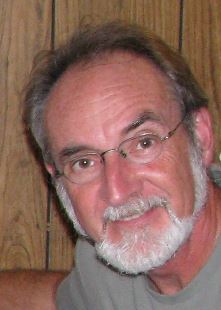
self-portraitA lot of people do not like the names they have been given.

My middle name is Lynn. For a long time I admitted that with the same resignation and regret that a person felt when beginning an Alcoholics Anonymous meeting–  “I am an alcoholic.” For whatever reason some of us grow up not liking the names our parents gave us. In my case it is because the name is sexually ambiguous. Boys often find that a challenge. Gary is not; it comes from the Germanic word for a spearman. Chapman is as manly as they come. But a lynn is a woodland valley, and more women than men carry it as their name.

I have known several men whose first name was Lynn, who used it with no more obvious self-consciousness than a Ralph or a Horace. That is, they got used to it. They knew who they were, and there was no ambiguity to that, at least no more or less than anyone else felt. And if orientation were the issue, those friends of mine who were named Rick, Doug, Bob, Peg, Mark, Carol had to wrestle with that more, and their names had nothing to do with it. They came out finally and knew who they were, a realization that their names neither helped nor hindered.

Through the years I have used my middle initial “L” to differentiate me from the other Gary Chapmans who pop up, as a draft resister in Toronto, on the FBI’s wanted list; as a singer-composer of Christian music, married to a more famous partner; as a lecturer and writer on marriage and the family. Then someone always asks, what does the “L” stand for?

As a youth I hesitated to say, so my Scout friends made up an answer. So I had the nickname “Lindsey” for a while– they didn’t know how close they came– but I might as well have said “Lynn” proudly. Jewish friends called me “Gershon Levi” because “Gary” is often the nickname for the Hebrew name Gershon, which means “convert” after all, and they knew I was a minister from a Coen family, hence “Levi.” Levi sounded good to me; after all I often wore a pair of them.

The Women’s Movement developed and with it the recognition of androgyny– men and women have more in common than in difference, including essential human rights. An androgynous name, like, say,  “Lynn,” made more sense. My parents were simply ahead of their time, as they named their sons with ambiguous middle names. Still I knew the reality was that they were hoping for girls, more each time they had a baby, until they gave up. After all, I had to admit that I was happier with Lynn than with the names Laverle or Carrol, that my brothers had, or the Connie or Jan or Joyce that other guys have had.

Lately I have been thinking about willows and meadows and woodland valleys, and summer ahead, thinking Lynn is not so bad, a lovely place really, a good name for a sensitive man who enjoys children and the natural world, who identifies with women as well as men in their aspirations for freedom.

My middle name is Lynn. It is a little part of who I am. Other things I hope stand out more. If anyone needs to know you can tell them. But you can call me Gary…or Mister…or Doctor…first…if you don’t mind.

What is a parable?

12 Tuesday May 2015

Posted by chaplines2014 in Words

≈ Leave a comment

Tags

A License to Preach, Serendipity

3 Owls  Maybe the answer is obvious, but whenever people say “obvious,” some investigation may be in order. Start with “A parable is a short and simple story that represents a message about values.” Short? As short as a couple of sentences or as long as a few hundred words. Simple? Usually simple means easy to understand or uncomplicated, but here there is a difficulty. On the surface a parable sounds simple enough, but when it comes to what it means, it gets more complicated. Maybe we should scratch out “simple,” though the story itself should at least sound straightforward.

A parable’s representation of something else is metaphorical, but not allegorical. In an allegory each part of the story, or each key part of the story is a symbol for something else, which it should resemble in some important aspect. A parable may sometimes become an allegory, when the teller of the tale decides to interpret its elements as symbols for something specific. Jesus’s parable of the sower and the soils (Mark 4) becomes an allegory when the soils become symbols for several specific kinds of human responses, like deafness, apostasy, fickleness, weakness, conflicted values, and faithfulness, and the sower becomes the preacher of the gospel. In its original telling, as a parable, the story merely suggests a comparison. It is more or less obvious to the listener how amazing it is that a bountiful harvest usually follows the scattering and waste of much of the seed. Many parables have been interpreted allegorically. The allegorical method of interpretation dominated the early centuries of the Christian church. In the same centuries rabbis continued to teach with parables, leaving the interpretation to the imagination and consternation of their listeners.

The interpretation of parables does sometimes lead to frustration and other times to inspiration, to disturbance and to comfort, to puzzlement and to satisfaction. If it leads nowhere, it is not a parable. If it answers its own questions, and leaves no sense of incompleteness for us to think about, it is probably not a parable. If the analogy is too perfect, and we see a meaning immediately that is exact, it is unlike the parables of those teachers who used parables so well, like Jesus of Nazareth or the Baal Shem Tov.

What about the values that parables suggest? Is there a limit to the kinds of values that can be espoused in the parable form? While I may favor humane and compassionate suggestions over cruel and selfish ones, parables can be moving expressions of all of the attitudes people rank as important.

Where will we find parables? That is what I’d like to know. I’m looking for them In nature or human interactions, in memories or imagination, in dreams or lived moments that make an impact, everywhere that my attention is grabbed and something is discovered.

As far as how the parables I find may be used, I must leave that up to the listener. Have fun with them. Make a sermon out of them. Let them suggest experiences when you have discovered your own parables. Carry on.

Shall we join the demonstrators?

06 Wednesday May 2015

Posted by chaplines2014 in Caring, Events, Racial Prejudice, Words

≈ Leave a comment

Tags

A License to Preach

cropped-circledance.jpgWhat is a demonstration? Is it a showing, a calling of attention to something? Or is it a proof of the reality of something, bringing enough evidence together to be persuasive, as some of us would assert the validity of the metaphorical statement, “Christ is the light of the world?” Like most words we may use the word “demonstration” either way.

Some of us grew up in a world of demonstrations which grabbed our attention, and persisted in presenting uncomfortable truths, and made life more difficult for both demonstrators and others immediately involved, with positive results I would hurry to add. There were sit-ins, marches, and boycotts– many of which demonstrated effectively the presence of racist discrimination and injustice in our world. The demonstrators often had to pay a price in fines and imprisonments, ridicule and bodily injury,

loss of security and even life, in order to demonstrate the deprivations of dignity and opportunity to others. The people demonstrated “against” had to deal with a challenge to their authority, routines and attitudes.

We owe much to one who expressed so powerfully the rule of love as a means to effective demonstration, including self-giving, sacrifice and refusal of violence–  M L King Jr. He made his source in the love of Christ a central affirmation of his work, but he made no secret that he owed much to the influence of the Mahatma as well.

I think of Sheltered Reality with its focus on homelessness, youth and their capacity to express themselves, their songs and their drums as a form of demonstration. The sound of dozens of drums can be deafening, literally, when people do not protect of their ears. It can be uncomfortable and challenging, and those involved pay a price in time and energy for their effort. The obvious “target” is the people who ignore and dismiss the problem. Yet, as the years have  gone by since the group was formed, the problems of homelessness have continued to mount, and someone must make noise about it. As in the earlier demonstrations, youth are often more willing and ready to show their true colors than their seniors.

Many of our demonstrations are more polite and subtle, less brash and potentially offensive, and as a result often less effective. We have some noisy and obvious tools at our disposal– bells, lights, and whistles to draw attention. When and how will we use them? We come from many centuries of tradition calling for human dignity and mutual service, the relief of suffering and life in solidarity with the oppressed. We live with the benefits and burdens of mass media letting us know of innumerable insults and attacks on such values. Where shall we apply ourselves and our resources? Does it matter which situation of need we address or where we work as long as we do? Shall we join the demonstrators?

A license to preach

02 Saturday May 2015

Posted by chaplines2014 in Caring, Words

≈ Leave a comment

Tags

A License to Preach

3 Owls

When does a person run out of things to say? Oh, there are plenty of times in conversations when there is a lull, no one knowing quite where to go from the last comments, but after a few moments we think of something to talk about. And there are those moments when the talk comes abruptly to a full stop, because the “last word” has been spoken on a particular topic, and the next words must either change the subject or plunge into deeper turmoil. There is usually something to be say.

When I first started to preach, at age 16, receiving a Methodist Local Preacher’s License, I couldn’t imagine not having something to say. There was a rather full Bible. There was a four thousand year history of Abraham’s children to draw from. There was my own “vast” experience as a teenager, and later young adult, and still later….  After all I had a “license” and people were willing to have me preach. To fill ten to twenty minutes of sermon time started as a challenge, but after getting started it rarely was a problem for me. For my listeners on the other hand….

After more than fifty years the question is still not one of running out of material or topics. I have no trouble filling three hours of class time in one evening session at the local community college. The question of value persists. What difference does all this talk make? Who is listening? Who is really paying attention? When do we reach the heart of the matter? Or is it so much fluff and unimportant irrelevant detail? Where is the good in all this talk? Will people recognize it when they hear it? Will they remember it?

Maya Angelou, who often had profound things to say, in well-chosen words, said, “I’ve learned that people will forget what you said, people will forget what you did, but people will never forget how you made them feel.”  This is more than the “medium is the message” of McLuhan’s theme, which itself seems more valid now with all the technical options available for communication than it was in the 1960’s.

I have mostly stopped making speeches during the last eight years. In writing and editing students’ words I haven’t stopped reworking vocabulary to say things in the simplest way, eliminating passive verbs and being verbs, trying to touch emotional nerves without rubbing them raw, detecting where we have hidden the meanings rather than revealing them. I have been listening to preaching and powerful speaking and taken time to remember the many times speakers and writers have moved me in different ways with different voices. Not simply informed or entertained, but made me alive.

Parables are a part of this search for meaning beyond the words. More on this later….

Ten Words and the debate about where to put them

12 Sunday Apr 2015

Posted by chaplines2014 in Words

≈ Leave a comment

Tags

events

Monkeys see, hear, speak no evil, Bangra.com   Arkansas is the latest state to join the ones who have decided to place a monument to the Ten Commandments on their state capitol grounds. 

Luther put the Ten Commandments in his Little Catechism. Many churches still include them in their Confirmation teaching, since they are a part of the covenant between God and God’s people. Some commands address the uniqueness of Israel’s God and God’s demands, one preserves the reciprocal care of one generation for the other, four address the essential duties of neighbor to neighbor, and the last one or two, depending on who is counting, go to the heart of neighbor-to-neighbor meanness in human greed. 

The numbering and the translations of these Commandments vary. I usually taught them from the simple Hebrew root words, which have no “Thou shalts” but do have definite “No, No’s!” or “Lo, Lo’s!” if we’re going to be literal in the original Hebrew language. We do not need to honor one set of versions above another—two versions from Exodus, one from Leviticus and one from Deuteronomy—but we can see a similar core to all four, and to the various prophets’ applications of them. Chief among the prophetic applications for us come from Jesus, who did not discount the Ten Commandments but reinterpreted them by going to the heart of each one, especially the five neighbor commands, in the Sermon on the Mount found in Matthew 5-7. 

Jesus went further, recognizing the chief commandments are not the Ten “No’s” but the two “Yes’s” also from the Torah—“Love the Lord your God with all your heart, mind, soul and strength,” and “love your neighbor as yourself.” Every other command and every application of them, even the great Ten, are judged according to these two, according to Jesus.  

These are special teachings, unique to the tradition of Israel, but they have echoes and parallels to a some extent in several other religions. These teachings are not built into Western jurisprudence. They are not quoted or mentioned in the Constitution. They are not referred to in the Declaration of Independence, though “God” is mentioned there a few times, defined as the source of human liberty. When built into the lives of believers they can influence the direction we should go in law and public life, especially the “love neighbor as self” rule and the “Golden” interpretation of it, “acting toward others as you want them to act toward you.” 

None of the founders of this nation, Washington, Franklin, Jefferson, Madison, Adams, or anyone else insisted that any particular biblical law or quotation be a motto or basis for our public life. If they had, they would have spent a great deal of time arguing with each other about what it should be. Today we will still argue about which version and which laws should be used to influence public life. It is a good argument, as long as someone does not insist that his or her own particular version should be enshrined in stone and required of every citizen to be honored above all else. 

I would hope that judges and other politicians would teach and preach and study their own positions and versions of faith openly in their communities and houses of worship, but not in their courtrooms nor in their legislative chambers. Let them learn from their Hebrew roots if they have them, and not build idols of things they do not yet understand. Let them testify in court and legislature without bearing false witness.

The Jaws of Life…and Death

11 Saturday Apr 2015

Posted by chaplines2014 in Words

≈ Leave a comment

Tags

The Volunteer Fire and Rescue Squad

IMG_0002

How would one describe the jaws of life? When I first saw this device demonstrated at the fire station, I thought it was a handy dandy all-purpose tool, the super-achieving version of something you’d see advertised on late night TV by Ronco. A hydraulic set of jacks that can slip into a small space or crevice and move in just about any direction to open it up, spread it apart, or even to cut and tear it apart, or simply to ram or bust it. A small robotic dinosaur on steroids, akin to one of those velociraptors portrayed in Jurassic Park.

The point being, that if you were trapped in something like a crushed steel container, then the jaws of life could get you out. I looked forward  to rescuing people from vehicle wrecks when the doors were jammed and they needed a jaws of life to let them walk free again.

Unfortunately, in that era between 1973 and 1978, when I had an opportunity to put this marvelous instrument of liberation to work, the use of safety devices in vehicles was just emerging. Seat belts were the only standard equipment on new cars, and many of the cars or trucks on the road did not have them, and people generally were exercising their right to be stupid and not use them, “taking their chances,” as people put it. The chances were not good in vehicles made of heavy gauge steel.

Our town was designed to lie, like a hot dog bun, along a very busy curve of an Interstate highway, where traffic from factories, long-distance truckers, eager local drivers, and speedsters miles away from home, regularly collided with each other. Though not so many people lived in our town, fifty times as many drove through it daily on their way to somewhere else they wanted to reach in a hurry.

In every accident when I was called, the people had already been ejected from the vehicle quite forcefully and awkwardly through the windshield or some other torn-apart portion of a vehicle, or they had been encased coffin-like in a steel cocoon with no regard for their functioning organs. The jaws of life were necessary, but they were more appropriately called the jaws of death.

It didn’t have to be that way; it just happened to be. Having a wonderful life-saving tool does not mean that you get to use it to save lives. Sometimes you just get to extricate bodies or portions of bodies.

As a minister I had the opportunity to be with many people when they died. Usually it was a quiet drawn-out process at the end, even if along the way there had been more pain or struggle than anyone wanted to experience. These prepared me in no way to face sudden, catastrophic, bloody death. The jaws were always useful, and the work had to be done, for someone else’s benefit, but the images did not erase from one’s mind or dreams, ever.

Still, when you have the right equipment, you can always hope for a chance to use it, when it really does help a person survive and live. We do like our toys.

When we became foreigners and the children of wandering Arameans

09 Thursday Apr 2015

Posted by chaplines2014 in People, Racial Prejudice, Words

≈ Leave a comment

Tags

events

cropped-circledance.jpg

When we lived in Minonk, Illinois, which is smack in the middle of… nowhere, and all the work of Sunday morning was done, Jan and I sometimes took our two teenagers for a get-away lunch to the nearest fast food stop, which was ten miles south at Dairy Queen, El Paso. On this particular Sunday, I got in line with the orders in mind, and stood behind a man who became increasingly disgruntled, as the famiIy in front of him tried to decipher the menu and communicate their food orders with their broken English.

Ironic, I thought, that a place named El Paso could not handle Spanish. The menu design did not help much, as the pictures did not correspond with anything printed nearby, so the process was taking awhile. Sunday mornings were usually uplifting, peaceful, and energizing, so I was in no hurry, enjoying the children’s interplay with their parents, and their struggle understanding what they were actually ordering.

Mr. Impatience Next-in-line would have none of it. His muttering under his breath grew louder and soon his swearing was loud enough for everyone nearby to hear. He turned back to me, plainly seeking support for evicting the blank, blank “foreigners, Mexicans.” “Where do they get these people, anyway?”

I put on my blank face and said what first came to mind, “Mah atah rotzeh? Ani lo yodeah,” in my best conversational Hebrew (which is to say, “What do you expect? I have no idea.”). The man turned red, turned around, and didn’t say another word. It wasn’t long before he got to place his order, and after a few moments, he had it in hand and left the restaurant.

We ate in peace, enjoying each other and the lovely family nearby who were discovering their strange and not particularly healthy or appetizing new foods.

But what do they mean?

23 Monday Feb 2015

Posted by chaplines2014 in Words

≈ Leave a comment

Tags

A License to Preach

IMG_0002

“I enjoyed your Chaplines, but what did they mean?” So said one of my readers, and I have to admit that sometimes I too have wondered.

In college creative writing classes our teacher was a relic of 1920’s Paris. He had known all the “greats,” he preferred Venice to Paris, and why his own wonderful and winsome writings had not caught on, I do not know. But he guided our efforts with an artist’s touch. If you think you have a point to make, use an objective correlative, an image, a story. People will remember it longer if they can picture it, or touch it, or smell it, or taste it. Of course they will also come up with their own interpretations and meanings, but a well-chosen story will still tell more than an abstraction. “Above all, don’t preach to them!”

Pastor Harry was good at choosing a story. His congregation thought so much of his writings that they collected them in a book and gave them right back to him at his 25th Anniversary of being their pastor. He got at least ten meanings out of every story he told, and he belabored every single one of them, so you wouldn’t misinterpret his intent.

I’m happier to be misinterpreted. My writing teacher noted that I was fond of O’Henry-like surprise endings. There is a chance that people will remember those endings, but they won’t remember the abstract stuff. Draw your characters well, but don’t make them say a lot unless you want people to think of them as windbags.

For several years I wrote and delivered a one minute “Walking and Talking” radio series. That exercise reminded me to make a point as quickly and concretely as possible. Still the room may have seemed a little windy when it came to sermon time. I worked on that for forty-five years before trading in my pulpit. (I became a Methodist local preacher at 16; they stopped allowing that after me.) It is a task that is worth doing, attempting to share Good News, so I kept trying, even when no one was listening. I did have lots of practice at that. I still write when no one is reading.

But wasn’t Jesus good at telling a story? He too left them wondering sometimes. And once in a while he too was misinterpreted. Talk about a well-drawn character!

← Older posts
Newer posts →

Subscribe

  • Entries (RSS)
  • Comments (RSS)

Archives

  • February 2022
  • May 2020
  • October 2018
  • December 2017
  • November 2017
  • October 2017
  • June 2017
  • April 2017
  • March 2017
  • February 2017
  • January 2017
  • November 2016
  • October 2016
  • September 2016
  • August 2016
  • July 2016
  • June 2016
  • May 2016
  • April 2016
  • March 2016
  • February 2016
  • January 2016
  • December 2015
  • November 2015
  • October 2015
  • September 2015
  • August 2015
  • July 2015
  • June 2015
  • May 2015
  • April 2015
  • March 2015
  • February 2015
  • January 2015
  • December 2014
  • November 2014
  • October 2014

Categories

  • beach
  • Books by Gary Chapman
  • canoeing
  • Caring
  • Cherokee history
  • Church
  • Citizenship
  • Death
  • Disabilities
  • Events
  • Faith
  • Farm
  • fighting fires
  • Forest
  • Garden
  • Growing up
  • Gullibility
  • guns
  • Health
  • Hiking
  • House
  • Innocence
  • Learning from mistakes
  • Life along the River
  • Miracles
  • Nature
  • Patience
  • People
  • Prayer
  • Racial Prejudice
  • rafting
  • Running
  • Seasons
  • Small town life
  • Suffering
  • Travel
  • Uncategorized
  • Vehicles
  • Volunteering
  • Words
  • Yard

Meta

  • Create account
  • Log in

Create a free website or blog at WordPress.com.

Privacy & Cookies: This site uses cookies. By continuing to use this website, you agree to their use.
To find out more, including how to control cookies, see here: Cookie Policy
  • Subscribe Subscribed
    • chaplinesblog
    • Join 71 other subscribers
    • Already have a WordPress.com account? Log in now.
    • chaplinesblog
    • Subscribe Subscribed
    • Sign up
    • Log in
    • Report this content
    • View site in Reader
    • Manage subscriptions
    • Collapse this bar
 

Loading Comments...