You will know how to vote.

Tags

,

3 Owls

Grandpa Warfel talked politics. It was not a rule in his house to avoid the topic. Abraham Lincoln was his all-time hero, though Dwight Eisenhower came onto the list somewhere not terribly far below him. When the time came for any of his forty-odd grandchildren to be eligible to vote, Grandpa would make a visit to each one shortly before the time ran out for voter registration to make sure his kids were registered, and when the time for the election came he would visit to make sure his kids were planning to vote.

He never told us how to vote. He just said, “You’ll know how to vote.” Did we know how to vote because we had listened to so many family conversations over the years, or was he simply expressing his confidence in us? I do not know for sure, but I do know that he wanted us to vote. He wanted his family to participate in the franchise, both young men and young women, as he and Grandma had done, though she was not eligible to vote until the 19th Amendment made her vote possible. Thereafter she most certainly did, whether they canceled each other’s vote or not.

I think about Grandpa whenever I hear that so many first opportunity voters do not become first time voters. I was persuaded from the first that 18 year olds, able to die for their country, and continuing to do so through the years in ample numbers, should be able to vote. Is the franchise really meaningless?

Why have so many died for that right if it means nothing? All of those who worked to secure and implement the Voting Rights Act surely believed that we should do all we could to use it, including the young adults Werner, Chaney and Goodman who died for it. Should we forego that right and responsibility here when we fight for it elsewhere?

The spiritual resources from our ancient history longed for equality and mutuality among people, but of necessity endured governments where tyrants ruled and abused their citizens. Do we really want to return to that kind of state?

We have a year until the next major national election, and several voting and citizen participation opportunities in the meantime. Can we play the role that my Grandpa undertook for the young adults in our community? How can we persuade each other that each vote can make a difference and that all who have the right also have the responsibility to cast votes?

Can we remind each other that a handful of voters in each precinct have decided recent national elections? War and peace, jobs and benefits, air and water, schools and hospitals, roads and parks, jails and courts, animals and plants, faiths and freedoms all feel an impact from voters’ decisions. Nonvoters have as much impact as voters, but not necessarily in the direction they would choose.

It is time for more exercise! It is time for a movement for exercise of the vote in a country in which fewer than half usually vote. It won’t do much good to have a well-exercised body or an educated mind if we have given away the freedom to use them.

Wait for me, Mary Alice.

Tags

farm windmill

Of the stories Mary Alice (our Mother) loves to tell, some of her most familiar tell of moving to the farm northeast of New Salem, Illinois. Glen Hillmann moved his family from Quincy, Illinois, to New Salem in 1935, leaving his job as a life insurance salesman, when life insurance was a lower priority than putting food on the table for most people, to become a farmer, with help from his father-in-law, Ezra Doane. Ezra was preparing to move into town, leaving his farms and houses to his daughters’ husbands.

The Hillmanns, Glenn and Dollie Leigh and their four daughters, moved in January, to be ready to do the field work when spring came. Mary Alice had just completed sixth grade in a program that made it possible for students to work at their own accelerated pace. That meant that seventh grade in nearby Tennariff School had already been in session for four months. She came into that grade mid-year in a one-room school, and she faced major changes from the separately graded city schools in Quincy. She wondered whether she could make it in such a strange setting, starting months behind her classmates, with all the grades in one room, and a one-eyed man named Hugh Kerr as her teacher, the first male teacher that she had. She didn’t have to worry. She excelled in her work and fit right in. When Hugh Kerr sent her out with a pail to fetch water, after she had also used the girls’ fancy outhouse, and she returned to the classroom without the pail, then was embarrassed to remember and she slipped out to return with the full pail a few minutes later, and the teacher didn’t say a word to her about it, no punishment or anything, she decided it was going to turn out all right.

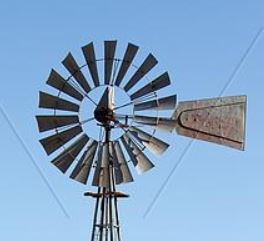
Tennariff School sat just around the corner of the section from their farmhouse, an easy quarter mile walk for her and little sister Rosalyn except on the coldest of days. Barbara was still at home, too young for school. In another year Mary Alice joined her older sister Aileen in New Salem High School. That was a long two mile walk up and down the steep Rutman and Quinney Hills. Aileen was taller and her stride longer, but Mary Alice was faster, and she liked to run up the hills, much to the consternation of her less athletic sister. Aileen would whine from behind, “Wait for me, Mary Alice! Wait for me!”

Mary Alice had little patience for her older sister, who didn’t like the farm and didn’t adjust to farm life. Having no boys to help, Mary Alice was happy to become her father’s helping hand around the farm. She did chores with the animals and hitched the horse to the plow, and learned to work in the field. It wasn’t long before a tractor replaced the horses, but she didn’t mind working with either one. Aileen, on the other hand, had no interest and missed the city life.

The old memories and the feelings that came with them persist long into the dementia of aging. Aileen died nearly twenty years ago, and Rosalyn was too young to do field work until after Mary Alice had moved on to study and work at Western Illinois College and obtain her teaching certificate there, which she used for years to teach in a one room country school. Now, when she can neither farm nor teach nor run, she often tells us of the times when she could. She pictures that sister yelling “Wait for me,” every time she has to get up out of bed, use that walker, and head down the hall.

I’m trying to do my best.

Tags

,

dock at sunset

“Use your hands!” . . . “Use your hands!” . . . “Use your hands!” . . . the therapist said. (He wanted her to stretch out behind her and grab the arms of the chair before sitting down, but he did not say that.)

I am using my hands. I’m holding onto my walker to steady myself. What do you mean? What are you telling me to do? See my hands. Let me show them to you. You can see I’m used to using my hands. See how the fingers are misshapen. The ends of my fingers go every which way. I played the piano and organ for years and years. I took care of children, hundreds of children in the country school, and then first grade at South Grade, then North Grade School. Do you think I’m stupid? I’m using my hands, a lot longer than you’ve used yours.

If I could stretch out my hands and grab your neck, I’d do it! Don’t think I wouldn’t.

Last night I went to see Mama and Daddy. They said things had changed, just as a matter of fact. They didn’t say how they felt about it. Things have changed. I can’t figure out why. What has happened to me? I don’t like it. I saw the baby you would have had if he had lived. He had to grow up there when he couldn’t live here. He said he liked it there. (I think—Jan did have a miscarriage at three months, but Mother can’t be talking about that.)

My souls have tried to fly away. One is staying there with Mama. She died when I was 33, just when I needed her most, trying to raise four children; my husband not staying by my side. Daddy knew what I needed. His mama died when he was four, but then he had his grandma. I never got to know my grandma. Then she died when he was seven, but he had his older sister, then she died of typhoid. Daddy had to stay with neighbors, Bill and Bess Wireman, who were good people. His daddy had to work the mail route around New Salem, and he couldn’t watch the two little ones all day. Then he married Mary Jane Seaborn, and they all got to live together. My happy soul is there with him, my stubborn soul stays in my body, and my cranky soul goes wandering around this place, wherever this is.

You’re supposed know about these things. Who are you? Why don’t you do something? (I’m your son-in-law. You know me. I’m Gary. You’ve known me for 48 years, over half your life.)

I’m not where I’m supposed to be. You can do something. Take care of it. Or are you still a turtle? Slow to move. (I am a turtle. You are a wolf, and we’re both a little crazy.)

Our souls are flying all over the place.

The Litany

Tags

“Oh, it hurts.”

“What am I going to do?”

“You’re killing me.”

“How do I get out of this?”

“I can’t stand it.”

“I can’t take much more.”

“I’ve got to get something done.”

This litany occurs when the pain control runs out, every two to three hours, especially after a walk, a therapy session, a shower, and any other time when the neck brace has to be removed and repositioned. These are hard words for any child to hear coming from Mother, and these are hard words for any mother to say, when she is a proud and independent 92 year old woman who now must wait for the hands of another to help her through unfathomable pain.

That she survived a broken neck in the first place is a marvel. “She won’t survive surgery to correct it,” the doctor advised. Therefore the counsel is to be patient. In three months the healing should be noticeable if it is going to occur at all. Meanwhile, the challenge is to keep a neck brace in position when it is held in place by easily removable Velcro straps, and her exhausted fragmented mind does not understand why it is there in the first place. The brace becomes the target of her anxious, continuously moving fingers, for which no ball or squeeze toy or curious object can substitute. Surgical tape wrapped around the Velcro frustrates her fingers, but they seem to have a canny mind of their own.

dock at sunset

You should see her when she is walking, bent over her walker, determined to go to the destination. Such a picture of resolve is hardly matched by an Olympic athlete. She concentrated on word-search puzzles when she felt up to it, once yesterday and once the day before. For thirty minutes yesterday she sat in the garden, enjoying the flowers and the 90 degree heat that others found unbearable. Then through the night she slept in five minute snatches and could not find a comfortable position.

We take our turns waiting with her, listening, and wondering. What will happen if no one is here by her side?

Watching in the Night

Tags

dock at sunset

My mother died suddenly at age 75 after a brief period of intense illness early one morning. No one else was there except my father. When he was nearly 94 my father died when my brother and I were far away, hiking on the Appalachian Trail, and we were unaware of his several hours of declining life signs. He was living in a nursing home, and the staff called my son, who was able to be present with him. He died, as his death certificate so elegantly phrased it, of “a failure to thrive.” I never spent a night with either of them, when they were seriously ill, although I have spent many nights with other seriously ill people, many of whom were dear to me.

I was not especially close to my father-in-law, although I had plenty of cause to respect him, but Jan and I were with him the hour that he died, after his year dealing with colon cancer in treatments of diminishing effectiveness. He appeared to be comatose when we arrived, but in the last moments of his illness he became alert and agitated. I said to him, “It’s all right, Lyle. You can let go now. We’ll soon be coming after you,” and whether it was the meaning or the tone or something inside himself, he relaxed and soon stopped breathing

Now Jan and I sit with my 92 year old mother-in-law through the second of two nights, staying at her bedside. We no longer fear that she may die at any moment, even though that can happen of course. She fell three days ago, where she had walked hundreds of times before, tripping into her walker and landing hard on her face. She broke a neck vertebra and two more farther down her back. The doctors’ advice ruled out surgery, and they put her in a neck brace that she will probably wear the rest of her days. The vertebra remains in alignment, but a bump or slip or twist could change that without the brace.

She is “banged up” with cuts, bruises, and swelling around her face and broken nose, but she is mostly comfortable until she tries to move, which, naturally, she has to do now and then. We supposed that sooner or later she would fall, possibly breaking the increasingly fragile bones in her legs or hips. She always finds ways to surprise us. What broke was her neck. Somehow she survived it, breaking it just enough to keep living. She doesn’t understand it. She doesn’t like the collar and wants to remove it. How she will keep going, doing what she has to do, and learn how to live with that brace, we do not know.

She has been my mother for 47 years, doing what mothers do, and doing it well. It must be my turn to watch, feel the pain with her when she hurts, and understand more deeply what it means to suffer with someone I love.

The springs that fed the villages

Tags

,

cornfields

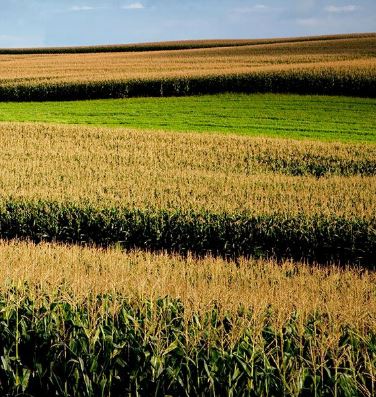
I was one of those boys who spent a lot of my time roaming around the farm. When I wasn’t in school or doing chores, I was usually in the woods or along (or in) the streams, or examining the earth to see what I could find. Since there was evidence of the human occupation of that land for at least 3,000 years or so, there was plenty to find. Rocks of all kinds sat in the landscape, many on the surface, especially around the streams, mostly because the land had been covered by glaciers that had deposited that variety of rocks from a vast distance.

Rocks with special shapes captured my attention. From sandstone to granite, heavy large rocks that had bowls shaped into their surface often served as grinding stones for grains and nuts that were gathered or grown. Hand-sized round rocks with grooves or indentations had a useful life as anything from hammers to shaft-sharpeners. Worked flint came in the form of knives, projectile points, and hide scrapers. Broken shards of pottery showed the workmanship that had once shaped a vessel or an ornament. Rarely did I walk across the land and not find something that had been used by someone long ago.

Where clusters of tools showed up in one place the earth itself often showed the marks of human occupation with berms of soil shaped into circles and rectangles where lodgings had once stood. These remains clustered in three areas, each where a spring still kept the soil moist through summer seasons, even though farmers had for eighty years stripped the land of trees, cultivated, and shaped grass waterways into the middle of those fields, where once those springs had bubbled to the surface.

It impressed me that where my parents, two brothers, and I lived, many hundreds of people had lived for uncounted generations, leaving their marks. Where had they all gone? For only a few years heavy machinery had plowed and prepared those fields, and large barns, cribs, and a house or two had stood, providing a livelihood for a handful of people. For hundreds of years that same land had fed, sheltered, and provided for hundreds, using only what they found there, living simply “off the land.” They had to understand a lot in order to accomplish what they did.

Modern civilization depends on a complexity of specialized and diversified tasks, with a comparatively small number of people providing food for a multitude. Living off the land now means leaving the land behind, but by doing that, we know less and less about what sustains our lives, and more and more about the tiny components of our own specializations. Where is the progress in that?

Driving Robert Mann

Tags

,

Chicago skyline 1970

Returning to Chicago in the fall of 1970, after a year-long internship in Danville, Illinois, I concentrated my attention on my studies, my fellowship (which involved organizing the church-related archives of the seminary), and the immediate neighborhood of the south side. State Representative Robert Mann shocked the democratic machine by declaring his political independence and refusing machine support. They promptly selected a black candidate from the largely black district, but one who promised to be more amenable to party direction. Mann’s record was irreproachable from a liberal reformer perspective, and I decided to spend some of my “free” time volunteering for this new Independent.

We had replaced our 1960 Ford Falcon with a brand new Plymouth Valiant during my internship. When Mann’s campaign team asked for volunteer drivers, who could also provide a car, I volunteered. By that time I knew the south side streets well. I cleared a week of evenings and signed up to drive Representative Mann.

On our first evening Mann noted that their wasn’t quite as much room in the back seat of a Valiant as there was in a Checker Marathon, a first taste of his droll sense of humor. We paid a visit to a meeting of the United Steelworkers on the far south side, and Mann let me listen to a private conversation with Edward `Sadlowski (“oil can Eddie”). Sadlowski eventually led the union to a more active advocacy role during the massive layoffs and transition to overseas manufacturing during the 1980’s and 90’s. Mann, himself an attorney, reminded me that ministers must learn how to keep confidences and I should do that here. I was impressed that they were talking about a future ten to twenty years ahead of events, and how unions should try to prepare for the transition that was coming as major corporations were making plans for replacing and avoiding union contracts.

Small group gatherings in churches, civic organizations, and homes filled the next few nights. Sometimes I had to double park on the street waiting for Mann to finish and move on to the next location. When I found a convenient close parking place, I got to observe Mann’s careful handling of the issues, including facing an opponent whose racial identity matched the majority of the district, but whose political positions did not necessarily match their interests.

On Thursday evening we were driving through a Woodlawn neighborhood, not more than a mile from my apartment when a loud bang and hit to the rear of the car alarmed us both. I just kept driving. When we reached a lighted area a few blocks away, we checked and found a bullet dent in the rear panel. That evening Mann thanked me for the week of transportation, but thought he might need a heavier vehicle in the future, maybe with some bullet-proof glass.

I didn’t drive for him again, but I did vote for him, and he did win the election. Eventually he yielded his position to another independent and African-American candidate.

Too Many Teasets, Never Enough Tea

Tags

cropped-circledance.jpg

The first tea set came from Italy, a poignant reminder from Jan’s brother Rod that he could not come to our wedding because he was serving the U S Navy on a destroyer tender in the Mediterranean that year. He thought of his sister when he shopped on shore leave, and found a white china tea set elaborately decorated with silver vines and flowers. His taste was exquisite, and the set was too pretty to use every day, so it has been prominently displayed wherever we lived, and used for special occasions.

The second tea set came from our seminary neighbors and friends; he had grown up in Thailand and India while his father had served as a missionary. The china teapot was a rich, mottled blue, and the cups small and with no handles, with the white and black figures of pussy willow branches climbing their sides—broadly Asian in inspiration—they easily served us every day and got a lot of use while we thought of ourselves as distant from the world around us but alive in our private garden.

The third tea set was plastic pink and white and a child’s plaything as our daughter went through the terrible two’s, but somehow she settled down to play with her future set before her, among her friends or by herself. The set itself hung around our house for more than two decades until it was replaced by a small, miniature, plain china set that our three granddaughters could use when they held elaborate tea parties, as they dressed to the nines while their grandparents served them as their butler and maid.

We inherited the fourth tea set when my parents died, first my mother, then my father. It came to my house with Father, when he had to leave his own farm home and come to live with us. My mother had chosen the silver tea service as they celebrated their twenty-fifth wedding anniversary, and it served many neighborhood and church group teas from then until they passed their fifty-sixth anniversary and she died unexpectedly.

Now those tea sets sit in their various places, while we enjoy our morning tea, without caffeine, steeped in cups that come from none of the tea sets, but they each have their own history, too. Each marks a special time in our lives that is fondly remembered. When we finally put them away, delivering them to someone else to use, the memories will remain with us, tucked away somewhere inside our brains. Tea and those we love.

Instead of going to the 1968 Democratic National Convention

Tags

,

cropped-chicago-skyline-1970.jpgI made a life-changing choice for the end of August, 1968. When I proposed to Jan in November, 1967, my proposal was not a romantic winner, even though we went to Bloomington’s Miller Park and sat at the edge of the lake. I had almost run into a tree driving through Miller Park, so Jan knew something was on my mind. (She said later she thought I might be breaking up with her.) I ruminated with Jan about the uncertainties of the future. I had just finished several months serving a small rural town congregation, but I had no other job prospects. My own anti-war choices that had placed me in some jeopardy with the Selective Service System and some administrators of Illinois Wesleyan University, but I still resolved to continue in my plan to go to seminary and pursue a career as a minister. At that point I had nothing to offer Jan except the impoverished life of a graduate student with the possibility of a study fellowship and stipend. If the fellowship materialized, we might have a small studio apartment near the University of Chicago, but she would have to find a job to support her own needs.

Whether I could stay out of trouble was not certain, having just had my first interview with an FBI agent, concerning my work with the Students for a Democratic Society, organizing an IWU Symposium on the Vietnam War, and inviting Staughton Lynd, a vigorous opponent of the war, to the campus to speak. At first I didn’t take the veiled threats of the agent and the Dean of Students seriously, but “the times…they were a’changin’.” Who knew what the future held? I just knew my own situation had begun to appear precarious after I had returned my draft card to my local draft office. (Nothing ever came of that action. The members of the local draft board knew me, my seminary plans, and my health disqualification already. ) Would Jan want to marry me when she really considered what she might face in the early days of our marriage, or the later days for that matter?

She said ‘yes.’ Would I want to marry her when she was able to make such a foolish decision? I said ‘yes, definitely.’ We proceeded to make plans to be married toward the end of the next summer, allowing time for Jan to finish her work at the Waterloo, Iowa, YWCA, and for me to make as much money as I could during the summer, painting barns, cribs, and other farm buildings, and working at Arby’s.

Many invitations arrived to come to Chicago to join in demonstrations against the war during the Democratic National Convention. The event promised to mark a momentous turning point in our nation’s history. Our own event promised to make a momentous turning point in our personal history, and who knew how much influence upon others might follow?

We arrived at our apartment in Chicago just a couple of days after the convention and the demonstrations concluded their tormented run.

The Different Dogs of Chicago Politics

Tags

, , ,

Chicago skyline 1970Dick Simpson, a political science professor at University of Illinois Circle Campus in Chicago, called Chicago “the most corrupt city in the country, and Illinois the third most corrupt state” in a February 2012 report for the Chicago Journal. “The truth is that the governor’s mansion and the city council chambers have a far worse crime rate than the worst ghetto in Chicago.” http://chicagoist.com/2012/02/17/dick_simpson_study_says_chicago_is.php

I met Professor Simpson in January of 1969, when he was instrumental in organizing the Independent Precinct Organization, and I was a student at Chicago Theological Seminary. The seminary encouraged students to get involved in churches , community and political organizations, and to engage in cycles of action and reflection (theological and ethical) with other students. I had worked, successively but not successfully, with the Eugene McCarthy and the Hubert Humphrey campaigns in 1968. The Chicago democratic machine held no attraction for me, but independent community-based politics was a different matter. Many local churches were involved in our own 5th Ward and in the 43rd Ward on Chicago’s North side, and it was easy to volunteer.

The first campaign for the IPO backed Bill Singer for Chicago Alderman for the 43rd Ward against the democratic machine. Singer had been a protege of Senator Paul Douglas and a friend of 5th Ward Alderman Leon Despres. I admired both of them, so I signed up to help with the Singer campaign, door to door canvassing and poll watching. Against odds, Singer was successful. The most inspiration, however, came from Dick Simpson, and his encouragement of young people and community residents to take part in the political process, in spite of the cynicism and despair that had gripped most reform efforts during those years. When other organizations gave up (the University Christian Movement among them), and others went underground (Students for a Democratic Society), the IPO offered hope to those of us who were inclined to believe that change would eventually come if we just kept working, even if it was only on a small local scale. Where else would it begin?

Change came, and it didn’t. Dick Simpson ran for alderman and joined the City Council for several years. Other independent candidates for mayor succeeded after Mayor Richard J. Daley’s death, and positive results followed, but corruption has continued to dog Chicago and Illinois politics. I and many others can take inspiration from the dogged determination of people like Dick Simpson, who are still involved and working.