
• About
  • Celebrating our decades…
  • Welcoming all and inclusiveness

chaplinesblog

~ everyday and commonplace parables

chaplinesblog

Tag Archives: Books by Gary Chapman

Grandma Tien Reflects on the Plight of Her Children

24 Sunday May 2015

Posted by chaplines2014 in Books by Gary Chapman, Caring, People

≈ Leave a comment

Tags

Books by Gary Chapman, The River Flows Both Ways, Vietnam and Cambodia

TRFBWcover

If I had known what they would be facing I could never have let them go. How could I have a moment’s peace when my youngest son and oldest grandson faced such dangers?  Not that I expected their journey to be easy. I just didn’t expect them to be at the mercy of men so cruel.

When you and Hue named your boy “Long” I did not know he would have to live up to his dragon name so early in his life. He had to be brave and hold onto his life with stubbornness and patience. You must have been proud to watch him, even as your heart was in your throat. Dragons had been so much a part of our Chinese heritage, and when we came to Vietnam we saw how the people drew strength from this symbol for their land. Even the shape of the country reminded people of a dragon. Yet politics had cleaved the land in two. We yearned for it to be whole, and despaired when we remained a broken and wounded people even after the “reunification.”

Through those days when I did not know what had happened to Phuong and Long, I felt such sadness that they could become dragon people only by leaving their home and struggling to find a way out. I looked into the waters of the river nearby, meditating on the flowing Great Mekong itself, always flowing one way and then another, spreading out into the Cu’u Long, the nine dragons of its delta. Though people have lived long by these waters, along which my children were now treading, they have never stood still. They have always been moving, spreading out, and finding new paths to follow.

One day I heard an old folksong carried on the breeze, sung in the pleasant, tired voice of an old woman like me, my neighbor who had lost several people to the war:      “We will go on living,   Though Mother Mekong     Flows out to sea,   Or turns     back to the setting sun.   We will go on loving,   Though thieves and    aiders   Descend from hills,  Or rains flood down from dark’ning skies.   We will go on working,   Though raging fires   Burn roofs from homes,   Or drought dries the rice paddies.   We will go on singing,   Though endless tears   Fall down our cheeks,      Or strong hands try to shut our mouths.   We will go on. We will go on.   We will go on. We will go on.”

I heard her words as if they were sung on my behalf. I realized that all I had left to do was to look out with longing and with love for the children of my heart. All anyone has to do is to love and cherish the people given to her, if only for the little while that she has them and has sense enough to pray for them.

Bootlegging…the Family Business

23 Saturday May 2015

Posted by chaplines2014 in Books by Gary Chapman, Events, Growing up, Gullibility, Learning from mistakes

≈ Leave a comment

Tags

Books by Gary Chapman, Out of My Hands

OOMH

My Uncle Albert Hunsaker had sold his share in the railroad as it was going bankrupt, and I didn’t know how he was making a living. He and Mary had gotten a divorce. She and the four children still at home continued to live where they had at Yale, but Albert rented a room in an old boarding house nearby with three other guys. Grandpa had suspected that he was making his living by bootlegging, and mentioned it to me, but we did not really know what he was doing. He had lost his car, so he approached me for a ride. He said he had a job over in Indiana. “Could you take me in your Model A?”

I wondered what kind of job he was talking about, but he had helped me get to my jobs years ago, and he was my uncle, so I decided I could drive him where he needed to go. He loaded my car with his “gear and tools,” he called them, and we took off on Route 40 headed east. Meanwhile the Cumberland County sheriff had caught on to his bootlegging operation and came after him. He kept looking back at the road behind us, so I suspected something was wrong. Suddenly he ordered me to turn off the highway onto a dirt road, and he told me to look for a hiding place for the car and ourselves in a gravel pit that was at the end of that road.

“What’s going on?” I yelled at him. “I’m not going to break any laws,” I insisted, but he informed me that I already had. His “gear” included bootlegged liquor and, whether I liked it or not, I was an accessory, and the law would treat me as guilty as he was. We hid ourselves overnight. During the night, while we hid in the dark and didn’t dare even to light a fire, he told me about various trips he had made in recent years. He had carried liquor and made enough to support himself. Sometimes it was over the Canadian border between Detroit and Windsor. More often he carried between Illinois and a club in Indiana. He worked with people connected to the Chicago crime syndicates and Al Capone. He would be in worse trouble if he did not complete this delivery, so I continued the trip with him, and made it back without any further incident. I informed him that I was never going to do that again. “Don’t even think about asking!” I told him.

The River Flows Both Ways: Following the Mekong Out of Vietnam and Cambodia

05 Tuesday May 2015

Posted by chaplines2014 in Books by Gary Chapman, People

≈ Leave a comment

Tags

Books by Gary Chapman, The River Flows Both Ways, Vietnam and Cambodia

TRFBWcoverThe remarkable and poignant stories of Hung Nguy and Hue Nguyen’s family from the 1960’s to the 1980’s, when they moved from Svay Rieng, to Bo Dau, and on to Ho Chi Minh City, then back to the countryside, and finally sought to leave Indochina, are told in The River Flows Both Ways: Following the Mekong Out of Vietnam and Cambodia, written by Gary Chapman and published in October 2014. After five years, a series of failed attempts, imprisonments and refugee camps, three teenage sons finally completed the journey to the United States.

The book is available from https://www.createspace.com/4977913,  http://www.Amazon.com, and your local bookseller.

Members of the Nguy family are interested in other peoples’ experiences related to their experiences in Cambodia and Vietnam, and their emigration, and other published memoirs, reported to chaplinesblog.com, or Email at gchapman@scciowa.edu

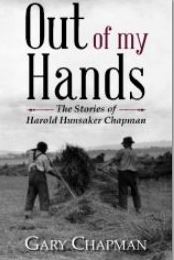
Out of My Hands: The Stories of Harold Hunsaker Chapman

05 Tuesday May 2015

Posted by chaplines2014 in Books by Gary Chapman

≈ Leave a comment

Tags

Books by Gary Chapman, Out of My Hands

OOMHA poignant personal memoir, Out of My Hands presents the story of Harold Chapman, a Jasper County boy, born at Yale, Illinois, in 1911, whose difficulties begin in the grip of one of the worst influenza outbreaks in history.

With his mother dead, seven-year-old Harold must take on the care of his siblings—who soon increase in number when his father and the nanny he hired to help them produce a seventh, then an eighth, child. But tuberculosis and a disastrous move to eastern Colorado weaken Harold’s father, leaving Harold responsible for getting the farming and ranching work done.

Extended family, friends, and community always come to the aid of Harold’s struggling family, and Harold’s maternal grandparents play a significant role in their lives, instilling values and imparting the skills the children will need to survive before and during the Great Depression.

Harold becomes a breadwinner early in life and as a teenager works at a gas station, a repair shop, and a dairy farm as well as in the cornfields and hayfields of Illinois doing menial labor.

An often-humorous tale of hope and perseverance, Out of My Hands was written by Harold’s son, Gary Chapman, based on Harold’s first-person stories about growing up, helping his family, and overcoming life’s inevitable obstacles.

Available from Create Space Publishers, http://www.createspace.com/4876050 , http://www.Amazon.com, and your local bookseller.

Back Cover Summary: Based on his stories about growing up before and during the Great Depression, Out of My Hands begins with Harold Chapman as a young boy whose life is turned upside down when his mother falls victim to the influenza epidemic sweeping the nation.

Charged with helping raise his brothers and sisters, Harold finds himself and his family shuffled from one home to another, from the rich fields of Jasper County, Illinois, to the dusty ranches of eastern Colorado and back.

After branching out on his own at the age of fourteen, Harold scrapes by for years working hard at various jobs…especially after he meets Vena, the girl of his dreams.

Years of waiting, working to secure enough income to provide for her, and respectfully courting her finally draw near to the time of their marriage, when Harold discovers that, no matter how prepared you think you are, there are always more obstacles to overcome in life.

Lessons on how to keep a skunk from spraying you

27 Monday Apr 2015

Posted by chaplines2014 in Books by Gary Chapman, Growing up, Gullibility, Learning from mistakes

≈ Leave a comment

Tags

Books by Gary Chapman, Out of My Hands

OOMH

Walter Wehmeyer and Gerald Golden sat behind me at school, which meant they were a grade or two ahead of me. They were always bragging about something they did or knew how to do.  One day they were talking on the playground about how they were able to disarm skunks.  There was one sure way to keep a skunk from spraying you, they said.  You have to approach very slowly and carefully, not doing anything to scare it, talking softly and all friendly-like. Then you could use a pole to lift the skunk’s back legs off the ground, so the skunk couldn’t use its scent sack to spray you. Then you could do anything you wanted with it.

Later I took the bait and tried out their advice. There was an old broomstick in the shed. Skunks often nosed through the garbage pile in the corner of our yard. We dumped peelings and bones and other garbage there. I snuck up while a skunk was poking through the garbage and eating.  I got that stick under its back legs and lifted it up quickly. For the split second that the skunk’s feet were still in the air, the air filled with the most horrid stench you can imagine. I could stand the strong scent of a skunk from a distance, but up close it took my breath away. I thought I’d die, and mostly I wanted to.

Bonnie (my stepmother) set up a galvanized tub in the yard. My sister and brother took turns hauling buckets of hot water from the stove reservoir, and Bonnie poured on the strong lye laundry soap, but it didn’t help much. The Jenkins gave Bonnie some tomato juice they had canned, and made me wash with it, but I couldn’t tell that it made any difference. We burned my clothes, so I only had one outfit left to wear.  Several days passed before I was allowed to return to school, only to face smirks from Walt and Jerry.

October 16, 1838, in Red Wolf’s Day Log

28 Saturday Mar 2015

Posted by chaplines2014 in Books by Gary Chapman, Cherokee history, Events

≈ Leave a comment

Tags

Books by Gary Chapman, Our Land! Our People!, The Trail of Tears

Cherokee Star

This morning at sunrise a procession of our people moved slowly and silently to the Tennessee River. Below the head of the Great Bear we dipped in the water and cleansed ourselves. Some of the women elders shed tears, knowing they will never return to this land of our ancestors.

Father tells me that we will travel several days along the river. After we leave it far behind, it will curve around so we will cross it once again in central Tennessee. Today feels like the day we have been preparing for all my life, when we leave our land behind. We embark on a long journey to a new land to call our own. Will it be a Promised Land? Will the Great Spirit provide for us as we wander through the wilderness? Will many of us die on the way?

As I watched people the last three days, I could tell that a lot of our people are weak and sick. Measles, whooping cough, bloody bowels are among the sicknesses that still are showing up. Several of us are just weak and worn out from being sick, and not having enough good food and shelter. Many of us do not have strength for such a journey. It is not a good beginning.

Grandfather was with the lead wagons today. Some people were slow to get underway, and Udoda, Jack, and even the soldiers came back and forth trying to get the slowest ones started. Uloghi Jennie—I can’t call her Uji yet—, the children, Ezekiel, Will and I are still at the tail. I began to feel impatient with those who were slow to move, because they made us wait too.

The wagon path on the south side of the river is sometimes in sight of the water. Sometimes the path moves up the mountainside into rocky areas and brush under the trees. The mountains are steep on the other side of the river. With the rocky narrow road and slow start we barely made four miles today. We cannot see the Great Bear’s head anymore.

August 3, 1838, on Lookout Mountain South of Ross’s Landing

20 Friday Mar 2015

Posted by chaplines2014 in Books by Gary Chapman, Cherokee history

≈ Leave a comment

Tags

Books by Gary Chapman, Our Land! Our People!, The Trail of Tears

Cherokee Star

Will and Little John picked their way up the vertical climb through the rocks, brambles, and vines, and between the trees that managed to keep a foothold. The sun was setting in the west and cast long shadows across the mountainside.  When they came to a flat rock sheltered by an angular boulder at its side, they decided they had gone far enough for the day, sat down and looked behind them. The wide Tennessee River snaked down from the north, flowing toward the base of the mountain, and abruptly turned west to flow between the mountains to their left. They could see all the way down to the landing in the distance, where men were trying to herd some balky, mixed breed cattle onto the ferry for the trip across the river, but they could only imagine the herding calls and the words they were using.  Still farther upriver one of the great barges sat tied to moorings at the riverside, and it looked like some of the housing structures built so recently atop it were already being dismantled after the decision not to depart by boat.

“Those cows don’t want to cross the river any more than our people do,” Will said.

“Can’t blame ‘em. They aren’t used to feeling the world rock underneath their feet either. But it sure is a pretty view from up here.”

They sat quietly for a while, then pulled out some of the hard bread and dried meat they had packed to chew on, and rolled out their bedding as the darkness continued to descend. Only a few strands of high cirrus clouds reflected the changing red hues of the sunset before the sky itself began to darken into deeper blue and finally black.

The evening was still hot, and the rocks radiated stored heat from the summer sun, but soon Little John was complaining of the chill and wrapped himself tighter into his blanket.

“It’s not a bit cold, Lil’ John,” Will said, but when he held his hand to Little John’s forehead, he could feel the fever that was bringing on the chills. “You caught somethin’.  We didn’t get away soon enough, I’m fraid.”  The shivering continued, until finally Will lay down beside Little John and held his own blanket around him, until his shaking subsided, and they had both fallen asleep, exhausted from the long day’s travel. A few times in the night Little John’s rasping and coughing brought them both awake again, but not for long, and sometime in the night Little John’s fever broke and he was drenched in sweat as if he had been running in the midday sun.

May,1833, at the Bell General Store, Coosawattee Town

17 Tuesday Mar 2015

Posted by chaplines2014 in Books by Gary Chapman, Cherokee history

≈ Leave a comment

Tags

Books by Gary Chapman, Our Land! Our People!, The Trail of Tears

Cherokee Nation laurel and starDavid stood behind the counter with his hands in his pockets, looking uncomfortable, and wishing he was working in the field instead of listening to several angry and raucous men.

“What does your brother think he’s doing, joining the protest against Chief Ross at Council?” Young Turkey said, louder than necessary in the small store cabin.

“Well, what do you expect him to do?”  Jack Daugherty yelled. “Ross is a dreamer, but he doesn’t see the plain truth staring back at him. We don’t stand a chance of keeping our nation together here. They’re picking us off four and five at a time, people seizing the house and land as soon as one of us leaves to go hunting, or to visit a friend. We could go home right now, and find our wives and children kicked out and crying.”

George Arnold spoke more evenly, trying to calm the waters.  “Even Ross’ brother Andrew, and his nephew Cooley disagree with his position. Major Ridge spelled out the whole story at the Council. He went into great detail and made the case. So I don’t blame Jack for signing the petition asking Ross to explain himself and stop delaying. We’ve got to get the best deal we can, before we can’t make a deal at all.”

“Wasn’t Chief Ross trying to do that when he went to Washington? I heard he tried to get twenty million at least, since there’s that much gold in the mountains, let alone the value of the land,” said John Otterlifter as he tipped the chair he was sitting in, balancing on the back two legs.

Quickly Jim Stone slipped in, “Then why won’t he admit it and get it out in the open?”

“He’s afraid of losing the support of most of the fullbloods, I say.”

“He’s not going to make us leave without a fight. He’s not going to settle for a pittance like his brother, either.”

“We’re not going to fight. Ross is no fighter. Can’t you see that? Ask Black Hawk and the Sauk tribe how much good it did them to fight out in Illinois. I just don’t see why Ross doesn’t knuckle down and negotiate a good price. He knows how to make a bargain. If he can’t, get his brother Lewis to do it. He could dicker the shell off a turtle. ”

“You’re much too quick to give up.”

“Why did Jack and the others agree to let Ross wait until the October meeting to explain himself?

“They don’t know what to do either.”

Little Wolf looked from man to man as they responded so fast to each other. He hadn’t heard men talk so quickly to each other before, even interrupting each other, and not allowing one man to finish before another spoke. It was confusing. Why were they so angry with each other?

Finally there was a quiet moment and several of the men were looking at David. “I don’t know what to tell you. I’ve tried to stay out of it, and I haven’t had a chance to talk to my brother. I think everyone is just trying to do the best job they can, and time is running out.  Now, I’m going to go home to Allie, and try to explain to her what’s going on, when I don’t know myself.”

He started blowing out the oil lamps, and putting away the record book, and making it clear that it was time to close the store. “You can stay and talk as long as you want, but I don’t know what good it’s going to do us. I know it won’t help if we come to blows. Fighting each other is the last thing we need at a time like this.” The men were headed toward the door, and David had Little John’s hand in his own.  Soon they were walking toward home.[1]

“Why is everyone so mad all the time?” Little Wolf asked his father.

“I think it’s because no one knows exactly what to do. When people are afraid and don’t know where to turn, they get angry and upset. Instead we should keep alert and watchful, like the owl and the hawk, to see what’s happening and when to take to wing. We have to see the whole view like the eagle, and every little thing that happens like the hawk. If we fuss with each other and don’t use our brains, we’ll act more like frightened mice or rabbits, and fall prey to people who would hurt us.”

[1] John Ehle, Trail of Tears, p. 265

Thank you, Hue Thi Nguyen!

21 Saturday Feb 2015

Posted by chaplines2014 in Books by Gary Chapman, Death, People

≈ Leave a comment

Tags

Books by Gary Chapman, The River Flows Both Ways, Vietnam and Cambodia

TRFBWcover

Who could imagine that the decisions of a woman in Vietnam, during and within a few years after the war, would have such a profound impact on our lives? The decisions that Hue made led a decade later to a young man named Au entering our lives as a dancer and the dance partner of our daughter Alicia as they studied at Illinois State University. He brought an amazing story of hardship, endurance, and perseverance, that was matched by his extraordinary determination to do well in his studies, his work, his willingness to tackle any challenges, his open-heartedness, and his love of family. They married in 1990 just before Au’s first return to Vietnam, with his brother Long, to see his mother and grandmother, and to reassure them that their difficult decisions had been worth the sacrifices they had made.

In the next five years came our three wonderful grand-daughters, who have each grown up in the security of parents who have been devoted to their nurture and the development of their minds, hearts, and talents with a depth that few children have known.

We owe a lot to Au, computer and communications technician that he is, and cook, repairman, hunter, painter, martial artist, fisherman, runner, dog-lover, care-giver, mechanic, audio-visual specialist, volunteer….husband, son-in-law, father, son.

Thank you, Hue Thi Nguyen, for the decisions and sacrifices that you made, and for the life that you led. May you enjoy the blessings of heaven forever.   Hue Thi Nguyen, 1950-2015.

Hue decides to try again to get Au out

20 Friday Feb 2015

Posted by chaplines2014 in Books by Gary Chapman, Events, People

≈ Leave a comment

Tags

Books by Gary Chapman, The River Flows Both Ways, Vietnam and Cambodia

TRFBWcover

Before making any more decisions about leaving, Hue decided to wait to hear from Phuong and Long to make certain that they had been able to emigrate. The weeks following the return to Go Dau felt longer and longer as they waited for word that Phuong and Long had made their way beyond the refugee camps in Thailand. Food and money were scarce, and hope itself became harder to find. Finally a letter from the United States arrived, and they celebrated the news that Phuong and Long were safe and secure there.

Hue decided to find Aunt Phan again to see what kind of plan of escape still made sense. Aunt Phan had a son, Trai, and his wife, Lien, and their two little boys named Anh and Ling. Trai and Lien were restless and eager to leave. They all began to search for a way out. They knew that smaller numbers would have a better chance. Girls would have a harder time making the journey, especially the journey on foot through the jungle, if that was the only way to escape.

News of families trying to escape by sea alarmed everyone, and the government published horror stories of families lost at sea, turned away at foreign ports and forced to return to Vietnam, and starving and dying of thirst. They wanted to discourage people from trying to leave. The dangers of the jungle and war in the west were frightful enough. The family had no experience with the sea, so only the land escape route made any sense. But what chance did they have to make it out of Cambodia? Civil war was raging on the western frontier. The Vietnamese Army was in charge of most of the route, and fewer people would be able to make their way through the checkpoints since they were firmly in control. Could any of them really go on that journey with Trai and Lien, people they barely knew?

Who would try to make the journey? When they weighed and considered everything, only Au had a good prospect of making it out successfully. Could they send him by himself? Hue finally decided to send Au with Aunt Phai’s son and his family. Au would soon be thirteen. He would have to cross Cambodia almost on his own, just in company with his older cousins, supposedly helping them with their little children.

Grandma Tien and Hue had a hard time saying goodbye to Au.  They felt certain that this was the last time that they would see him while either of them lived. He and Muoi were born just two months apart, and he was both son and grandson to Tien. With the situation in Vietnam growing more desperate week by week, and all the troubles they had seen, how could they keep him with them? He needed a chance to live a better life than he would face in Vietnam.

At the end of the calendar year, after farmers were harvesting the long season rice, Hue took Au to Svay Rieng, where Au climbed on board a truck used for smuggling.  She paid the smuggler the money he required, told Au that she was proud of him and knew he would succeed, and gave him a parting hug and kiss. The smuggler had his workers load large bags of rice, each weighing about one hundred kilos, onto the bed of the truck. A large piece of plywood in the center of the truck bed allowed a small open space for people to sit underneath, so sacks of rice could be stacked on top as well as on the sides of the space. Au and Trai’s family of four crammed themselves into the smuggling space. Au did not know his cousins; he did not remember meeting them before, but he soon became familiar with their smells and sounds and the feel of their bodies around him. The truck had no shock absorbers, so they became sore from riding with little room even to wiggle, although the two little children did a lot of wiggling. Confined in such a small, dark, hot space, jostled this way and that, they all felt like chunks of meat thrown into a lidded wok with frying rice.

← Older posts
Newer posts →

Subscribe

  • Entries (RSS)
  • Comments (RSS)

Archives

  • February 2022
  • May 2020
  • October 2018
  • December 2017
  • November 2017
  • October 2017
  • June 2017
  • April 2017
  • March 2017
  • February 2017
  • January 2017
  • November 2016
  • October 2016
  • September 2016
  • August 2016
  • July 2016
  • June 2016
  • May 2016
  • April 2016
  • March 2016
  • February 2016
  • January 2016
  • December 2015
  • November 2015
  • October 2015
  • September 2015
  • August 2015
  • July 2015
  • June 2015
  • May 2015
  • April 2015
  • March 2015
  • February 2015
  • January 2015
  • December 2014
  • November 2014
  • October 2014

Categories

  • beach
  • Books by Gary Chapman
  • canoeing
  • Caring
  • Cherokee history
  • Church
  • Citizenship
  • Death
  • Disabilities
  • Events
  • Faith
  • Farm
  • fighting fires
  • Forest
  • Garden
  • Growing up
  • Gullibility
  • guns
  • Health
  • Hiking
  • House
  • Innocence
  • Learning from mistakes
  • Life along the River
  • Miracles
  • Nature
  • Patience
  • People
  • Prayer
  • Racial Prejudice
  • rafting
  • Running
  • Seasons
  • Small town life
  • Suffering
  • Travel
  • Uncategorized
  • Vehicles
  • Volunteering
  • Words
  • Yard

Meta

  • Create account
  • Log in

Blog at WordPress.com.

Privacy & Cookies: This site uses cookies. By continuing to use this website, you agree to their use.
To find out more, including how to control cookies, see here: Cookie Policy
  • Subscribe Subscribed
    • chaplinesblog
    • Join 71 other subscribers
    • Already have a WordPress.com account? Log in now.
    • chaplinesblog
    • Subscribe Subscribed
    • Sign up
    • Log in
    • Report this content
    • View site in Reader
    • Manage subscriptions
    • Collapse this bar
 

Loading Comments...