• About
  • Celebrating our decades…
  • Welcoming all and inclusiveness

chaplinesblog

~ everyday and commonplace parables

chaplinesblog

Tag Archives: Memories

Lake Michigan dunes reverie

21 Friday Aug 2015

Posted by chaplines2014 in beach, Nature

≈ Leave a comment

Tags

Memories, Serendipity

lakeshore

The forecast called for rain for most of the six days we stayed in the Michiana dunes along the southeast shore of Lake Michigan, but rain only fell during the first night, and the next morning dawned fresh and breezy. When we arrived on the shore that first morning the waves that greeted us the previous afternoon continued to crash against the shore loudly and strongly, enough for some body surfing for those not minding the chill. Every day afterward the wind slowed, the waves calmed, the water warmed, the sky cleared, until the last two days provided a lake so still that the lapping against the shore made barely a whisper. The temperatures every day were warm enough for a first week in August not to need a shirt or wrap, and cool enough in the reflected sunrays against the white sand never to feel oppressively hot. Out of twenty-five years of spending a week or two on the dune area beaches, I do not remember such a stretch of opportunities for beachcombing, resting, reading, swimming, sunbathing, or anything else we were prepared to do in or near the water.

Not a trace of alewives showed up on the beach, which in the early years of our visits met us in smelly die-off by the thousands. They hadn’t invaded the Great Lakes until the St. Lawrence Seaway made their incursion from the Atlantic possible in the 1950’s, when I paid my first visit, but the lake trout had also disappeared through over-fishing, so the alewives didn’t have any predators until Coho and Chinook salmon were brought into Lake Michigan. As those game fish became established, the alewife die-off slowly subsided, and the beaches depended on the cleanliness of their human occupants. Apart from an occasional piece of trash arriving with the waves, the Michiana shores were clean, and the users kept them so. An active storm season had left evidence along the tide zone, where a strip of heavier rocks interrupted the smooth sand of the beach. That rocky border, from two to ten feet wide, made the approach to the water a little painful for those of us with tender feet. We either walked gingerly through that zone, or we wore our sandals and beach slippers into the water. Either way the journey was worth it, as the lake water became unusually clear and warm during those days.

Even in such mild weather, every day proved different for those of us living on the beach. From noisy to nearly silent, from heavy waves to barely a ripple, from cloudy to clear skies, from cold water to warm, each day brought its variations. Never was it easy to leave the beach on the last day of our scheduled time. This year brought no difference at all in that respect.
Persistent Welcomers

19 Wednesday Aug 2015

Posted by chaplines2014 in Farm, Growing up, House, Seasons

≈ Leave a comment

Tags

A License to Preach, Memories, Serendipity

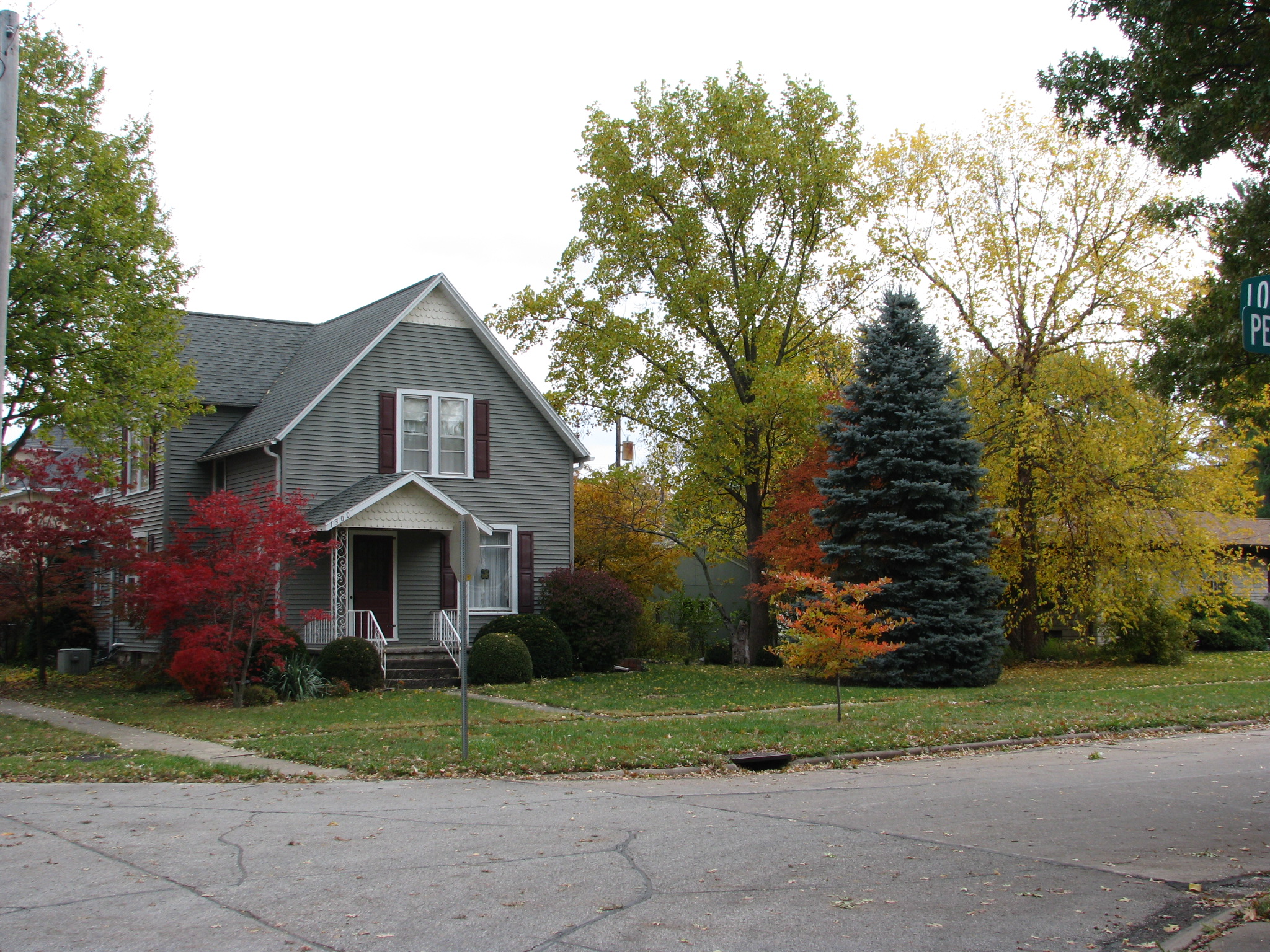
Burlington house in fall

They welcomed us in great numbers when we arrived in August, 1988. Throughout the fall they kept coming, sometimes pestering us to the point that we wondered whether we would ever be rid of their nuisance. Even in January they kept moving, popping up at odd times and places, such as on my collar during a children’s sermon at a Sunday morning service. If I had been quick-witted, I would have turned that moment into an object lesson on persistence. When winter came in its fullness of ice and snow, they still persisted, although I saw only one every day or so. Boxelder bugs.

As a child I became acquainted with them. They were more numerous and lasted longer than lightning bugs, so when it was no longer possible to collect the more illuminating lightning bugs, I turned my acquisitive attention to boxelders, seemingly harmless, and only slightly stinky, but certainly persistent and ubiquitous. The worst weather in heat and dryness brought out the best in them, but they made themselves known even in cold and icy times in the warm comfort of the house. In Burlington the bugs had occupied the soft maple trees that grew along the berm immediately north of our house. On the farm they had occupied the namesake boxelder trees that grew along the river bank not far from the house. In both cases they moved inside when they decided the conditions were better there. For whatever reason the bugs left our Burlington house the next spring and have never returned.

I want such long-lasting determination, such unexpected perseverance, for my faith. When I am caught in mundane, day-to-day tasks that seem to drag on endlessly, I need the unexpected reappearances of joy and surprise that persist in spite of all I do to suppress them or tame them or forget about them. When I am overcome by the scale of problems that seem insurmountable, I need the confident will to see a victory that gives meaning to my feeble and uncertain movements. Sometimes such faith does appear in solitary heroic figures battling all odds. Sometimes such faith comes in masses of individuals filling every corner and space with their relentless march of life conquering death. Even such lowly creatures as the boxelder bug encourage us by the nuisance of their example.

Alone in the Dark

09 Sunday Aug 2015

Posted by chaplines2014 in Events, Growing up, Gullibility, Learning from mistakes, Running

≈ Leave a comment

Tags

A License to Preach, Community Development, Life in the City, Memories, Urban Renewal

Chicago Old Town

In 1969, working for the Independent Precinct Organization [IPO]in Chicago’s north side Lincoln Park neighborhood, we canvassed door to door to build support for community-based initiatives instead of the urban renewal plans of the democratic machine and Mayor Richard J. Daley’s administration. The city plan called for bulldozing entire blocks of housing, displacing hundreds of poor and elderly families of many races and ethnic backgrounds, and building apartment buildings and condominiums that would cater to wealthy, upper class, largely white people. The area needed rehabilitation and preservation, from our perspective, not destruction and replacement. In canvassing , we met many wonderful people of various backgrounds who would be forced to move, priced out of the neighborhood.

We organized meetings, rallies, and took part in city-sponsored meetings that were supposed to give the people a voice, but largely consisted of city spokesmen telling the residents what was going to happen, whether they liked it or not. The city’s only authentic German beer garden became a center of attention, when the city planners decided it had to go the way of every other building of historical, ethnic, or cultural significance in the urban renewal area. What would the new neighborhood look like? An uninspired collection of modern boxes of uniform size, shape, and costliness, with little attention to amenities that existed in the previous community, because Lincoln Park would be considered a residential extension of the downtown. “Little boxes…full of [just more expensive] ticky-tacky,” anyone?

One night I had to park three blocks from the meeting –place at the edge of an already bull-dozed three-block strip, where the citizens were confronting city planners. Parking was scarce because we had generated a lot of interest in the meeting. The people present were angry and eloquent, expressing their grief at the prospect of losing homes and businesses and facing an uncertain future with below-replacement value appraisals and no help in relocation. The IPO presented alternative plans and proposals that had the backing of much of the resident community. When the meeting ended we felt that we had done well in getting both citizen-involvement and the important media attention.

I walked out of the building after a brief feedback session with my co-volunteers, needing to get back to my apartment on the south side and ready for seminary coursework the next day. The street was empty and dark; many of the street lights were removed with the destruction. I didn’t see anyone around, until I had walked a block, but then I heard from a distance when a gang of Spanish Disciples had spotted me. I didn’t understand all that they were saying, but I knew from a few words and phrases that they had recognized a lone target for their resentments and rage when they saw me. It didn’t matter that I thought I was serving their interests in being there. Their street sophistication did not extend to political disputes between the city and local white liberals.

They were coming at a run, and I decided that I needed to be faster, and so I was. I unlocked my car, jumped in, and sped off just as they were arriving. I didn’t wait to see whether I could persuade them that I was a good guy just trying to help out.

I returned to that neighborhood, continued to canvass, participated in other meetings and demonstrations, but I made sure that I was not alone in the dark after that.

Not So Finger-lickin’ Good

05 Wednesday Aug 2015

Posted by chaplines2014 in Learning from mistakes, People, Travel

≈ Leave a comment

Tags

Memories

Monkeys see, hear, speak no evil, Bangra.com

We were traveling in Europe as a family—Jan, Alicia, Nathan, and I. London, Amsterdam, Paris, Geneva, Frankfurt, and assorted smaller towns in Germany where we rented a small VW Polo so I could enjoy driving on the Autobahn. This was Europe on $25 a day when the dollar was worth more anyway, and beds and breakfasts, hostels, and pensions provided inexpensive overnight accommodations for families.

I was studying the relationship between church and state for two months, so not every stop proved interesting to my minor children, although they seemed to appreciate churches in general, most of which provided stately, beautiful, and immense echo chambers.

One area where I knew we would have to compromise occasionally involved food, considering the fact that my children tended to be picky eaters, one in particular, though she is not so picky anymore in her adulthood, I must hasten to add. England to me meant steak and kidney pie, shepherd’s pie, and stock pots. Only to me. To the rest of the family it meant the accommodation of one stop at McDonald’s.

Amsterdam meant raw ground meat. Only to me and my flirtation with Mad Cow disease. There we began the tour of different national variations of pizza, especially of the Four Season variety, with four different items in the four quarters of the pizza. That worked well in Paris and Geneva, but in Bacharach, Germany, the Four Seasons pizza that included tuna, peas, sardines, and squid did not go over so well with the rest of the family. Fortunately they were placated with Brats mit Brotchen at the next stop.

It was the Geneva visit to Colonel Sanders’ Kentucky Fried Chicken that caused the most intense reaction from the local clientele. We had not observed that the advertising slogan “Finger Lickin’ Good” was noticeably absent in French, German, or any other language. Believing that we knew how to eat fried chicken, since it was after all a conspicuously American restaurant with an all-too-familiar menu, the four of us proceeded to eat the chicken with our fingers. Every one of the other customers began to stare at us , and there were unnervingly many customers. As our nearest neighbor at the next table informed us, “It is extremely impolite and unsanitary to eat with your fingers.” We must have thought that we had entered Geneva out of a time warp from the Fifteenth Century when they were not so fastidious, from their point of view. We rapidly adapted to knife and fork consumption of the rest of our meal.

The Wild Life at Wind Cave and Custer Parks

04 Tuesday Aug 2015

Posted by chaplines2014 in Learning from mistakes, Nature, People, Travel

≈ Leave a comment

Tags

Memories, Serendipity

IMG_7131

Driving through nearby Wind Cave National Park into Custer State Park for a circuit of its forty mile Wildlife Loop has become a frequent part of our sojourns at the Mammoth Site in Hot Springs at the southern reaches of the Black Hills. Both parks have extensive herds of American bison as well as populations of elk, pronghorn, white-tail and mule deer, prairie dogs, marmots, mountain goats, and bighorn sheep. Custer has its burros that became “wild” after their usefulness as beasts of burden officially ended, but the visitors offering food don’t have any trouble getting them to eat out of their hands. We bring carrots, although we often see less healthy snacks offered. The burros are not fussy.

This season we also saw a prairie rattlesnake at the edge of a road, but still no cougars, which are numbered among the inhabitants of the parks.

Two years ago Wind Cave obtained a large additional acreage of old homestead tracts, long since merged into ranch pasturelands, but still containing some of the pioneer buildings, and at least one bison jump, used by Native Americans to herd bison to their doom over the edge of a cliff in centuries past, when several captured animals provided food, tools, clothing, fuel, medicine, and shelter for many native peoples. A ranger took a few of us on a preview tour of that locale, and we look forward to the day when it will be open for others to appreciate.

The bison herds here are among the first to be restored after the animals were nearly extinct. People purposefully destroyed these majestic and well-adapted animals by the millions to make way for cattle or just for their own amusement. It makes us wonder about human intelligence and character. We could watch their behaviors for hours. Part of the herd is usually on the move even when most of the bison are resting as they graze over large territories, never depleting their resources.

One magnificent old bull walks across the road and stops both lanes of traffic, then he walks down the middle of the road as cars slowly pass, then he stops one lane of traffic for a full minute, then he moves into the other lane to stop it for another minute. A loud motorcycle tries to pass, sounding like another bull, and he challenges it with the hoof-scraping gesture and his characteristic bellow, then he snorts and turns his back and moves on. He knows what he is doing.

One bison cow nurses her calf until she decides it has had enough. She turns in circles while the calf tries to reach for more. The calf persists until the cow finally lies down and the calf has to go to another cow if he wants more. It tries, but that cow knows what it is doing, and she imitates the first cow’s behavior. Finally the calf has to be satisfied with what it already has.

We looked for the bison herd on our first visit in 1976, but didn’t see any. Now we usually check with the rangers for their last observed location, and head for it, but usually we find them whether we have good information of not. We have learned to be patient in the quest and we are rewarded.

Drinking from the Common Cup

30 Thursday Jul 2015

Posted by chaplines2014 in Farm, Growing up

≈ Leave a comment

Tags

Memories

farm windmill

On a hot summer day, when farm work left us dirty, tired, and thirsty, nothing was more refreshing than a drink at the old well pump. A hand pump brought up cold water from a hundred feet deep where an underground river ran sixty degrees cold and seemingly inexhaustible. The tall windmill that stood above the well had served for many years, but it was disconnected in the twelve years of my childhood and youth there. There was still plenty of water available for a water fight or filling the tank nearby where we kept the turtles for a time, and sometimes took a dip ourselves.

One tin cup hung from a hook on the steel windmill frame, and it served as our common cup, in the years when we did not fear each other’s germs, but gladly took our turns for several full to overflowing cups. It was a fitting symbol of everything we shared in those days, including the work that put most of the food on our table from the garden, fields, and feedlots. No bottled water or soda pop or even fresh-squeezed country fair lemonade tasted as good or quenched thirsts as well as the water from that well.

Later a deeper well and a pressure tank was needed to sustain a constant supply for the growing herds of cows and pigs. That well was connected to a hydrant at the same location, and its lever was easy enough to open and didn’t require any pumping by hand. And that water, just as laden with iron as the first, and just as cold, served us well also, but there was a magic to that old hand pump that the new system lacked. The water splashed out of that old pump in flagrant gushes that responded to the force of our muscles, and always filled the cup in one big splash, washing our feet as well. The new well nearly knocked the cup out of our hands, but never filled it to the brim. The uncontrollable pressure gave us a shower as well, much higher than the feet. No matter, I suppose. The shower was often as welcome as thirst quenched. And the same battered tin cup still served.


Bruce and Cathy Larson opened the door.

01 Wednesday Apr 2015

Posted by chaplines2014 in Church, Death, People, Seasons

≈ Leave a comment

Tags

Community Development, events, Life in the City, Memories

Luna moth

Bruce and Cathy Larson opened their door… to their neighbors who were trying to maintain their homes in Chicago’s Lincoln Park neighborhood in the face of a major urban renewal project that would wipe out many blocks of moderate income housing and replace them with high income condominiums. They volunteered to work for the Independent Precinct Organization’s efforts to stand with these neighbors and protect their homes and investments in their neighborhood.

Bruce and Cathy opened their door… to me as I went door-to-door canvassing for support for the IPO’s project and resistance to the city plans. They served me herbal tea each time I stopped to talk with them. They loved their multi-cultural neighborhood, interesting people, old houses, and Chicago’s only authentic beer garden. They found the city plans to be disappointing and discriminatory, destroying a a rich culture and replacing it with a moneyed elite.

Bruce and Cathy opened their door…  to the Lutheran congregation they served by choice at the same time that they opened their congregation to  commitments to service with their Latin and African American neighbors, young and old, their old union-organizer, artistic,  political dissident, and nonconformist folks of all stripes.

Many people came in and out of their doors. I was privileged to be among them for several months.

One night, after they put their two small children to bed,  they opened their door…  to someone they probably knew, or whom they believed they should know, as Jesus would have opened the door, or as Jesus came to them in the form of someone in need. That night Bruce and Cathy were stabbed to death in their living room.

As far as I know, their murders, back in 1969, remain unsolved. Holy Week seems a good time to remember such a fine couple in Christian ministry, who opened the door of my heart to the needs of people I had not met before,  and to the sacrifices that sometimes are required in the attempts to  serve.

Newer posts →

Subscribe

  • Entries (RSS)
  • Comments (RSS)

Archives

  • February 2022
  • May 2020
  • October 2018
  • December 2017
  • November 2017
  • October 2017
  • June 2017
  • April 2017
  • March 2017
  • February 2017
  • January 2017
  • November 2016
  • October 2016
  • September 2016
  • August 2016
  • July 2016
  • June 2016
  • May 2016
  • April 2016
  • March 2016
  • February 2016
  • January 2016
  • December 2015
  • November 2015
  • October 2015
  • September 2015
  • August 2015
  • July 2015
  • June 2015
  • May 2015
  • April 2015
  • March 2015
  • February 2015
  • January 2015
  • December 2014
  • November 2014
  • October 2014

Categories

  • beach
  • Books by Gary Chapman
  • canoeing
  • Caring
  • Cherokee history
  • Church
  • Citizenship
  • Death
  • Disabilities
  • Events
  • Faith
  • Farm
  • fighting fires
  • Forest
  • Garden
  • Growing up
  • Gullibility
  • guns
  • Health
  • Hiking
  • House
  • Innocence
  • Learning from mistakes
  • Life along the River
  • Miracles
  • Nature
  • Patience
  • People
  • Prayer
  • Racial Prejudice
  • rafting
  • Running
  • Seasons
  • Small town life
  • Suffering
  • Travel
  • Uncategorized
  • Vehicles
  • Volunteering
  • Words
  • Yard

Meta

  • Create account
  • Log in

Blog at WordPress.com.

Privacy & Cookies: This site uses cookies. By continuing to use this website, you agree to their use.
To find out more, including how to control cookies, see here: Cookie Policy
  • Subscribe Subscribed
    • chaplinesblog
    • Join 71 other subscribers
    • Already have a WordPress.com account? Log in now.
    • chaplinesblog
    • Subscribe Subscribed
    • Sign up
    • Log in
    • Report this content
    • View site in Reader
    • Manage subscriptions
    • Collapse this bar
 

Loading Comments...