• About
  • Celebrating our decades…
  • Welcoming all and inclusiveness

chaplinesblog

~ everyday and commonplace parables

chaplinesblog

Tag Archives: Serendipity

Check the Supporting Structure

07 Friday Aug 2015

Posted by chaplines2014 in House, Learning from mistakes, Prayer

≈ Leave a comment

Tags

Serendipity

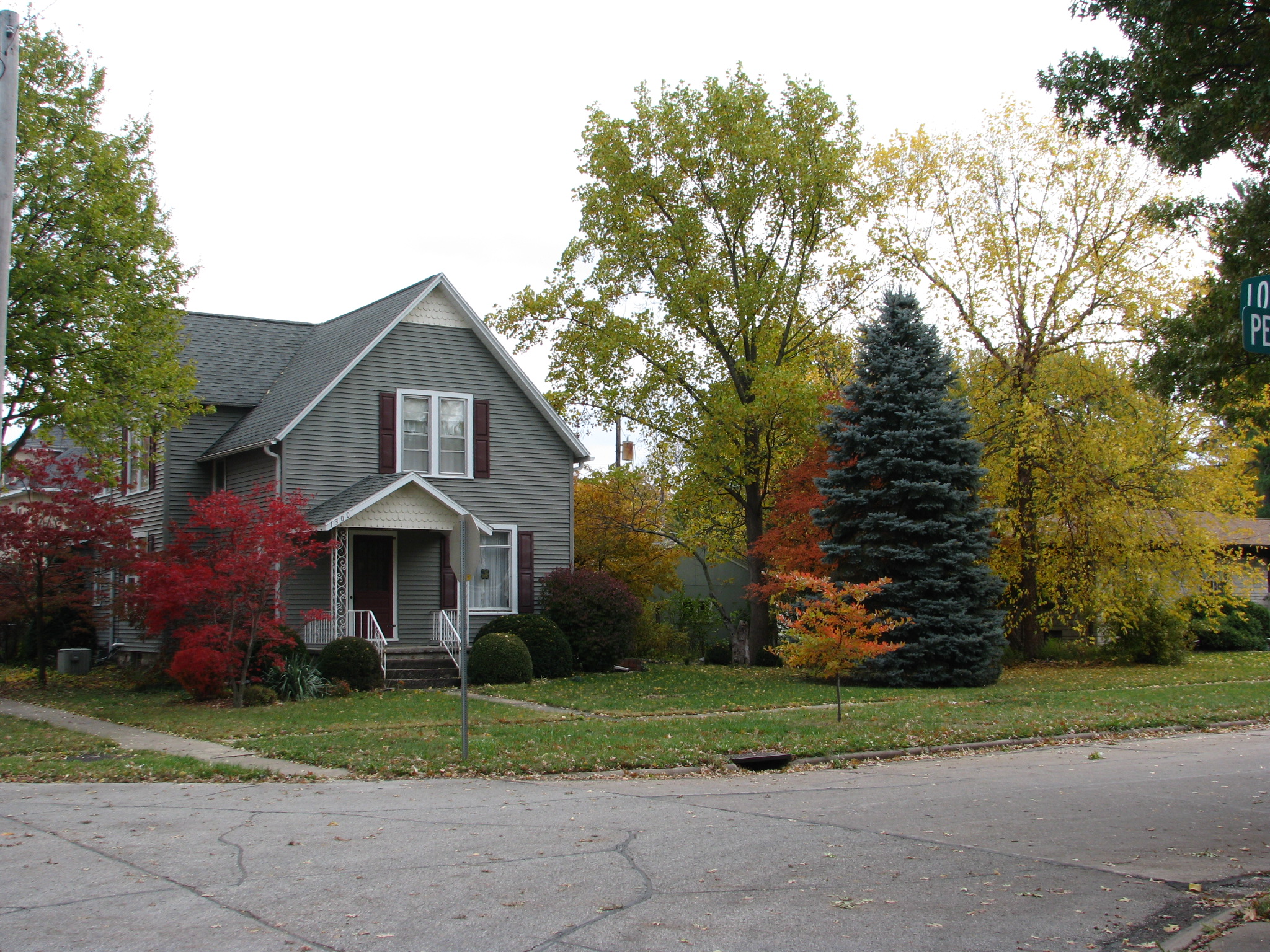
Burlington house in fall

Our Burlington house is a late Victorian eclectic built in 1899, originally a farmhouse on the railroad magnate Charles Perkins’ estate. For most of its life three families by the name of Nelson had owned it, although two of them were not related to the third. The family that sold it to us in 1988 had begun to restore it after several attempts at remodeling. Jan said, when she first entered the front hall, seeing the old varnished woodwork, that it wrapped its arms around her and said, “Welcome home.” That made me happy, since the other seven houses in our price range that I had previewed all had serious problems that would need a lot of attention right away. This one was almost “move-in ready.”

Walls were newly papered with tasteful period patterns. Ceilings were newly coated to cover the cracks and holes. New curtains were hung just about everywhere. Floors were sanded smooth and refinished. Only a few issues remained that would need resolution sooner or later.

The six basement windows provided the first challenge that I tackled. The casings had deteriorated past the point of repair, reglazing, or repainting. I tore them all out, stabilized the surrounding limestone rocks with mortar, and installed new windows that resolved some of the leaks and drafts in the cellar.

All the while I looked at that solid wide-board wooden wall that ran down the center of the cellar, lengthwise of the house, separating the cellar essentially into two large narrow rooms. Above that wall in the center of the house, the floors were noticeably uneven, and a wall crack had broken through the new wallpaper on the second floor. Something was going on behind that wall, I decided, exercising my powers of deduction.

The wall seemed so solid until I started to take it down. A little pushing on the heavy boards and they gave way at the bottom, so I proceeded to remove every board. At the top the boards attached to the main support beam of the house. At the bottom, everything seemed increasingly loose and mobile. The upright posts supporting the beam had obviously rotted at the bottom, so that the entire wall, about a ton of wood, was hanging from the main beam. When I finally reached the center of the wall, I found that the beam itself, was not one large hewn timber, but two butted end to end, with nothing supporting the center. The center was hanging from the rafters of the house. No wonder it had settled! The whole support system was hanging from the house, rather than holding up the house. It made no sense, but the house seemed to be lifting its support.

I quickly put several jacks in place under the two main beams, and dug footings under the concrete floor, that the owners had obviously poured years after the original rock footings had been put in place. Then new pressure-treated six by sixes were wedged into position, firmly attached at top and bottom. This house was not going to collapse or going flying off into the great beyond if I could help it.

No Waiting

05 Wednesday Aug 2015

Posted by chaplines2014 in Faith, Growing up, Learning from mistakes, Running

≈ Leave a comment

Tags

A License to Preach, Serendipity

IMG_1187

After college I swore that I would never stand in a waiting line again. Cafeteria lines, registration lines, textbookstore lines all had eaten up more time than the studies themselves, it seemed. It was a vain resolution.

Lines and waiting rooms became a prominent feature of my career as a minister. Hospital waiting rooms, court house lobbies, city council chambers, and jailhouse waiting rooms took the place of earlier lines. In retirement, road and traffic delays and outer office sitting areas have continued to devour time.

Early line training introduced me to the art of starting conversations with strangers, if they were amenable, or preparing sermons, letters, or work outlines without the benefit of notepaper. Thinking through concerns in empty spaces of time also helped with the daily exercise of running. Regardless of work being accomplished and acquaintances being made, waiting is still waiting.

“Those who wait upon the Lord will renew their strength.” It is a running mantra that I used sometimes. I would say that waiting saps strength and waiting rooms are more tiring exercise chambers than gymnasiums and running tracks. What makes “waiting on the Lord” any different? While most waiting involves anxiety, is there at least the possibility that waiting on the Lord can involve faith, trust, confidence, and some assurance that all things work for good for those who love the Lord? Perhaps waiting on the Lord involves more serving time than leisure time.

Practicing patience and endurance is good for you, my significant other says. Where do these gifts fall in the series of spiritual gifts? Between suffering and hope, with one experience making possible the next, according to Romans 5.

“No waiting” is a good advertising ploy, but I have not found a commercial establishment that yet lives up to that claim. No waiting will be heaven.

The Wild Life at Wind Cave and Custer Parks

04 Tuesday Aug 2015

Posted by chaplines2014 in Learning from mistakes, Nature, People, Travel

≈ Leave a comment

Tags

Memories, Serendipity

IMG_7131

Driving through nearby Wind Cave National Park into Custer State Park for a circuit of its forty mile Wildlife Loop has become a frequent part of our sojourns at the Mammoth Site in Hot Springs at the southern reaches of the Black Hills. Both parks have extensive herds of American bison as well as populations of elk, pronghorn, white-tail and mule deer, prairie dogs, marmots, mountain goats, and bighorn sheep. Custer has its burros that became “wild” after their usefulness as beasts of burden officially ended, but the visitors offering food don’t have any trouble getting them to eat out of their hands. We bring carrots, although we often see less healthy snacks offered. The burros are not fussy.

This season we also saw a prairie rattlesnake at the edge of a road, but still no cougars, which are numbered among the inhabitants of the parks.

Two years ago Wind Cave obtained a large additional acreage of old homestead tracts, long since merged into ranch pasturelands, but still containing some of the pioneer buildings, and at least one bison jump, used by Native Americans to herd bison to their doom over the edge of a cliff in centuries past, when several captured animals provided food, tools, clothing, fuel, medicine, and shelter for many native peoples. A ranger took a few of us on a preview tour of that locale, and we look forward to the day when it will be open for others to appreciate.

The bison herds here are among the first to be restored after the animals were nearly extinct. People purposefully destroyed these majestic and well-adapted animals by the millions to make way for cattle or just for their own amusement. It makes us wonder about human intelligence and character. We could watch their behaviors for hours. Part of the herd is usually on the move even when most of the bison are resting as they graze over large territories, never depleting their resources.

One magnificent old bull walks across the road and stops both lanes of traffic, then he walks down the middle of the road as cars slowly pass, then he stops one lane of traffic for a full minute, then he moves into the other lane to stop it for another minute. A loud motorcycle tries to pass, sounding like another bull, and he challenges it with the hoof-scraping gesture and his characteristic bellow, then he snorts and turns his back and moves on. He knows what he is doing.

One bison cow nurses her calf until she decides it has had enough. She turns in circles while the calf tries to reach for more. The calf persists until the cow finally lies down and the calf has to go to another cow if he wants more. It tries, but that cow knows what it is doing, and she imitates the first cow’s behavior. Finally the calf has to be satisfied with what it already has.

We looked for the bison herd on our first visit in 1976, but didn’t see any. Now we usually check with the rangers for their last observed location, and head for it, but usually we find them whether we have good information of not. We have learned to be patient in the quest and we are rewarded.

Best Laid Plans

19 Sunday Jul 2015

Posted by chaplines2014 in Church, Learning from mistakes, People

≈ Leave a comment

Tags

A License to Preach, Serendipity

Monkeys see, hear, speak no evil, Bangra.com

Few things end as we expect. This is the lesson of the huge cost overruns that have become a way of life in our Department of Defense. Sophisticated and ambitious plans are drafted, limited numbers of production experts make bids on the plans, bids are awarded to one of the few competitors, greater than expected difficulties in production are encountered, additional intricate specifications are added to the original design, and cost overruns escalate. No end is in sight for such costly miscalculations, and the tendencies remain in human character as well.

Too many factors must be considered in most of our decision-making. We want to stop thinking about it and just make a decision. Consider the choice of a mate. A million qualifications could be appropriate. The chances for error are large. Success in marriage becomes a daunting prospect, and people are generally waiting longer to decide.

I worked for a church that spent sixty years trying to eliminate pigeons from nesting on top of the belfry. The flat belfry roof provided an excellent roosting place. Pigeon guano piled up and had to be removed every six months. Church attenders had to duck the droppings of pigeons as they flew in for a landing. Rainwater leaching through the manure digested the roof shingles and corroded the drain pipes. They tried many solutions. Many solutions! Finally they built a steeply sloped pyramid roof on top of the belfry. Pyramid power. No more pigeons.

The same church had an embossed metal ceiling in its sanctuary which had been painted a dozen times in eighty years, until paint would no longer adhere to the metal, but kept peeling off and falling on the congregation in large patches. Talk about the roof falling in when someone comes to church! Ideas were abundant. Cover it with acoustical tile? That would ruin the acoustics of the room and look drab in due time. Sandblast the paint off the metal? That would condemn the building to sandy surfaces and paint fragments for generations. Finally they checked to see what was underneath the metal. A beautiful carved wooden ceiling, dirty but paintable,  hid under the metal. Removing the metal left a result that was both cheaper and more attractive than any of the alternatives considered. We cannot always be so fortunate.

When making plans or watching other people’s plans unfold, what do we need to do? Take as many facts into consideration as we can.  Test as many assumptions as we can. Be prepared to change course when either facts or assumptions prove inadequate. One way or another they will be.

Dealing with Bird Brains

16 Thursday Jul 2015

Posted by chaplines2014 in Nature, People

≈ Leave a comment

Tags

A License to Preach, Serendipity

3 Owls

After all that I do for them, there is little evidence that they appreciate me. I feed them. I provide shelter for them in summer and winter. I invite them to my home, not into my house, but into my garden. Then I get into my car and their thanks is splattered all over my windshield.

Birds just fail to appreciate what I do for them. I refrain from spraying my lawn so that plenty of insects, worms, and untainted seeds and nectars provide meals without poisons to invade their little systems. I grow the plants that produce the flowers, berries, and shelter that they are supposed to enjoy. I leave a brush pile or two for their protection in winter. And this is the thanks that I get? That bird had to be aiming for my window to do such an expansive job.

Birds are supposedly descended from dinosaurs. That oversimplified claim is probably about as true as saying human beings are descended from apes. Maybe they are getting their revenge on us mammals for replacing so many of their large ancient relatives with our own kind. Maybe they remember more recent extinctions, like the dodo and the passenger pigeon. Apart from a few species regarded as nuisances, most people appreciate birds. We admire their plumage, enjoy their songs, and marvel at their acrobatic flying. Along with Jesus we learn from them not to worry about tomorrow.

Birds do resemble people enough that we frequently compare ourselves to them. Stool pigeons. Night owls. rockin’ robins. Lawyers like vultures. Singers like larks. Renewing our strength like the eagles.  Maybe they resent such pretentious comparisons.

The mess on my windshield reminds me of many messes each of us faces every day, left by birds of a different feather. Not all of them appreciate what we do. That is a fact of nature and of life, but our motivation to enjoy others and continue trying to help or please is not diminished by this fact. We keep putting the food out, developing the habitat, and cleaning up messes so that all of these species can learn to live together and encourage each other.

Appreciating others comes from an inner commitment to the community and commonality that we share. Neither born nor bred into us, generous attitudes come from the giving of others and their teaching by example and word. As we have been fed, so we feed. We learn from making messes what it takes to clean them up. Thanks, birds. You’re not so dumb.

Quirky Fuel Gauges

09 Thursday Jul 2015

Posted by chaplines2014 in Learning from mistakes, Vehicles

≈ 1 Comment

Tags

A License to Preach, Serendipity

cropped-img_38291.jpg

The fuel gauges on my vehicles behave oddly. I did hear recently, however, that my observations about fuel gauges compare well with many other peoples.’ With the tanks starting at full, they remain full for a long time, and then move gradually down the gauge until the half-way point. Then they drop precipitously. The last half tank goes twice as fast as the first half, and the gauges speed up as they approach empty. When the needles reach the empty mark, two or three gallons remain in the tank, but I do not feel secure in depending on them. My riders, feeling even less secure, insist that I refill instead of driving on empty. One of my riders (who can remain unnamed), aware of the odd behavior of the gauges, always insists that our gas tank should be filled just before we drive into a city, because that person believes that at some point in our trip I will always get lost in the worst slums of that city. To be fair, she also gets nervous when we are driving across the vast expanses of the Great Plains.

The ornery behavior of my gauges parallels my soul. If a spiritual supply gauge could be affixed to my body, it would probably behave in a similar way. Filled up with an awareness of abundance and grace, well-rested in mind and body, I would register full for a long time, probably long past the time that my resources begin to diminish. Gradually I would indicate the ebbing of my awareness of grace until I reach the point at which I notice that I am only half-full. Then in a frenzy of activity I would use up my reserves and register empty before I actually am. The challenge comes to refill before I run out of gas completely.

Maybe I need such a gauge, but with or without it, the use of my time, talents, and energies depends on my awareness that the gifts I contain are limited, while the source of the supply is unlimited. Filling up is a regular undertaking, and I must allow time for the rest, worship, meditation, and recreation that fill me and others around me. Running in empty may be possible for longer than anyone has a right to expect, but it really is not worth the risk of getting stranded where we do not want to be.

When Notes are Unsigned and the Preacher Still Has a Pulpit

08 Wednesday Jul 2015

Posted by chaplines2014 in Caring, Church, Learning from mistakes, Small town life

≈ Leave a comment

Tags

A License to Preach, events, Serendipity

Self-potrait 1988

I had spent a few days in the hospital with some significant heart symptoms. When I returned to the pulpit after my release, I thanked the people for the many get-well cards, encouraging words, and generous offers of help that came to my wife and me, but I told them that there was also one card that had come with the others. Unsigned, it had asked, “What are we supposed to do, if our pastor is ill? We can’t get the help that we need when we have a sick pastor.”

In my notes for that Sunday in winter, 1984, I said that I must try to answer this question, as much for myself as for whoever wrote it. First, my physicians assured me that I could expect to get control of this issue if I took certain steps and continued doing so the rest of my life. I could return to work and have the heart to do it. Second, ministers are human and will get sick, some more often than others. The church will survive, and sometimes it will prosper, as people share more of the load and cooperate with one another in getting things done that the minister cannot do. Third, we are in this church together in all circumstances, good and bad, much like a marriage, and God’s power is most visible when we are at our weakest.  I had certainly felt that power, during the previous two weeks, when so many had taken time to provide what was needed, and I had gained in understanding of what I faced and what I needed to do about it.

I never learned who had expressed those fears in the “get well card,” and I don’t know whether the writer was embarrassed or not about my reference to those words from the pulpit, but the sentiment probably did everyone a favor.

Rethinking the Melting Pot

07 Tuesday Jul 2015

Posted by chaplines2014 in Events, Learning from mistakes, Racial Prejudice, Travel

≈ Leave a comment

Tags

Serendipity

3 Owls

“33 Flavors,” Baskin-Robbins used to advertise, and I probably liked them all. Years ago, ice cream came in vanilla, chocolate and strawberry. Now it comes not only in multitudinous flavors, but in low and no (as well as high?) fat varieties, frozen yogurt, ice milk, and other variations. When people are put together for any long, intense period of time, you begin to note how many variations there are in us.

When many varieties of ice cream first became available, Jan and I splurged one time by each ordering a concoction. The location was Mackinaw City as we viewed the great bridge over the Straits of Mackinac. We were celebrating our safe landing after being caught in the middle of that five miles long bridge in a windstorm and watching a camper blow off a truck onto the roadway ahead of us. The fear of having our 1960 Falcon take flight off that bridge might be supposed to remove appetites, but we were on our honeymoon, so we were believers in letting our appetites expand.

In our celebration we each ordered about seven scoops of different flavors of ice cream. (They were small scoops.) They came with names like Bat Girl (licorice), Fudge Brownie, Candy Stripers (peppermint), and Black Walnut. I just remember the appearance of the bowl as they began to melt together–black, green, red, and yellow mixing. I ate mine and Jan handed hers to me to finish, after it had begun to turn into one blended shade of brownish-grayish.

Then and there I had a revelation. The melting pot was an inadequate image for people getting along together. One has to recognize and accept the differences—the different flavors—in order to enjoy being together. (Revelations after all are hard to come by.) Trying to force everyone into one “mold” is likely to produce something that looks a bit moldy. We try to remember that when we live and work intensely together. The flavors are all there to be enjoyed. Attempts to put everything together all at once may put a strain even on great lovers (of ice cream). Everything works out in due time, with patience and flexibility and fixed purpose.

The Miracle of the Broken-down Weed Chopper

25 Thursday Jun 2015

Posted by chaplines2014 in Events, Farm, Forest, Seasons, Yard

≈ Leave a comment

Tags

A License to Preach, Serendipity, Synchronicity

redwood treesI was ready to start the weed chopper and mow the strip at the sides of the Shepherd’s Gate house and driveway. Two or three mowings a season is enough to keep new trees and plants from encroaching “my” space, which is fifteen to twenty feet around the perimeter of the house. The rest of the surrounding acres remain wild woodland and take care of themselves. The engine started well, but the mounted mower whiplines did not engage. Turning off the engine I found the belt had slipped off its pulley. If I had not already been thinking about my father, this could easily have reminded me of the many times some piece of equipment broke down and delayed the work of planting or harvest or general farm maintenance.

When it came to tools my father was not the most organized. Keeping the right tool in the right location was a challenge, and as a result there were usually a dozen places where that tool might be. The tool house was well-organized, thanks to the my older brother’s intervention, but tools tended to migrate from there to every tractor, barn, crib and shed which had its own specialized tool collection. It was always frustrating to run into a task that required the tool that was somewhere on the other side of the farm. In my case on this day, the small tool box I had with me held only  pliers, inadequate to the task of removing the cover to reinstall the belt. The plumbing kit, ready for the bathroom fixture installation tasks that I had planned for this trip,  had wrenches that were much too large to reach the bolts I had to loosen.

Then I thought of the small toolbox Dad gave me to use at Shepherd’s Gate. It had a few well-worn basic tools. Did I remember that it had a driver and socket set? I looked and it had only two sockets, but what were the chances that these were the ones that would fit? I took them out to the chopper, and one fit the larger bolts, and the other one fit the smaller bolts perfectly! Thereafter the job was a snap. Thanks, Dad.

This is hardly evidence convincing to anyone of a surrounding cloud of witnesses or an angelic host. Plenty of times I have had to learn from my oversights, go out and buy or borrow the necessary tool, or take that extraordinary amount of time to complete the simplest task. But this time Dad was definitely present, patiently gazing over my shoulder, and chuckling, so I add it to the list of revealing moments when I speak my grateful dues and recognize the continuing influence of the unseen. Thank you, Abba!

Just One of the Stupid Things I have done

18 Thursday Jun 2015

Posted by chaplines2014 in Cherokee history, Learning from mistakes

≈ Leave a comment

Tags

Books by Gary Chapman, Our Land! Our People!, Serendipity, The Trail of Tears

Cherokee Nation laurel and star

Charleston, Tennessee, was the site of the federal agency relating to the Cherokee Nation and Fort Cass, as the government prepared for the Cherokee Removal to the west. Since I was writing about that event, I went to investigate the geography and environment, and to discover what was left of the 1830’s era facilities. The town is small, so it is easily navigated in a few circles of about sixteen square blocks. My sources had identified a harbor that fronted Hiwassee River on the north edge; the agency building sat at the southwest corner of the harbor. I found the shallow lagoon that remains of the harbor, and a stone foundation that remains of the old agency. Across the lagoon stands the Henegar House, a fine old Victorian house with a marker in front that states that the house was originally constructed from the wood of the military barracks that had stood there.

One of the confinement stockades that housed the people of the Treaty Party supposedly stood on the hill to the east.  The hill was clearly visible above the town, but, of course, the stockade area was covered by trees and brush. Like the other stockades of the twelve or so that composed “Fort Cass,” it was probably burned as soon as it was evacuated, about five horrible months after it was supposed to be evacuated, because of delays in beginning the move west.  The dilapidated housing near the foot of the hill was the semblance of a tribute to the days when hundreds of people were confined without sanitary facilities, decent food or lodging in each of those stockades.

Down the street still stands the house that Lewis Ross built in 1820; he served as treasurer of the Cherokee Nation and brother of Chief John Ross. Like his brother, Lewis Ross prospered during that era while most of the people suffered. The original house hides within the current structure that was expanded and rebuilt many times since Ross lived there.

I decided to drive west on Cass Road, since a stockade at Mouse Creek and the Candy Creek Mission (of the American Board of Commissioners for Foreign Missions) supposedly had stood west of the Charleston settlement. I turned around at Mouse Creek, about seven miles west, which was easy to identify from the map, and stopped at the other creek I had crossed, where a large industrial complex obscured the river on the north, and a picturesque valley with a new log cabin home extended to the south. I parked at the side of the road to take some pictures.

After taking the photos, I returned to the Jeep. I had left it running, since taking pictures would be quick and easy, but I must have touched the lock button when I exited. I had locked myself out of my car while it was still running. The windows were all closed since the day was chilly. The extra key in the magnet box under the bumper must have fallen off, so the only choice left was to call AAA to come and unlock my car. My cell phone was in the seat of the car. The car wasn’t going anywhere.

I walked up the lane to the new log cabin, hoping to find someone home.  When I knocked on the door, no one answered, so I sat down on a chair nearby to decide what to do next. After a minute or so a man did come to the door, saying that he was on the phone and could not come when I knocked. What did I want?

I explained my stupid mistake and why I was in the vicinity. He seemed interested and said that he didn’t know where any of the old stockades had stood, but this was Candy Creek flowing by his house, and he had heard that there had been a school upriver that served the Cherokees. His friend owned the land where Rattlesnake Springs flowed, and, after I had made my call to reach AAA, he’d call his friend and get permission for me to visit the springs, that were south of Charleston on old Dry Valley Road. Until the AAA man arrived, we had a good visit about the area, he called his friend and made arrangements for my visit, and he gave me directions. The delay took about half an hour, and what I gained more than made up for what I lost.

Rattlesnake Springs had been a Cherokee meeting area for many generations. Its abundant water provided much of the drinking water for the stockades in that valley during the confinement. The last meeting of the people occurred there before their trek west. Although it is designated as a national landmark, and has been for several years, there has been no money to develop it, and it is still owned by the family that purchased the land after the Cherokees were forced out. I had a good visit with the owner, and we looked at the spring, and what remained of the homestead that had stood nearby .

If all of my stupid and embarrassing mistakes would have led to such discoveries, I would try to make more.

← Older posts
Newer posts →

Subscribe

  • Entries (RSS)
  • Comments (RSS)

Archives

  • February 2022
  • May 2020
  • October 2018
  • December 2017
  • November 2017
  • October 2017
  • June 2017
  • April 2017
  • March 2017
  • February 2017
  • January 2017
  • November 2016
  • October 2016
  • September 2016
  • August 2016
  • July 2016
  • June 2016
  • May 2016
  • April 2016
  • March 2016
  • February 2016
  • January 2016
  • December 2015
  • November 2015
  • October 2015
  • September 2015
  • August 2015
  • July 2015
  • June 2015
  • May 2015
  • April 2015
  • March 2015
  • February 2015
  • January 2015
  • December 2014
  • November 2014
  • October 2014

Categories

  • beach
  • Books by Gary Chapman
  • canoeing
  • Caring
  • Cherokee history
  • Church
  • Citizenship
  • Death
  • Disabilities
  • Events
  • Faith
  • Farm
  • fighting fires
  • Forest
  • Garden
  • Growing up
  • Gullibility
  • guns
  • Health
  • Hiking
  • House
  • Innocence
  • Learning from mistakes
  • Life along the River
  • Miracles
  • Nature
  • Patience
  • People
  • Prayer
  • Racial Prejudice
  • rafting
  • Running
  • Seasons
  • Small town life
  • Suffering
  • Travel
  • Uncategorized
  • Vehicles
  • Volunteering
  • Words
  • Yard

Meta

  • Create account
  • Log in

Blog at WordPress.com.

Privacy & Cookies: This site uses cookies. By continuing to use this website, you agree to their use.
To find out more, including how to control cookies, see here: Cookie Policy
  • Subscribe Subscribed
    • chaplinesblog
    • Join 71 other subscribers
    • Already have a WordPress.com account? Log in now.
    • chaplinesblog
    • Subscribe Subscribed
    • Sign up
    • Log in
    • Report this content
    • View site in Reader
    • Manage subscriptions
    • Collapse this bar
 

Loading Comments...