• About
  • Celebrating our decades…
  • Welcoming all and inclusiveness

chaplinesblog

~ everyday and commonplace parables

chaplinesblog

Tag Archives: Vietnam and Cambodia

Curt Gave Me a Round Tuit

17 Tuesday Oct 2017

Posted by chaplines2014 in Books by Gary Chapman, Citizenship, Events, Growing up, Learning from mistakes

≈ Leave a comment

Tags

Books by Gary Chapman, life experiences, Memories, The River Flows Both Ways, Vietnam and Cambodia

TRFBWcover

Curt Williams was one of the peculiar elder saints of the United Church of Tilton. In 1973, a few months after I arrived there, he gave me a wooden coin with the letters “TUIT” on one side, when I admitted, “I didn’t get around to doing that.” “You’ll never have to say that again,” he responded with a smile.
Over the years the need for that round TUIT has returned many times, especially when a stack of unread material and unfinished projects has piled up. The only advantage of procrastination has been that some items are so outdated they can be filed quickly in File 13.
One such set of files was marked “Selective Service 1964 to 1972.” That file used to seem so significant. I was a volunteer draft counselor with the American Friends Service Committee, talking to dozens of peers who were looking at their options. I was the potential holder of four deferments—student, medical, conscientious objector, and theological student. There had been many letters, reclassifications, and everyone on my draft board knew me. Even when I stopped responding to their letters, they ignored my non-cooperation. The whole extended episode was a time to be forgotten, and I succeeded in forgetting most of it. Twenty years later I discarded the file.
The letters from friends serving in Vietnam was another matter, still on file. I proposed to my wife just before Thanksgiving of 1967, confessing to her that I didn’t know what the war would do to us. We married during the Democratic National Convention in Chicago, so I did not join my fellow members of the Students for a Democratic Society in Grant Park. Our daughter was born immediately after the Kent State killings when University of Chicago students had dug trenches into the empty lot a block from our apartment building. Our son was born in 1973, just after the Paris Accords were signed and America’s soldiers were being withdrawn. When I got around to it, I told myself, I should write something about those times. In 2007 I did, although it took shape around the experiences of my son-in-law and his brother and became the book The River Flows Both Ways.
President George H.W. Bush said in 1988, “No great nation can long be sundered by a memory.” More than fifty years after those days, “The Vietnam War,” the documentary film from Ken Burns and Lynn Novick, finally puts a comprehensive review of that war before the world.
Some psychologists say that we forget things for reasons that are unconsciously hostile. We also postpone forgetting things, remembering certain things with hostility. Is there not a time peacefully to remember, releasing hostility in the creative act of beating swords into plowshares and spears into pruning hooks? Sometimes it takes a while to get around to it. We wait until the lessons we should have learned earlier are repeated before our eyes.


Threatened with Expulsion

31 Tuesday Jan 2017

Posted by chaplines2014 in Church, Citizenship, Events, Faith, Growing up, Learning from mistakes, People

≈ Leave a comment

Tags

A License to Preach, events, life experiences, Memories, Serendipity, Vietnam and Cambodia


eagle head

Appointed by the Illinois Wesleyan Student Senate in my senior year to chair the Religious Activities Commission, I presided over the committee that organized the weekly chapel series, two annual lectureships by theologians or religious leaders, two symposia on current events related to the world of religion, and coordinated several volunteer groups, including the Student Christian Movement and the Community Tutoring Program. It was my third year serving on the commission in those latter capacities, and it was turning out to be a challenging year.


We determined that the Fall 1967 symposium would address the issues raised by the Vietnam War, and it was customary when dealing with controversial issues to have different sides well-represented. An expert in the history of Indochina agreed to come to provide background. Several of the IWU faculty agreed to serve on discussion panels. To present the case for the continuing conduct of the war we found a U.S. Defense Department analyst, Craig Spence. The cost of bringing these experts to campus had eaten most of our available budget. I asked for more funds.


I began to promote the plans for the symposium, using an art student volunteer for poster design, and, among other efforts, publishing the key documents that represented the sides of the conflict, the Gulf of Tonkin resolution, various statements by North and South Vietnamese leaders and assemblies, and considerations of Just War theory and applications by ethicists. These documents were left in several areas of the campus for students who were interested.


Four weeks until the symposium, when we still had not secured a bona fide critic of the war, the Dean of Students summoned me to her office. She informed me that I should not secure someone to present a criticism of the war, I should stop distributing propaganda representing our enemy’s viewpoints, and, if I continued to undermine the reputation of the university that she had worked so hard to maintain, I would be expelled. Anything else that she said during the minutes that followed fell on deaf ears as I prepared my case. I was not alone in planning this program; other students and faculty were just as committed to it as I was. If the university was doing its job, it would consider different positions as objectively as possible. If she thought she could threaten me into submission on this, she was mistaken.


The next day I learned that no additional funds would be available. I called Staughton Lynd, a well-known academic and activist, who had written and spoken extensively about the war, and explained the situation to him. We could provide a modest honorarium, and I would drive to Chicago to bring him to campus and return him to his home after the presentations and discussions. He agreed to come.


I confided in the college chaplain and two other faculty members about the threats from the Dean of Students, and received reassurances from them, but I didn’t see any value in alarming the other students who were involved in planning the conference until and unless they experienced the same threats.


The symposium occurred with high participation, full reporting by the Bloomington Pantagraph as well as the Wesleyan Argus, and Staughton Lynd made a thorough presentation to a packed ballroom at the Memorial Student Center. Craig Spence said that the war would probably last another thirty years, if we intended to win it, and an important benefit could be the destruction of China’s nuclear arsenal. If it was evaluated as a debate no one won the symposium, but as a fair representation of views it accomplished its purpose. I mostly remember the extraordinary five hours on the road between Chicago and Bloomington, learning from Staughton Lynd, who shared his experiences with the human rights crisis in the United States as well as opposition to the war in Vietnam.


I didn’t hear any more from the Dean of Students, but a few weeks after the symposium, the Dean of Men called me into his office, and he warned me about the dangers of the passive aggressive anger that I had displayed in the fall. He didn’t know that I had that in me.


Becoming a Draft Counselor

18 Monday Jan 2016

Posted by chaplines2014 in Citizenship, Events, Faith, Growing up, Learning from mistakes

≈ Leave a comment

Tags

Books by Gary Chapman, Memories, Out of My Hands, The River Flows Both Ways, Vietnam and Cambodia

Chicago skyline 1970

I was almost finished with applications for conscientious objector status when a physician informed me that the question had no personal significance since I would not pass the physical examination anyway, even if I wanted to serve in a non-combatant role. Since I was opposed to the U.S. involvement in the war in Vietnam, I looked for other constructive ways to be involved. In the fall of 1968, as we took up residence in Chicago and I continued graduate studies for ministry, I entered the American Friends Service Committee training for draft counselors.

Having training in law would have been an advantage in dealing with the selective service system and legal precedents in the cases that we studied, in order to give helpful information to people who came with concerns, both draft-eligible men and their families. Having more experience in counseling also would have been useful, but some of that came with the counselees as they presented their questions. Motivations and concerns varied greatly, and responding equitably and sympathetically to people who held different beliefs and values was challenging. Enough trained people participated as counselors that it was not overly demanding for each of us who entered the volunteer AFSC network, and that was important as I tried to balance all of the requirements of study, work, service to others, and being a new husband. It could have been much harder, and I still would not have faced a fraction of the hardships that several of my friends and family, and especially my family-members-to-be, were facing in Vietnam.

Those who came with questions included people who were conscientious objectors, people who were simply draft avoiders, people who wanted to help others in their family or friendship circles who were having trouble dealing with the variety in draft boards and their practices, people who were in the military service but unwilling to fight in Indochina, people who were already in trouble one way or another, and those who were interested in all the options that were available before they committed themselves. We all had a lot at stake, and, although I was glad that an all-volunteer force replaced the selective service system, finding ways to serve our country as good citizens was in front of all of us in ways that have not been matched afterward.

Serving our country as citizens remains a universal duty, but being willing to kill people who differ with us in perspective, who are not threatening us, as persons or as a nation, in any direct or meaningful way, is not justifiable. Often personal judgment must be set aside, but too often conscience has been set aside as well, in responding to the orders that come from a chain of command.

We are now in the gap between the Vietnam War’s foggy beginnings and ignominious ending fifty years ago. I still puzzle about how to honor those who served their country as soldiers and those who served their country as resistors, then and now. The phrases “serving our country” and “defending our freedoms” pass easily off the lips of many people. The reality is much more complicated and difficult.

Grandma Tien Reflects on the Plight of Her Children

24 Sunday May 2015

Posted by chaplines2014 in Books by Gary Chapman, Caring, People

≈ Leave a comment

Tags

Books by Gary Chapman, The River Flows Both Ways, Vietnam and Cambodia

TRFBWcover

If I had known what they would be facing I could never have let them go. How could I have a moment’s peace when my youngest son and oldest grandson faced such dangers?  Not that I expected their journey to be easy. I just didn’t expect them to be at the mercy of men so cruel.

When you and Hue named your boy “Long” I did not know he would have to live up to his dragon name so early in his life. He had to be brave and hold onto his life with stubbornness and patience. You must have been proud to watch him, even as your heart was in your throat. Dragons had been so much a part of our Chinese heritage, and when we came to Vietnam we saw how the people drew strength from this symbol for their land. Even the shape of the country reminded people of a dragon. Yet politics had cleaved the land in two. We yearned for it to be whole, and despaired when we remained a broken and wounded people even after the “reunification.”

Through those days when I did not know what had happened to Phuong and Long, I felt such sadness that they could become dragon people only by leaving their home and struggling to find a way out. I looked into the waters of the river nearby, meditating on the flowing Great Mekong itself, always flowing one way and then another, spreading out into the Cu’u Long, the nine dragons of its delta. Though people have lived long by these waters, along which my children were now treading, they have never stood still. They have always been moving, spreading out, and finding new paths to follow.

One day I heard an old folksong carried on the breeze, sung in the pleasant, tired voice of an old woman like me, my neighbor who had lost several people to the war:      “We will go on living,   Though Mother Mekong     Flows out to sea,   Or turns     back to the setting sun.   We will go on loving,   Though thieves and    aiders   Descend from hills,  Or rains flood down from dark’ning skies.   We will go on working,   Though raging fires   Burn roofs from homes,   Or drought dries the rice paddies.   We will go on singing,   Though endless tears   Fall down our cheeks,      Or strong hands try to shut our mouths.   We will go on. We will go on.   We will go on. We will go on.”

I heard her words as if they were sung on my behalf. I realized that all I had left to do was to look out with longing and with love for the children of my heart. All anyone has to do is to love and cherish the people given to her, if only for the little while that she has them and has sense enough to pray for them.

The River Flows Both Ways: Following the Mekong Out of Vietnam and Cambodia

05 Tuesday May 2015

Posted by chaplines2014 in Books by Gary Chapman, People

≈ Leave a comment

Tags

Books by Gary Chapman, The River Flows Both Ways, Vietnam and Cambodia

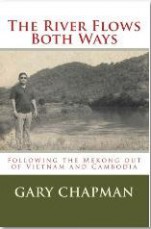
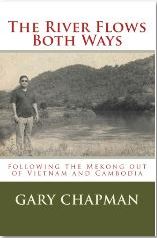
TRFBWcoverThe remarkable and poignant stories of Hung Nguy and Hue Nguyen’s family from the 1960’s to the 1980’s, when they moved from Svay Rieng, to Bo Dau, and on to Ho Chi Minh City, then back to the countryside, and finally sought to leave Indochina, are told in The River Flows Both Ways: Following the Mekong Out of Vietnam and Cambodia, written by Gary Chapman and published in October 2014. After five years, a series of failed attempts, imprisonments and refugee camps, three teenage sons finally completed the journey to the United States.

The book is available from https://www.createspace.com/4977913,  http://www.Amazon.com, and your local bookseller.

Members of the Nguy family are interested in other peoples’ experiences related to their experiences in Cambodia and Vietnam, and their emigration, and other published memoirs, reported to chaplinesblog.com, or Email at gchapman@scciowa.edu

Thank you, Hue Thi Nguyen!

21 Saturday Feb 2015

Posted by chaplines2014 in Books by Gary Chapman, Death, People

≈ Leave a comment

Tags

Books by Gary Chapman, The River Flows Both Ways, Vietnam and Cambodia

TRFBWcover

Who could imagine that the decisions of a woman in Vietnam, during and within a few years after the war, would have such a profound impact on our lives? The decisions that Hue made led a decade later to a young man named Au entering our lives as a dancer and the dance partner of our daughter Alicia as they studied at Illinois State University. He brought an amazing story of hardship, endurance, and perseverance, that was matched by his extraordinary determination to do well in his studies, his work, his willingness to tackle any challenges, his open-heartedness, and his love of family. They married in 1990 just before Au’s first return to Vietnam, with his brother Long, to see his mother and grandmother, and to reassure them that their difficult decisions had been worth the sacrifices they had made.

In the next five years came our three wonderful grand-daughters, who have each grown up in the security of parents who have been devoted to their nurture and the development of their minds, hearts, and talents with a depth that few children have known.

We owe a lot to Au, computer and communications technician that he is, and cook, repairman, hunter, painter, martial artist, fisherman, runner, dog-lover, care-giver, mechanic, audio-visual specialist, volunteer….husband, son-in-law, father, son.

Thank you, Hue Thi Nguyen, for the decisions and sacrifices that you made, and for the life that you led. May you enjoy the blessings of heaven forever.   Hue Thi Nguyen, 1950-2015.

Hue decides to try again to get Au out

20 Friday Feb 2015

Posted by chaplines2014 in Books by Gary Chapman, Events, People

≈ Leave a comment

Tags

Books by Gary Chapman, The River Flows Both Ways, Vietnam and Cambodia

TRFBWcover

Before making any more decisions about leaving, Hue decided to wait to hear from Phuong and Long to make certain that they had been able to emigrate. The weeks following the return to Go Dau felt longer and longer as they waited for word that Phuong and Long had made their way beyond the refugee camps in Thailand. Food and money were scarce, and hope itself became harder to find. Finally a letter from the United States arrived, and they celebrated the news that Phuong and Long were safe and secure there.

Hue decided to find Aunt Phan again to see what kind of plan of escape still made sense. Aunt Phan had a son, Trai, and his wife, Lien, and their two little boys named Anh and Ling. Trai and Lien were restless and eager to leave. They all began to search for a way out. They knew that smaller numbers would have a better chance. Girls would have a harder time making the journey, especially the journey on foot through the jungle, if that was the only way to escape.

News of families trying to escape by sea alarmed everyone, and the government published horror stories of families lost at sea, turned away at foreign ports and forced to return to Vietnam, and starving and dying of thirst. They wanted to discourage people from trying to leave. The dangers of the jungle and war in the west were frightful enough. The family had no experience with the sea, so only the land escape route made any sense. But what chance did they have to make it out of Cambodia? Civil war was raging on the western frontier. The Vietnamese Army was in charge of most of the route, and fewer people would be able to make their way through the checkpoints since they were firmly in control. Could any of them really go on that journey with Trai and Lien, people they barely knew?

Who would try to make the journey? When they weighed and considered everything, only Au had a good prospect of making it out successfully. Could they send him by himself? Hue finally decided to send Au with Aunt Phai’s son and his family. Au would soon be thirteen. He would have to cross Cambodia almost on his own, just in company with his older cousins, supposedly helping them with their little children.

Grandma Tien and Hue had a hard time saying goodbye to Au.  They felt certain that this was the last time that they would see him while either of them lived. He and Muoi were born just two months apart, and he was both son and grandson to Tien. With the situation in Vietnam growing more desperate week by week, and all the troubles they had seen, how could they keep him with them? He needed a chance to live a better life than he would face in Vietnam.

At the end of the calendar year, after farmers were harvesting the long season rice, Hue took Au to Svay Rieng, where Au climbed on board a truck used for smuggling.  She paid the smuggler the money he required, told Au that she was proud of him and knew he would succeed, and gave him a parting hug and kiss. The smuggler had his workers load large bags of rice, each weighing about one hundred kilos, onto the bed of the truck. A large piece of plywood in the center of the truck bed allowed a small open space for people to sit underneath, so sacks of rice could be stacked on top as well as on the sides of the space. Au and Trai’s family of four crammed themselves into the smuggling space. Au did not know his cousins; he did not remember meeting them before, but he soon became familiar with their smells and sounds and the feel of their bodies around him. The truck had no shock absorbers, so they became sore from riding with little room even to wiggle, although the two little children did a lot of wiggling. Confined in such a small, dark, hot space, jostled this way and that, they all felt like chunks of meat thrown into a lidded wok with frying rice.

Hue and the children are jailed in Cambodia

19 Thursday Feb 2015

Posted by chaplines2014 in Books by Gary Chapman, People

≈ Leave a comment

Tags

Books by Gary Chapman, The River Flows Both Ways, Vietnam and Cambodia

TRFBWcover

When the soldiers who stopped their truck saw the light-skinned Hue, Mui and Kim Chi, they examined their papers carefully and discovered that they were actually from Vietnam. They detained Au, Hue, Mui, and Kim Chi.  The checkpoint guards confined the family in a high-fenced area some distance away from the road and they enforced strict war zone security measures. The troops did not abuse the people in the confinement, but they were not gentle or respectful. Everyone was fed like the troops. They had enough to eat, but rations were simple cans of rice.  Tin cans had become the common measure and utensil during the Khmer Rouge years, and here they continued to reuse tin cans in this way.

Local civilians came in and out of the military compound where they were confined. Eager bartering over extra food, cigarettes, and necessary clothing occurred while the soldiers weren’t looking. The locals charged exorbitant prices for the exchanges made inside the compound. Even though Hue had many items of jewelry, and other small valuables, sewed into the seams of the family’s garments for safe keeping, she did not want to use these to make purchases inside the prison, unless it was absolutely necessary. Mostly she kept what she could for the future.

Mosquitoes pestered all the time. There were no mosquito nets for sleeping. Everyone was accustomed to mosquito nets while they slept, so the nights were miserable at first, and people feared the spread of malaria.

They stayed near Sisophon for several weeks. Then they were transported south toward Battambang to an official, gated jailhouse.  There were more restrictions and more tension.

Hue knew that the children, and the others who were imprisoned there, could not hold out for long under such a strict regime. She brushed her hair, and made herself as presentable as she could. Not that it was hard for her to look pretty, for Hue was always a lovely woman with the charm of one who could make an impression. She soon attracted the attention of the Vietnamese General in charge of the prison, and she gradually revealed her story in a sympathetic way, as she worked to win the trust of all of those in charge.

The soldiers in charge of the prison resented the waste of time spent in dealing with captives from their own people, so they made life harsher than it needed to be. They had their hands full. They were occupying Cambodia. They were trying to restore normal trade and civilian life after years of Khmer Rouge destruction. They were still fighting opposition forces at the frontier. When the officers could see that some prisoners were willing to be cooperative and helpful, and even do favors for them, they began to relax the rules and encourage more freedom for the Vietnamese captives.

Through one of the civilians who came into the prison, Hue managed to smuggle out that letter to Grandmother Tien in Vietnam explaining that only Long and Phuong might have managed to make it out of Cambodia, and the rest of the family would find their way back to Go Dau as soon as they could. Au, Mui, Kim Chi, and their mother and stepfather were confined in another detention center near Phnom Penh for several weeks.

Hue tries to take her family to Thailand…only two make it.

19 Thursday Feb 2015

Posted by chaplines2014 in Books by Gary Chapman, People, Travel

≈ Leave a comment

Tags

Books by Gary Chapman, The River Flows Both Ways, Vietnam and Cambodia

TRFBWcover       

Hue brought the family together in Phnom Penh in November. She made arrangements with Aunt Phai who promised safe travel to Thailand through Khmer Rouge-controlled territory.    They knew it would be difficult to avoid Vietnam’s occupation troops, find their way through territory controlled by a resistance group, and follow the route of Cambodian refugees into Thailand.

On the night before leaving in November, in the middle of the night, they walked to the house of another family, stayed until early morning, then they walked to yet another family that owned the two trucks they would board. Aunt Phai herself was with them all, serving as a guide. She knew the way to travel, on Route 5 toward the Thai border, expecting to disembark near Battambang, and walking through the jungle until they crossed the Thai border. Then they would find a refugee camp where the rest of their arrangements could be made through the officials at the camp. The weather was sunny and warm. The rainy season was behind them. They would not travel together in one truck in case something would happen to one of the trucks. At least the other might be able to continue the journey. It was about 6 A.M. when Long and Phuong climbed into the first vehicle, a canvass-covered cargo truck with large sacks and crates of contraband stacked on the truck bed on which dozens of passengers sat and piled their small bundles. Long and Phuong were not carrying anything.

Hue and Thin, and the children—Au, Mui, and Kim Chi—with a few bundles of clothing and tradable goods, climbed into the second truck. People and cargo filled both trucks. Roads were terrible, full of ruts, so the trucks could go no faster than twenty kilometers per hour. Every few kilometers Cambodian people wearing a variety of clothing, sometimes parts of uniforms, stood alongside the road, and the drivers made payments to them for permission to pass without interference. All of the passengers had to stay in the trucks under the canvass, so they were not obvious, but the back ends of both trucks were open. Long tried to sleep as the truck jostled along, and sometimes he was successful.

The trucks rattled apart and frequently broke down. Having never travelled far before, Au soon became sick from the jarring motion. Occasionally when there was no one in sight they stopped to let people relieve themselves.  Au tried to calm his unsettled stomach, but back aboard the truck he was sick again. Neither truck made any special effort to hide, but they avoided larger towns where they knew that regular Vietnamese Army soldiers were stationed. Until they got closer to the border no one was checking to see who belonged where.

During that first day they traveled most of the long road from Phnom Penh toward Battambang, over three hundred kilometers. When the sun had set and the road turned too dark for the driver to see where they were going, both trucks stopped for the night, and everyone slept in their clothing with a few shared blankets along the roadside near the trucks. Hue’s family slept together that night.

At daybreak they ate a little that they had packed and resumed the traveling. Long and Phuong were in the first truck all of the way. Near the end of the afternoon, in the area near Sisaphon, Long saw the other truck pass them briefly and then pull off to the side of the road. Mui and Kim Chi waved at him from the open back end. He waved and smiled back at them, not realizing this would be his last sight of them for a long, long time. Later that day, and on the many days following, he clung to the memory of them waving.

Toward sunset the road became impassable. Long and Phuong and the rest of their group climbed down off of their truck for the last time. The other truck was nowhere to be seen. There was no sign of activity around the shacks and buildings in that region. People were afraid to be out at night. The gravel path that continued where the road was no longer drivable served ox carts, bicycles and walkers, but not four-wheeled vehicles. As darkness fell they arrived at a hut, and they crowded into it to sleep for the night, hoping for some protection from the mosquitoes. Long and Phuong wondered aloud where their family was, but no one knew. They lay awake worrying about them. They knew that Hue had all of the gold and extra resources the family needed for the trip, and they themselves had nothing. Mostly they just wanted to be together again. They had no way of knowing that the other truck had been captured by occupation soldiers, and Hue and the rest of the family had been imprisoned.

Hue Thi Nguyen, 1950-2015

16 Monday Feb 2015

Posted by chaplines2014 in Books by Gary Chapman, Death, People

≈ Leave a comment

Tags

Books by Gary Chapman, The River Flows Both Ways, Vietnam and Cambodia

TRFBWcover

Hue, which means “Rose” in Vietnamese, was born in Tay Ninh Province, Vietnam, in 1950, the daughter of Do Van Nguyen and Vinh Thi Tran.  Her family moved to Svay Rieng, Cambodia, where she met and married Hung Thanh Nguy in 1966. They had four children, two boys—Long and Au, and two girls—Kia and Mui. Hung and Hue moved to Go Dau, Vietnam, in 1970, where they continued as cross-border traders with Hung’s father, Lao Nguy. Hung was killed on October 19, 1973, and Hue moved to Ho Chi Minh City and established herself as an entrepreneur, owning trucks and passenger vehicles, a business which she conducted the rest of her life.

Hue married Thin Nguyen and they had one daughter, Kim Chi. During the actively anti-Chinese period of the reunited Vietnam, Hue worked to provide a means of escape for her young brother-in-law, Phuong Nguy, and her two sons, Long and Au, so that they would not be caught in the mistreatment of Vietnamese citizens who had Chinese ancestry, or conscripted to serve in the ongoing war in Cambodia, and so that they might have an opportunity for education and a better life.  After several years each of the three boys emigrated to the United States and became citizens. Thin and Kim Chi emigrated to Texas, and he and Hue divorced.

Hue continued to earn a living that supported, not only her own daughters, but also her parents and siblings. As the Vietnamese economy began to flourish in the late 1990’s and 2000’s, she assisted her siblings in getting their own businesses started. She sent Mui to the United States to live with Au and Long at Bloomington, Illinois, in 1991.

Hue married Phap Danh in Ho Chi Minh City around 1988, and they had one daughter, Phong. Phong came to live with Mui and her husband, Kenyatta Stevenson, in 2014, in Miami, Florida.

Hue died on January 19, 2015, at home with her husband, Phap, as a result of complications from diabetes.  Kia and other near family members were with her, and she was aware that Long, Au, Kim Chi, and Phong were flying home to be with her. (Mui remained home with her husband, who was dying with cancer.)

She was buried at Cu Chi, Vietnam, attended by hundreds of family and friends from many places in Vietnam, Cambodia, and the United States.

← Older posts

Subscribe

  • Entries (RSS)
  • Comments (RSS)

Archives

  • February 2022
  • May 2020
  • October 2018
  • December 2017
  • November 2017
  • October 2017
  • June 2017
  • April 2017
  • March 2017
  • February 2017
  • January 2017
  • November 2016
  • October 2016
  • September 2016
  • August 2016
  • July 2016
  • June 2016
  • May 2016
  • April 2016
  • March 2016
  • February 2016
  • January 2016
  • December 2015
  • November 2015
  • October 2015
  • September 2015
  • August 2015
  • July 2015
  • June 2015
  • May 2015
  • April 2015
  • March 2015
  • February 2015
  • January 2015
  • December 2014
  • November 2014
  • October 2014

Categories

  • beach
  • Books by Gary Chapman
  • canoeing
  • Caring
  • Cherokee history
  • Church
  • Citizenship
  • Death
  • Disabilities
  • Events
  • Faith
  • Farm
  • fighting fires
  • Forest
  • Garden
  • Growing up
  • Gullibility
  • guns
  • Health
  • Hiking
  • House
  • Innocence
  • Learning from mistakes
  • Life along the River
  • Miracles
  • Nature
  • Patience
  • People
  • Prayer
  • Racial Prejudice
  • rafting
  • Running
  • Seasons
  • Small town life
  • Suffering
  • Travel
  • Uncategorized
  • Vehicles
  • Volunteering
  • Words
  • Yard

Meta

  • Create account
  • Log in

Create a free website or blog at WordPress.com.

Privacy & Cookies: This site uses cookies. By continuing to use this website, you agree to their use.
To find out more, including how to control cookies, see here: Cookie Policy
  • Subscribe Subscribed
    • chaplinesblog
    • Join 71 other subscribers
    • Already have a WordPress.com account? Log in now.
    • chaplinesblog
    • Subscribe Subscribed
    • Sign up
    • Log in
    • Report this content
    • View site in Reader
    • Manage subscriptions
    • Collapse this bar
 

Loading Comments...