
• About
  • Celebrating our decades…
  • Welcoming all and inclusiveness

chaplinesblog

~ everyday and commonplace parables

chaplinesblog

Tag Archives: Vietnam and Cambodia

Phuong, Long, and Au are stuck in Phnom Penh…

16 Monday Feb 2015

Posted by chaplines2014 in People

≈ Leave a comment

Tags

Vietnam and Cambodia

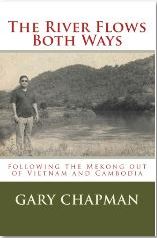
TRFBWcover

Hue and Thin came when they heard a rumor that the plans for the boys to leave by boat had collapsed. Hue did not know where to find them, so she walked around the city of Phnom Penh until she happened to see a man that she recognized as the second helper of the group. He was working with Huu to provide the large group’s daily needs. She said it was a pure good luck that she finally could follow him to the building where the boys were being kept. She arrived just in time, for the group was deciding that they had to disband and return to their homes in Vietnam.

The situation in Vietnam was no better, so Hue made plans with a family that she knew. They would take care of the boys until Hue could make another plan. The boys finally had some freedom to go out as long as they did everything they could to avoid Vietnam’s occupation troops. Dressed in the drab worn clothing of common Cambodian peasants, they could blend into the marketplace and the dusty streets. Loose fitting clothes concealed the fact that they were thin, but not as skeletal and exhausted as most of the Cambodians who had survived the Khmer Rouge years. The people who lived around them were relieved and hopeful, and everyone gratefully returned to holding the regular festivals, but they were still wary that something would occur to bring back the unspeakable horrors of the recent years. Few people complained, so the boys waited with the patience of those who knew they were fortunate, and they shared in the joy of a people who were tasting freedom again. They compared their plight with the fates of many who had not survived, whose countless bones were still piled in open pits and as common floating in the river currents as tree branches.

At the southeast edge of Phnom Penh, the boys lived in a simple house. They walked to the market and practiced the Cambodian words they were learning. Hue could speak Cambodian fluently, so when she was there she had no trouble talking to people. The boys fished in the river that flowed near the house. The family welcomed them for a few weeks, because they had known Hue years earlier in Svay Rieng. She paid them what she could to take care of them, while she returned home to take care of business and consult with her people in Vietnam. Soon that family grew tired of sharing their small space and food with the three boys. Long heard their loud complaints, “How long will we have these boys underfoot? They will eat us out of house and home!” Long knew enough Cambodian to understand when they were swearing at them.

When Hue returned, she found how quickly the welcome to her boys had worn out and immediately made arrangements with another family, her cousins, to take the boys in. Their house sat in the center of the ruins of other houses and shops at the outskirts of Phnom Penh. It belonged to the brother of the cousin whom they called Aunt Phai, who was working on plans to take people across Cambodia to escape through the border with Thailand. The boys watched and waited at a bridge over the Mekong River, along Highway 1 as it headed back toward Svay Rieng.  Trees, flowers and bamboo lined the Mekong River shores, but no boats came to pick them up and take them back toward the South China Sea.
More reflections on Hue’s life in Vietnam, 1979…

15 Sunday Feb 2015

Posted by chaplines2014 in People

≈ Leave a comment

Tags

Vietnam and Cambodia

TRFBWcover

Many of the area residents were Chinese or part Chinese. This was one of several neighborhoods where Chinese immigrants were largely confined. During that time the government conscripted older Chinese youths from the city for forced labor, sending many to Cambodia. They were called “teenage volunteers” and had their pictures taken with shovels to show in propaganda. They served in the countryside to clear bombs and mines and other hard, dirty, menial and dangerous work. They succumbed to starvation and disease. The neighbors said that only one in ten survived to return home. Fortunately many of the Chinese youths in rural areas were not bothered.

Hung’s brothers, Tam Xuan Luu and Huu Thanh Lam, were dismissed from military service. They had worn their People’s Army uniforms so proudly when Saigon had finally fallen. They felt shamed, but because of their years of military service they were still able to get government jobs, though they had lower pay and status.

Our family was glad to get out of Ho Chi Minh City, with the constant stories of people sent away for re-education or work-details, and new restrictions for those who remained. Everyone had to give detailed information about every detail of their lives. Fortunately while they lived in the city, Long was not considered old enough to join the “teenage volunteers,” officially the Vanguard Youth Corps, which continued to be sent out to do jobs that no one else would take, such as clearing mine fields.

In the countryside travel was inconvenient. Even though her papers included the family connections with Go Dau and Tay Ninh, Hue found it hard to get permission to go back and forth. She and Thin had to present papers to get through checkpoints every few miles along Route 1 and every other road, and the soldiers at the checkpoints did not always respond in an understanding way. This presented many problems for Hue’s trucking business. Her mid-sized pick-up truck carried about a half ton of goods found in the country for sale in the city. Often goods were confiscated at checkpoints. She had to apply in the center of the city for a permit to allow people to travel out of the city on board the truck. At every checkpoint officials would count and check paperwork to make sure that names and numbers matched. Many checkers would take advantage of this opportunity to extort bribes for themselves, and if they were not satisfied they would detain the driver and everyone or everything on board. Trying to make a living, even to survive, became harder day by day.

1979: Grandma Tien asks, “What future in Vietnam?”

14 Saturday Feb 2015

Posted by chaplines2014 in People

≈ Leave a comment

Tags

Vietnam and Cambodia

TRFBWcoverThat year of 1979 became the year of the second exodus from Vietnam. The government had tried to organize communal farms in the south, but they produced only years of crop failures. Farmers hid the little bit of rice they did harvest, so that they could feed their own families. Cut off from the rest of the world we no longer had much to buy even when we had money or gold to buy it. With most of the army occupying Cambodia, officials could no longer waste so much effort on road checkpoints, so people could find a way out more easily.

The relationship between Vietnam and China was getting worse every day. Sometimes they were actually fighting each other in Vietnam’s northern provinces. China was pressuring Vietnam to allow people of Chinese descent to leave if they wanted. In places where they had been welcomed and had lived for years, they were no longer trusted. Native Vietnamese called them the “overseas Chinese” in contrast to people who had lived in Vietnam for many generations. We ourselves were somewhere between the two groups, relatively recent as immigrants, but considering ourselves more Cambodian and Vietnamese than Chinese. We had lived here much of our youth and all of our adult life. Where would we go? Anyway, we heard of many other people who were taking advantage of the opening to leave for better conditions. Traffickers began to organize groups emigrating from Cho Lon, on the west edge of Ho Chi Minh City, but the traffickers were charging exorbitant fees. Not long after the emigration became common knowledge, the government began to clamp down, fearing they were losing too many skilled workers, and aware that people other than those who came from China were taking advantage of the chance to leave.

Again we sat at table and talked about the future we could expect in Vietnam. There wasn’t much to look forward to. There was still fruit available for the picking, but more hands reaching to pick it. Fish were available for catching, but more people were trying to catch them. Less rice, and more mouths to feed. I knew what we needed to do, but I would not be able to do it. I was not strong enough. Kia heard and understood what we were talking about, even before anyone spoke the word “leaving.” She announced “I’m not leaving Grandma Tien, and I’m not leaving Go Dau.” We all tried to persuade her that we were only thinking about what was best for each of us, not deciding yet. If we did decide, not everyone would have to go. There was a part of me that was glad that she was stubborn, even as I wondered what her future would be like if she stayed here.

In the end we decided that Kia, Muoi, Mui, Grandfather, and I would stay at Go Dau. Hue and Thin would see what opportunities might be available for the rest of the family to escape through Cambodia. My heart was heavy, but the plan was as sensible as we could make it. We understood that escape was easier through Cambodia. They were in the midst of the chaos following the fall of the Khmer Rouge. The government was disorganized. The borders were as weak as rotten fish nets.

We were most concerned about the boys. Their future in Vietnam was the most unpredictable.  The future held little hope for men of Chinese descent to achieve much. They were not even trusted to take a job as a soldier. Most of my family wanted to leave together, but, without secure arrangements, the boys had a better chance on their own than with a large family. They were not subject to the same dangers as the girls would be. Maybe they could pass for Cambodian Chinese, and blend in for a while, if necessary, and find an opportunity to emigrate with some luck. They could use some of the money we had saved to find a boat headed downriver on the Mekong. It was a plan. We had hope that they had a future somewhere.

Christmas in Camp NW9 (from Ch. 14 “The River Flows Both Ways: Following the Mekong Out….”)

05 Friday Dec 2014

Posted by chaplines2014 in Books by Gary Chapman, Seasons

≈ Leave a comment

Tags

Books by Gary Chapman, The River Flows Both Ways, Vietnam and Cambodia

TRFBWcover

After the night passed, and nearly a full day in all, a truck arrived with Thai soldiers who identified themselves as Camp NW9 personnel. They climbed aboard and traveled another hour until they stopped toward evening outside a line of berms and trenches that surrounded several mat-sided, tin-roofed huts. People were milling around, feeding several evening fires and lighting torches. Single palm trees, saved from the clearing operation, gave the scene the look of an out-of-place beach. The residents seemed to be celebrating, talking loudly, sometimes singing. Stacks of rice bags and other boxes of food supplies sat under an open-sided roofed shelter.

Phuong and Long at first believed that this must be a wonderful place where people celebrated late into the evening instead of facing the sunset curfew which they had come to expect. The camp appeared to be a paradise compared to where they had been. When they began to wonder whether anyone knew they were there, the coordinator arrived. He welcomed them to Camp NW9, that had just opened last May, and he explained that this was Christmas Eve, 1980. They were celebrating Christmas, and singing Christmas carols, since several of the refugees and some of the staff were Roman Catholic.

The residents welcomed Phuong and Long to their Christmas celebration. They learned that Camp NW9 sat about six kilometers from Nong Chan. Just about all of the refugees there were from Vietnam. Most had walked across Cambodia.

Sure enough, after Christmas the curfew returned regularly as the sun went down, so residents had to stay near their huts, walk away only to visit the latrine, and stay off of the main paths. Everyone returned to the routine that included an early morning awakening to the distant sound of artillery shells. Every refugee took the metal cooking oil container that had been assigned to them to get the four liters of water that was their allotment. They had that much and no more for any purpose for which they needed water. Everyone had a paper pass with their hut number on it, and a record was made each time a person received a water ration. Volunteers among the refugees prepared the rice and canned sardine allotments into the meals served each day at noon and early evening. Sometimes the workers served soup, made of a few bean sprouts, lettuce of some kind, and water. There was no variety in the food available unless someone managed to trap a jungle rat or trade for a chicken. Long helped to clean the rats or other animals that men trapped, and he developed some skill in doing it, but while he was there, other volunteers did the cooking.

Newer posts →

Subscribe

  • Entries (RSS)
  • Comments (RSS)

Archives

  • February 2022
  • May 2020
  • October 2018
  • December 2017
  • November 2017
  • October 2017
  • June 2017
  • April 2017
  • March 2017
  • February 2017
  • January 2017
  • November 2016
  • October 2016
  • September 2016
  • August 2016
  • July 2016
  • June 2016
  • May 2016
  • April 2016
  • March 2016
  • February 2016
  • January 2016
  • December 2015
  • November 2015
  • October 2015
  • September 2015
  • August 2015
  • July 2015
  • June 2015
  • May 2015
  • April 2015
  • March 2015
  • February 2015
  • January 2015
  • December 2014
  • November 2014
  • October 2014

Categories

  • beach
  • Books by Gary Chapman
  • canoeing
  • Caring
  • Cherokee history
  • Church
  • Citizenship
  • Death
  • Disabilities
  • Events
  • Faith
  • Farm
  • fighting fires
  • Forest
  • Garden
  • Growing up
  • Gullibility
  • guns
  • Health
  • Hiking
  • House
  • Innocence
  • Learning from mistakes
  • Life along the River
  • Miracles
  • Nature
  • Patience
  • People
  • Prayer
  • Racial Prejudice
  • rafting
  • Running
  • Seasons
  • Small town life
  • Suffering
  • Travel
  • Uncategorized
  • Vehicles
  • Volunteering
  • Words
  • Yard

Meta

  • Create account
  • Log in

Create a free website or blog at WordPress.com.

Privacy & Cookies: This site uses cookies. By continuing to use this website, you agree to their use.
To find out more, including how to control cookies, see here: Cookie Policy
  • Subscribe Subscribed
    • chaplinesblog
    • Join 71 other subscribers
    • Already have a WordPress.com account? Log in now.
    • chaplinesblog
    • Subscribe Subscribed
    • Sign up
    • Log in
    • Report this content
    • View site in Reader
    • Manage subscriptions
    • Collapse this bar
 

Loading Comments...