• About
  • Celebrating our decades…
  • Welcoming all and inclusiveness

chaplinesblog

~ everyday and commonplace parables

chaplinesblog

Monthly Archives: March 2015

Fog on the Great River Bridge

14 Saturday Mar 2015

Posted by chaplines2014 in Travel

≈ Leave a comment

IMG_0002

I was approaching the Great River Bridge, driving East on 34. The winter fog rose and spread directly above the Mississippi, obliterating all familiar markers with its hungry white haze, as if the whole world had transformed into this blank computer screen, waiting for us to create something of it. The Great River Bridge itself rose into the haze with its five lanes lifting into nothingness.  

The car ahead of me disappeared. It looked like the bridge ended midair, and we would just drop off into the river, no matter how massive and secure the bridge must still be. There was that natural reactive moment of alarm, and just as quickly, the disclaimer of foolishness.  

I had not planned to drive across the bridge. I was going to take the Front Street exit. But there was an appeal from the fog, just to prove that the bridge was still there. There was a temptation just to find out. Should fear, even a momentary flash of it, dictate direction? How quickly we can become disoriented, even when we think we know where we are! 

Is this wide road like the one which, biblically, “leads to destruction?” Or is it the familiar structure that has proven itself by experience to be reliable, secure? How do we know that it is going to be the same this time? As the skeptic David Hume indicated, there is no provable necessary connection between what has been and what will be. There are unknowns which may change the experience, and surely eventually will change it.  

Everyone else was traveling with me at speed limit, trusting the unseen. Did they too have a moment of doubt? Did they just continue on automatic pilot? 

This time it was daunting enough just to take the exit. Its curve was obscured as well. Next time? Who knows? Maybe I’ll accept the invitation from the upper atmosphere. Maybe the bridge will rise above the fog. Maybe a multi-vehicle pile-up will greet me instead. Maybe….

July, 1834, on the footpath along the Coosawattee River in Georgia

13 Friday Mar 2015

Posted by chaplines2014 in Cherokee history

≈ Leave a comment

Tags

Our Land! Our People!, The Trail of Tears

Cherokee Star

Followed by Little Wolf, David herded two large oxen down the path past the last cabins of Coossawattee Town as they headed toward home. “Now I have this problem,” he said half to himself. Little Wolf looked up at his father, but didn’t say anything.

“How do I tell your mother that I spent most of a year’s income on these oxen?”  They walked on for a while in silence, only the swishing of the oxen tails and the clop of their hooves making any sound to compete with the midsummer locusts. “Do you suppose it will help to tell her that I bought them from Samuel Lattamore? That’s her clan brother who’s married to your aunt Rachel, even if we don’t see much of them.” Little Wolf just kicked a little dust in reply.

“I suppose we’ll know soon enough if she minds my buying them. I could take them back if I can’t persuade her that we’ll need them, but I hope that I can.”

A small outcropping of limestone, typical of the region along the lower river, gave way to the clearing where their first field showed the corn in full tassel, and the squash and bean vines growing abundantly between the stalks.

“Just a little bit farther and I’ll have my answer.”

Not far from their house David saw Allie standing in the small cotton patch, inspecting the blossoms.  He called to her. “I think you’ll have a good crop of cotton,” he called as soon as he thought she would see him.

“Where’d you get those?” she answered. “I don’t remember talking about buying a team of oxen.

“You’re right. We didn’t. I saw Sam Lattamore in town. He delivered a new wagon to John Martin. He drove it all the way from the Hiwassee River in McMinn County, and I was admiring this pair of oxen. He said he’d sell them, too, since he’d raised them, and didn’t need them himself, and Judge Martin already had ten good teams.  So I offered him thirty dollars, and we settled at forty. But if you don’t think we should buy them, I’ll take them back.”

Allie pursed her lips and began to examine them, as she thought about it. She rubbed her hands over their flanks and examined their mouths and teeth. “No, I think you did all right. I’d been wondering how we would move our stuff when the time came, and a good working team will help us in the field wherever we are. So you are safe this time. But I don’t want you to get used to spending our money without talking to me. This time I agree that you did well in buying them when you did.”

David breathed a visible sigh of relief and gave Little Wolf an open-eyed look and a wink. “Little John helped me make the decision. He’s going to be a bargainer like his Grandpa, I think.”

“I suppose so,” was all that she said. “Did you hear any news?”

“Sam says your clan relatives are all as well as can be expected. They heard from Arkansas. Your mother Ruth is strong as ever. She is herding more cattle. They heard from your aunt-mother Nancy Starr. They are prospering with their mill and holdings there at Evansville. They said they are ready for more of their family to join them and hoping it will be soon.”

Allie answered, “It’s already been ten summers since Nancy and Caleb moved out there. I didn’t dream we would even consider going there. It’s been hard to have the family so far apart.”

David continued, “The people are getting ready for the Green Corn Festival. There are special preparations at New Echota, the largest festival ever, they say, a full week of stomp dancing, fasting and fresh corn feasting, stick ball, scratching ceremonies, everything. I suppose we should plan to go.”

“Hmmph. I don’t think I want to leave Old Coosawattee Town this year. We should prepare a gayugi[iii] to take care of old Deaf Nancy’s fields, and it seems strange to me to leave Old Coosawattee when it may be the last time we get to celebrate here. There has been a green corn festival here for as long as anyone can remember. The old people would surely miss it if everyone went to New Echota instead.”

David stepped close to her and wrapped his arms around her. “I’m glad you feel that way. I’d rather be here myself, and, you’re right, Deaf Nancy could use our help. That should come first. We can get a dozen or so to form a gayugi for her, and then we can celebrate in the old style, even if most of the town goes away. Besides, even with the ban on liquor, someone will sneak it in when the crowd gathers at New Echota. Someone is always spoiling the old ways.” Then he and Allie shared a strong kiss, even while Little Wolf stood silently looking at them.

“One other piece of interesting news, though I don’t know what it means. Sam said that his brother-in-law James Starr, and another of your clan brothers, John Walker, Jr., are in Washington with Andrew Ross, trying to negotiate a plan with Andrew Jackson.”[iv]

“They can’t do that!” Allie protested. “They don’t have any authority. They can only get into trouble with the people!”

“My feelings exactly. But that is what he said, and that is what I heard from the four winds as well, though less politely.”

“It’s already being talked about, then. This will be awful for them. “Allie paused for a moment before she continued. “We should name them Cain and Abel.”

“What?” David asked, confused.

“The oxen. We should call them Cain and Abel, because of the division growing among the Ani Yun’wiya.[v]”  She then sat down with Little Wolf and explained to him the bible story that gave the oxen their names.

[iii] A gayugi was a communal show of support.

[iv] John Ehle, Trail of Tears, p.266

[v] The Ani Yun’wiya are the Principal People, the traditional self-designation of the Cherokee Nation. The name “Tsa’ lagi” (brought into English as Cherokee) is of uncertain origin and meaning.

What is that smell… on the Appalachian Trail?

12 Thursday Mar 2015

Posted by chaplines2014 in Forest, Hiking, Seasons

≈ 1 Comment

Tags

Appalachian Trail

IMG_0002

What is that smell? My brother and I found ourselves asking that question as we hiked along the trail. The odor resembled garlic or onions, strong and persistent in a local area, then as we walked on, it vanished. Sometime later the odor came strongly again. We looked around to see if there were some kind of onion in the vicinity, but all we could find was wild ginger, trillium and mayapples. The area was wooded and shady, of course; virtually everywhere along the trail was wooded; oak and maple predominant in this particular area, about 2500 feet in altitude. The soil was noticeably loose and rich, full of humus, with the mountain slope providing plenty of drainage.

I thought it was the wild ginger. I have a small patch of wild ginger in my garden, but I’ve never noticed a distinctive odor coming from it. The roots are supposed to be usable as an herb, similar to the ginger found in grocery stores, but not botanically related. Still I surmised that the odor of such large amounts of ginger might be strong, as the flavor usually is. I have little experience of wild ginger, certainly none of patches that are as large as tennis courts. I took a leaf and a stem and crushed them in my hands, and all that came out was a fresh grass-like scent. I smelled the soil around the ginger, and although the ambient area was filled with the distinct aroma, the soil smelled like, well, soil.

Dave thought it smelled like ramps. What are ramps? He had attended a ramp festival somewhere in North Carolina. They cooked with ramps, and told stories about ramps, which are popular in the Appalachian region. He didn’t particularly like what he had tasted, which is unusual for my brother, but he knew that people collected ramps in the mountains.

Still there was no sign of an unusual plant. We walked on until we came to another patch of wild ginger, where the aroma was again strong. Every time we entered a large patch of ginger, which was regularly at the same altitude and type of environment, the aroma came. I guessed that the aroma percolated up through the soil from the roots.

Maybe ramps and wild ginger are the same plant? We wondered about it, but walked on without knowing. Recently I took the time to investigate further. Wild ginger, which I had correctly identified, is Asarum canadense. Ramps are an entirely different plant, scientifically identified as Allium tricoccum and Allium burdickii. Both wild ginger and ramps show up in the same kind of mountain environment. Ramps look something like lily of the valley, but the leaves die back after their spring appearance, leaving the onion-like bulb in the soil.

My favorite story about ramps, also called “wild leeks,” comes from their seasonal character. Mountain families would find and use them alongside morels and other mushrooms in their spring cooking. Children often enjoyed ramps’ sweet taste, and ate them like candy, with the problem being that a vile smell oozes from people’s pores for days after eating them. Children were often excused from school for those days.

So we have to go back. We have to dig up the roots and see whether there are some onion-like bulbs among all those wild ginger roots. We will put our trowels to use in this scientific quest, which is different from their typical use along the trail.

May you find yourselves on fruitful quests throughout the coming spring. May your curiosity be piqued and your senses be stirred with aromas, flavors, sights, sounds, and textures in limitless variety. Taste and see that God is good.

At the foot of Blood Mountain

12 Thursday Mar 2015

Posted by chaplines2014 in Hiking, Seasons

≈ Leave a comment

Tags

Appalachian Trail

IMG_0002

We left the Appalachian Trail at the foot of Blood Mountain in Georgia. The next fifteen miles climbed the mountain and descended the other side. Near the highest point in Georgia this section of the trail is the most popular and scenic stretch in that state. At mountaintop sits an eighty year old rock cabin that serves hikers as a shelter from the storms that sometimes rake the barren summit. Prominent signs warn hikers to carry water from the spring a mile below the summit if they plan to stay at the cabin overnight. It is not supposed to be an easy climb, but the rewards on the other side include a fully stocked store and showers at the foot of the mountain’s other side. As near to heaven as the AT gets. 

The name of Blood Mountain intrigues us. Known by that name before the Europeans came people assume it came from a prehistoric battle between native peoples. Over the thousands of years of human habitation every space on earth has seen its share of blood, but occasionally the toll is heavy enough to mark the sites with lasting titles that warn us– Starved Rock, Devil’s Den at Gettysburg, the Crater at Petersburg, Wounded Knee, Little Bighorn. Those places all have tragic stories to tell, and so, I suppose, does Blood Mountain, but the details of the story were lost and so the name became generic and universal. 

So we planned to return to the trail  to pick up where we left off, knowing that this mountain is a symbol of a universal and hopeful quest that we will someday climb beyond the stories of slaughter to a place of refuge and serene circumspection. From that vantage point we will see in perspective all the paths traveled by people with plans that intersect and plans that merge, where either cross-purposes or reconciliation could emerge from the deep woods and thickets with just a slight turn of the compass.  

Already some people have climbed that mountain and achieved such perspective, following the leader up to the top. How heavy that burden must have been, weighed down as it was with so many rivers of blood, before he arrived there, and foretelling so many more needless sacrifices to follow. Yet he carried it, with a little help from yet another hapless victim chosen at random to add to the burden of insult. He carried it up to the top and then still higher as he ascended to the place of thrones and final judgments. 

Again we mark Jesus’ ascent of a cross and of a path to heaven. Again he tells us to put away our swords and suffer the temporary humiliations of defeat while at the same time we accept the stronger force of stubborn love to insist on healing instead of harm. From the perspective of a bloody mount we look all around at the world God has made, and see how beautiful it can be.

An abandoned village on the Appalachian Trail

11 Wednesday Mar 2015

Posted by chaplines2014 in Hiking

≈ Leave a comment

Tags

Appalachian Trail

IMG_0002

The gap between the mountains was broader than many, about a half mile of relatively easy slope or level ground. My brother and I had read that there was a mountain village here between 1750 and 1900, and the last building, a church, had burned down in the 1930’s. All that remained would be a gravel road, a cemetery that had once surrounded the church, and a 12 acre clearing that still produced some hay.

As we walked down the Appalachian Trail toward the abandoned village we began to see some signs of stone foundations, overgrown pathways, and finally the road and the clearing. We wondered where the churchyard was. The guidebook was deep in the pack, so we didn’t dig for it, not remembering whether it told us more details or not. We explored the edges of the clearing for a while, but there were no signs of gravestones or anything other than timothy grass and weeds. Under the trees, deep ruts marked where streets had been. Since it was noon, we sat on some rocks that others before us had obviously used, and enjoyed our jerky, granola and water. Afterward we spent a little more time looking for that churchyard, wondering whether names and epitaphs would tell us more, but we didn’t find it. There were no wooden structures visible above the brush, no rock chimneys, no markers, just the depressions in the ground where once people lived and worked– who and how many, anyone’s guess. Whether they were some of our mountain ancestors or not, we had no clues. We met no one else in that place. We decided to walk on.

Across the earth the story repeats. Where once communities thrived for a time, sometimes for hundreds and thousands of years, there is little left to tell us. The accomplishments and monuments of the past disappear to all but the diggers and the story-tellers.  We walked on in silence for awhile, imagining what life was like and what major events in people’s lives went unrecorded in that place. The hundred years that had passed might as well have been ten thousand years before, when the first people had come to those mountains.

If people had lived there for a hundred fifty years, or thousands, was it a failure of community that emptied that high pass, or simply time to move on, as for my brother and me in our much shorter stay? Even if we didn’t find it, was it a sign of the people’s endurance and faith that the churchyard had been among the last signs of occupation? Or was it the clearing that remained a hayfield that became the last will and testament to future passersby?

If we had dug in our pack and found the book, we would have known that the gravel road that intersected our trail would have led us down a gradual slope, around a bend, and ended at that churchyard a half mile northwest of our explorations.   We were just not industrious enough to dig the book out and walk that far off our trail. It would have rewarded us. The book says that families gather there for reunions every summer. They must know the stories of the earlier days, and tell them to each other then, and continue the caring that began in that place. The road itself is their monument.

Dog Boy on the Appalachian Trail

10 Tuesday Mar 2015

Posted by chaplines2014 in Hiking, Seasons

≈ Leave a comment

Tags

Appalachian Trail

IMG_0002

Dreaming about summer, I dug up this Chaplines from 2005:

Dog Boy* came trotting down the trail alongside his Irish Setter late afternoon on July 11. Brother Dave and I were staying our first night on the Appalachian Trail at Gooch Mountain Shelter. We shortened that day’s hike to five crow-fly miles due to the soaking rain, from tropical storm remnants of the two early season hurricanes. We had had an alarming experience at Gooch Gap, where lightning had us hunkered down for thirty minutes, after we had searched in vain for the shelter that used to be there.

We decided to stay at the Gooch Shelter a mile and a half farther after we finally found it. It was eight intensely hard miles to the next shelter, and tenting in a soggy campsite was no match for the dry shelter, even with its one side open to the air. Dog Boy explained that he was a trail runner, and his banter raced even faster than his scrawny legs.

“You got a cell phone? (Yes). Can you get a signal? (No.) If I could get a signal I’d just stay here all summer and work from my camp. I might just do that anyway. I live in Atlanta, but here is where my real home is. I’m camped up at . . . [Five minutes later.] Did you know you’ve got a Scout Troop coming, about an hour behind me? Three adults. Six tired and sore boys. They’ll probably sleep tonight . . . [Another five] You’ve got synthetics to wear? [Our wet synthetic clothes were stretched out on lines under the shelter roof to “dry.”] You can’t survive out here without synthetics. If I were teaching a course on hiking the AT I would just toss all the hikers, shoes and clothes and all, into a swimming pool, and then make ‘em hike for a week. That would get ‘em used to what it’s like. You never can dry out. Socks and shoes just stay wet all the time. . . [At one point I did manage to squeeze in a question about the river crossings that lay ahead of us; Dave and I both had imagined trying to cross swollen streams walking on a narrow slippery log.] They’re OK. Got a little foot bridge on one and some slippery rocks to walk across on the other. Just get your feet wetter, that’s all. I’ve got . . . .” [The Irish Setter listened more patiently than I.]

Forty minutes later, after his discourse on wilderness survival and environmental protection, the first instalment of Scouts arrived, and we moved our things aside. There would be plenty of room in the double decker shelter for all of us. Dog Boy stayed a few more minutes, then took off, saying he hoped to be back at his own tent camp, next to a Forest Service road, shortly after dark.

The next day we did indeed see Dog Boy in his camp, explaining the facts of AT life to two other hikers. We waved and slipped past. It was reassuring to know that he was not an apparition, since the mists and sounds of the wilderness made everything take on an other-worldly mantle. We met no one else until we came into the next shelter at Hawk Mountain.

Trail runners scout the trails regularly to make sure they are passable, to make notes of where fallen trees must be removed and paths restored, to find the lost and discouraged stragglers, and, obviously, they have other social or anti-social agendas as well. We didn’t meet another, but there were plenty of signs of regular volunteer maintenance on the trail. With the wash-outs and recent windstorms there was a lot to be done soon. We appreciated the warning about the fallen tree that was covered by a huge lush poison ivy vine. Climbing over it or through it was inadvisable. Climbing around it took us through more poison ivy, but we at least had a chance soon to wash the ivy oils off our legs.

With small captive audiences who really do need a lot more advice, and plenty of trails to maintain, and a wonderful, extraordinary environment in which to work, trail runners are an unexpected and unremarked feature of the trail experience. Not a bad job to have. Come to think of it, I think I had that job for a lot of years.

* An old Appalachian Trail custom is for hikers to adopt a “trail name” while hiking the AT. Nobody needs to know the name you use in the rest of the world. Dog Boy introduced himself with this trail name.

April, 1831, along the Coosawattee River in Georgia

04 Wednesday Mar 2015

Posted by chaplines2014 in Cherokee history, Racial Prejudice

≈ Leave a comment

Tags

Our Land! Our People!, The Trail of Tears

Cherokee Nation laurel and star

The horses and the cows were grazing in one of the fenced lots near the small log barn, and the plow sat near the gate. David was hoeing in the field, and the sun was beginning its final descent into western horizon. At the edge of the field Little Wolf had his own small hoe and wielded it with the sporadic determination of a two year old. His mother, Allie, his “Uji,” was within calling distance as she worked in the garden nearer the house, lifting and resetting small green sprouts.

The sound of a trotting horse turned their faces to the road that ran by their house and farm. The rider was coming from the Southwest along the river road, and soon they could see the calico shirt, buckskin pants, and dark skin of Ezra, a trusted slave belonging to Uncle Jack.  He turned his horse in David’s direction as soon as he saw him standing in the field.

“Your brother been arrested,” he said breathlessly to David as he slipped off the horse. “Happen this morning near New Echota, when Jack out to buy some salt pork for his store. Not know what happen to him when he not come back when he said.”[iii]

“Who arrested him?”  David interrupted.

“Georgia Guard. I find out when I go find Jack. Wife of old man Sawney see it happen and tell me. The soldiers come up the road with white man who claim old man’s place belong to him. Jack not happy and get mad. Tell white men to go back and leave old man alone. Soldiers arrest both and take ‘em away. Say they will sell ‘em for slaves.”

“Do you know where they took them?”

“No. I go back to New Echota and tell Mr. Boudinot what I find out. He gets his man Caleb and they go to look for him.”

“Thank you, Ezra. Come with me and we’ll get something for you to eat. I’ve got to think about this. The Georgia Guard no longer has to have a reason to do what they do.” David took the reins of the horse and led it back to the stable.

Allie and Little Wolf had come up behind them and heard their words. Allie escorted Ezra to their house and offered him the basin, water pitcher, and towels sitting on the porch for washing hands and faces, and they each in turn used them. After she had cleaned up Little Wolf, she went inside to prepare for their meal.  Spreading a fresh muslin tablecloth, she began putting brown stamped pottery bowls and metal spoons on the table, preparing for the stew that she had simmering in a black pot hanging above the coals in the fireplace. Taking the loaf of corn bread from a sideboard she cut it into thick slices on the table. She set a pitcher of goat’s milk and four cups in easy reach at the center of the table. Next to it she placed a large bowl of mixed berries and a wooden spoon. Finally, she took the bowls to the pot and filled them with a steaming mixture of meat, broth, and vegetables. By that time, David also had cleaned up and come in.

David said, “Please sit down, Mr. Ezra. We are grateful to you for bringing us word of our brother.”

Ezra hesitated a moment,  then sat down quickly on the bench and rubbed his hands together. The others sat down after him. David thanked the Creator Spirit for the food on their table and their guest, and asked help for his brother, and they began to eat.

“You stay here tonight, Ezra. You and your horse have travelled far enough for today,” David said, after a few quiet minutes. “I will go back to New Echota and see if there is any news from Elias. If not, I will stay at Jack’s store until I have been able to learn something. I just hope that Jack is able to keep his temper under control. He could make matters worse if he loses it again.”

“I go back tonight,” Ezra said. “My horse is strong. I don’t rest here. Your brother needs me to work at store when he gone. We take road slow. Full moon tonight helps us.”

“I wish you could both wait until morning,” Allie said. “But if there is anything to be done, I know you want to get right to it. Perhaps John Martin could advise us. If he is here I will find out in the morning and speak with him. If he is in New Echota you must speak to him.”

“Yes, I will also see if John Ridge is getting back from his trip to Washington with any news.[iv] If I know my brother Jack, he will try to bribe his way out when he finds a greedy officer. Sorry to say, that is probably the best way to handle it. We don’t need yet another case that stands on principles, because Georgia has none. The governor will just stand with his back to the wall and fight like a wildcat, and keep people in prison. We have to get Jack out if we can.”

[iii] The account of John Adair Bell’s arrest comes from The Cherokee Adairs prepared by the Adair Family Reunion Book Committee, published by the Cherokee Nation 2003, page 26.

[iv] The account of John Ridge’s delegation to Washington D.C. in mid-1831 and his meetings with President Jackson are recorded in Chapter 15 of John Ehle, Trail of Tears: The Rise and Fall of the Cherokee Nation (New York, Doubleday, 1988), pages 240ff.

The Discard pile at Delmo

03 Tuesday Mar 2015

Posted by chaplines2014 in Events, People, Travel

≈ Leave a comment

Delmo 1

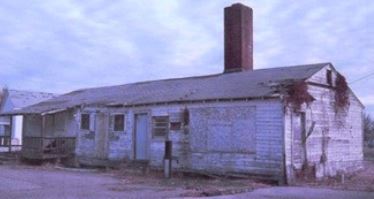
During a winter school break, back in 1977, I took a group of high schoolers from Tilton, Illinois, to Delmo Community Center, at Homestown, in the Missouri Bootheel. We loaded many boxes of good used clothing and groceries into a borrowed truck, and ten students into two cars, and headed south southwest. The weather was cool and gray overcast, but as cooperative as we could expect for midwinter. The church had contributed to Delmo for many years, but no one had visited at any time that anyone remembered.  When we arrived the first thing that we did, with the guidance of a gracious older staff member, was to tour the facilities and to drive around the area. The community center consisted of a barracks-type utility building, about sixty by thirty feet,  left over from the end of the Great Depression, a church and a bunkhouse  in varied conditions of maintenance and decay. Nearby, Pemiscot and New Madrid Counties showed several crowded housing developments of similar age and condition, filled with nearly identical four room cottages, mostly segregated by race, set in the middle of cotton and tobacco fields, a taste of the deep south in this appendage of Missouri. It was culture shock for our blue collar but relatively comfortable contingent.

Returning to the center, we entered the utility building that housed the thrift store, packed full of goods, and suffering from a leaky roof that left the unmistakable odor of mold and mildew in the place where we would be working. Instead of unloading our donations into the space, we knew that we had a major clean-up to accomplish first.

We spent a day sorting and organizing the clothing and household goods that were there. Every piece of clothing that was damaged was piled outside on the ground in the drizzling rain. The store was supposed to be open again at noon the next day, and we had a lot to do to get it ready. We organized into work crews, and after the existing goods were finally in order, we unloaded the boxes we had brought and placed them neatly onto the racks, tables, and shelves. At the end of the day, we knew that we could have it ready for the reopening the next day. The areas under the leaky roof were cleared of goods, with buckets in place, and the pile of discards outside reached above our heads. We planned to load the discards onto the truck the next day and take them to a landfill.

Our group relaxed for the night in the bunkhouse across the parking lot, enjoyed the warmth and the kitchen for our meals, played some games, sang some songs and slept till 7:30 in the morning, when we rose to a light snowfall and some noise outside. We could see that people were coming and going from the area, but we didn’t know why. When we finished breakfast we returned to the store and saw that the discard pile was almost entirely gone. Only a few of the worst items remained. Neighborhood residents had come to claim the things that we thought were too bad to sell for pennies or to give away inside. As one of the women still there explained, she could turn the things she was holding into usable items. She would wash and mend, take apart and remake, until she had children’s clothing, quilts, aprons, and all kinds of things that could be used. Her plans were multiplied many times by the others who had carried armfuls of the pile away.

We returned to our work, chastened by the new knowledge that our judgments were impaired. After the store reopened people came back, and checked out with normal armfuls of used goods, still celebrating the windfall taken from the discard pile outside and warmly welcoming us into their community.

https://preservemo.wordpress.com/most-endangered/2011-2/ and http://www.nps.gov/nr/feature/afam/2010/delmo_community_center.pdf

February, 1831, at the Bell General Store, Coosawattee Town in Georgia

03 Tuesday Mar 2015

Posted by chaplines2014 in Cherokee history

≈ Leave a comment

Tags

Our Land! Our People!, The Trail of Tears

Cherokee Nation seal and stars

At the edge of the flagstones in front of a smoldering fire in the fireplace, Little Wolf sat on the wood floor playing with pick-up sticks, listening to the older men who sat around. They took turns talking, with the silences longer than the sentences. Uncle Jack’s general store was a low-ceiling cabin with shelves covering the outside walls, filled with bolts of fabric, tools, cans of coffee, tea, and tobacco, herbs and spices, guns and ammunition.

The half-breed Jim Stone[i] spoke, drawing from his long-pipe after every few words, and letting the smoke out as he spoke, “It was not enough for them… to take the gold from the mountains. They had to take the mountains, too. Then they wanted the fields and barns… the houses and towns and rivers. They want it all, make no mistake. Until they eat it all up, eat the people, too. Like a monster alligator, crawling from the swamp.” Then he accented his words with a “Hummph,” the signal that he was done and another man could speak.

Jack Dougherty was next to speak, “There’s no one left to stand with us. Jackson took his soldiers home to Washington. Georgia does whatever it wants. They even threaten to put the preachers in jail—Worcester, Thompson, Mayes, Trott, Butler, Clauder. It doesn’t matter what church they come from, they will take them all to court, threaten to keep them in jail if they stand with us. We have to stand alone. Hummph.”

Then Young Turkey took his turn. “We have a good crop this year. We could take the corn and buckwheat and our animals into the hills, and make our stand there. We know the land better than the Georgia boys. There we have a chance even when they outnumber us. Hunh.”

“That works for us, but what about our wives and children, our old people?” Wat Sanders asked. “This has been our land for many generations. This has been our town since our grandfathers fought the Creek and won it. How can we run away from the graves of our fathers? When we leave this place we will not be able to come back, even if we make a stand in the mountains. I think we must stay as long as we can, stay in our houses, stay on our farms, until they force us out. Hummph.”

[i] This name and the other names of Coosawattee Town citizens are borrowed from  Don L. Shadburn, Cherokee Planters of Georgia, 1842-1838 (Cumming, Georgia: Don Shadburn, 1989), pp. 241-246. The personal characterizations are fictional.

Letter from the “Good Old Days”…things gotta change

01 Sunday Mar 2015

Posted by chaplines2014 in People, Racial Prejudice

≈ Leave a comment

Tags

Carl and Bessie- True Friends

Bessie Coen

Bessie Coen

Rose Hill, July 19, 1914 [Miss Bessie Coen, Marshall Ave 3201, Mattoon] 

Dear Bessie, I will answer your most kind and welcome letter which I received last Friday and was sure glad to hear from you. How are you standing this hot weather? I suppose that you are at the park now. It is 7:30 clock. I would sure like to be with you. It seems like a long time since I saw you. I am thinking about going up to my sisters one day this week. If I do I think I will drive over next Sunday eve if I can but Bessie don’t look for me until you see me coming. 

Oh that was too bad about that colored man. I don know when things are gonna change but they got to. I had some bad luck the other evening. One of the horses run away with me but I didnt get hurt very bad. I got two ribs broken But I get out pretty lucky. I havent worked much since. I am going to try to work tomorrow. Well Bessie I must close for this time. Answer soon. Good by from your true friend, CW


Newer posts →

Subscribe

  • Entries (RSS)
  • Comments (RSS)

Archives

  • February 2022
  • May 2020
  • October 2018
  • December 2017
  • November 2017
  • October 2017
  • June 2017
  • April 2017
  • March 2017
  • February 2017
  • January 2017
  • November 2016
  • October 2016
  • September 2016
  • August 2016
  • July 2016
  • June 2016
  • May 2016
  • April 2016
  • March 2016
  • February 2016
  • January 2016
  • December 2015
  • November 2015
  • October 2015
  • September 2015
  • August 2015
  • July 2015
  • June 2015
  • May 2015
  • April 2015
  • March 2015
  • February 2015
  • January 2015
  • December 2014
  • November 2014
  • October 2014

Categories

  • beach
  • Books by Gary Chapman
  • canoeing
  • Caring
  • Cherokee history
  • Church
  • Citizenship
  • Death
  • Disabilities
  • Events
  • Faith
  • Farm
  • fighting fires
  • Forest
  • Garden
  • Growing up
  • Gullibility
  • guns
  • Health
  • Hiking
  • House
  • Innocence
  • Learning from mistakes
  • Life along the River
  • Miracles
  • Nature
  • Patience
  • People
  • Prayer
  • Racial Prejudice
  • rafting
  • Running
  • Seasons
  • Small town life
  • Suffering
  • Travel
  • Uncategorized
  • Vehicles
  • Volunteering
  • Words
  • Yard

Meta

  • Create account
  • Log in

Blog at WordPress.com.

Privacy & Cookies: This site uses cookies. By continuing to use this website, you agree to their use.
To find out more, including how to control cookies, see here: Cookie Policy
  • Subscribe Subscribed
    • chaplinesblog
    • Join 71 other subscribers
    • Already have a WordPress.com account? Log in now.
    • chaplinesblog
    • Subscribe Subscribed
    • Sign up
    • Log in
    • Report this content
    • View site in Reader
    • Manage subscriptions
    • Collapse this bar
 

Loading Comments...