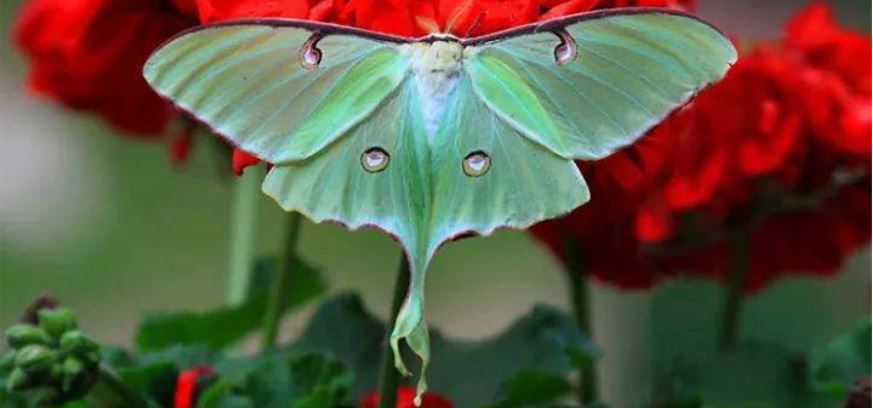
Bruce and Cathy Larson opened the door.

Tags

, , ,

Luna moth

Bruce and Cathy Larson opened their door… to their neighbors who were trying to maintain their homes in Chicago’s Lincoln Park neighborhood in the face of a major urban renewal project that would wipe out many blocks of moderate income housing and replace them with high income condominiums. They volunteered to work for the Independent Precinct Organization’s efforts to stand with these neighbors and protect their homes and investments in their neighborhood.

Bruce and Cathy opened their door… to me as I went door-to-door canvassing for support for the IPO’s project and resistance to the city plans. They served me herbal tea each time I stopped to talk with them. They loved their multi-cultural neighborhood, interesting people, old houses, and Chicago’s only authentic beer garden. They found the city plans to be disappointing and discriminatory, destroying a a rich culture and replacing it with a moneyed elite.

Bruce and Cathy opened their door…  to the Lutheran congregation they served by choice at the same time that they opened their congregation to  commitments to service with their Latin and African American neighbors, young and old, their old union-organizer, artistic,  political dissident, and nonconformist folks of all stripes.

Many people came in and out of their doors. I was privileged to be among them for several months.

One night, after they put their two small children to bed,  they opened their door…  to someone they probably knew, or whom they believed they should know, as Jesus would have opened the door, or as Jesus came to them in the form of someone in need. That night Bruce and Cathy were stabbed to death in their living room.

As far as I know, their murders, back in 1969, remain unsolved. Holy Week seems a good time to remember such a fine couple in Christian ministry, who opened the door of my heart to the needs of people I had not met before,  and to the sacrifices that sometimes are required in the attempts to  serve.

April 17, 1865, at the New Salem Universalist Church

Tags

,

Cherokee Star

Following the Easter worship service, Rev. William Gamage greeted people at the front door beneath the bell tower that stood in the southwest corner of the white frame building. He thanked people for inviting him to come from Barry to lead their service in the absence of a regular minister, and he said repeatedly that, “Yes,” he agreed that it was a terrible thing that President Lincoln was assassinated on Friday, and “We must pray for our nation in this time of testing.”  The news of the assassination had spread everywhere on Saturday, and the church was full of mourners, in addition to the regular Easter crowd.

Thomas Gray held the arm of his wife Catherine, to help her walk, since she was finding that arthritis affected her more every day. Their newest grandchild, Bennett Foster Bell, a month old, had been baptized that morning, and then his father, John Bell, had to carry the colicky baby in and out of the service, when he cried out of his discomfort. Willie Ann corralled the other children—Tommy, Irene, Art, and Jimmy—while they sat quietly. The Bells were among the last to leave the church building, following Willie Ann’s parents.

“Thank you for your comforting words,” Thomas said to Rev. Gamage. “We would be happy if you saw fit to come here regularly to lead us, Brother Gamage.”

“I appreciate your saying that,” Rev. Gamage replied. “The congregation does need someone, especially in times like these.”

“Yes, we do. We were just beginning to breathe freely again, with the war finally coming to an end. Now the future is cloudy again, with more storms ahead, without our dear President to lead us. I wasn’t for him at first, when he ran for the office, but he won my heart with his wisdom.”

Rev. Gamage turned to John Bell, and asked, “Are those your feelings also, Brother Bell? You come from a different part of our country.”

“Much the same, yes, sir. In my experience the wisest and bravest of my people are among the first to be killed, when their enemies finally have the chance to do it. We have lost many of our best leaders, in the same cowardly way that President Lincoln was taken. Somehow the God of All helps us through the troubles anyway. It takes a lot of trust to keep going, and keep believing, but God provides a way.”

“Well said, Brother Bell. You could have given the message for us all today, in just those words,” Rev. Gamage replied.

In that month John transferred the last of his land holdings south of New Salem to his father-in-law, and concentrated his attention on the land he held north and northwest of New Salem.[i] He owned more than enough land to support his family, and the prospect of having men home from the war and eager for work gave him and Willie hope. Maybe they could expand some of the fields and pastures, reduce the wooded areas, and hire workers to help with the farming. John might not have so much work to do on his own, and keep sickness at bay.

[i] The Pike County Clerk land records show several parcels changing hands among neighbors with John Bell releasing southern township ownership from 1857 to 1865.

The unnatural event of resurrection

Tags

,

purple butterfly

“The first fruits of those who have died” (1 Corinthians 15:20). Even the metaphors of resurrection connect us to nature. In our area the serviceberry, also called the shadblow, is among the first bloomers and the first fruits of spring. We rejoice in the renewal of natural life that spring provides. Easter fits right into nature’s course. Even the name Easter brings to mind the ancient religions of natural renewal. Every Christian festival makes a connection to some phase of the agricultural cycle, just as the Jewish festivals that preceded them made those connections between God’s great historical actions and the natural cycles of life.

But resurrection is not nature in any typical observation. We do not ordinarily see resurrections. We see metaphors for rebirth in butterflies and seemingly dead plants and seeds springing to life. We see deserts blossom in the rare showers that fall. We see the persistence of life in extremely frigid and extraordinarily super-heated conditions, and the superabundance of life in most places on earth. But we also see extinctions, endangered species, the alarming die-offs of chunks of this interdependent environment of the earth, which we know will never be duplicated or replaced. We see deaths without visible resurrections.

Thanks to Jesus and his early followers we have our imaginations inspired by events with a claim to history, if not to nature. It was not a natural phenomenon that they proclaimed, although before them many had dreamed of resurrections of the dead. There was no divorce from the body in their thoughts, though other peoples had dreamed of a soul separating from the body at death. This was not the Hebrew dream; they were people tied to the goodness of the earth and physical life. They dreamed of a bodily resurrection, where the goodness of the body could provide a vessel for the spirit that God shared with people, and to an invisible extent God shared that spirit with all the rest of creation, as it “groaned in travail.”

Jesus was no resuscitated corpse, no ghost, nothing like anything imagined, a surprise when he came. But he and they gave us a hope that takes us beyond nature as we know it and beyond history as we know it most of the time, and we are thankful for that hope every time we say farewell to someone or something we have loved. We want more life, and not just any life, life in this specific form of this person, this animal, this place. Our faith anchors that hope in Jesus, in heaven, in God’s infinitely loving and seemingly impossible promises.

Nature takes us to near-death experiences, but no farther. Nature revives hearts that are not beating and lungs that have stopped inflating, but not if too much time has passed, and not without help. Does God have another nature in store for us, rearranged atoms, other dimensions, realms of spirit with a different nature than we have yet imagined? These are tantalizing questions for those of us who want explanations and hard evidence.

For now we must settle for the reality of first fruits, in various degrees of deliciousness. Metaphors feed our stomachs, while our eyes try to see beneath and behind, what Jesus would have us see.

Making it to the hairdresser in a spring blizzard

Tags

, ,

purple butterfly

The snowstorm was one of those late season avalanches, in March of 1976, interrupting everyone’s expectations of what should be coming. The blooms of daffodils and forsythia  should be just around the corner, and everyone should be getting ready for spring garden parties and Easter egg hunts. Instead, two feet of wet snow clogged the streets and brought school schedules, traffic, factory production, business and everything else to a halt.

The siren of the local volunteer fire department and rescue squad alerted me to the mid-day need, when ministers and third shift workers were usually the only ones available to respond. Who knew who could show up today? Driving the car three blocks to the station was out of the question. Running would have to do. Fortunately the high carriage of the rescue truck would plow through the snow-filled streets better than most other vehicles. I met Mike and Bill at the station, we jumped into our gear, and headed  a mile east of the station, to a beauty salon from which the emergency call had come.

A block and a half short of the salon we came to a halt in a snow bank in the middle of the street. We bailed out of the truck, hauled our emergency gear cases, and trudged as fast as we could to the salon. The hairdresser-beauty operator met us at the door, frantic and near hysterical.

In the middle of the salon floor, flat on her back, lay a lovely woman, in her mid-thirties, neatly dressed in a spring dress, her skin shading to gray and blue, not breathing.  She had rushed several blocks through the snow to make her weekly hair appointment, arrived on time, and, after removing her light coat, but before she had a chance to sit in the salon chair, she had collapsed. How long had it been? To my mind it had been at least ten minutes from the time that the siren had blown, but who had kept track? When had she stopped breathing?

Bill was the old hand among us, but he had a cold, so giving advice and communicating by radio and telephone was his appropriate role. We had to proceed with checking her clear airway, beginning artificial respiration, and chest compressions, as we were trained to do in those days. Mike took the first turn in mouth to mouth, and I alternated with him, both of us losing the contents of our stomachs sometime during the next hour of intimate contact, with no response.

Bill tried valiantly to arrange for a snowplow and another ambulance to come in tandem, but in the end the best that he could get was the funeral director’s station wagon following the snowplow, after we had given up on the principle that “having started CPR, one did not stop.”

She had a husband and two young children. She was about the same age as Mike and I. What could possibly have been so important about her beauty appointment that she pushed herself through the snow for events that would most certainly be cancelled during the days to come, except for her own funeral? Neither Mike nor I were feeling particularly healthy at that point, not that we regretted trying to revive her, but everything we had done certainly proved futile.

That was how we prepared for spring, and Easter, that year. In the face of such futility and pointless death, we had to insist that sometime, somewhere, there had to be a point to our foolish living. We would look for it. Maybe we would find it.

October 16, 1838, in Red Wolf’s Day Log

Tags

, ,

Cherokee Star

This morning at sunrise a procession of our people moved slowly and silently to the Tennessee River. Below the head of the Great Bear we dipped in the water and cleansed ourselves. Some of the women elders shed tears, knowing they will never return to this land of our ancestors.

Father tells me that we will travel several days along the river. After we leave it far behind, it will curve around so we will cross it once again in central Tennessee. Today feels like the day we have been preparing for all my life, when we leave our land behind. We embark on a long journey to a new land to call our own. Will it be a Promised Land? Will the Great Spirit provide for us as we wander through the wilderness? Will many of us die on the way?

As I watched people the last three days, I could tell that a lot of our people are weak and sick. Measles, whooping cough, bloody bowels are among the sicknesses that still are showing up. Several of us are just weak and worn out from being sick, and not having enough good food and shelter. Many of us do not have strength for such a journey. It is not a good beginning.

Grandfather was with the lead wagons today. Some people were slow to get underway, and Udoda, Jack, and even the soldiers came back and forth trying to get the slowest ones started. Uloghi Jennie—I can’t call her Uji yet—, the children, Ezekiel, Will and I are still at the tail. I began to feel impatient with those who were slow to move, because they made us wait too.

The wagon path on the south side of the river is sometimes in sight of the water. Sometimes the path moves up the mountainside into rocky areas and brush under the trees. The mountains are steep on the other side of the river. With the rocky narrow road and slow start we barely made four miles today. We cannot see the Great Bear’s head anymore.

August 3, 1838, on Lookout Mountain South of Ross’s Landing

Tags

, ,

Cherokee Star

Will and Little John picked their way up the vertical climb through the rocks, brambles, and vines, and between the trees that managed to keep a foothold. The sun was setting in the west and cast long shadows across the mountainside.  When they came to a flat rock sheltered by an angular boulder at its side, they decided they had gone far enough for the day, sat down and looked behind them. The wide Tennessee River snaked down from the north, flowing toward the base of the mountain, and abruptly turned west to flow between the mountains to their left. They could see all the way down to the landing in the distance, where men were trying to herd some balky, mixed breed cattle onto the ferry for the trip across the river, but they could only imagine the herding calls and the words they were using.  Still farther upriver one of the great barges sat tied to moorings at the riverside, and it looked like some of the housing structures built so recently atop it were already being dismantled after the decision not to depart by boat.

“Those cows don’t want to cross the river any more than our people do,” Will said.

“Can’t blame ‘em. They aren’t used to feeling the world rock underneath their feet either. But it sure is a pretty view from up here.”

They sat quietly for a while, then pulled out some of the hard bread and dried meat they had packed to chew on, and rolled out their bedding as the darkness continued to descend. Only a few strands of high cirrus clouds reflected the changing red hues of the sunset before the sky itself began to darken into deeper blue and finally black.

The evening was still hot, and the rocks radiated stored heat from the summer sun, but soon Little John was complaining of the chill and wrapped himself tighter into his blanket.

“It’s not a bit cold, Lil’ John,” Will said, but when he held his hand to Little John’s forehead, he could feel the fever that was bringing on the chills. “You caught somethin’.  We didn’t get away soon enough, I’m fraid.”  The shivering continued, until finally Will lay down beside Little John and held his own blanket around him, until his shaking subsided, and they had both fallen asleep, exhausted from the long day’s travel. A few times in the night Little John’s rasping and coughing brought them both awake again, but not for long, and sometime in the night Little John’s fever broke and he was drenched in sweat as if he had been running in the midday sun.

Bessie Coen returns to Charleston to take care of children

Tags

Bessie Coen Bessie Coen

Charleston, Nov. 25, 1913 [Mr. Carl Warfel, Rose Hill] 

Dear Friend,

Vena and I have been thinking for quite a while, that we would write you a few lines, but kept putting it off and have not written; and now we are going to write you a Thanksgiving letter. I am at Charleston now. I’ve been sewing for Vena and Belle and we have been having some good times. Tonight there are eight children here, all under twelve years of age, and Vena and I have been entertaining them, while their parents are gone to the Opera. 

We have been making fudge and popping corn. They certainly seem to be enjoying themselves. I am so glad that we can make them happy. Vena and I sure had a grand time when we were down at your house, last July. I was working at a dress-maker’s shop here in Charleston, then we moved to Mattoon and I had to quit work and have not been working away from home since then. I do not like Mattoon, but I try to be satisfied, for it is so much better for papa, as he works there all the time. 

Well I must close, for there will be no room for Vena to write. This is so near Thanksgiving that we should be thankful for many things and most of all for all things good. I hope this will find you and all the rest well. Best wishes to all. Please answer. From Bessie Coen.

The spirits of the trees

Tags

,

IMG_1206

Standing in the forest, in winter, the bare branches of the oaks and maples, and the undergrowth dogwood, redbud and sassafras, intertwine in contortions and still barely touch each other. The breeze moves the branches in a thousand directions at once, and still the trees do not scrape or bother each other. They dance and swing, bow and bend.

These are living beings, not inanimate things. Aristotle believed all living things had souls, along with the animists of primitive faiths. So our ancestors worshipped the spirits of the trees. They had a glimpse of something true. The life in such wonderful plants outnumbers us by far, and our health and well-being depends on them.

The trunks stretch and crack. With an ear to the wood I hear the sound of stress and relief throughout the organic system. Doing this, Martin Buber claimed that we can have an “I-Thou” experience with a tree, that opens us to the possibility of Thou within and beyond the self and the universe, divine and exquisite. All I know is that the tree is part of me, and I am in the tree.

The power and weakness of the trees become obvious as they move, from top to bottom. I had thought that the trunk stood still, but look at it stretch and bend! The oldest tree stands most rigid, and that becomes its problem, as its core decays and allows water and air, squirrels and birds to take up residence. Yet even it spreads out tender, youthful extremities, to reach the light and make the air that we breathe, to claim its unique place among the living.

Should it be “I cannot see the forest for the trees,” or “I cannot see the trees for the forest?”

May,1833, at the Bell General Store, Coosawattee Town

Tags

, ,

Cherokee Nation laurel and starDavid stood behind the counter with his hands in his pockets, looking uncomfortable, and wishing he was working in the field instead of listening to several angry and raucous men.

“What does your brother think he’s doing, joining the protest against Chief Ross at Council?” Young Turkey said, louder than necessary in the small store cabin.

“Well, what do you expect him to do?”  Jack Daugherty yelled. “Ross is a dreamer, but he doesn’t see the plain truth staring back at him. We don’t stand a chance of keeping our nation together here. They’re picking us off four and five at a time, people seizing the house and land as soon as one of us leaves to go hunting, or to visit a friend. We could go home right now, and find our wives and children kicked out and crying.”

George Arnold spoke more evenly, trying to calm the waters.  “Even Ross’ brother Andrew, and his nephew Cooley disagree with his position. Major Ridge spelled out the whole story at the Council. He went into great detail and made the case. So I don’t blame Jack for signing the petition asking Ross to explain himself and stop delaying. We’ve got to get the best deal we can, before we can’t make a deal at all.”

“Wasn’t Chief Ross trying to do that when he went to Washington? I heard he tried to get twenty million at least, since there’s that much gold in the mountains, let alone the value of the land,” said John Otterlifter as he tipped the chair he was sitting in, balancing on the back two legs.

Quickly Jim Stone slipped in, “Then why won’t he admit it and get it out in the open?”

“He’s afraid of losing the support of most of the fullbloods, I say.”

“He’s not going to make us leave without a fight. He’s not going to settle for a pittance like his brother, either.”

“We’re not going to fight. Ross is no fighter. Can’t you see that? Ask Black Hawk and the Sauk tribe how much good it did them to fight out in Illinois. I just don’t see why Ross doesn’t knuckle down and negotiate a good price. He knows how to make a bargain. If he can’t, get his brother Lewis to do it. He could dicker the shell off a turtle. ”

“You’re much too quick to give up.”

“Why did Jack and the others agree to let Ross wait until the October meeting to explain himself?

“They don’t know what to do either.”

Little Wolf looked from man to man as they responded so fast to each other. He hadn’t heard men talk so quickly to each other before, even interrupting each other, and not allowing one man to finish before another spoke. It was confusing. Why were they so angry with each other?

Finally there was a quiet moment and several of the men were looking at David. “I don’t know what to tell you. I’ve tried to stay out of it, and I haven’t had a chance to talk to my brother. I think everyone is just trying to do the best job they can, and time is running out.  Now, I’m going to go home to Allie, and try to explain to her what’s going on, when I don’t know myself.”

He started blowing out the oil lamps, and putting away the record book, and making it clear that it was time to close the store. “You can stay and talk as long as you want, but I don’t know what good it’s going to do us. I know it won’t help if we come to blows. Fighting each other is the last thing we need at a time like this.” The men were headed toward the door, and David had Little John’s hand in his own.  Soon they were walking toward home.[1]

“Why is everyone so mad all the time?” Little Wolf asked his father.

“I think it’s because no one knows exactly what to do. When people are afraid and don’t know where to turn, they get angry and upset. Instead we should keep alert and watchful, like the owl and the hawk, to see what’s happening and when to take to wing. We have to see the whole view like the eagle, and every little thing that happens like the hawk. If we fuss with each other and don’t use our brains, we’ll act more like frightened mice or rabbits, and fall prey to people who would hurt us.”

[1] John Ehle, Trail of Tears, p. 265

Two AT Hikers Lost in a Stampede of Wild Whats?

Tags

IMG_0002

After an unseasonably cold night for mid-May, the day broke blue and clear, and the sun soon thawed us out from our night’s discomfort.  We left  Wood’s Hole Shelter at 7:30 heading south. We appreciated the endless stretches of trillium that lined the trail with deep purple flower buds still tight, and full blossoms in lavender, pink, white,  and yellow, and large expanses of ferns, turtle-head lilies, and multi-colored lichens spread upon the worn igneous boulders.

Over the years we had almost become indifferent to the possible dangers of the hike, though the trail log book back at the shelter had provided some engrossing narratives of previous hikers’ encounters with bears and snakes. Perhaps they were fictions invented for the impressionable. The worst that we had encountered were some very noisy and drunk motorcyclists tearing up a forest service road a year before, persuading brother David and me to stay hidden on the trail nearby.

We were close to Jarred’s Gap on the trail map, and whether it was that gap or not, it was a low, flat area, filled with head-high tall plants growing thickly in damp soil that we had come to expect when we reached the base of the mountain trail.  We had seen large scat on the trail that made us wonder who or what had been there ahead of us. We were not prepared for the noise we heard that made us turn around and stare in the direction we had come. Such a ruckus of crashing brush, squeals, and fast rampage through the woods, coming toward us, crossing the trail about fifty feet from us, and just as quickly moving away. We counted at least a dozen wild razorbacks running full out in the craziest “follow the leader” race we had ever seen.

Had we stopped in the spot they chose to cross, we might as well have been  standing in front of a semitrailer truck on an interstate highway. Splat! There was a danger no one had warned us about. We walked on in silence for a while, pondering how embarrassing it would be to leave a legacy for our family of being the only hikers on the AT to lose our lives in a stampede of wild hogs. On such a beautiful day, too.