He left his mark….

Tags

, ,

People used to “sign” their important documents with a mark, sometimes a simple “X,” sometimes some other personal symbol, or even a ring impression in wax. My grandfather sent love letters to his wife-to-be on a nearly daily basis for four years, and signed them RCW, not because he couldn’t spell his own name, though he invented the spelling of a lot of the words he used. Grandpa did not really write anything. He printed, and he did not print well.  As he reminisced about his elementary school education, he acknowledged that he preferred to hunt and farm when he was a youngster. He did not spend many days in school. He wanted his children to do better, and they did.

One afternoon in the 1950’s we went to visit Grandma and Grandpa, who lived an hour away from us. We did not find them at home, so we went on to visit someone else in the vicinity, but when we returned to our home, we found notes all around the outside of our house and yard with the sentence, “Kilroy was here.” That was as close to Grandpa’s signing his name “Roy” as I ever saw, but most people knew him as “Carl” anyway.

When I was in school the Palmer Method cursive letters surrounded the classroom. We expended much effort practicing those flowing shapes, holding the pen correctly, not flexing the wrist, but using the whole arm in writing cursive. Even our signatures followed the method. Later my banker brother said that I must individualize my signature, or anyone would be able to copy it who knew how to write.  His was truly unique.

Times have changed. Signatures mostly look like people have been coached in signing by their physicians. Illegible marks. Keyboarding has replaced anachronistic cursive in many schools. We return to the mark as sign. When many of our documents require a virtual signature over the Internet, and we never see one another in the process of signing, the X may be more than what is really necessary.

I think about this in connection with my wife’s great-great grandfather whose life I have been researching and trying to reconstruct over several years. He bought and sold many properties during the last half (twenty years) of his life, and the deeds were recorded in the county record book with the notation of “his mark.” Did he know how to read or write or print? We won’t find an answer in those records in which many people “made their mark” who knew how to read. Many knew languages that are no longer spoken or written there, including him, so it may not have been a matter of education that marks were made, but merely a matter of trust. He was there. He made his mark.

Some of the most revered people in history left no inscribed marks of any kind. Perhaps the one most dear to many of us is known still most completely by his cross-shaped X. He left his mark.

the care of days

The pages of my calendar filled my desk drawer. I had to discard some. But discarding days brings a feeling of uneasiness. Caring for days and filling them appropriately adds to the joyous accumulation. The symbol of this truism was my desk drawer.

For several years our secretary gave me a garden calendar with each day describing another wonderful aspect of gardening.  The reverse sides of the calendar pages were plain, so they could become useful note paper, if the contents seemed disposable, but often the information was so helpful and interesting that I add it to the “do not discard” pile. Both the recycling pile and the “do not discard” pile continued to grow. So I finally had to sort and remove some days.

The care of days remains a challenge. If you want to add to the challenge, consider the many rewarding pastimes you could take up. What a mix of things to do or to neglect, to save or to discard! But each day involves its choices. Will this activity ever be useful to anyone again? Will this investment of time, and the desire to remember and hold onto it make any sense down the line?

To care for days recognizes the primary gift any of us ever get– the amazing gift of this day and the choices and opportunities in it. My chief sin will be to reject this gift of time, and to treat it as a waste. Still a day of rest is not a waste, nor time spent in the contemplation of beauty or goodness or the One Source of all that is.

I have exhausted myself in plenty of hours discarding other people’s accumulations, including those of people I dearly love. I must let go of some days, and memories, and collections. Then what remains? Only the love itself, and the desire to find some new expression of it that does not just sit and fill a desk drawer. An expression that is not just so many words, or things.

Each day is new and different. If it was just repetition, without a different approach or slant to it, then the tedium would make the task of disposal easier. Why save any day if the next will be just like it? When is that ever a problem?

These calendar pages are just symbols. Wednesday, September 20th,  lists fifteen plants that purportedly possess aphrodisiac powers. It then reports that only one on the list has a verifiable impact, and that is not as an aphrodisiac. I think I can do without that one

A belated Boxing Day wish

Granddaughter Willow wrote a regular humor column for her school newspaper on the subject of odd holidays and observances. I suggested to her that she should write about “Boxing Day,” that day after Christmas, when people are supposed to “box.” I used to think it was a day devoted to fisticuffs, but that was because I grew up in a family of boys, and trying to be good for too many days before Christmas required a way to release pent-up energy.

I understand that in Great Britain and Canada Boxing Day was devoted to giving boxed gifts to people whom you wouldn’t see on the holiday– postal and garbage workers, delivery people, and the like. I like that idea, because I rarely get myself well-enough organized to give gifts to them ahead of Christmas. The days after Christmas tend to be more leisurely so I honor the idea that Christmas is supposed to be twelve days after all, followed by Epiphany, which lasts until the beginning of Lent. That six weeks or so gives me time to get everything done that most people try to get done before Christmas even starts.

Boxing Day around here is the time when many people box up the kinds of decorations that I have finally gotten put up. At least one of my neighbors keeps Christmas lights on well into January, so I’m not alone in my neighborhood. Other people observe the day by boxing up the gifts that don’t fit or they don’t want and returning them to the store. I don’t remember ever returning anything; most people who give me anything have better taste that I have, so I keep whatever I get. Gift Cards are eating into that Boxing Day custom anyway, turning it into a shopping day for after-Christmas sales, and that suits me as a procrastinator just fine, so long as I can wait for a few days until the sale crowds have passed. As for mailing Christmas cards and greetings, mine have often waited until after Christmas anyway, guaranteeing that I have a chance to check the addresses for many of our old friends who have moved to a new address during the past year. We gave that up– moving, that is– many years ago, so they know where I am anyway.

I have one friend who manufactures boxes, so I won’t criticize them in any way. (He already knows the song about “Little boxes…full of ticky-tacky…etc.”) Boxes are great! Everyone should have several of them for storing things, just not too many, and definitely several for giving things, and as many of those as you can manage. You just can’t box up Christmas. You can’t return the message of this season. You must keep it with you for a year, until it’s up for renewal. If you think it’s out of date or wearing out… well… fisticuffs anyone??? Happy New Year and Merry Christmas, after all!

Filling time and space

Tags

, ,

I was a young pastor with a wife and two small children, full of myself as much as the gospel, and eager to do everything I could to fill time and space. Especially in a season like Advent, my schedule filled to overflowing. Preparations for services, extra services, hospital and home and nursing home visits, church meetings, decorating, gift-purchasing and wrapping, bible studies, prayer groups, youth and senior groups, caroling, community board meetings, police chaplaincy emergencies, preparing food baskets, volunteer hospital chaplaincy hours, volunteer fire and rescue department emergency calls—who could make this up and find such a schedule believable?

And so we came to the second Christmas Eve service, running from 11 PM to Midnight, with communion and candlelight. At the end of the service, the car being loaded, I would drive the family one hundred fifty miles, three hours, to my in-laws’ house for a gathering on Christmas Day. Exhausted. Every tiny bit of available energy spent. How could I drive? I had worn out my wife and kids with my busy-ness, too. No one should drive in that condition, as dangerous as being drunk. The one saving grace was that the highways were nearly empty.

About the time that I realized I was falling asleep at the wheel, another saving grace appeared. The northern sky filled with the aurora borealis. I stopped the car, stood outside in the brisk air, and witnessed another way to fill time and space. Magnificent colors and curtains danced in the heavens. My exhaustion turned to tears and joy. Glory in the Highest, quite apart from anything I had done or could do. I woke my wife and children, though I’m not sure that they could see and appreciate everything I saw and felt at that hour. Then we finished that trip in the refreshing company of the heavenly host.

Cancer for the Holidays…1978

Tags

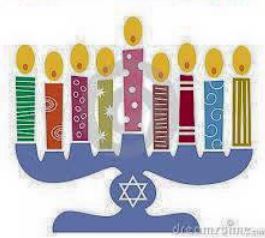
Hanukkah menora 1Mom called me on Tuesday, December 12, 1978. I had taken my family to Paxton to visit with them the previous Friday. She sounded a bit weaker than usual. First, she reported that Dad had been diagnosed with prostate cancer, but not to worry, his doctor was very encouraging. No surgery, just hormone treatments.

Then she dropped the bombshell. She was in Burnham City Hospital, recovering from a complete hysterectomy. Her doctor had found cancer in her as well, and they had scheduled the surgery immediately. “I am fine,” she said.

“Why didn’t you tell me Friday?” I wanted to ask, but knew better than to say it.

She continued anyway, “I knew you were busy getting everything ready for services and lots of people needing you. I wanted to be able to tell you about this when everything was settled. The doctor gave me the good news—he thinks they took care of it with the surgery.”

“That’s good to hear. I’ll be there in two hours,” I said.

“You don’t need…” she started.

“I’ll be there in two hours. I love you,” I said, firmly. The conversation went on for a few more moments, but apart from her “I love you, too” response, and her apology for not being able to gather the family for the holidays, I do not remember more.

When we met in her hospital room, she still wanted to talk about the family gathering. “I was ready for everyone to come. Maybe we can get together later, maybe in March.”

I tried to reassure her that March would be fine. Jesus was born in the spring or summer anyway, when the shepherds were in the fields with the sheep. We prayed together for her and Dad’s healing and for some of the other people who always were her concern. I saw her again before her discharge, and everything was going well, except for her sadness about the family get-together. On the next Friday, the 22nd, we went to Paxton again, carrying a small Christmas tree and a small Hanukkah menorah. We started lighting the candles. “A great miracle happened here,” we said on the first candle, “You both found the cancer early and have done quickly what you needed to do to treat it.”

The family gathered around the tree in March and celebrated Christmas. For the next Christmas Eve, their 45th Wedding Anniversary, we celebrated with a surprise reception in their honor, with many friends and family members coming together. Mother lived twelve more years, Dad another twenty-seven, in relatively good health.

A Letter from the “Good old Days”…Happy 100th Wedding Anniversary…on Christmas Eve 2014!

Tags

Bessie Coen

Bessie Coen

Carl Warfel wrote to his “True Friend” Bessie Coen on December 9, 1914:

“Well Bessie I am going up to Janesville tomorrow. I will be just 10 mile from you. I will be there about a week. I think it has been just a week ago today since I seen you but it seems like two weeks to me. I will try and come up next Sunday if I can. The trains don’t run to suit me and I can’t come every time I want to.  . . . Well I guess I must close for this time. Answer soon. Good by. from your true friend Carl to Bessie. Think of what I ask you.”

“Think of what I ask of you.” That was all he wrote. He knew that Bessie’s father said that he was no longer reading all of their mail, but he still kept the request ambiguous.

Bessie wrote back several times without revealing anything, but on December 23 she wrote:

“I just got home from grandma’s & had such a good time. Hasn’t this been a dreadful cold time? I thought so Sunday morning. I missed the city car, walked to town & saw the 8 o’clock car leave Mattoon. I went at 9:30. I didn’t have to walk there though. I am sorry that your hand isn’t well yet. Well, Carl, I will try to be ready when you come. I am so nervous I can hardly write, I have been carrying my suitcase from the car line. Well, I must close & go to town or this letter will not leave Mattoon today. I will be ready tomorrow. With love from Bessie Coen to Carl W.

On Christmas Eve, December 24, 1914, Carl and Bessie married. Now one hundred years, eleven children, sixty-some grandchildren(counting spouses), who knows how many great and great-great grandchildren (I am confident Bessie does from her new point of view), we celebrate those true friends who remained true until Carl’s death February 26, 1971, fifty-seven years later.

Happy one hundredth anniversary, Carl and Bessie!

1918, the worst Christmas ever (from Out of My Hands: Stories of Harold Chapman)

Tags

Dad hadn’t stayed far enough away from the man who was sick with the flu but still on his feet. Dad began to complain of aches in his arms and legs, and then chills, and his cough sounded deeper and more persistent. Then Chlora and I got sick  too. Then Mary, our two year old toddler. And three year old Pearl and her twin brother Earl. Mamma  tucked us in bed, made mustard plasters for our chests, and brought in cold water from the well to wipe us down with wet towels. We all were staying downstairs, and she kept the parlor stove going all night.

Dad’s Uncle Joe came a couple of days before Christmas. Dad sent word through Grandpa Hunsaker that all of the family were pretty sick. Uncle Joe was doctor to most of the people in the western part of Jasper County around Wheeler, and to his family too, though they lived mostly in the northeastern part of the county. The moment he stepped inside the house he said, “This place is too closed up and hot. You’ve made a brooderhouse for germs here. We’ve got to open the doors and windows and let the fresh air clear things out.”

Uncle Doc and Mamma went around and opened the windows and doors for the cold air to blow through the house. With the cold air and shivering, we all felt even more miserable. He listened to our chests with his stethoscope, and said he heard the grippe but no pneumonia, and pronounced us “as good as could be expected.” After he left, Mamma kept the house open as long as she could stand it, then shut it up again,  and fired up the stove “to keep us from shivering to death,” she said. I thought that if the flu didn’t kill us the cold would, and I started to wonder about Uncle Joe.

One night Mamma was up all night with Earl. I heard her say she didn’t know whether he would make it through the night. I was afraid. I watched her take all the covers off and all his clothes off and put him in the metal laundry tub with a bucketful of cold water. Then she wiped him down and put the plaster back on his chest, and talked quietly to him so that I could not hear. Earl didn’t seem to hear either. She made some weak tea and tried to get us to drink. She went out and got an old  hen and made chicken soup, and baked some bread and slathered it with butter and tried to get us to eat. That was how we spent Christmas that year. Every one of us was in the only bedroom downstairs or lying around the parlor. Dad didn’t have the strength to go into the woods to find a cedar tree to decorate. I didn’t feel like going either. I hadn’t used an ax to chop down anything bigger than a jimson weed anyway. We were all still coughing.

I began to eat before anyone else did. I could even feel a little hungry again. We were just glad that Earl was beginning to be strong enough to cry. Then three days after Christmas Mamma went to bed. By the next evening she was gone.

“Mable, don’t leave me! I’m so sorry! What am I ever going to do? Don’t go!” I heard Dad crying out in the bedroom. Chlora and Earl and Pearl and I listened and whimpered and looked at each other with big eyes. Grandma Mollie was in the kitchen, and she came and took us away from the bedroom door back into the kitchen, where Mary was tied into a high chair, and baby Alonzo was in his little drawer, the bottom one from the dresser. “Your mamma is gone. My only daughter,” Grandma said. “Now we will have to pull ourselves together and go on living.”  Grandpa Hunsaker was outside on the porch, smoking his pipe as he sat on one of the ladder back chairs he had dragged out there from the kitchen. He climbed onto the seat of the buck wagon, and urged his horses toward Hidalgo, ten miles west, where there was an undertaker,
so he could buy a coffin to bury her.

A knock at the door…on Christmas Eve

Tags

, ,

US 51 bypassed Minonk many years before we moved there, so not many travelers stopped at the church for assistance, and fewer came to the parsonage, which was a nondescript ranch-style house several blocks south of the church. That may explain why I chose the meditation topic for Christmas Eve 1986 without a second thought—finding room for strangers. The town had not had much practice with that theme, though the rough area economy, and the deteriorating and vacant housing in the rural community were preparing the ground for some changes. I preached it, a safe distance away from Bethlehem two thousand years ago. The late candlelight communion service was beautiful, of course. Families packed the pews and shared customary greetings at the benediction.

After the lights were out and the church doors locked, on that cold icy night, we drove home with our  teenage children and prepared for bed, when the knock came at the door. I pulled my pants over my pajama bottoms, and went to answer, with some trepidation. There stood a man in dirty, disheveled clothing, with a canvas bag slung over his shoulder, asking if I could help him find a room for the night. He introduced himself as Goodman.

“Well, Mr. Goodman,” I answered without much enthusiasm, “You’ve come to the right place. I don’t know how you found me, and I can’t promise much, but we’ll find you a room.” I invited him inside, thinking of all those times I remembered when such an invitation did not turn out well. We had a sleeper sofa. The nearest motel was fifteen miles away. As Jan gave him something to drink and eat,  I called that motel and found that they still had a room available for the night. At Midnight I found myself driving Mr. Goodman south to El Paso, listening to a hard-luck story, and trying to encourage a man to hold onto hope that things would get better for him.  And wondering about the mysterious ways….

That was the only night that we had such a visitor knock on our door seeking shelter, in the eight years we lived at Minonk, and it was on Christmas Eve, when I preached about welcoming strangers.

a Christmas angel…named Debbie

Tags

, ,

Once in a while on vacation we see something that reminds us of people back home, and if it would make a nice gift and we can afford it we buy it for them. This was the case when we saw the pottery angel oil lamps, about 250 of them, arranged layer by layer in a Christmas tree-shaped display at Otis Zark’s (O.Zark, get it?) down in Arkansas. Our friend Debbie collects angels. Not only that, she has frequently been an angel, and quite generous with us, so Jan and I said to each other, “Let’s get one of those for Debbie. She needs another angel.” (Need is relative, isn’t it? Probably Debbie has enough angels to supply all of us, but this was, well, a different kind.)

So we examined the angels for the prettiest and the sweetest looking one to match our friend. We narrowed it down to five, then made our decision, picked it up, bought it, put it in an official O. Zark box, and carried it home. Later we passed it on to our friend Debbie, who was suitably appreciative. Only later did we learn a bit more about the gift.

Debbie took the boxed angel home, of course. She read on the box how each angel had a different name, and you could find the name of your angel inscribed on the back of its neck. She found the name of her angel. It was “Debbie.”

Debbie mentioned to us when we next saw her that she appreciated the “fact” that we had searched for an angel that had her name. But we didn’t, we said. We only looked for the prettiest and sweetest one that we could find. “You mean you didn’t know that the angel you gave me was named Debbie?”

No, we didn’t know. But obviously someone did. Someone does keep track of such things. Not me. And this time it wasn’t Jan either.