• About
  • Celebrating our decades…
  • Welcoming all and inclusiveness

chaplinesblog

~ everyday and commonplace parables

chaplinesblog

Tag Archives: Books by Gary Chapman

Hue and the children are jailed in Cambodia

19 Thursday Feb 2015

Posted by chaplines2014 in Books by Gary Chapman, People

≈ Leave a comment

Tags

Books by Gary Chapman, The River Flows Both Ways, Vietnam and Cambodia

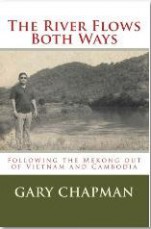
TRFBWcover

When the soldiers who stopped their truck saw the light-skinned Hue, Mui and Kim Chi, they examined their papers carefully and discovered that they were actually from Vietnam. They detained Au, Hue, Mui, and Kim Chi.  The checkpoint guards confined the family in a high-fenced area some distance away from the road and they enforced strict war zone security measures. The troops did not abuse the people in the confinement, but they were not gentle or respectful. Everyone was fed like the troops. They had enough to eat, but rations were simple cans of rice.  Tin cans had become the common measure and utensil during the Khmer Rouge years, and here they continued to reuse tin cans in this way.

Local civilians came in and out of the military compound where they were confined. Eager bartering over extra food, cigarettes, and necessary clothing occurred while the soldiers weren’t looking. The locals charged exorbitant prices for the exchanges made inside the compound. Even though Hue had many items of jewelry, and other small valuables, sewed into the seams of the family’s garments for safe keeping, she did not want to use these to make purchases inside the prison, unless it was absolutely necessary. Mostly she kept what she could for the future.

Mosquitoes pestered all the time. There were no mosquito nets for sleeping. Everyone was accustomed to mosquito nets while they slept, so the nights were miserable at first, and people feared the spread of malaria.

They stayed near Sisophon for several weeks. Then they were transported south toward Battambang to an official, gated jailhouse.  There were more restrictions and more tension.

Hue knew that the children, and the others who were imprisoned there, could not hold out for long under such a strict regime. She brushed her hair, and made herself as presentable as she could. Not that it was hard for her to look pretty, for Hue was always a lovely woman with the charm of one who could make an impression. She soon attracted the attention of the Vietnamese General in charge of the prison, and she gradually revealed her story in a sympathetic way, as she worked to win the trust of all of those in charge.

The soldiers in charge of the prison resented the waste of time spent in dealing with captives from their own people, so they made life harsher than it needed to be. They had their hands full. They were occupying Cambodia. They were trying to restore normal trade and civilian life after years of Khmer Rouge destruction. They were still fighting opposition forces at the frontier. When the officers could see that some prisoners were willing to be cooperative and helpful, and even do favors for them, they began to relax the rules and encourage more freedom for the Vietnamese captives.

Through one of the civilians who came into the prison, Hue managed to smuggle out that letter to Grandmother Tien in Vietnam explaining that only Long and Phuong might have managed to make it out of Cambodia, and the rest of the family would find their way back to Go Dau as soon as they could. Au, Mui, Kim Chi, and their mother and stepfather were confined in another detention center near Phnom Penh for several weeks.
Hue tries to take her family to Thailand…only two make it.

19 Thursday Feb 2015

Posted by chaplines2014 in Books by Gary Chapman, People, Travel

≈ Leave a comment

Tags

Books by Gary Chapman, The River Flows Both Ways, Vietnam and Cambodia

TRFBWcover       

Hue brought the family together in Phnom Penh in November. She made arrangements with Aunt Phai who promised safe travel to Thailand through Khmer Rouge-controlled territory.    They knew it would be difficult to avoid Vietnam’s occupation troops, find their way through territory controlled by a resistance group, and follow the route of Cambodian refugees into Thailand.

On the night before leaving in November, in the middle of the night, they walked to the house of another family, stayed until early morning, then they walked to yet another family that owned the two trucks they would board. Aunt Phai herself was with them all, serving as a guide. She knew the way to travel, on Route 5 toward the Thai border, expecting to disembark near Battambang, and walking through the jungle until they crossed the Thai border. Then they would find a refugee camp where the rest of their arrangements could be made through the officials at the camp. The weather was sunny and warm. The rainy season was behind them. They would not travel together in one truck in case something would happen to one of the trucks. At least the other might be able to continue the journey. It was about 6 A.M. when Long and Phuong climbed into the first vehicle, a canvass-covered cargo truck with large sacks and crates of contraband stacked on the truck bed on which dozens of passengers sat and piled their small bundles. Long and Phuong were not carrying anything.

Hue and Thin, and the children—Au, Mui, and Kim Chi—with a few bundles of clothing and tradable goods, climbed into the second truck. People and cargo filled both trucks. Roads were terrible, full of ruts, so the trucks could go no faster than twenty kilometers per hour. Every few kilometers Cambodian people wearing a variety of clothing, sometimes parts of uniforms, stood alongside the road, and the drivers made payments to them for permission to pass without interference. All of the passengers had to stay in the trucks under the canvass, so they were not obvious, but the back ends of both trucks were open. Long tried to sleep as the truck jostled along, and sometimes he was successful.

The trucks rattled apart and frequently broke down. Having never travelled far before, Au soon became sick from the jarring motion. Occasionally when there was no one in sight they stopped to let people relieve themselves.  Au tried to calm his unsettled stomach, but back aboard the truck he was sick again. Neither truck made any special effort to hide, but they avoided larger towns where they knew that regular Vietnamese Army soldiers were stationed. Until they got closer to the border no one was checking to see who belonged where.

During that first day they traveled most of the long road from Phnom Penh toward Battambang, over three hundred kilometers. When the sun had set and the road turned too dark for the driver to see where they were going, both trucks stopped for the night, and everyone slept in their clothing with a few shared blankets along the roadside near the trucks. Hue’s family slept together that night.

At daybreak they ate a little that they had packed and resumed the traveling. Long and Phuong were in the first truck all of the way. Near the end of the afternoon, in the area near Sisaphon, Long saw the other truck pass them briefly and then pull off to the side of the road. Mui and Kim Chi waved at him from the open back end. He waved and smiled back at them, not realizing this would be his last sight of them for a long, long time. Later that day, and on the many days following, he clung to the memory of them waving.

Toward sunset the road became impassable. Long and Phuong and the rest of their group climbed down off of their truck for the last time. The other truck was nowhere to be seen. There was no sign of activity around the shacks and buildings in that region. People were afraid to be out at night. The gravel path that continued where the road was no longer drivable served ox carts, bicycles and walkers, but not four-wheeled vehicles. As darkness fell they arrived at a hut, and they crowded into it to sleep for the night, hoping for some protection from the mosquitoes. Long and Phuong wondered aloud where their family was, but no one knew. They lay awake worrying about them. They knew that Hue had all of the gold and extra resources the family needed for the trip, and they themselves had nothing. Mostly they just wanted to be together again. They had no way of knowing that the other truck had been captured by occupation soldiers, and Hue and the rest of the family had been imprisoned.

Hue Thi Nguyen, 1950-2015

16 Monday Feb 2015

Posted by chaplines2014 in Books by Gary Chapman, Death, People

≈ Leave a comment

Tags

Books by Gary Chapman, The River Flows Both Ways, Vietnam and Cambodia

TRFBWcover

Hue, which means “Rose” in Vietnamese, was born in Tay Ninh Province, Vietnam, in 1950, the daughter of Do Van Nguyen and Vinh Thi Tran.  Her family moved to Svay Rieng, Cambodia, where she met and married Hung Thanh Nguy in 1966. They had four children, two boys—Long and Au, and two girls—Kia and Mui. Hung and Hue moved to Go Dau, Vietnam, in 1970, where they continued as cross-border traders with Hung’s father, Lao Nguy. Hung was killed on October 19, 1973, and Hue moved to Ho Chi Minh City and established herself as an entrepreneur, owning trucks and passenger vehicles, a business which she conducted the rest of her life.

Hue married Thin Nguyen and they had one daughter, Kim Chi. During the actively anti-Chinese period of the reunited Vietnam, Hue worked to provide a means of escape for her young brother-in-law, Phuong Nguy, and her two sons, Long and Au, so that they would not be caught in the mistreatment of Vietnamese citizens who had Chinese ancestry, or conscripted to serve in the ongoing war in Cambodia, and so that they might have an opportunity for education and a better life.  After several years each of the three boys emigrated to the United States and became citizens. Thin and Kim Chi emigrated to Texas, and he and Hue divorced.

Hue continued to earn a living that supported, not only her own daughters, but also her parents and siblings. As the Vietnamese economy began to flourish in the late 1990’s and 2000’s, she assisted her siblings in getting their own businesses started. She sent Mui to the United States to live with Au and Long at Bloomington, Illinois, in 1991.

Hue married Phap Danh in Ho Chi Minh City around 1988, and they had one daughter, Phong. Phong came to live with Mui and her husband, Kenyatta Stevenson, in 2014, in Miami, Florida.

Hue died on January 19, 2015, at home with her husband, Phap, as a result of complications from diabetes.  Kia and other near family members were with her, and she was aware that Long, Au, Kim Chi, and Phong were flying home to be with her. (Mui remained home with her husband, who was dying with cancer.)

She was buried at Cu Chi, Vietnam, attended by hundreds of family and friends from many places in Vietnam, Cambodia, and the United States.

December 1, 1838, on Crowley’s Ridge, in John Bell’s Day Log

29 Thursday Jan 2015

Posted by chaplines2014 in Books by Gary Chapman, Cherokee history, Events

≈ Leave a comment

Tags

Books by Gary Chapman, Our Land! Our People!, The Trail of Tears

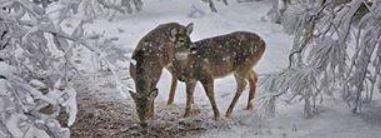
pair of deer in snowWhen we left Strong’s Inn this morning we followed the Military Road up a gradual incline to Crowley’s Ridge, which is the top of the bluffs along the river valley. We followed the ridge through wooded and hilly areas for several miles. The road stayed level, turning a little left and right, but not going up and down the steep ravines.

Not long after we reached the top of the bluff a doe and her fawn walked through the woods alongside the wagon train, about ten paces from the road. She kept walking alongside for at least two hands of time. Some wanted to shoot her, but my Udoda told them we had enough meat, and her feeling of safety with us was a good sign. Many of our people are Deer Clan. We can take their presence as a sign that helping spirits are with us on our journey. That reminded me of seeing the red wolf on the way to Ududu’s place, when I was feeling lost and weak. We feel blessed to have spirit helpers with us. It seems to be a rare and special event.

When the road turned west away from the bluff, the land became flat again. The trees changed from bare-of-leaf maples and brown-leafed oaks to pine woods bordering grass and marsh lands. In this flat area the road goes straight as an arrow. We can see all of the wagons stretched ahead of us for more than a mile. We didn’t go far today, before we set up camp. Those who stayed in the inn a second night will be able to catch up with us tomorrow.

On Crowley Ridge…the Trail of Tears

28 Wednesday Jan 2015

Posted by chaplines2014 in Books by Gary Chapman, Cherokee history, Events, Travel

≈ Leave a comment

Tags

Books by Gary Chapman, Our Land! Our People!, The Trail of Tears

Red Wolf2Snow and ice covered the roads on January 9, 2010, in Northeast Arkansas, so, true to southern pattern, few people ventured out, and the ranger at Village Creek State Park spent a lonely day in the visitor center. When I relied on my four-wheel-drive Jeep to navigate the hills and curves of the park, I was the only one to do so. The ranger doubted that I really wanted to drive two miles farther into the park, and walk the mile across the dam and into the woods, until I reached the last remnant of the original military road on Crowley Ridge. There the ancestors were among the 670 Cherokee travelers who followed the road west for 790 miles until they reached the Indian Territory that would “forever” be theirs for another forty years anyway.  But I was willing, and she gave me directions. There would be just enough time before sunset to make the journey.

Crossing the ice-covered dam tested my resolve,  as did the sound of dogs howling deep in the woods ahead, but I grabbed a straight branch for a walking stick, and walked on, following a marked trail, up and down the hills until I reached the ridge, and the simple historical marker. Only  a few miles remain of the original road, but I had time before sunset only to hike a mile of it before turning around to start back. The silence and the snow were sufficient to let me hear the distant echoes of  one hundred twenty wagons and carriages, pulled by teams of horses and oxen, accompanied by many walkers through the winter of 1838 and 1839. One hundred seventy years later, it was very quiet, but telling its story loudly.

I had turned around and started back when she joined me—a doe walking through the woods parallel to the road and about thirty feet away. She seemed curious about me, and as I did not threaten her, she walked along at that distance for about half a mile until she decided to amble down into the deep ravine.  I was glad for her company, and I could not help but think that all of the Bell ancestors of the Deer Clan would be pleased.

Swedish Christmas with the Johnsons…1925 (Out of My Hands: Harold Chapman)

08 Monday Dec 2014

Posted by chaplines2014 in Books by Gary Chapman, Seasons

≈ Leave a comment

Tags

Books by Gary Chapman, Out of My Hands

IMG_1568

I didn’t go to church until Christmas, when it was obvious that Mr.  and Mrs. Johnson were eager to have us go. Back home sometimes I  had not attended for several weeks in a row, so I had not given much  thought to going to church here, where I was a stranger to everyone.

The prospect of Christmas services interested me. I had enjoyed hear- ing Christmas hymns and stories at home. Mrs. Johnson hung some suits and dress shirts on the coat pegs in the pantry where we ate. We  took them back to the bunkhouse to try on, and we each found a suit  and shirt that fit well enough. Herman decided he would go with the  Johnsons and me to the Lutheran Church. John and Ira had family in  Rock Island that they would join for Christmas.
The church was a large brick building with a central bell tower in  front with the main entrance below the tower. Inside the church the  abundant boughs of evergreen, silver and gold ribbons, and candles  dazzled me and perfumed the air. The pews rapidly filled from back  to front, and a choir of singers filled the loft that rose behind the high
central pulpit. A spruce tree stood from the floor to the high ceiling on  one side of the loft, filled with candles and ribbons, and a huge organ  covered the front wall with pipes and a carved case. The organ began  to play, filling the large room with wondrous sounds that vibrated the  furniture and the many-colored glass panes in the windows. I sat in awe.

This was so much different from my little frame church in which the  people refused to use instruments. People sang out in both churches  though. Here they sang about Christmas with songs I had never heard,  but they were beautiful.  Toward the end of the service, ushers lighted  candles and passed them from person to person, and the people joined  in singing some songs in Swedish, which must have been about Jesus’
birth, though I didn’t understand a word. I was glad I went. It was really  something!

Mrs. Johnson served Christmas dinner to all of us in the dining  room—honey glazed ham, mashed potatoes and sweet potatoes, a sweet- bread dressing, corn, green beans, a variety of pickled vegetables and  little fish, and many cakes, candies, and puddings. They were all laid  out on a buffet and she called it a smorgasbord. We could keep going  back for more of anything we wanted. Their sons were home, and all of
us made pigs of ourselves. They asked us to say whatever prayers we were  used to saying, and I said Grandpa’s prayer—“Lord, bless this food for  its intended use and us to thy service, and, God, save us. Amen.” The  Johnsons all said a prayer in unison in Swedish, but they had taught us  the English words, too. They were—“Come, Lord, Jesus, be our guest,  and let this food to us be blessed. Amen.”

December 25, 1838 (from Our Land! Our People! a Trail of Tears Narrative )

06 Saturday Dec 2014

Posted by chaplines2014 in Books by Gary Chapman, Cherokee history, Seasons

≈ Leave a comment

Tags

Books by Gary Chapman, Our Land! Our People!, The Trail of Tears

snow geese migration near St Elmo IL, Dave Moody 2

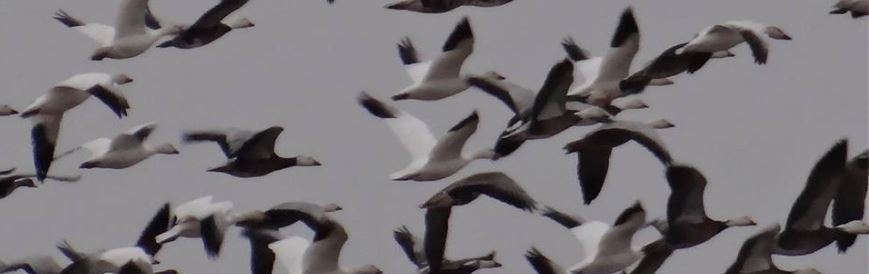
Flocks of Canada geese made lots of noise this morning to wake us up. We followed the Post Road today into a pine forest along the Illinois Bayou. Tomorrow we will follow the river upstream until we find an easier place to cross. We are not near a town now, just out in the middle of the woods.

Sarah remembers decorating for Christmas at the Moravian missions at Springplace and New Echota. The missionaries cut evergreen bows and brought them inside. They filled their chapels and houses with candlelight on this evening and the coming day to celebrate the birth of Jesus. We are outside among the pine trees and under the stars tonight, with a blazing fire to keep us warm. She says the story of Jesus began with Joseph and Mary taking a long trip to Bethlehem, ordered to do so by a distant government, and giving birth to Jesus in a stable. We are doing something like they did. I would enjoy the warmth of a stable tonight. Otherwise our night is much like theirs. It is a good starry night to remember that the Great Spirit is with us too.

…excerpts from Red Wolf’s (John Francis Bell’s) Day Log

Christmas in Camp NW9 (from Ch. 14 “The River Flows Both Ways: Following the Mekong Out….”)

05 Friday Dec 2014

Posted by chaplines2014 in Books by Gary Chapman, Seasons

≈ Leave a comment

Tags

Books by Gary Chapman, The River Flows Both Ways, Vietnam and Cambodia

TRFBWcover

After the night passed, and nearly a full day in all, a truck arrived with Thai soldiers who identified themselves as Camp NW9 personnel. They climbed aboard and traveled another hour until they stopped toward evening outside a line of berms and trenches that surrounded several mat-sided, tin-roofed huts. People were milling around, feeding several evening fires and lighting torches. Single palm trees, saved from the clearing operation, gave the scene the look of an out-of-place beach. The residents seemed to be celebrating, talking loudly, sometimes singing. Stacks of rice bags and other boxes of food supplies sat under an open-sided roofed shelter.

Phuong and Long at first believed that this must be a wonderful place where people celebrated late into the evening instead of facing the sunset curfew which they had come to expect. The camp appeared to be a paradise compared to where they had been. When they began to wonder whether anyone knew they were there, the coordinator arrived. He welcomed them to Camp NW9, that had just opened last May, and he explained that this was Christmas Eve, 1980. They were celebrating Christmas, and singing Christmas carols, since several of the refugees and some of the staff were Roman Catholic.

The residents welcomed Phuong and Long to their Christmas celebration. They learned that Camp NW9 sat about six kilometers from Nong Chan. Just about all of the refugees there were from Vietnam. Most had walked across Cambodia.

Sure enough, after Christmas the curfew returned regularly as the sun went down, so residents had to stay near their huts, walk away only to visit the latrine, and stay off of the main paths. Everyone returned to the routine that included an early morning awakening to the distant sound of artillery shells. Every refugee took the metal cooking oil container that had been assigned to them to get the four liters of water that was their allotment. They had that much and no more for any purpose for which they needed water. Everyone had a paper pass with their hut number on it, and a record was made each time a person received a water ration. Volunteers among the refugees prepared the rice and canned sardine allotments into the meals served each day at noon and early evening. Sometimes the workers served soup, made of a few bean sprouts, lettuce of some kind, and water. There was no variety in the food available unless someone managed to trap a jungle rat or trade for a chicken. Long helped to clean the rats or other animals that men trapped, and he developed some skill in doing it, but while he was there, other volunteers did the cooking.

The Return of Christmas (Ch 22, Out of My Hands: the Stories of Harold Hunsaker Chapman)

04 Thursday Dec 2014

Posted by chaplines2014 in Books by Gary Chapman, Growing up, Seasons

≈ Leave a comment

Tags

Books by Gary Chapman, Out of My Hands

OOMHWe hadn’t celebrated Christmas for several years. We were all sick with  the flu in 1918, and Mom died just after Christmas. Great-grandpa Ben  Hunsaker had died at Christmas in 1919. In 1920 and 1921 we were just
scraping by in Colorado, and we didn’t think we had anything to celebrate.  Dad died just before Christmas in 1922. The year 1924 was different.  Grandma started it just a few days before Christmas by saying,  “I’m tired of being sad at this time of year. It’s time for us to celebrate
Christmas again.”
Grandpa said simply, “All right.” He immediately sent Earl and me  out into the woods nearby to find a red cedar tree, “about as tall as you  are.” So we took a two-person saw, and we looked for a tree that had a  good shape and that was about my height. We found one, and sawed it  off, and brought it home. I found two two-by-fours, and Grandpa’s brace  and bit, and drilled a hole through the center of the boards. We cut a
couple of blocks the same width as the boards to nail to the bottom of  the ends of one board. With Earl holding the tree sideways and still, I  drilled a hole into the trunk of the tree. We found a seven inch spike in  a bucket of old nails, and we had a tree stand to keep the tree upright.  We proudly took it inside.

Grandma had popped corn and put Pearl, Mary, and little Lon in  charge of stringing the popcorn. Not much of Lon’s portion made it  past his mouth onto the string. They were plainly enjoying the tree-decorating. Grandma supervised the making of popcorn balls in exchange for a promise from little Lon that he would finish the strings.  Then they switched to strings of dried crabapples, so the tree was finally  crisscrossed with red and white garlands.

When the garlands were all on the tree, Grandma disappeared into  her bedroom for a while. She returned carrying a shiny metal star with  a candle holder attached to the front, and a partially burned candle in  it. She gave it to Chlora to crown the treetop.
Christmas morning we got up to a big breakfast. A bowl of oranges  was under the tree, and we each had one of them. There was also a bowl  of hard candy, a handful apiece, Grandma said, and six small boxes. We  children opened the boxes at the same time, and we each had a new pair  of brown cotton gloves. It seemed quite an extravagant occasion.

Grandma asked us what we wanted to eat for Christmas dinner.  What would be special? I had shot two wild rabbits a week before. Earl and Pearl suggested that we hadn’t had rabbit stew for quite a while, and  it would seem special, since we had eaten that stew so many times with Dad and Bonnie. So their suggestion won against the ham or chicken  or goose that the rest of us suggested. With Grandma’s supervision, the rabbit stew was filled with vegetables and potatoes and noodles, and
even small chunks of ham, and it tasted a lot better than any rabbit stew we had eaten before. We also enjoyed apple pie and pumpkin pie.  “Now I can pack my bags,” Grandma said. We looked at each other and wondered what in the world she was talking about.

Newer posts →

Subscribe

  • Entries (RSS)
  • Comments (RSS)

Archives

  • February 2022
  • May 2020
  • October 2018
  • December 2017
  • November 2017
  • October 2017
  • June 2017
  • April 2017
  • March 2017
  • February 2017
  • January 2017
  • November 2016
  • October 2016
  • September 2016
  • August 2016
  • July 2016
  • June 2016
  • May 2016
  • April 2016
  • March 2016
  • February 2016
  • January 2016
  • December 2015
  • November 2015
  • October 2015
  • September 2015
  • August 2015
  • July 2015
  • June 2015
  • May 2015
  • April 2015
  • March 2015
  • February 2015
  • January 2015
  • December 2014
  • November 2014
  • October 2014

Categories

  • beach
  • Books by Gary Chapman
  • canoeing
  • Caring
  • Cherokee history
  • Church
  • Citizenship
  • Death
  • Disabilities
  • Events
  • Faith
  • Farm
  • fighting fires
  • Forest
  • Garden
  • Growing up
  • Gullibility
  • guns
  • Health
  • Hiking
  • House
  • Innocence
  • Learning from mistakes
  • Life along the River
  • Miracles
  • Nature
  • Patience
  • People
  • Prayer
  • Racial Prejudice
  • rafting
  • Running
  • Seasons
  • Small town life
  • Suffering
  • Travel
  • Uncategorized
  • Vehicles
  • Volunteering
  • Words
  • Yard

Meta

  • Create account
  • Log in

Create a free website or blog at WordPress.com.

Privacy & Cookies: This site uses cookies. By continuing to use this website, you agree to their use.
To find out more, including how to control cookies, see here: Cookie Policy
  • Subscribe Subscribed
    • chaplinesblog
    • Join 71 other subscribers
    • Already have a WordPress.com account? Log in now.
    • chaplinesblog
    • Subscribe Subscribed
    • Sign up
    • Log in
    • Report this content
    • View site in Reader
    • Manage subscriptions
    • Collapse this bar
 

Loading Comments...